

Start with the driver's information and any policy under which the injured person is expressly named or defined as an insured. This article does not claim that every policy issued to a relative or household member applies.
- IDOI describes bodily-injury liability coverage as paying, up to the policy limit, for injuries an insured causes to other people with a vehicle.
- Indiana Code 27-7-5-4[2] separately defines uninsured and underinsured motor vehicles.
- A hit-and-run does not automatically establish UM coverage.
- IDOI's general MedPay description does not decide what a particular policy covers.
- The complete issued policy, not this article, supplies the controlling contract language.
Which files may matter after a pedestrian collision?
The Indiana Department of Insurance[3] describes bodily-injury liability coverage as paying, up to the policy limit, for injuries an insured causes to other people with a vehicle.
Indiana Code 27-7-5-2(a)[1] addresses protection for persons insured under the policy who are legally entitled to recover specified damages from owners or operators of uninsured or underinsured motor vehicles. The same section permits the named insured to reject the coverage in writing and contains additional exceptions and requirements.
For a broader discussion of pedestrian claims, see the firm's pedestrian-accident guide.
How do Indiana UM and UIM rules differ?
Indiana Code 27-7-5-4[2] defines an uninsured motor vehicle and separately defines an underinsured motor vehicle. The UIM definition compares available bodily-injury liability limits with the injured person's underinsured-motorist limits.
A low liability limit does not by itself complete that statutory comparison. The actual limits and the issued policy must be identified.
Walking does not remove the statutory requirement that the claimant be a person insured under the policy. The relevant insured definition therefore must be read before drawing a conclusion.
The firm's UM/UIM guide provides additional background.

What if the driver leaves and cannot be identified?
In Gillespie v. GEICO General Insurance Co.[4], the Indiana Court of Appeals explained that Indiana Code 27-7-5-2[1] does not require an auto policy to include hit-and-run coverage. The issued policy therefore supplied the hit-and-run terms in that case.
In Von Hor v. Doe[5], the court enforced policy language requiring physical contact with the unidentified vehicle and denied the no-contact claim before it.
Those decisions do not decide every pedestrian collision. They show why the exact hit-and-run language and the contact facts must be examined.
The firm's hit-and-run guide offers a practical checklist for the scene and report.
Does MedPay apply while you are walking?
IDOI describes typical auto medical-payments coverage as paying medical bills for the insured and usually passengers, up to the policy limit, when injured while riding in, entering, or leaving the car.
That general consumer description does not say that every pedestrian claim is covered or excluded. Our practical suggestion is to check the declarations page for MedPay and then read the complete provision.
Which documents should you organize?
This is Delventhal Law Office's suggested starting set, not a list attributed to IDOI or a court:
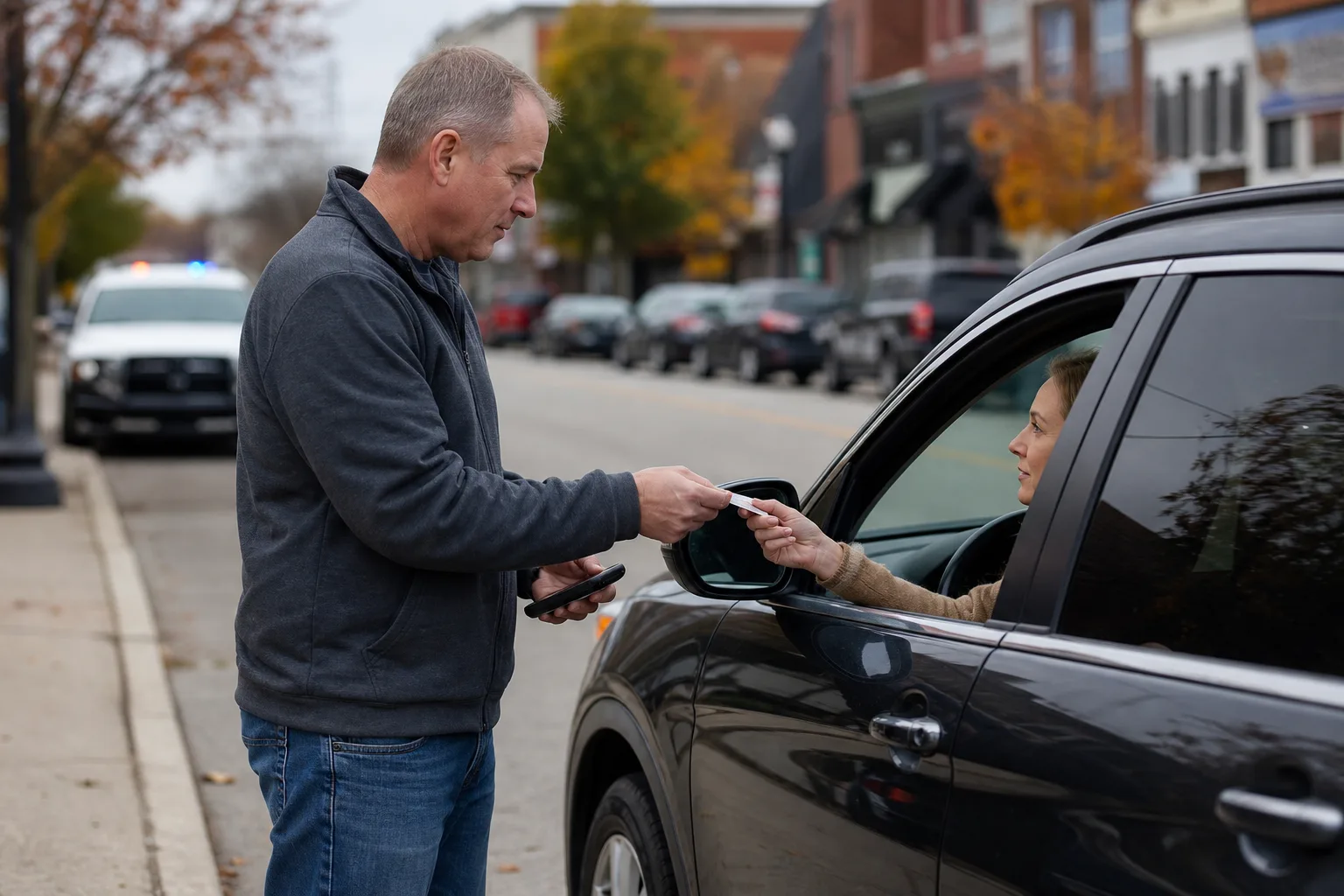
- The driver's name, plate, and carrier information that is available.
- The declarations page and complete form for a policy under which the injured person may be an insured.
- Endorsements and any UM/UIM selection or rejection form tied to that policy.
- Letters, emails, claim numbers, and notes of conversations.
- Photographs, witness information, report details, bills, and receipts already in your possession.
| Item | Purpose |
|---|---|
| Declarations page | Starting summary |
| Complete form and endorsements | Definitions and conditions |
| Selection or rejection form | Recorded choice |
| Letters and emails | Stated position |

Practical next steps
- Call 911 when emergency help is needed.
- Record the information that is available without guessing.
- Keep original files and make working copies.
- IDOI advises consumers to file a claim as soon as possible because a policy may require notice within a stated period.
- IDOI advises consumers whose claim is denied to ask for a written explanation that identifies the policy language used in the decision.
The firm's evidence guide offers another organizational checklist.
What if a claim is denied?
The IDOI complaint page[6] instructs consumers to contact the company, agent, or broker first and to submit copies of supporting documents with a complaint.
IDOI reviews compliance issues but states that it cannot serve as a consumer's legal representative.

For an overview of Indiana car accident claims, including deadlines and insurance coverage, see our Fort Wayne car accident attorney page.
Frequently Asked Questions
Can my auto policy apply while I am walking?
Indiana Code 27-7-5-2[1] protects persons insured under covered auto policies from specified losses caused by uninsured or underinsured motorists unless the named insured rejects the coverage in writing, subject to the statute's exceptions.
What if the driver has insurance?
IDOI describes bodily-injury liability coverage as paying, up to the policy limit, for injuries an insured causes to other people with a vehicle.
Does a hit-and-run automatically establish UM coverage?
A hit-and-run does not automatically establish UM coverage. Gillespie explains that Indiana Code 27-7-5-2[1] does not require an auto policy to include hit-and-run coverage.
Does MedPay automatically cover or exclude a pedestrian?
IDOI's general MedPay description does not decide what a particular policy covers. The complete provision must be read.
Can IDOI represent me in a dispute?
IDOI reviews compliance issues but states that it cannot serve as a consumer's legal representative.
You may request a free case evaluation from Delventhal Law Office.
This article provides general information, not legal advice. Do not send confidential or time-sensitive information until the firm confirms representation.