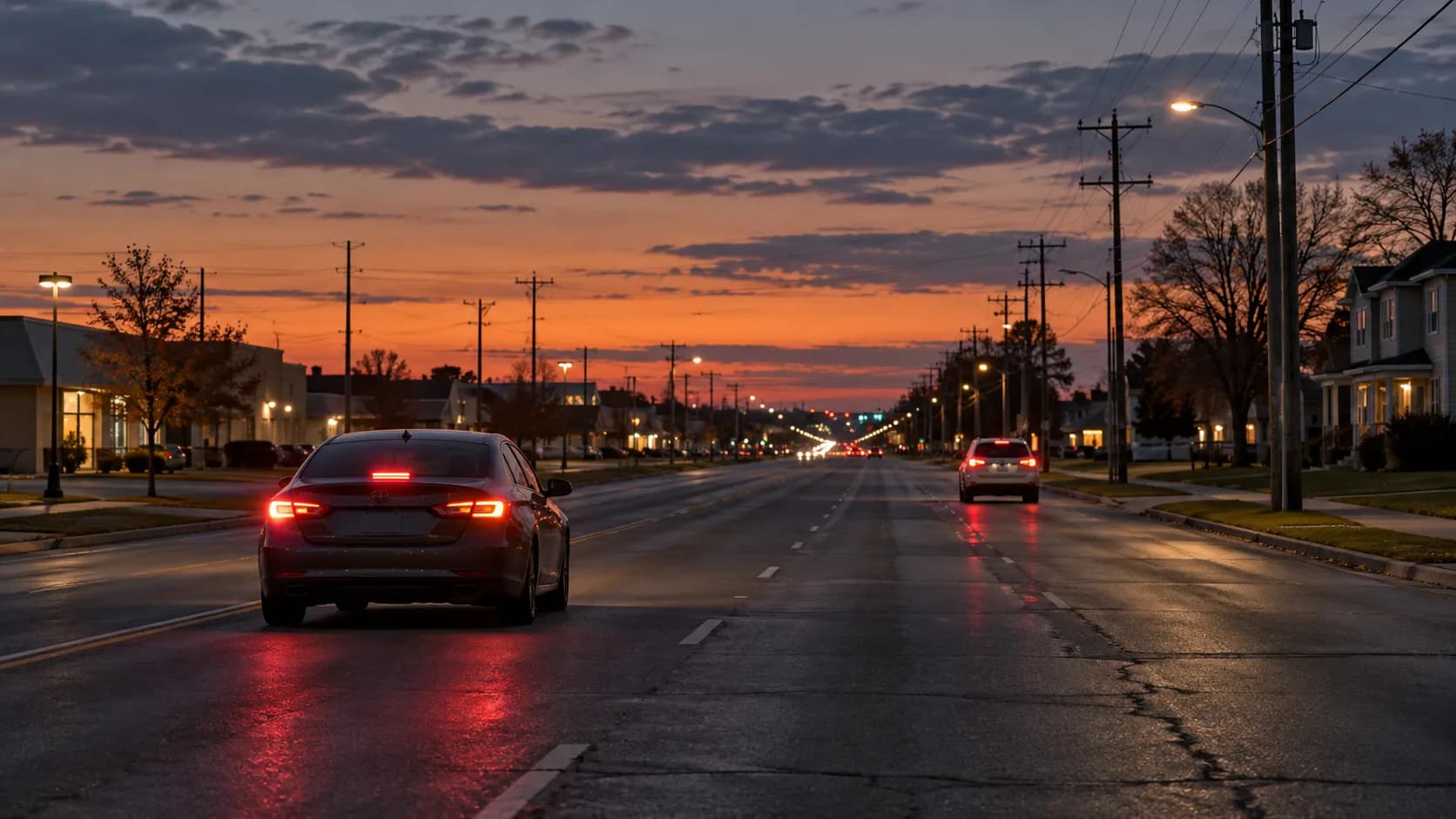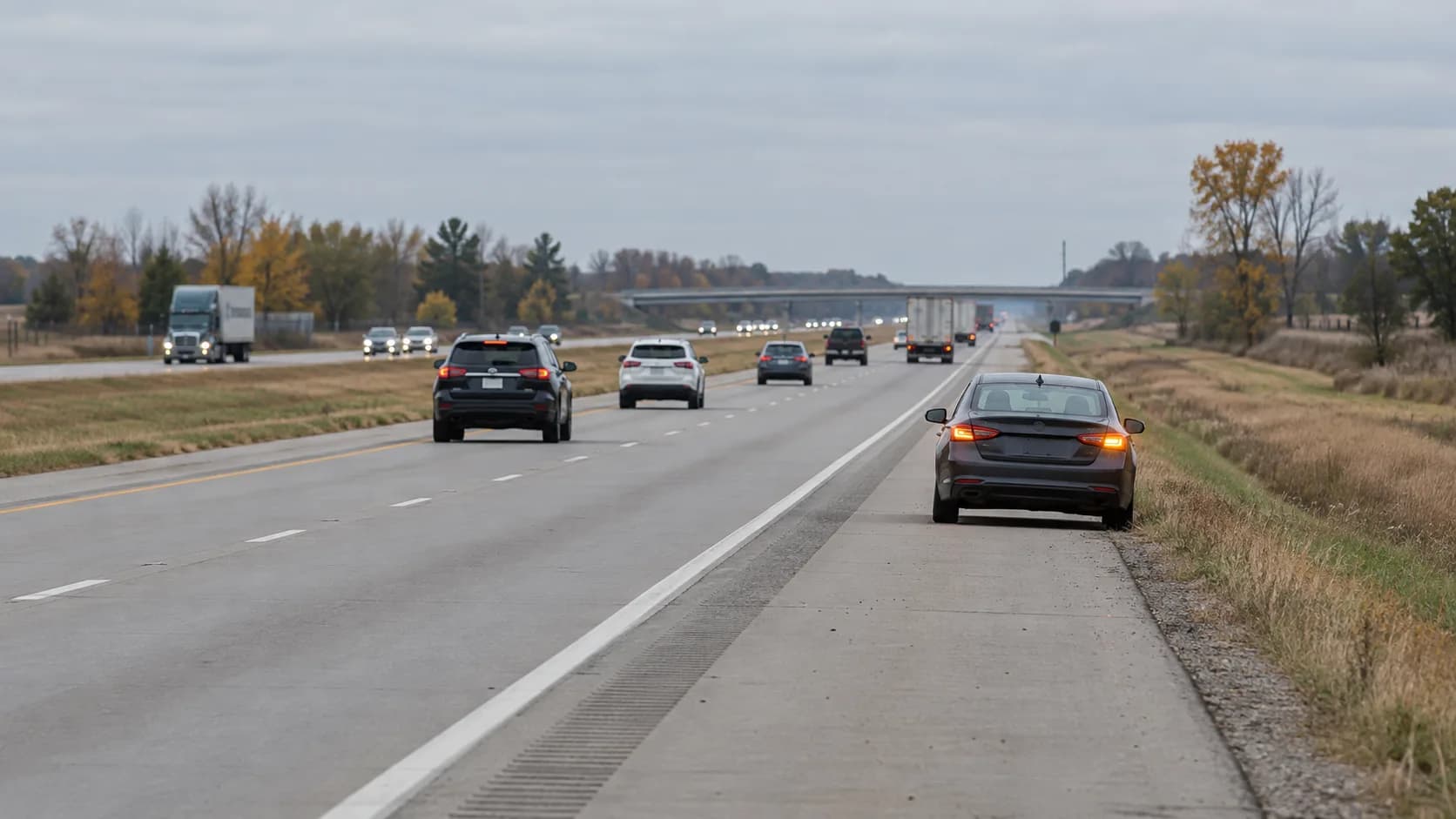
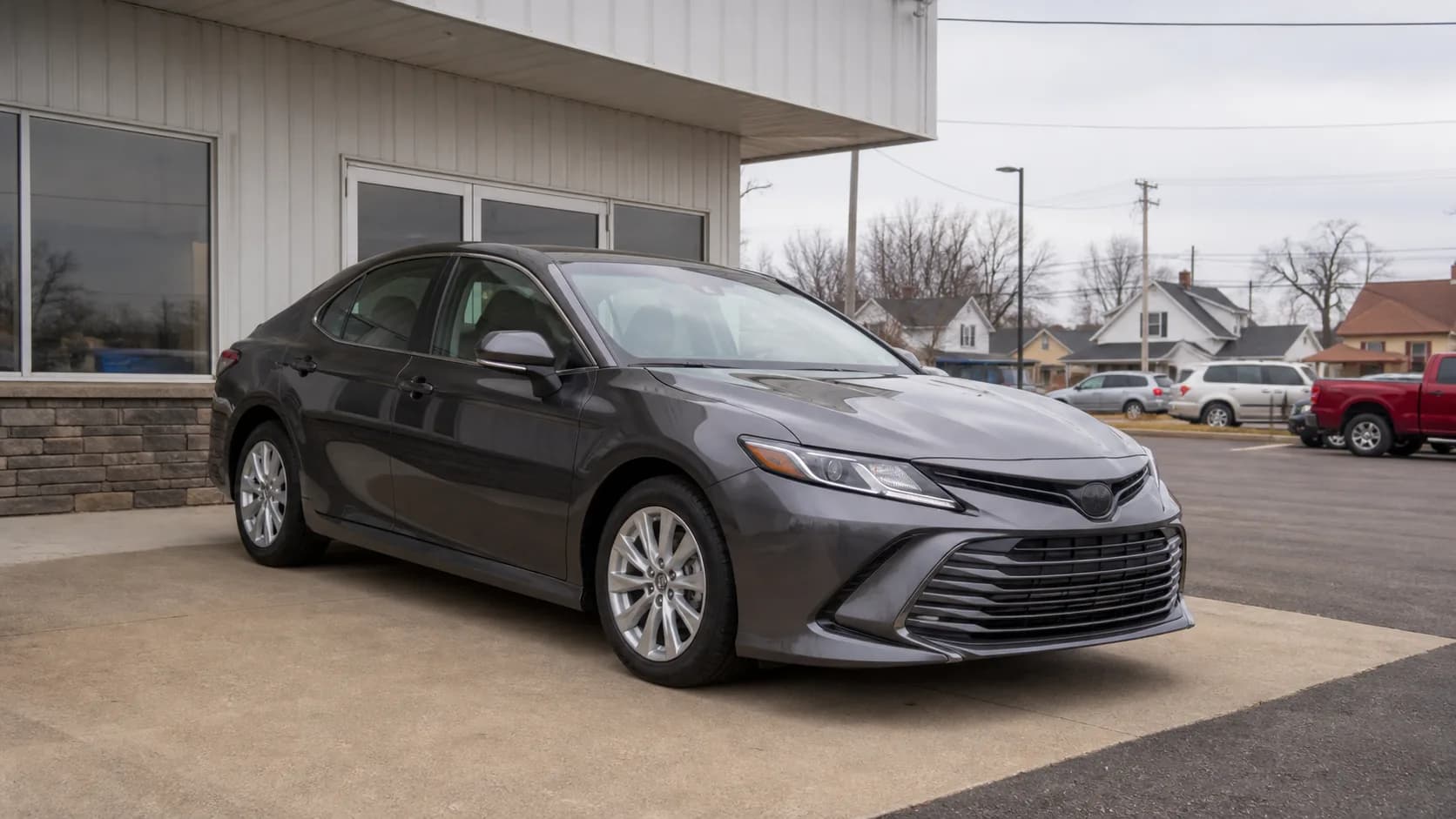
A collision during a dealership or private-sale test drive can involve the prospective buyer, a salesperson, the vehicle owner, passengers, or people in another vehicle. Start by identifying who was driving, who owned the vehicle, how permission was given, what happened, and which policies may apply. This article explains the general Indiana framework without predicting the result of any individual case.
Key takeaways
- Responsibility depends on the evidence; vehicle ownership alone does not establish what happened.
- Indiana law requires[1] a motor-vehicle liability policy to insure the owner against third-party liability resulting from the negligence of a person who legally uses or operates the vehicle with the owner’s express or implied permission.
- The permissive-use rule is one part of the review; the actual policy terms and other applicable law still must be examined.
- For actions governed by Indiana’s Comparative Fault Act[2], a claimant’s damages are reduced in proportion to the claimant’s fault.
- A claimant is barred from recovery when the claimant’s fault is greater than the fault of all persons whose fault proximately contributed to the damages.
- Indiana Code § 34-11-2-4 generally requires[2] an action for injury to a person or personal property to be commenced within two years after the cause of action accrues.
How is responsibility allocated after a test-drive crash?
The analysis begins with what each person did or failed to do. Useful material may include the crash report, photographs, video, witness accounts, electronic data, and the vehicle’s condition. Ownership, without more, does not show how the collision occurred.
For actions governed by Indiana’s Comparative Fault Act[2], a claimant’s damages are reduced in proportion to the claimant’s fault. A claimant is barred from recovery when the claimant’s fault is greater than the fault of all persons whose fault proximately contributed to the damages. The Act contains definitions, allocation rules, and exceptions, so its application should be evaluated against the actual parties and issues.
For broader context, read how responsibility is evaluated after an Indiana car accident and Delventhal Law Office’s Indiana car accident guide.
How do policies and permission work?
The owner policy and third parties
Indiana law requires[1] a motor-vehicle liability policy to insure the owner against third-party liability resulting from the negligence of a person who legally uses or operates the vehicle with the owner’s express or implied permission. The Indiana Department of Insurance summarizes the same requirement and notes that named-driver exclusions may be included in commercial motor-vehicle policies.
The permissive-use rule is one part of the review; the actual policy terms and other applicable law still must be examined. Priority can require analysis of the people involved, policy definitions, other-insurance clauses, endorsements, exclusions, and other applicable law. A test driver’s personal policy may also warrant review, but no conclusion should be drawn without its terms.
Documents for a policy review
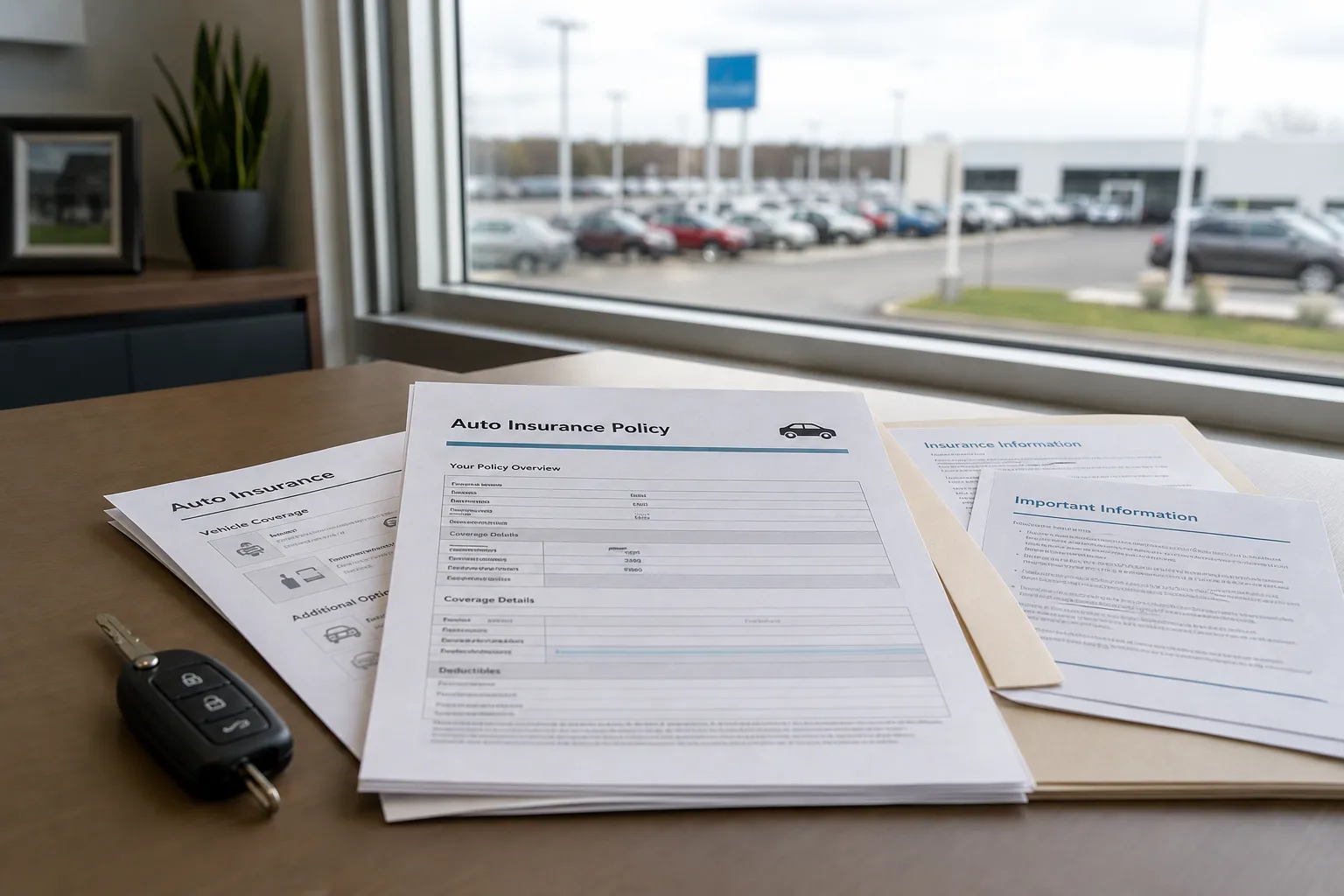
Ask for the correct carrier and file number for each potentially involved policy. Keep policy cards, declarations pages if provided, position letters, reservation-of-rights letters, denials, and correspondence. A policy card alone does not show all terms.
What matters when the vehicle belongs to a dealership?
An Indiana dealer-license application[3] must be accompanied by evidence of liability insurance covering the established place of business, unless the applicant supplies the permitted risk-retention-group evidence. The listed minimum limits are $100,000 for bodily injury to one person, $300,000 per accident, and $50,000 for property damage.
Those are licensing requirements, not a substitute for reading the policy and endorsements issued for the dealership.
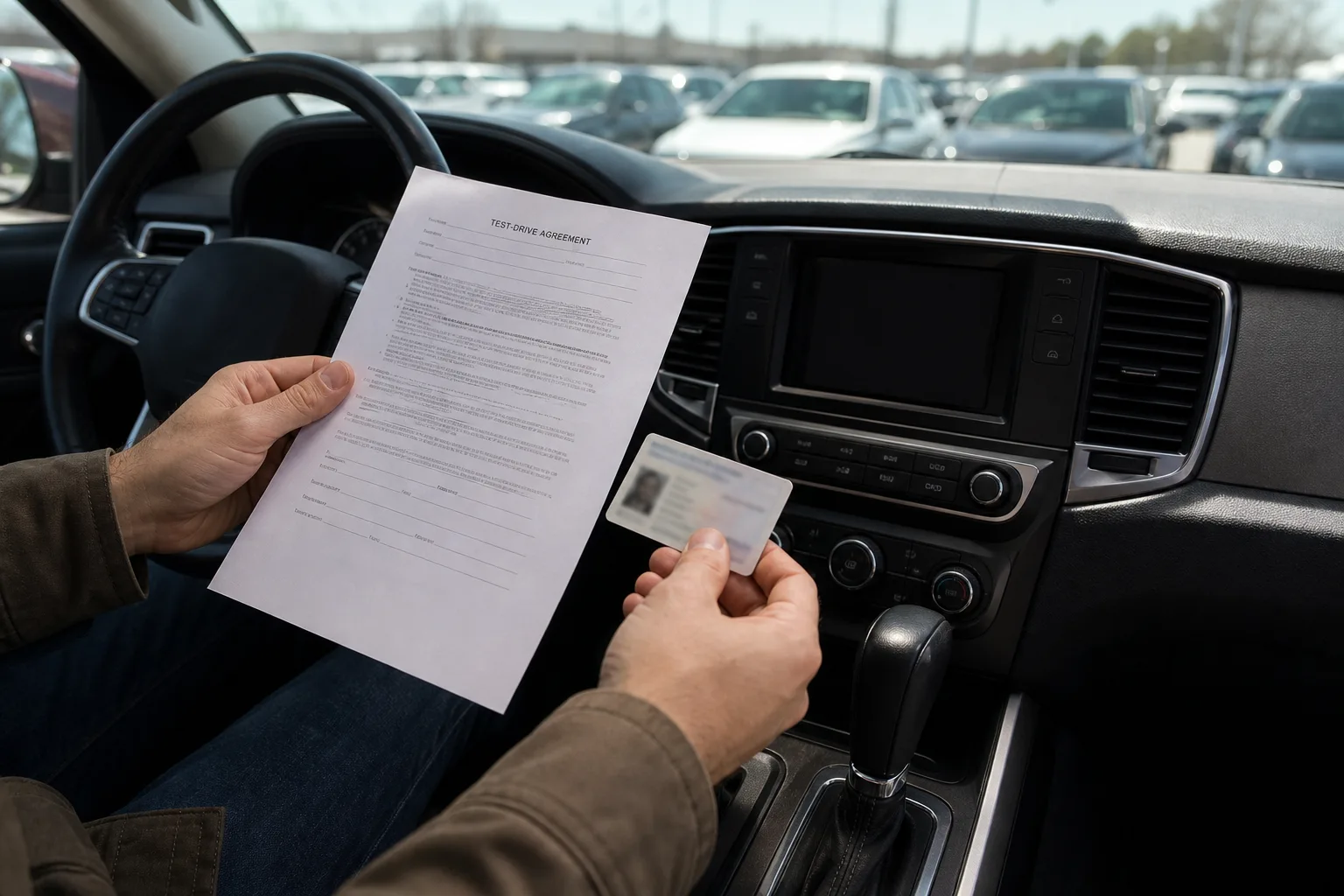
Preserve the test-drive agreement, the dealership’s copy or scan of the driver’s license, the salesperson’s identity, route instructions, vehicle stock number and VIN, photographs, surveillance video, and relevant inspection or repair records. No dealer-plate inference is needed.
What matters in a private-party test drive?
In a private sale, document the owner’s permission and any limits placed on the drive. Preserve the advertisement, messages arranging the test drive, title or registration information, VIN, photographs, agreed route, and statements about the vehicle’s condition.
The owner’s policy and the test driver’s policy may both warrant review. The permissive-use rule is one part of the review; the actual policy terms and other applicable law still must be examined. For related context, read about a crash involving someone driving another person’s car.
What evidence should you preserve?
| Category | Items to keep |
|---|---|
| People and permission | Driver and owner information, test-drive form, texts, emails, salesperson information, and witness contacts |
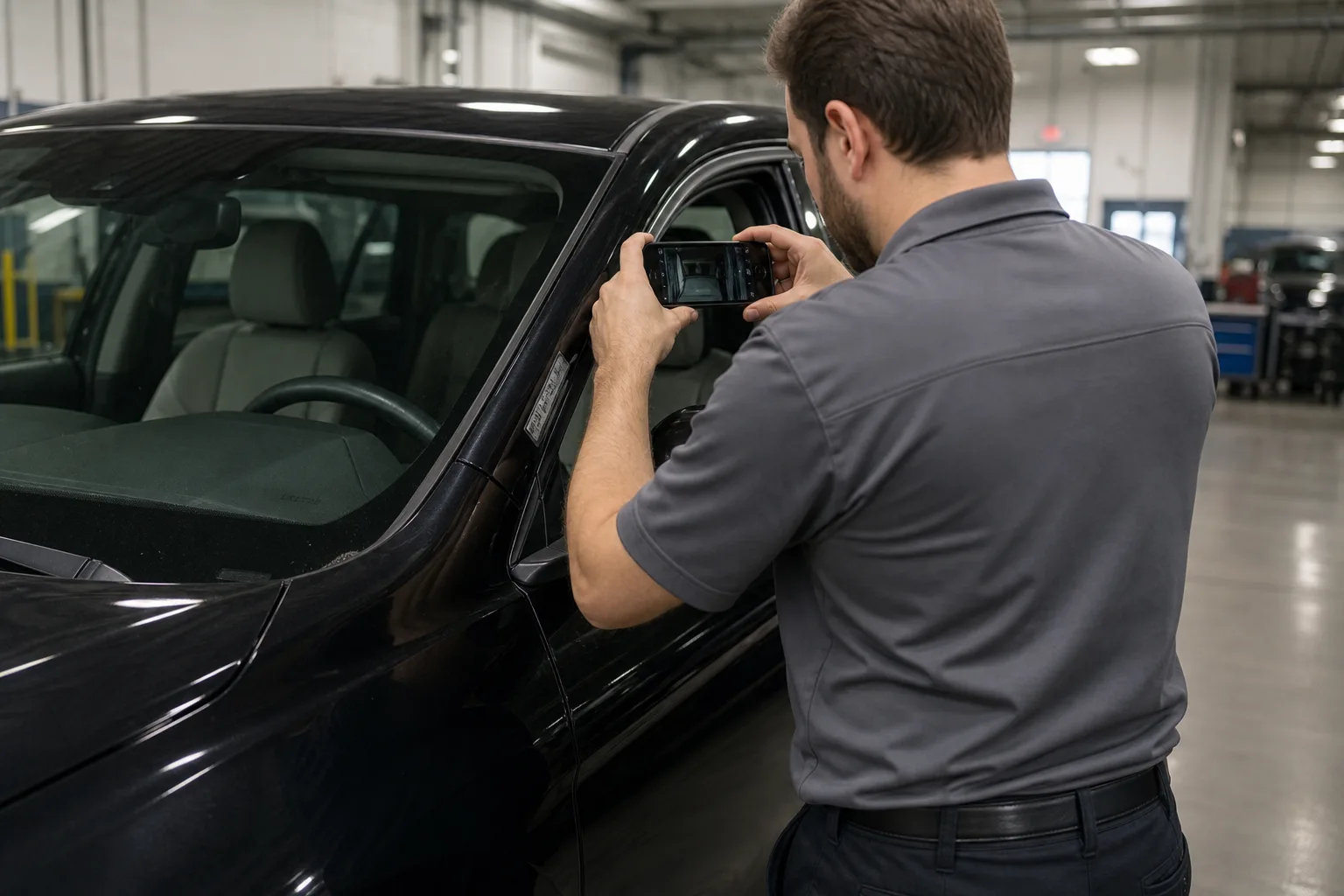
| Vehicle | VIN, stock number, registration or title information, photographs, warning lights, and condition notes |
| Crash | Report information, scene photographs, video, witness accounts, and towing or storage location |
| Dealership records | Route instructions, surveillance video, inspection records, repair records, and communications |
| Policies | Carrier names, file numbers, policy materials supplied to you, position letters, denials, and correspondence |
| Harm and loss | Health records and bills, work records, wage documents, receipts, photographs, and contemporaneous notes |
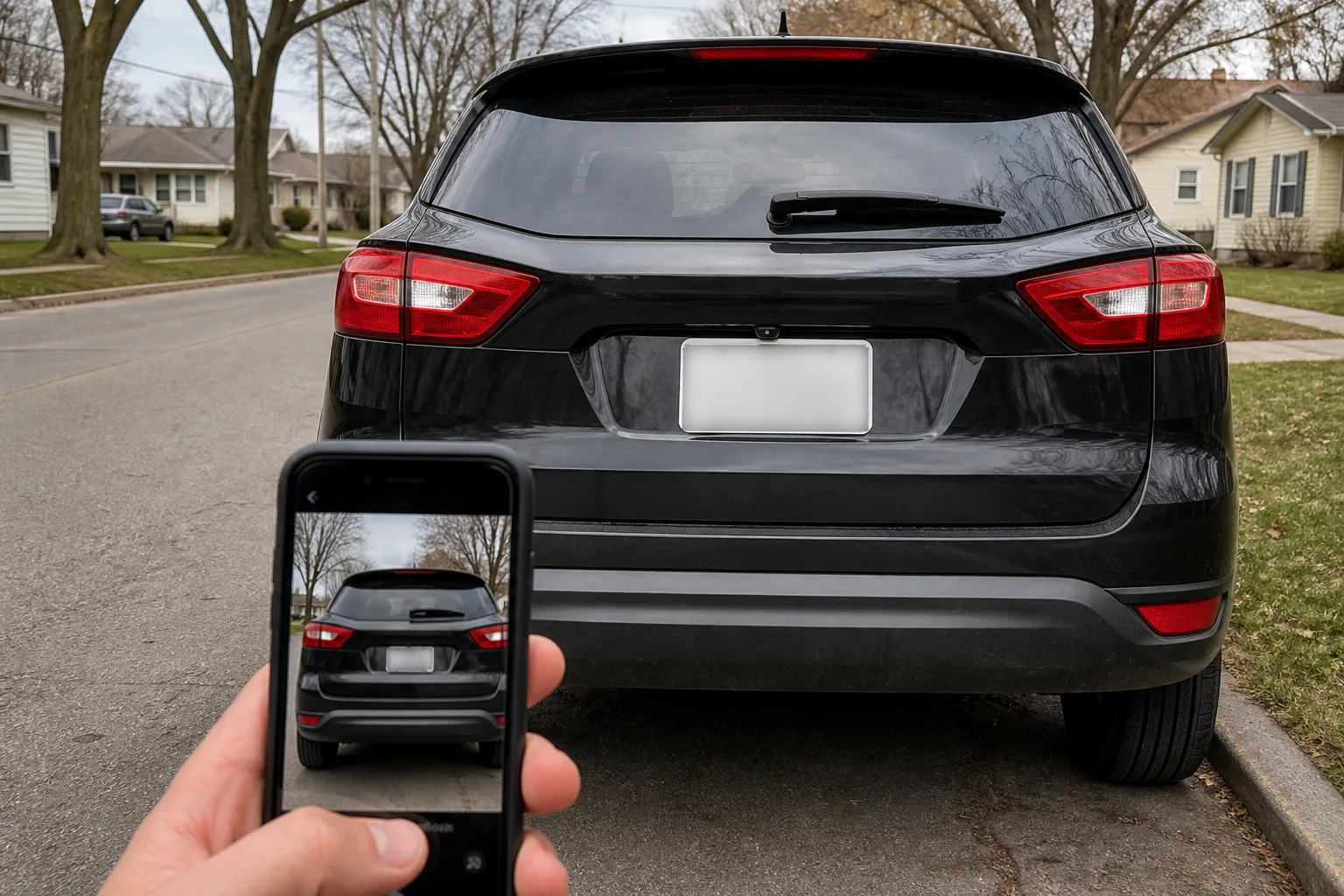
Preserve what already exists and send a focused written preservation request when relevant records may be routinely overwritten or discarded. Do not alter the vehicle or electronic files in an attempt to create evidence.
Health, communications, and timing
Health safety
Some mild TBI and concussion symptoms[4] may appear immediately, while others may not appear for hours or days. The CDC says to seek immediate emergency medical care for danger signs such as a worsening headache, repeated vomiting, seizures, slurred speech, unusual behavior, unequal pupils, increasing confusion, or inability to wake the injured person. Questions about your condition or care belong with a qualified health professional.
Communications
Avoid guessing about speed, the extent of harm, or responsibility.
The Indiana Department of Insurance complaint page[5] asks consumers to try to resolve a complaint with the insurance company, agent, or broker before filing with the Department.
Indiana’s general filing period
Indiana Code § 34-11-2-4 generally requires[2] an action for injury to a person or personal property to be commenced within two years after the cause of action accrues. This general rule is not a calculation for every case. The accrual date, the identity of a defendant, government-claim rules, contractual notice terms, tolling provisions, and other factual or statutory exceptions can affect timing. Confirm the correct dates from the actual facts instead of relying on the collision date alone.
Common test-drive scenarios
Dealership ownership
Ownership and licensing records identify important documents and people to investigate. The collision evidence remains necessary to evaluate what happened.
Policy order
Do not assume an order from an insurance card or dealer plate. Compare the actual policies, endorsements, written company positions, and facts.
Salesperson present
The salesperson may be a witness and may have given instructions or created records. Presence alone does not determine responsibility.
Possible vehicle-condition issue
Preserve the vehicle and its inspection, maintenance, repair, recall, and warning-light records. Whether a condition contributed requires factual and, when appropriate, expert analysis.
Private seller
Document permission, ownership, the planned drive, and statements about vehicle condition. Preserve the seller’s advertisement and messages, and gather available policy information.
General filing period
Indiana Code § 34-11-2-4 generally requires[2] an action for injury to a person or personal property to be commenced within two years after the cause of action accrues. Accrual, the defendant, notice requirements, tolling, and other exceptions can change the analysis.
Talk with an Indiana car accident attorney
A test-drive injury can require coordinated review of crash evidence, dealership or seller records, and several insurance contracts. Delventhal Law Office can review the available information, explain which Indiana issues may matter, and help you decide the next step. You may request a free consultation without any obligation to hire the firm.
\nThis article provides general information about Indiana law, not legal advice or medical advice. Contacting the firm does not guarantee that the firm will agree to represent you. Representation begins only through an agreement confirmed by the firm, subject to applicable law and professional duties.