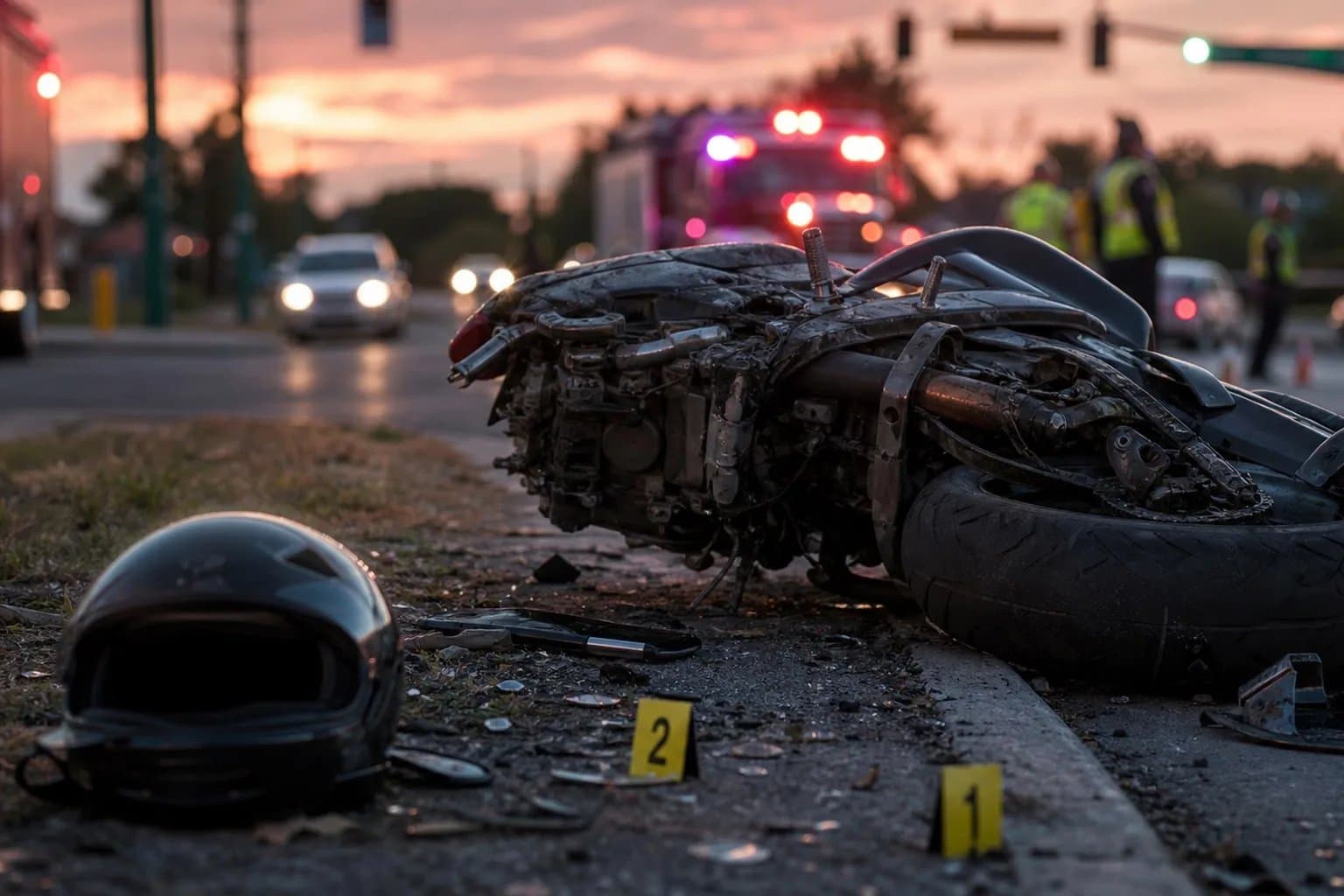
That is why Delventhal Law Office does not treat motorcycle cases like ordinary car accidents. The injuries are different. The evidence is different. The bias is different. And the way insurance companies defend them is different.
Why motorcycle accident claims are different
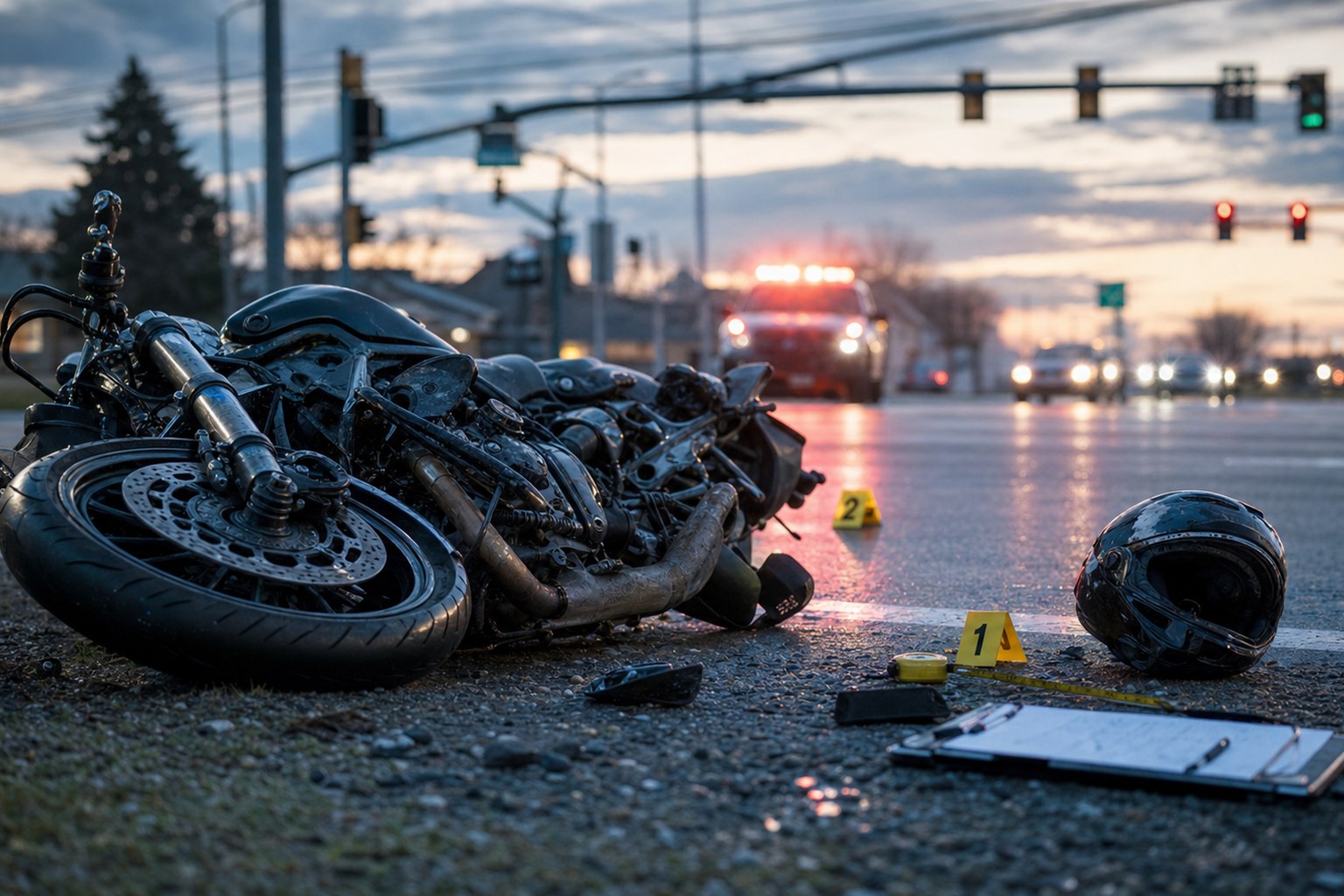
Motorcycle cases are not just car-crash cases with fewer wheels. The risk profile changes the whole claim. Motorcyclists are overrepresented in severe crash outcomes nationally. The National Highway Traffic Safety Administration[1] warns that motorcycle riders are far more vulnerable than passenger-vehicle occupants because they lack the protections built into cars and trucks. Indiana’s own crash resources, published through the Indiana Criminal Justice Institute[2], track motorcycle crashes separately for the same reason: the injury patterns and safety issues are not ordinary.
For an injured rider, that means the case usually has higher stakes from day one. A crash that might leave a car occupant sore can leave a motorcyclist with fractures, road rash, facial trauma, a concussion, a spinal injury, or permanent limitations. Those injuries can change work, driving, sleep, relationships, and the ability to do basic daily tasks.
The insurance company knows all of that. But it also knows motorcycle cases can trigger assumptions: the rider was speeding, weaving, not visible, not wearing enough gear, or “taking the risk” by riding at all. Those assumptions are not evidence. But if nobody pushes back with real proof, they can become the story of the claim.
The first job is protecting the evidence before it disappears
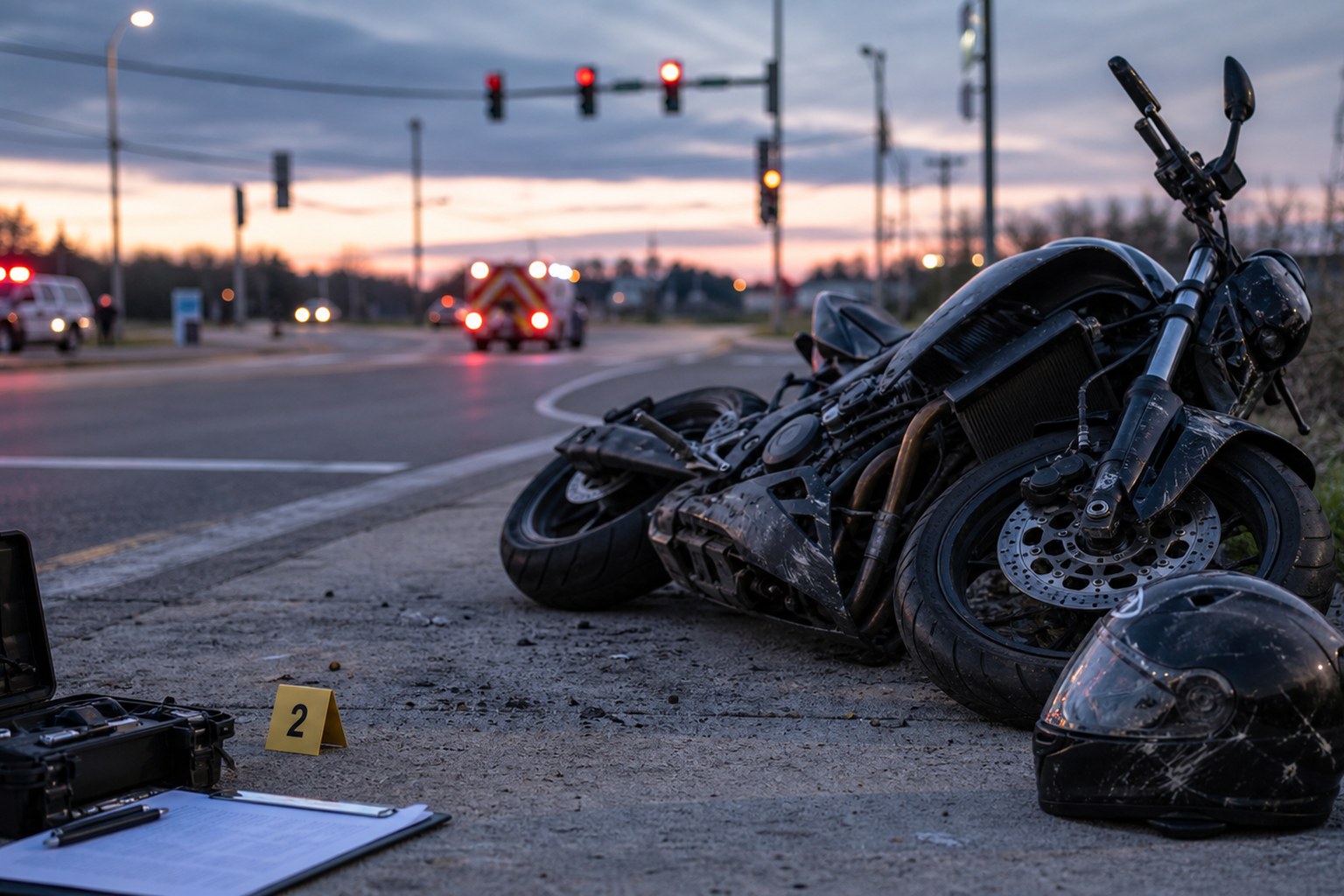
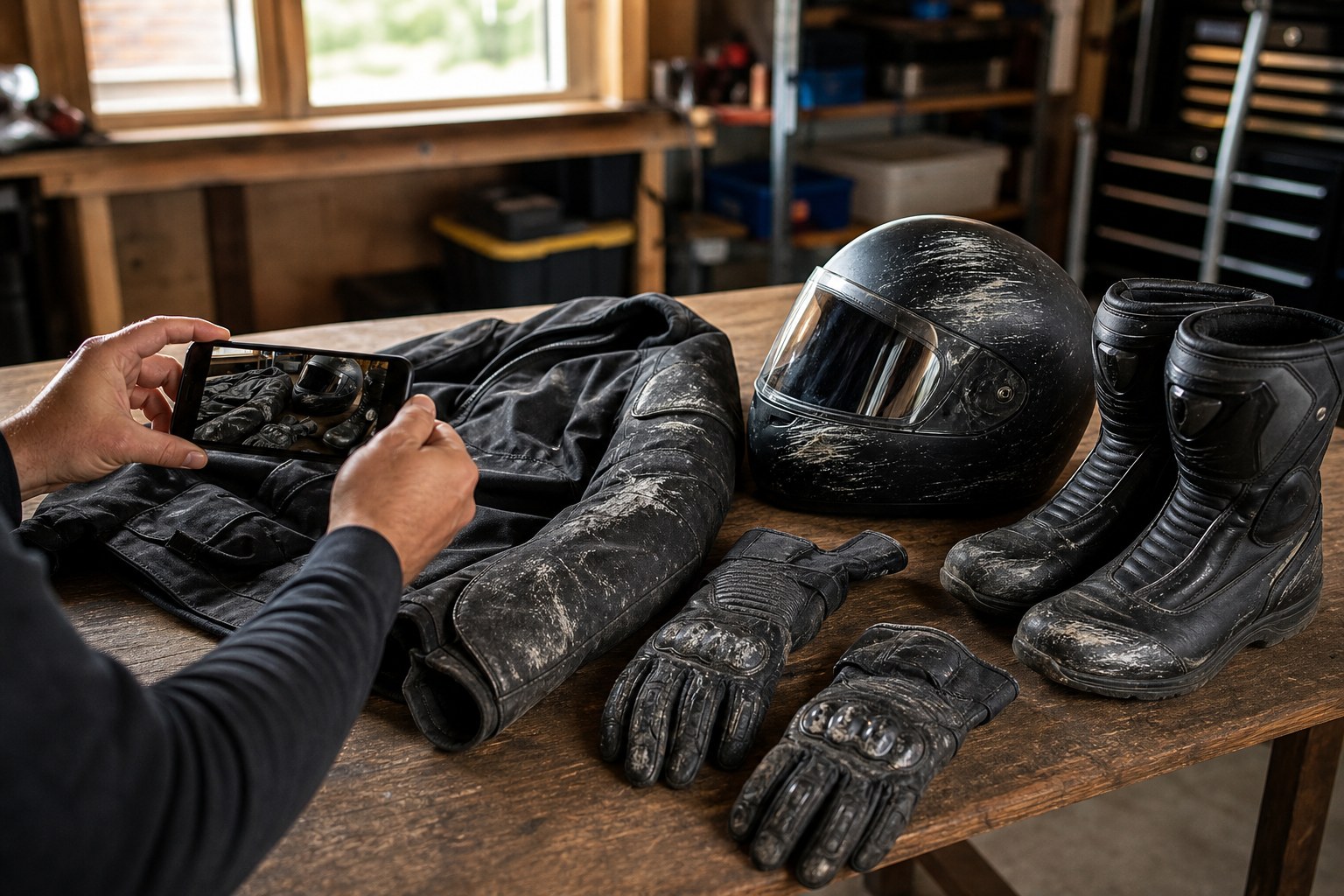
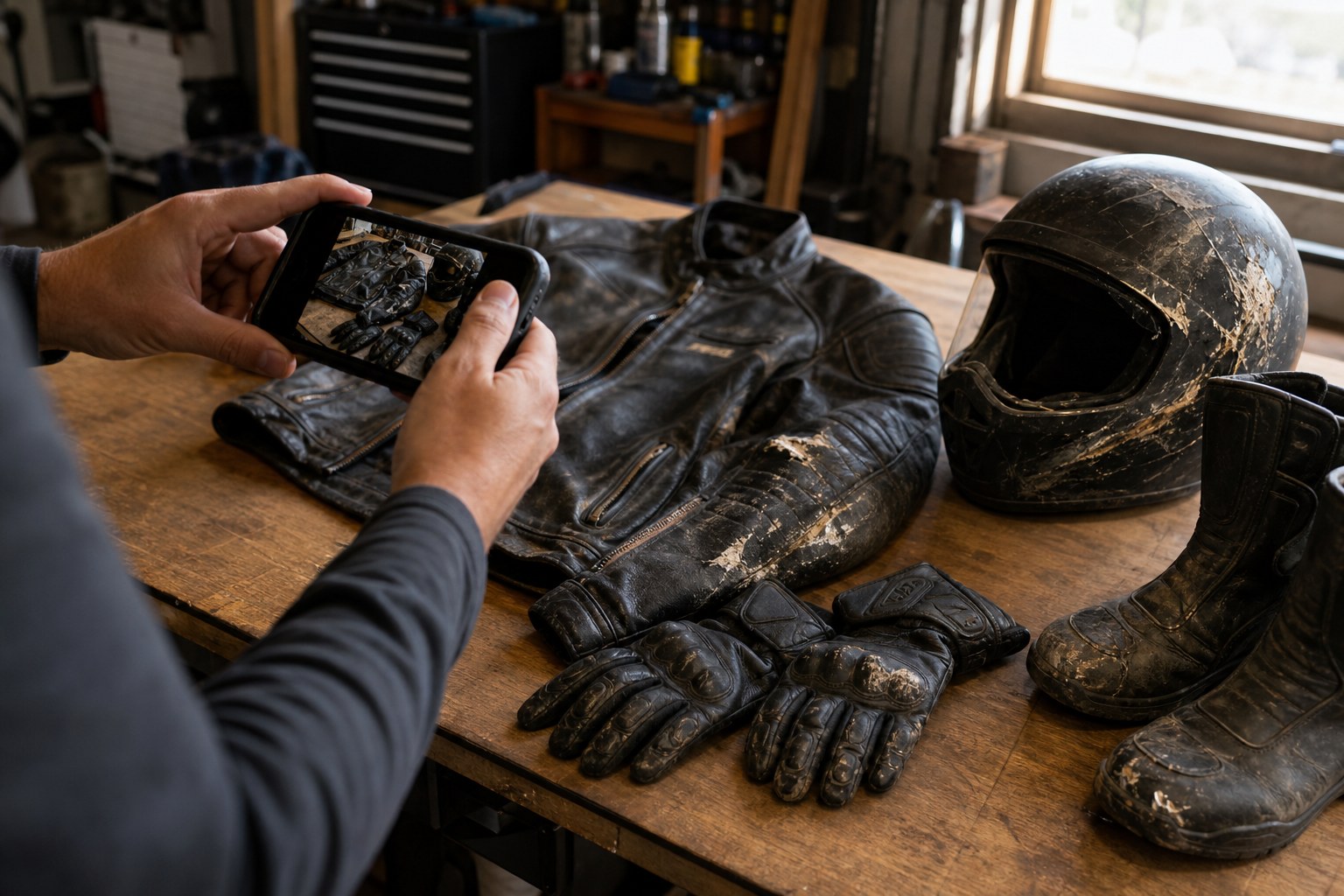
In a motorcycle case, evidence can vanish faster than the bruising. The motorcycle may be moved to a tow yard and released. The helmet may get thrown away. Riding pants, boots, gloves, and jackets may be cut off by EMS, bagged, or discarded. Skid marks fade. Debris gets swept. Nearby business cameras overwrite footage. A witness who was clear at the scene becomes hard to locate two weeks later.
That is why one of the first things we do is identify what needs to be preserved:
- the motorcycle before repair, sale, or salvage;
- helmet, gloves, boots, jacket, pants, and any protective armor;
- photos of damage, debris, gouge marks, sight lines, traffic signals, and road conditions;
- 911 records, body-cam footage, dashcam footage, and nearby surveillance video;
- witness names, phone numbers, and statements;
- event data from the at-fault vehicle when speed, braking, or distraction is disputed;
- phone-use evidence where distracted driving may be involved.
The point is not to make the case more complicated than it needs to be. The point is to keep the insurance company from using missing evidence against the injured rider later.
Common crash patterns we investigate
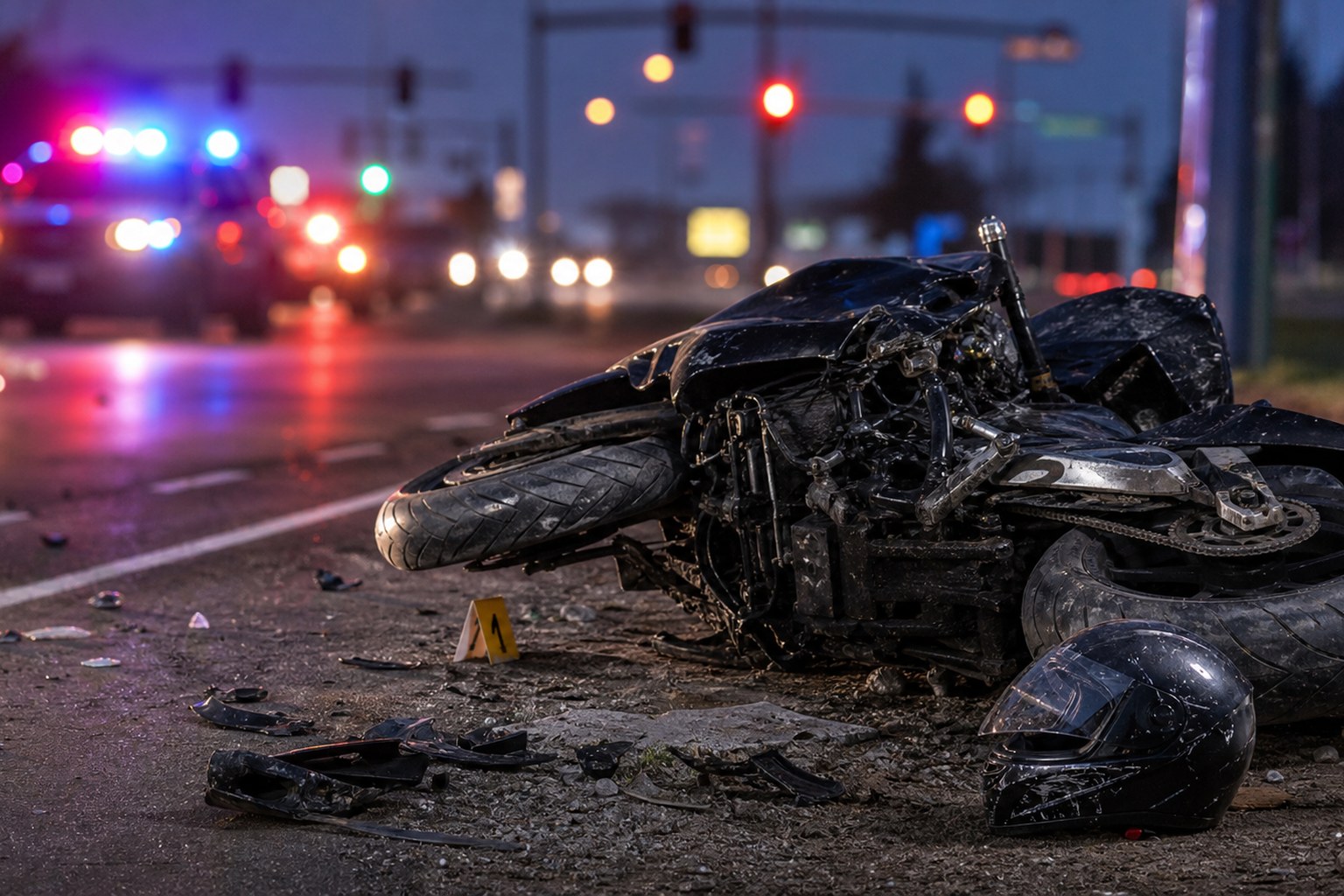
The crash pattern matters because it tells us what evidence to look for. In northeast Indiana motorcycle claims, the recurring patterns include:
| Crash pattern | What the insurer may argue | Evidence that helps |
|---|---|---|
| Left-turn across traffic | The rider was speeding or “came out of nowhere” | Sight lines, signal phase, witness statements, vehicle damage, reconstruction |
| Lane-change crash | The rider was in a blind spot or lane-splitting | Mirror positions, lane markings, dashcam, point of impact, roadway photos |
| Rear-end at a light | The rider stopped suddenly or had no brake light | Brake-light inspection, EDR data, phone records, traffic-camera/business video |
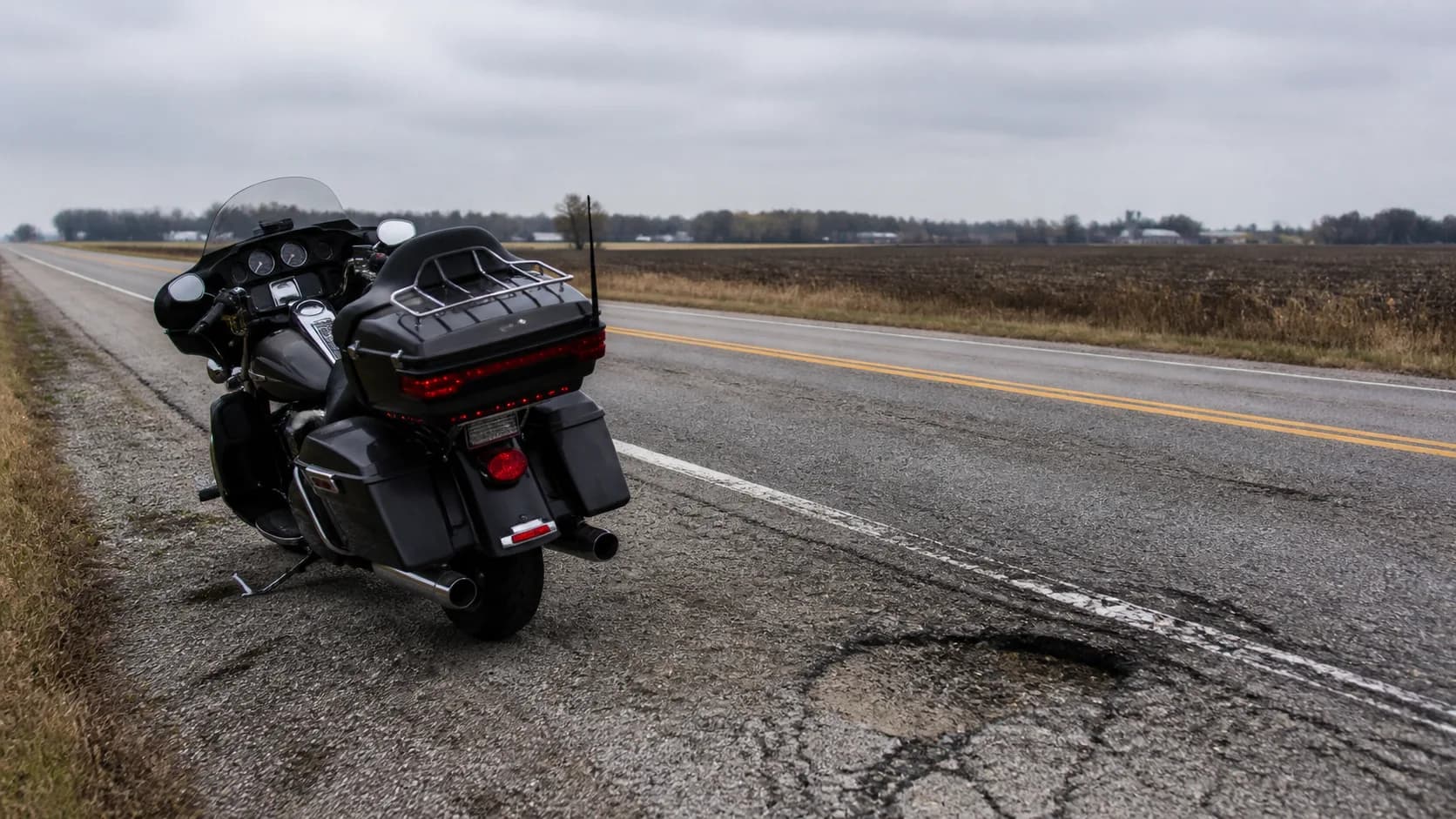
| Road hazard or gravel | It was a single-vehicle accident and nobody else is responsible | Road-condition photos, maintenance history, construction records, notice evidence |
| Commercial vehicle involvement | The rider was too close or hard to see | Driver logs, dashcam, inspection records, company safety documents |
A police report is important, but it is not the whole case. Officers usually arrive after the crash. They may not know whether a camera exists, whether the at-fault driver was on a phone, whether a vehicle had black-box data, or whether a road defect contributed. A good motorcycle investigation asks those questions early.
Indiana law: deadlines, fault, helmets, and insurance coverage
Most Indiana personal-injury claims have a two-year statute of limitations under IC § 34-11-2-4[3]. That sounds like plenty of time, but it is not a reason to wait. Evidence fades long before the filing deadline.
Indiana also uses modified comparative fault under IC § 34-51-2-6[4]. In practical terms, if the injured rider is found partly at fault, recovery can be reduced. If the rider is placed more than 50% at fault, recovery can be barred. That is why rider-blame arguments matter so much.
Helmet issues can also come up. Indiana requires protective headgear and eye protection for certain riders, including riders under 18 and motorcycle learner’s permit holders under IC § 9-19-7-1[5]. Adult licensed riders are not treated the same way. But even when helmet use is not legally required, the defense may still try to use gear choices to minimize damages in a head-injury case. You can use our Indiana car accident settlement calculator to organize the factors that may affect a claim’s value; it is an educational tool, not a promise of any result.
Insurance coverage is another major issue. Serious motorcycle injuries often exceed Indiana’s minimum liability limits. That makes uninsured and underinsured motorist coverage important. We look at the at-fault driver’s policy, the motorcycle policy, possible household policies, med-pay coverage, health-insurance liens, and whether any other responsible party may have coverage.
How we help with the medical side of the case
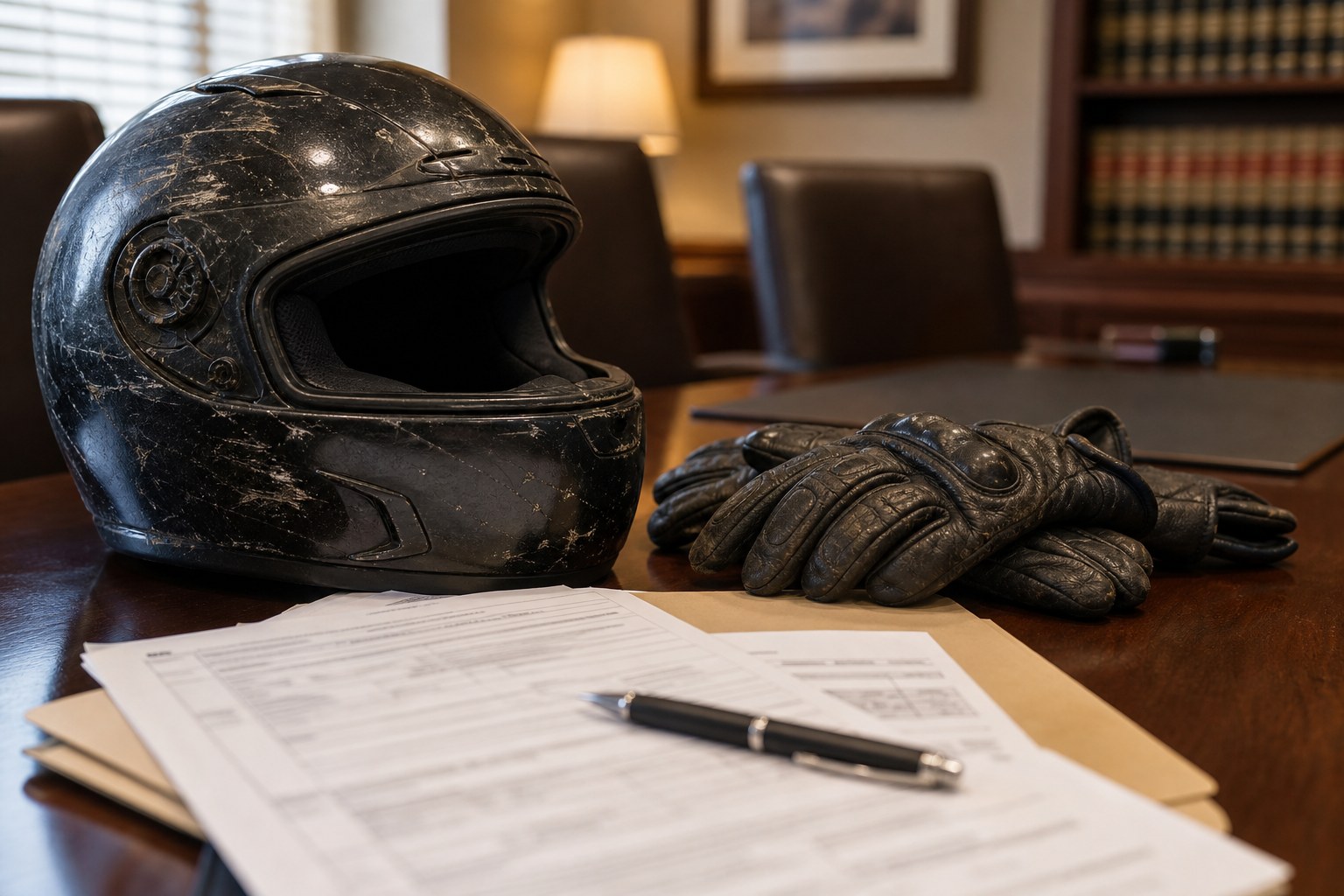
The medical record becomes evidence whether the injured rider thinks of it that way or not. Emergency-room notes, imaging reports, orthopedic visits, physical therapy notes, pain-management records, work restrictions, surgical recommendations, impairment ratings, and future-care opinions all become part of the claim.
Delventhal Law Office helps by organizing that record so the full injury picture is not reduced to a few diagnosis codes. We look for:
- every date of treatment and every provider involved;
- objective findings such as fractures, imaging results, nerve symptoms, range-of-motion limits, or surgical findings;
- missed work, reduced hours, job-duty changes, and future earning problems;
- gaps in treatment the insurer may try to exploit;
- pre-existing conditions the insurer may use unfairly;
- future medical needs that should not be ignored in an early settlement.
Motorcycle clients often want to get back to normal fast. That is understandable. But settling before maximum medical improvement can be costly. Once the release is signed, later surgery, permanent pain, wage loss, or unpaid liens usually become the rider’s problem.
The insurance company playbook after a motorcycle crash
The adjuster may sound helpful. Sometimes they are polite. That does not make them neutral. Their job is to resolve the claim for the insurance company, not to build the strongest possible case for the injured rider.
Common moves include:
- Recorded statement requests. Questions may be framed to lock in speed, lane position, visibility, gear use, and pain levels before the rider understands the injuries.
- Broad medical authorizations. These can give the insurer access to unrelated history it can use to argue the crash did not cause the injury.
- Quick property-damage focus. The bike gets handled while the injury claim is quietly steered toward an early low number.
- Fault shifting. The rider is blamed for speed, gear, visibility, lane position, or not avoiding a driver’s mistake.
- Delay. The insurer waits while bills stack up and pressure builds, hoping the injured person will take less.
Our job is to slow that playbook down and replace it with evidence. We deal with the insurer, protect deadlines, evaluate coverage, gather records, calculate damages, negotiate from a prepared file, and file suit when the carrier will not treat the claim fairly.
What to do after a motorcycle accident in Fort Wayne
If you are physically able, the best first steps are simple:
- Call 911 and report injuries.
- Accept medical care, even if adrenaline is masking symptoms.
- Photograph the motorcycle, vehicles, roadway, debris, helmet, gear, and injuries.
- Get witness names and phone numbers.
- Do not throw away damaged gear.
- Do not give the other driver’s insurer a recorded statement before getting advice.
- Contact a lawyer early if injuries, fault, coverage, or deadlines are disputed.
You do not need to have everything figured out before calling. A good consultation can help identify what matters, what can wait, and what needs immediate preservation.
How Delventhal Law Office helps injured riders
When Delventhal Law Office takes a motorcycle case, the work is practical: preserve evidence, investigate fault, protect the client from adjuster tactics, organize medical proof, find insurance coverage, evaluate liens, calculate lost wages, and prepare the case as if it may need to be filed.
Chad Delventhal handles personal-injury cases directly. You are not pushed into a call-center model or passed from one case manager to another. The goal is to find what others miss, explain the process clearly, and make sure the insurance company is dealing with a complete case rather than an injured rider trying to manage everything alone.
Frequently Asked Questions
Should I call a lawyer if the police report already says the other driver was at fault?
Yes, if the injuries are significant. The police report helps, but it does not preserve video, vehicle data, gear, medical proof, wage loss, liens, or insurance coverage. The insurer can still dispute injury value, causation, or comparative fault.
What if I was not wearing a helmet?
Do not assume you have no case. Helmet use may matter most when head injury damages are claimed, but it does not automatically excuse the driver who caused the crash. The actual legal effect depends on the injuries, facts, and Indiana law.
What if the at-fault driver only has minimum insurance?
That is common and serious motorcycle injuries can exceed minimum limits quickly. We evaluate underinsured motorist coverage, med-pay, health insurance, liens, and whether any other person or company may share responsibility.
How quickly should evidence be preserved?
Immediately. Business video may overwrite in days or weeks. Vehicles and gear can be repaired, salvaged, or discarded. Witness memory fades. The earlier preservation starts, the stronger the claim usually becomes.
Do I have to sue to make a motorcycle accident claim?
Not always. Many claims resolve before suit. But preparing the file as if suit may be necessary usually improves negotiations, especially when the insurer is blaming the rider or minimizing serious injuries.
Talk to a Fort Wayne motorcycle accident attorney
If you were hurt in a motorcycle accident in Fort Wayne, Allen County, or northeast Indiana, you do not have to sort out the insurance company, medical bills, evidence, deadlines, and fault arguments alone. An experienced Fort Wayne motorcycle accident lawyer can take that weight off your shoulders while you focus on healing.
Call Delventhal Law Office at (260) 484-6655 or contact us online to schedule a free case evaluation. The consultation is free, and you can speak directly with Chad about what needs to happen next.