

A settlement check is a gross recovery, not necessarily the amount the injured person keeps. Health coverage may have paid hospital, physician, imaging, therapy, or prescription charges while the liability claim was pending. Medicare, Indiana Medicaid, an employer health plan, or a private insurer may then assert a recovery interest. Providers may separately claim an unpaid balance or lien.
What does subrogation mean in practical terms?
Imagine that another driver causes a crash and your health plan pays $18,000 for related care. You later recover money from the driver's liability insurer. Subrogation lets a payer pursue rights associated with the responsible third party; reimbursement usually describes the payer's claim against money you recovered. Letters and adjusters often use the words interchangeably, so the label alone does not answer what is owed.
The practical questions are: Who paid? What legal or contractual language applies? Which payments were caused by this incident? Has the payer stated a final amount? Does a statute, plan term, procurement-cost rule, or case-specific agreement change it? The answers affect net recovery, which is why repayment analysis should begin before a release is signed.
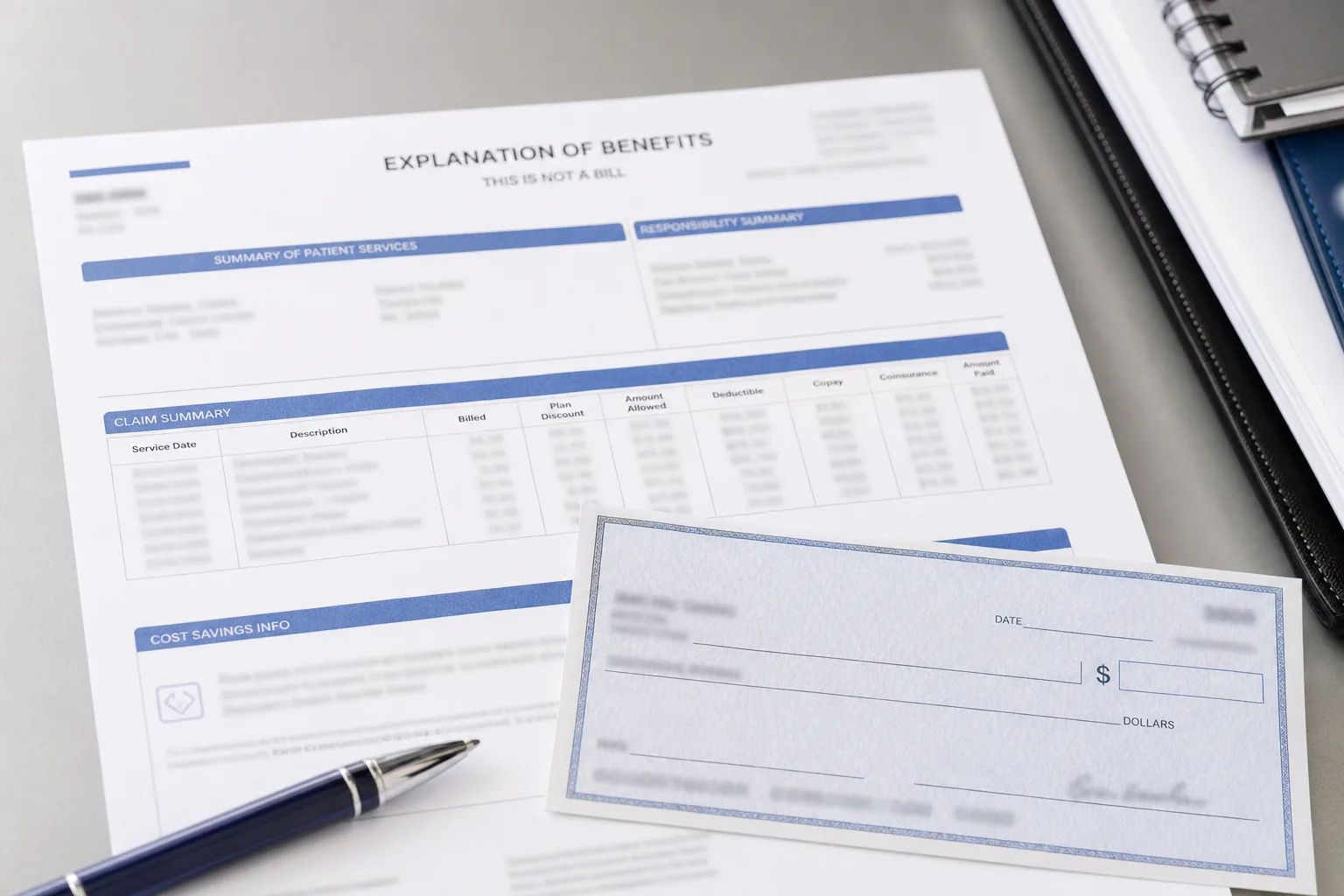
Subrogation vs. a lien or reimbursement claim
These concepts overlap but are not identical. Subrogation may allow a payer to step into the insured's position to pursue a responsible third party. Reimbursement generally seeks repayment from a recovery already obtained. A lien is a claimed charge against particular property or settlement proceeds. A hospital or provider lien can arise from a different source than a health plan's contractual repayment clause. An unpaid provider balance is not automatically a perfected lien.
| Term | Practical meaning | What to request |
|---|---|---|
| Subrogation | Payer asserts rights tied to the claim against a responsible third party | Authority, plan language, payment ledger |
| Reimbursement | Payer seeks repayment from settlement or other recovery | Governing terms, itemization, current payoff |
| Government recovery | Medicare or Medicaid seeks accident-related program payments | Official conditional-payment or claim statement and final demand |
| Provider lien or balance | Hospital or provider seeks unpaid charges under separate authority | Lien notice, itemized bill, credits, filing information |
Do not pay merely because correspondence says "lien." Identify the claimant and source of authority, check dates of service and diagnosis information, account for reversals or insurer adjustments, and obtain a written resolution. Our Fort Wayne accident attorney overview explains where this review fits in the broader injury claim.

Private health plans and the ERISA nuance
Start with the insurance card, employer benefits office, summary plan description, full plan document, and any recovery vendor's letter. A fully insured policy and a self-funded employer plan can present different issues. The U.S. Department of Labor's ERISA overview[1] says ERISA sets minimum standards for most voluntarily established retirement and health plans in private industry and requires plans to give participants information about plan features and funding.
That does not mean every employer plan wins every reimbursement dispute or that Indiana law never matters. The analysis may turn on whether ERISA applies, whether the plan is self-funded, the exact reimbursement and subrogation language, the documents governing the participant's benefits, the settlement fund, and controlling federal and state law. Union, church, governmental, marketplace, and individually purchased coverage should not be classified from the card alone.
Ask for the complete governing document in effect on the injury date—not only a summary or vendor worksheet. Compare the claimed payments with explanation-of-benefits records. Questions about allocation, attorney fees, equitable defenses, priority, or reduction are legal questions tied to the specific plan; no universal "made whole" or automatic one-third reduction should be promised.
Medicare conditional-payment recovery
Under the Medicare Secondary Payer process, Medicare may make a conditional payment when a primary plan does not pay promptly, conditioned on reimbursement when the primary plan pays. The official CMS conditional-payment guidance[2] says the Benefits Coordination & Recovery Center identifies affected claims and begins recovery activity after a settlement, judgment, award, or other payment. CMS describes this as an MSP recovery claim, although people commonly call it a Medicare lien.
A Conditional Payment Letter is not necessarily the final payoff. CMS says it lists items it has identified as related and gives an interim total because Medicare may make additional payments while the case is pending. Review that list promptly and dispute unrelated services through the available process. After settlement, report the required case and settlement information and request the final demand rather than relying on an old portal figure.
CMS's beneficiary recovery-process guide[3] lays out the progression from reporting the case through conditional-payment review, demand, and appeal or waiver options. Follow the current letter's instructions and deadlines; the correct route can differ depending on whether recovery is pursued from the beneficiary or another entity.

Indiana Medicaid third-party liability
Medicaid is generally the payer of last resort when a liable third party exists. The official Indiana Health Coverage Programs third-party-liability module[4] explains that IHCP identifies other resources responsible for claims and discusses casualty cases and liens. When Indiana Medicaid paid accident-related care, notify and work with the appropriate state recovery unit, obtain its itemized claim, and verify that each payment belongs to the incident.
Do not treat a Medicaid figure as interchangeable with Medicare or a private-plan demand. Different authority, procedures, contacts, and allocation issues may apply. Keep proof of all notices, disputes, revised statements, payments, and releases.
Indiana Code 34-51-2-19[5] and proportional reduction
Indiana Code § 34-51-2-19[6] addresses a subrogation claim or other reimbursement right when an injured claimant's recovery is reduced by comparative fault or by the uncollectibility of the full claim because of limited liability insurance or the responsible party's insolvency. The statute provides for the lien or claim to be reduced in the same proportion as the claimant's recovery is reduced. It also addresses the lienholder's pro rata share of reasonable and necessary costs and attorney's fees incurred in asserting the claim.
This is a fact-sensitive calculation, not permission to apply a discount to every invoice. The settlement record should support why the underlying claim was reduced and what reduction is asserted. Federal law or a governing benefit plan may affect whether and how the Indiana provision applies to a particular payer. Counsel should analyze the actual plan, statute, recovery, insurance limits, fault allocation, fees, and costs before stating a payoff.
How settlement disbursement and reconciliation work
Before money reaches the client, the liability release is signed, the settlement draft clears, and known repayment interests are reconciled. A careful file uses a working ledger: gross settlement; attorney fee; case expenses; each medical or benefit claim; any negotiated or statutory adjustment; and projected client net. Funds subject to a genuine unresolved claim may need to remain in a trust account while the undisputed portion is handled appropriately.
Reconciliation means matching records, not simply forwarding the first demanded amount. Payment histories may contain unrelated care, duplicates, reversals, services outside the injury period, or amounts later paid by another source. Once the proper amount is established, obtain written confirmation that payment resolves the claim, pay from the settlement as authorized, and show every deduction on the closing statement.

A car accident settlement calculator can organize damage inputs, but it cannot decide a repayment claim or net recovery.
Settlement subrogation checklist
| When | Action | Document to keep |
|---|---|---|
| Early in the claim | List every payer and provider; report the third-party claim when required | Cards, notices, authorization, confirmation |
| During treatment | Track injury-related dates, bills, EOBs, and payments | Medical chronology and payment ledger |
| Before settlement | Request plan terms and current itemized claims; identify unrelated entries | Plan/policy, conditional-payment letter, lien statement |
| Before signing release | Model fees, costs, repayment claims, and realistic net recovery | Draft distribution sheet |
| After agreement | Report settlement where required and obtain final demands or payoff letters | Settlement report and final demand |
| At distribution | Pay resolved amounts and document every deduction | Signed closing statement, checks, releases |

Common mistakes that delay or shrink a net recovery
- Waiting until the check arrives. Late notice and late document requests can delay distribution.
- Calling every claim a lien. Classification determines what authority and documents must be reviewed.
- Using billed charges instead of paid amounts. A repayment claim should be reconciled to the payer's actual injury-related payments and adjustments.
- Assuming the first figure is final. Medicare conditional totals may change, and other ledgers may include errors or unrelated care.
- Assuming a reduction is automatic. Indiana law, federal law, plan language, procurement costs, and settlement facts must be analyzed.
- Spending funds before resolution. Ignoring a valid recovery claim can produce collection, interest, benefit, or legal problems.
- Failing to keep proof. Save correspondence, revised ledgers, final demands, payment proof, releases, and the closing statement.
Subrogation usually comes up near the end of an Indiana personal injury case. Our Fort Wayne personal injury attorney page explains Indiana's filing deadlines, the comparative fault rule, and the damages Indiana law allows.
Frequently asked questions
Do I always have to pay health insurance back?
No single rule applies to every payer. The answer depends on the coverage source, governing language or statute, relationship of payments to the injury, and applicable defenses or reductions. Ask for the authority and itemized amount before accepting or rejecting a demand.
Is a Medicare conditional-payment letter the final lien?
No. CMS describes the conditional amount as interim because additional related payments may be made. Review the listed claims, report settlement information, and use the current CMS process to obtain and resolve the final demand.
Can unrelated medical care be disputed?
Yes. Compare service dates, providers, diagnosis information, payment status, and treatment records. Use the payer's stated dispute process and provide focused supporting records. A dispute should target specific entries rather than merely asserting that the total seems high.
Can an Indiana subrogation or reimbursement claim be reduced?
Sometimes. Indiana Code § 34-51-2-19[5] may require proportional and procurement-cost reductions in covered circumstances, while plan terms or federal law may affect a particular claim. Reductions depend on the payer and facts and cannot be promised.
How long does reconciliation take?
It varies with the payer, completeness of reporting, new claims, disputes, settlement details, and response times. Starting early, maintaining an accurate ledger, and promptly answering requests usually avoids preventable delay. Do not substitute an interim amount for a required final demand.
How can an Indiana injury lawyer help?
Counsel can identify potential claimants, obtain governing documents and ledgers, dispute unrelated charges, analyze possible reductions, communicate settlement details, and prepare a transparent closing statement. This work connects the gross settlement to the amount actually available to the client.
Vehicle collision deductibles raise a different recovery question. If you are waiting for one, see deductible refunds before auto-insurance subrogation ends; that guide is separate from medical-benefit repayment.
A calm next step
If repayment claims are complicating an Indiana injury settlement, gather every insurance card, benefits letter, EOB, medical bill, recovery notice, and proposed release. Delventhal Law Office can review the documents, explain the issues, and discuss next steps in a free consultation. Contact Delventhal Law Office to schedule a free consultation.
This article provides general information, not legal advice. Reading it does not create an attorney-client relationship, and neither does contacting us. If you do contact us about a possible claim, Indiana Rule of Professional Conduct 1.18 requires us to keep what you tell us confidential whether or not we take the case — but please do not send documents or detailed facts until we have agreed in writing to represent you.