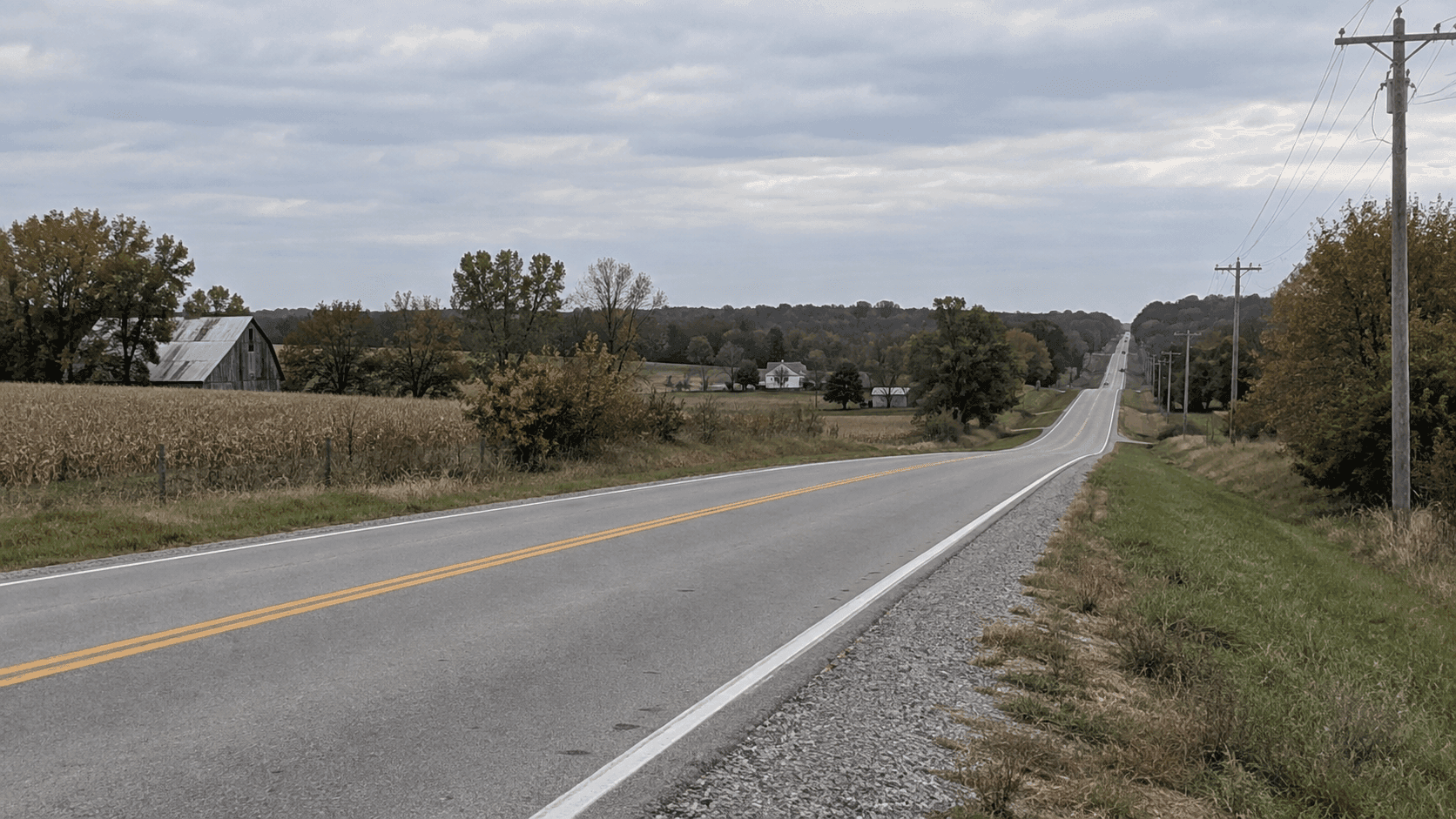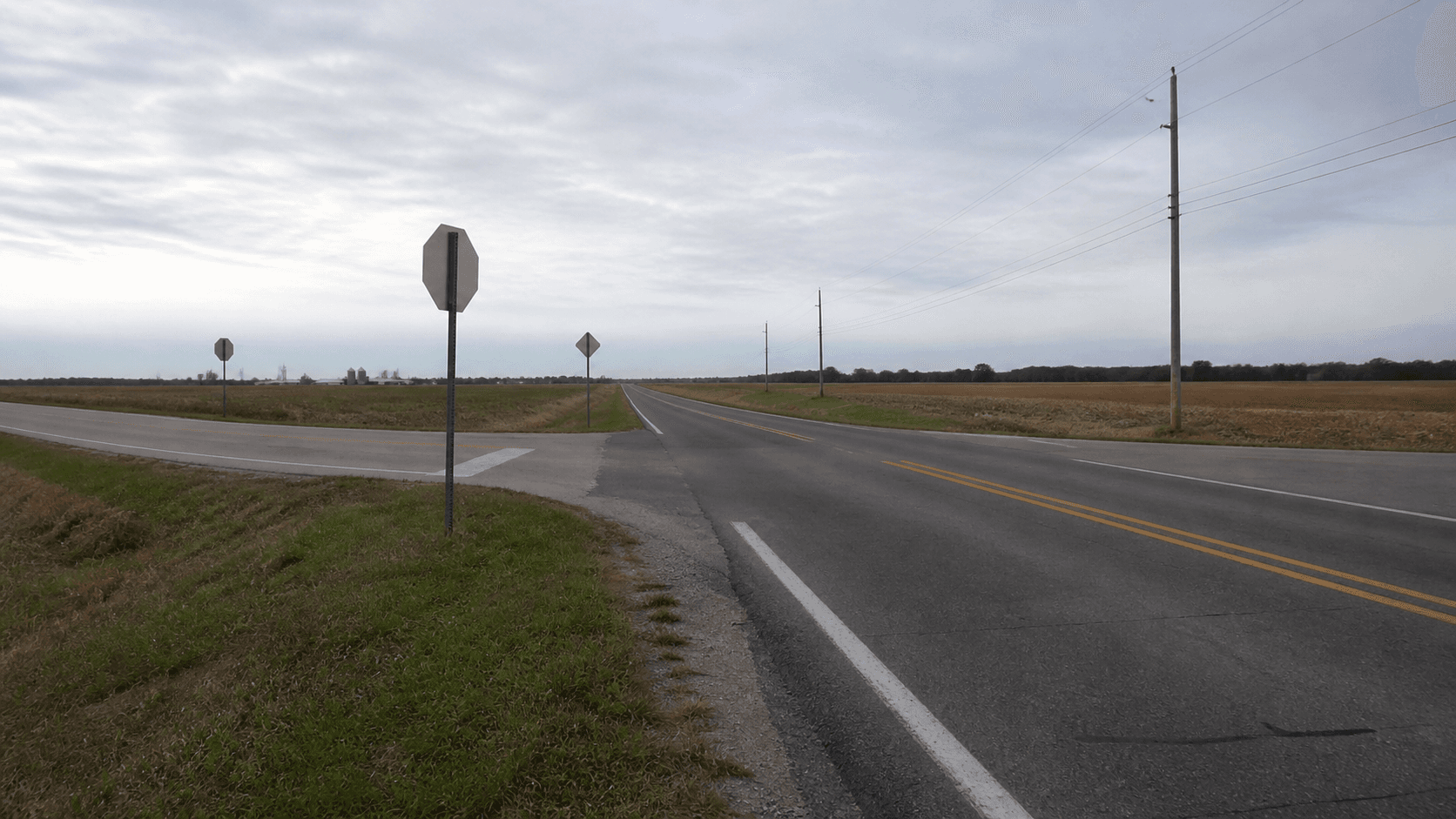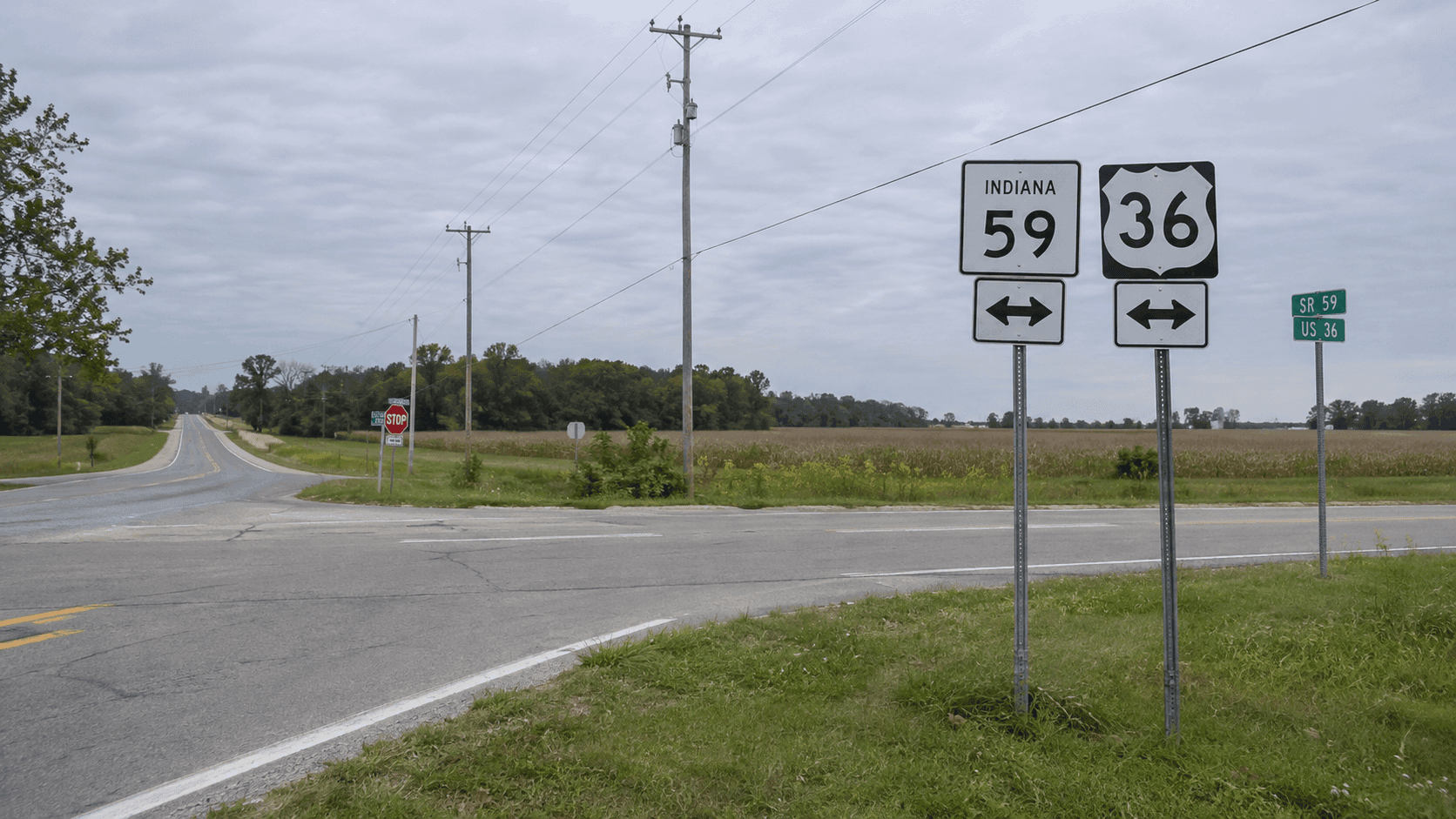
One person was hurt when one vehicle rear-ended another at the intersection of State Road 59 and U.S. 36 in Bellmore, Parke County, just before 10:30 a.m. on Friday, Nov. 13, 2026. WTHI-TV reported[1] the crash based on information from the Parke County Sheriff’s Office.
WTHI-TV reported that the rear vehicle’s driver had lacerations to his face and forehead and complained of back pain. He was taken to a hospital. The condition of the other driver was not reported, and no names or citations were released.
No fault determination has been announced. The cause of the crash also has not been stated. A rear-end impact alone does not settle every question about legal responsibility.

What this crash tells drivers on U.S. 36 and State Road 59
U.S. 36 and State Road 59 meet in a rural stretch of Parke County where through traffic, local traffic, and slowing or turning vehicles share the roadway. When you approach an intersection like this one, leave extra following distance and watch for vehicles slowing or stopping ahead.
Signal early before slowing to turn, and wear your seat belt. These basic precautions give other drivers more time to react and may reduce the risk of injury.
If questions later arise about how a rear-end collision occurred, photographs, witness information, vehicle damage, and electronic data may matter. This guide explains evidence that may help document an Indiana car accident claim.

What should accident victims do next?
If you are hurt in a rural highway crash, get appropriate medical care and accurately describe your pain to the provider. Ask the sheriff’s office for the crash report number, photograph the vehicles and intersection if it is safe to do so, and keep copies of insurance correspondence and other records.
The investigating agency’s report can usually be obtained after the investigation, but it does not determine civil liability. You can review the usual process for obtaining an Indiana crash report.
Notify your own insurer and keep a copy of what you submit. Before giving a recorded statement or signing a broad medical authorization, understand what the insurer is asking you to provide. Insurance companies may aggressively defend disputed claims, especially when the cause and fault remain unresolved.
Why location matters in an Indiana injury claim
A crash at this intersection would generally be handled in Parke County, and the Parke County Sheriff’s Office report could be important evidence. If a state highway’s design, signs, or sight lines were genuinely at issue, the Indiana Tort Claims Act could require notice to the state within 270 days under IC 34-13-3-6[2]. Nothing reported about this crash points to a road issue.
Indiana uses modified comparative fault under IC 34-51-2-6[3]. An injured person whose fault is greater than 50 percent cannot recover; otherwise, any recovery is reduced by that person’s percentage of fault. A police report or an insurer’s initial position does not necessarily decide those percentages. More information is available in the firm’s explanation of Indiana’s comparative-fault rule.
Indiana drivers must carry at least 25/50/25 liability coverage under IC 9-25-4-5[4]. Most personal injury claims must be filed within two years under IC 34-11-2-4[5]. Because evidence can be lost or overwritten, it is sensible to preserve relevant records before the filing deadline approaches.

How Delventhal Law Office can help
Delventhal Law Office, LLC is a Fort Wayne personal injury law firm founded by attorney Chad E. Delventhal in 2009. The firm helps people hurt by someone else’s carelessness on Indiana roads, including people dealing with hotly contested questions about fault, medical proof, and insurance coverage.
If you have questions after a rear-end collision, a Fort Wayne rear-end accident attorney can review the available records and explain how Indiana claim rules may apply. Delventhal Law Office offers a free case evaluation. No lawyer can promise a particular outcome.
This post is based on public reporting, the investigation may be ongoing, and nothing here is legal advice or creates an attorney-client relationship.