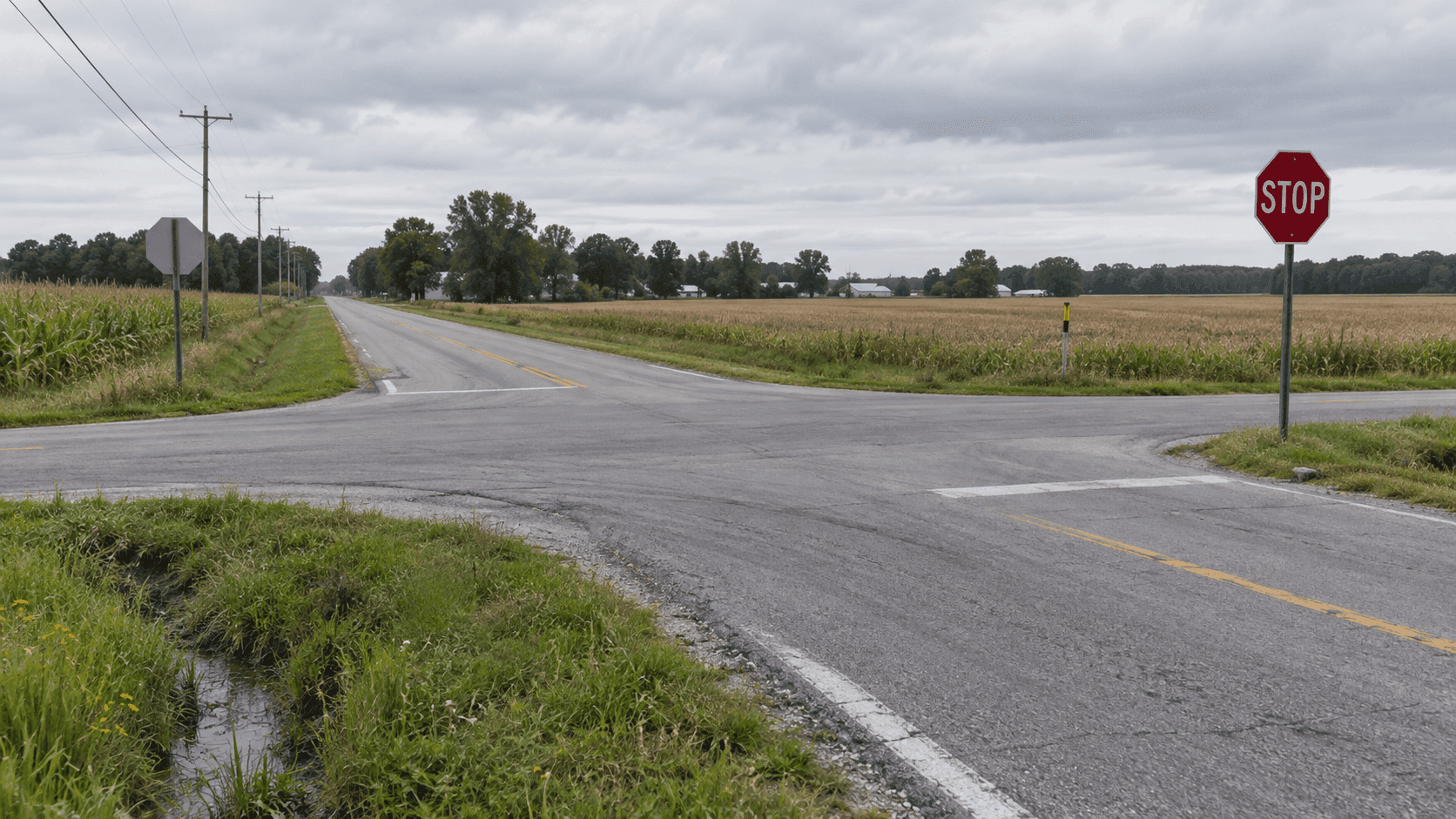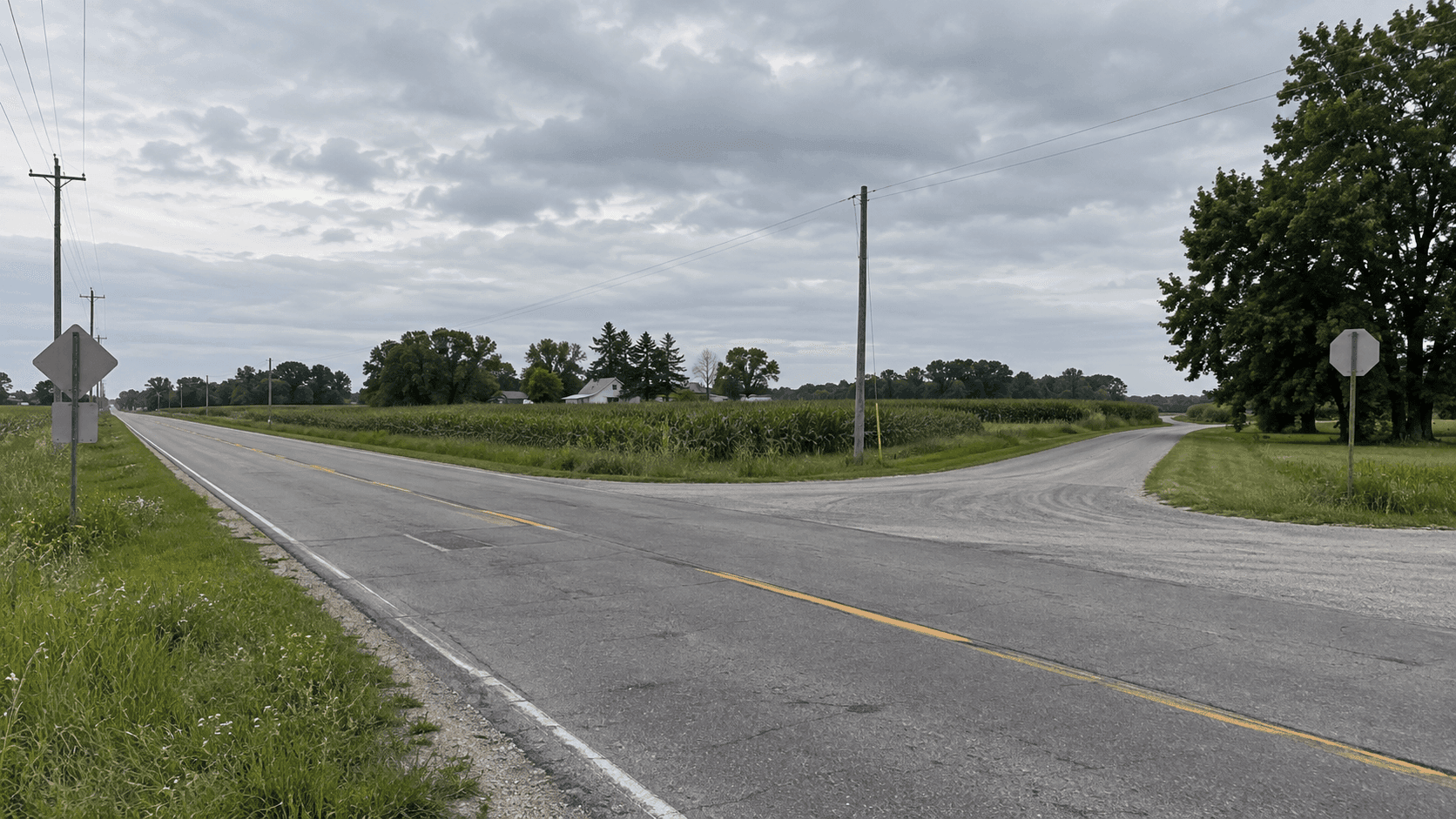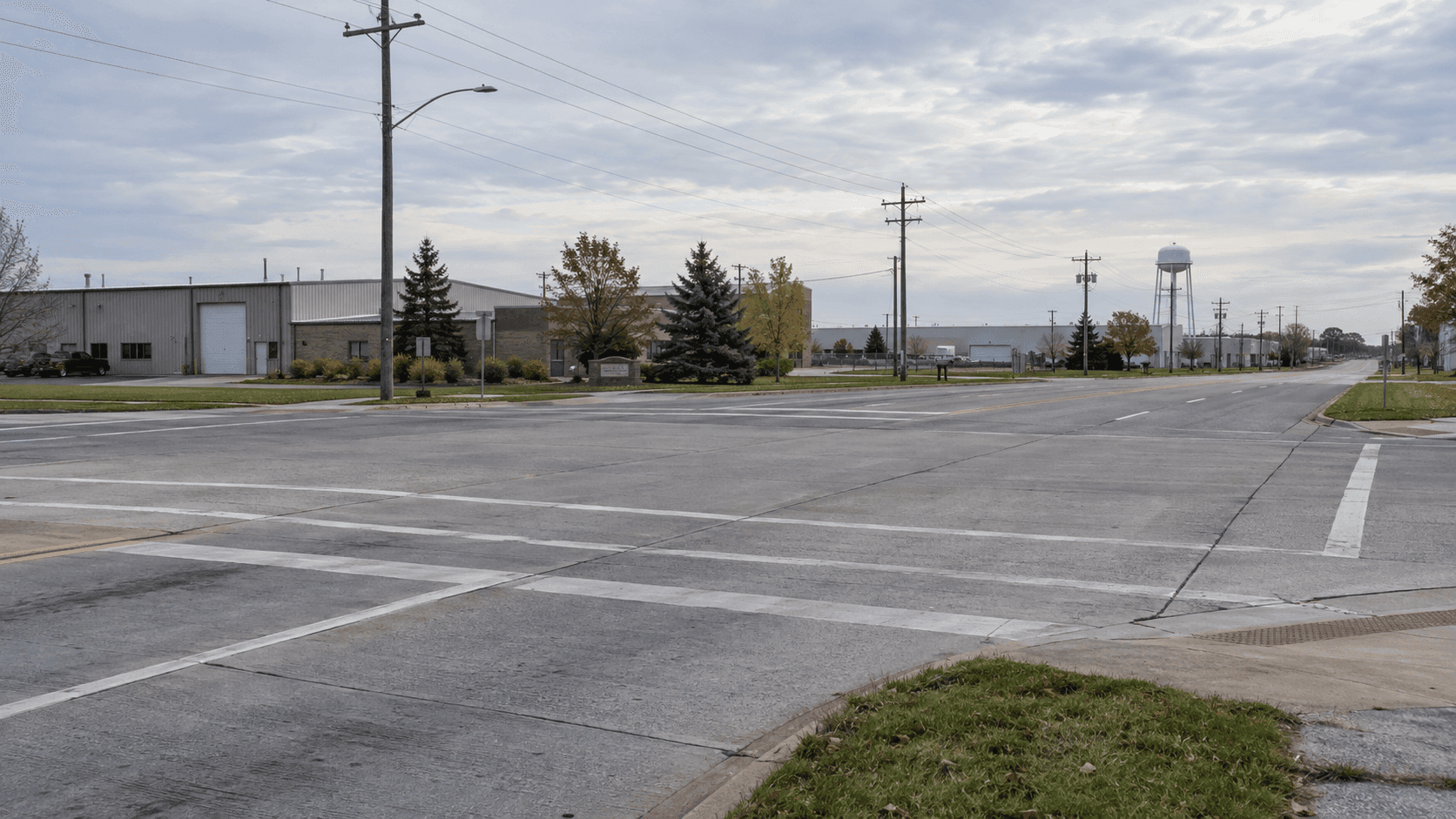
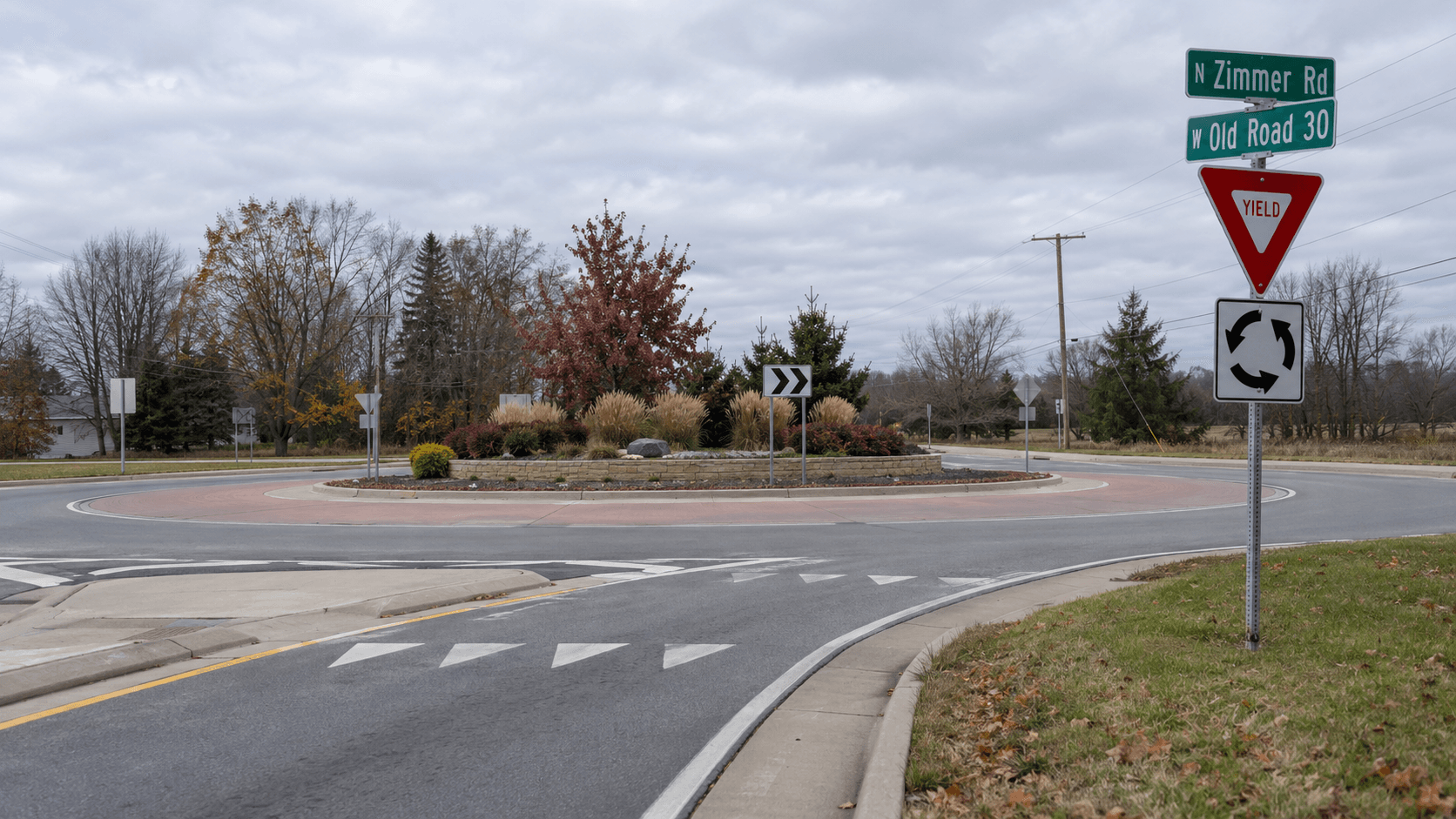
A single-vehicle crash at the roundabout where North Zimmer Road meets West Old Road 30 in Warsaw ended with the driver arrested for operating while intoxicated. Because the only person reported hurt was the arrested driver, this article focuses on road safety and the legal rules that can matter when someone else is injured in an Indiana intersection crash.
What InkFreeNews reported
According to InkFreeNews[1], the crash happened at about 1:11 a.m. on Sunday, September 27, 2026. The vehicle went over the curb and entered the landscaping inside the roundabout. The driver, a 29-year-old man from Mentone, was transported for medical evaluation and arrested for operating while intoxicated. Property damage was estimated at up to 25,000 dollars.
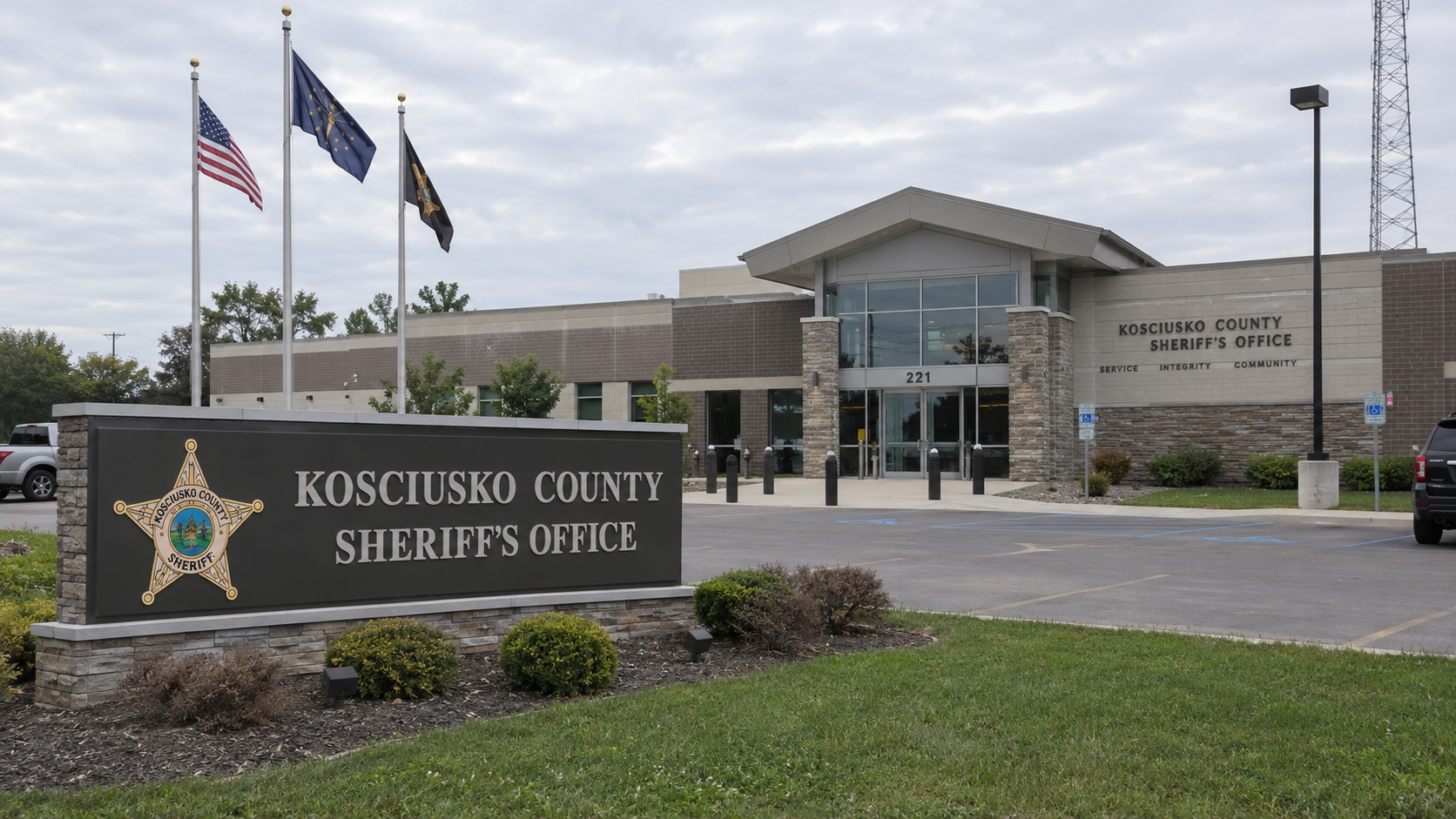
InkFreeNews reported that the driver said he could not remember what happened as he approached the roundabout. The Kosciusko County Sheriff's Office responded. This article does not name the driver. An arrest is not a charge, a charge is not a conviction, and an arrested person is presumed innocent.
The reporting does not describe the weather, road conditions, lighting, vehicle speed, or whether anyone else was in the vehicle. The matter remains under investigation.
What this crash tells drivers about the roundabout
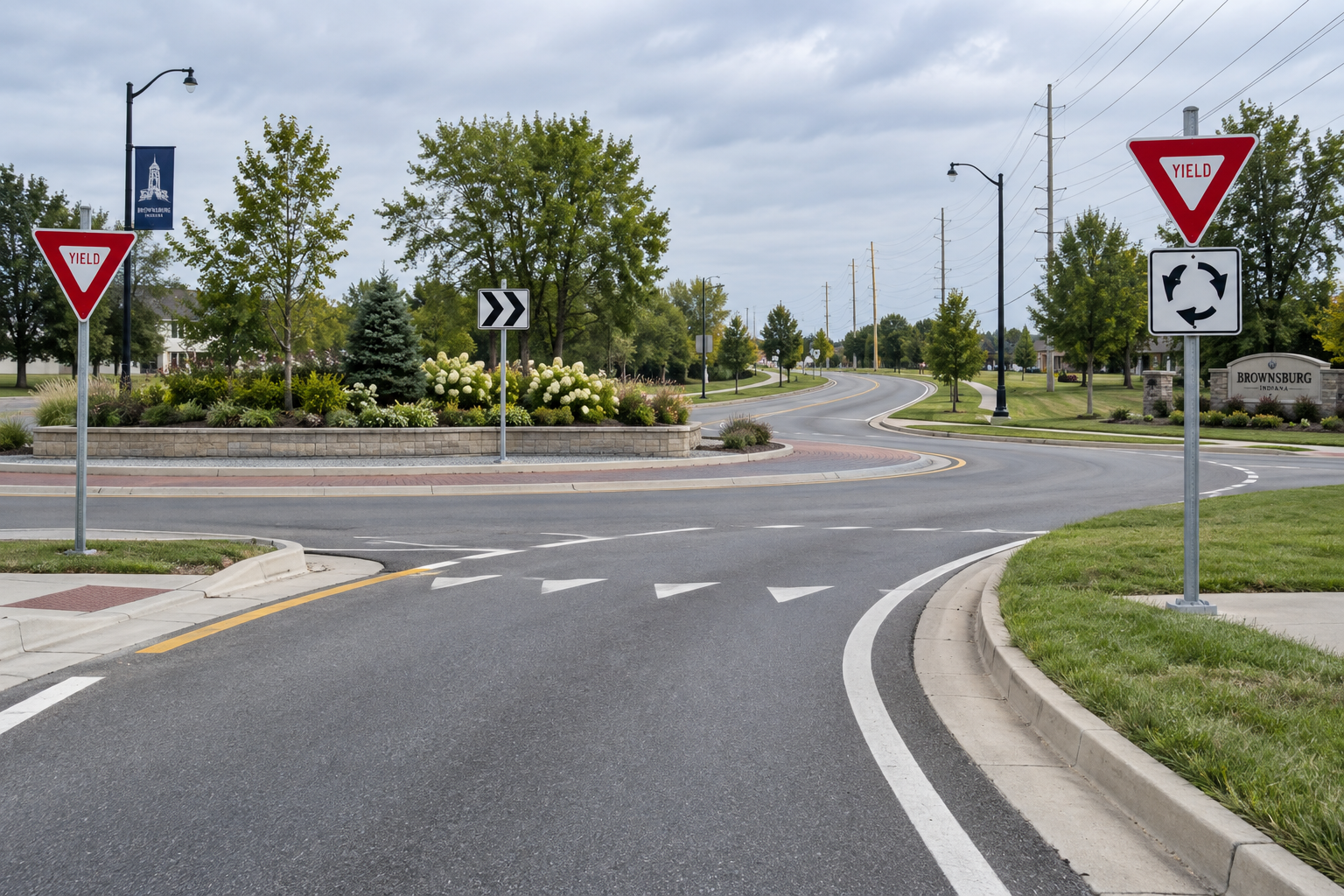
A roundabout requires you to reduce speed on approach, follow the curve, yield to traffic already circulating, and stay within a continuously curving path. If you use Old Road 30 or Zimmer Road, the practical lesson is to begin slowing before reaching the circle and to leave room for another driver who may approach too quickly.
When a vehicle mounts a curb and enters a central island, landscaping, signs, and other fixed features can affect the outcome. Nothing in the reporting suggests that the design or condition of this roundabout contributed to the crash. Drivers who want more general information can read about fault and evidence after an Indiana roundabout crash.
Overnight driving also calls for added distance and attention. You cannot control whether another driver is impaired, distracted, or unfamiliar with an intersection, but you can avoid assuming that every approaching vehicle will slow or yield correctly.
What injured people should do after an intersection crash
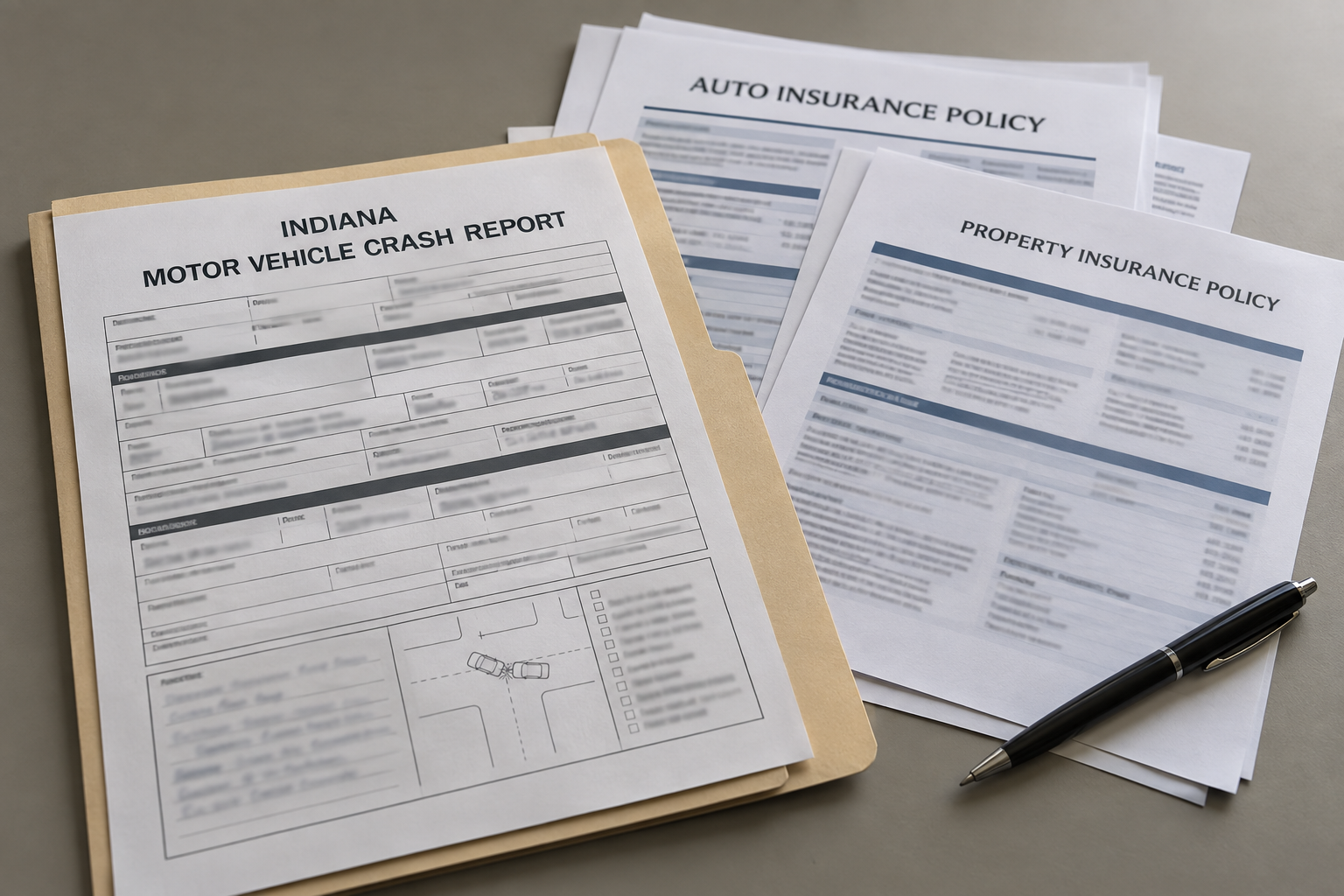
If another driver hurts you at an Indiana intersection, ask the responding agency how to obtain the crash report and report number. A police report is not a final determination of civil liability, but it can document the location, vehicles, responding officers, and initial observations. This guide explains how to obtain an Indiana crash report.
Seek appropriate medical attention and keep your records. Identify witnesses if you safely can, and photograph the intersection, signs, pavement markings, curb damage, and vehicle positions. Camera footage and vehicle data may be lost or overwritten quickly, so timely preservation matters. A broader Indiana crash evidence guide explains which records may help.
If an impaired driver caused your injuries, criminal and civil cases remain separate. An arrest, charge, or conviction does not extend the civil filing deadline. Depending on the facts, Indiana's dram shop law may permit a claim against a person or business that furnished alcohol while actually knowing the person was visibly intoxicated, when the intoxication was a proximate cause of the injury. That rule appears in Indiana Code 7.1-5-10-15.5, but the available reporting does not identify any alcohol provider connected with this crash.
Why the location and deadlines matter
The crash occurred in Warsaw, Kosciusko County, and the Kosciusko County Sheriff's Office handled the response. Venue, the location of investigative records, and the identity of any responsible public agency can affect how an injury matter proceeds.
Most Indiana personal injury claims must be filed within two years under Indiana Code 34-11-2-4[2]. If a road authority may be responsible, much shorter notice requirements can apply. A claim against a city, county, town, or another political subdivision generally requires written notice within 180 days under Indiana Code 34-13-3-8[3]. A claim against the State requires notice within 270 days under Indiana Code 34-13-3-6[4]. Nothing reported about this crash suggests that a road authority was responsible.
Indiana Code 34-51-2-6[5] governs comparative fault. An injured person whose fault is greater than 50 percent recovers nothing; otherwise, the recovery is reduced by that person's percentage of fault. Fault depends on the evidence, and a crash report alone does not decide civil responsibility. You can read a plain-language explanation of Indiana's 51 percent fault rule.
Indiana Code 9-25-4-5[6] sets minimum auto liability coverage at 25,000 dollars per person and 50,000 dollars per accident for bodily injury, plus 25,000 dollars for property damage. Indiana insurers must offer uninsured and underinsured motorist coverage under Indiana Code 27-7-5-2[7]. Whether any coverage applies depends on the policy and the facts.
How Delventhal Law Office can help
Delventhal Law Office, LLC is a Fort Wayne personal injury firm founded by attorney Chad E. Delventhal in 2009. In an appropriate crash case, the firm can obtain investigative records, preserve vehicle or video evidence, review available insurance, and identify filing or notice deadlines. Insurance companies may aggressively defend fault and injury claims, so careful documentation matters.
If you or a family member was hurt by another person's carelessness in an Indiana crash, you can request a free case evaluation. The facts of this reported crash do not establish that anyone has a civil claim against the arrested driver.
This post is based on public reporting, the investigation may be ongoing, and nothing here is legal advice or creates an attorney-client relationship.