
A 76-year-old Michigantown man was killed and his wife was injured in a head-on crash on State Road 29 in rural Clinton County early on the morning of September 20 or September 21, 2026. Published reports differ on the exact date, and this article does not resolve that conflict. The account updates an earlier report and adds the names of the people involved.
What WLFI reported about the crash
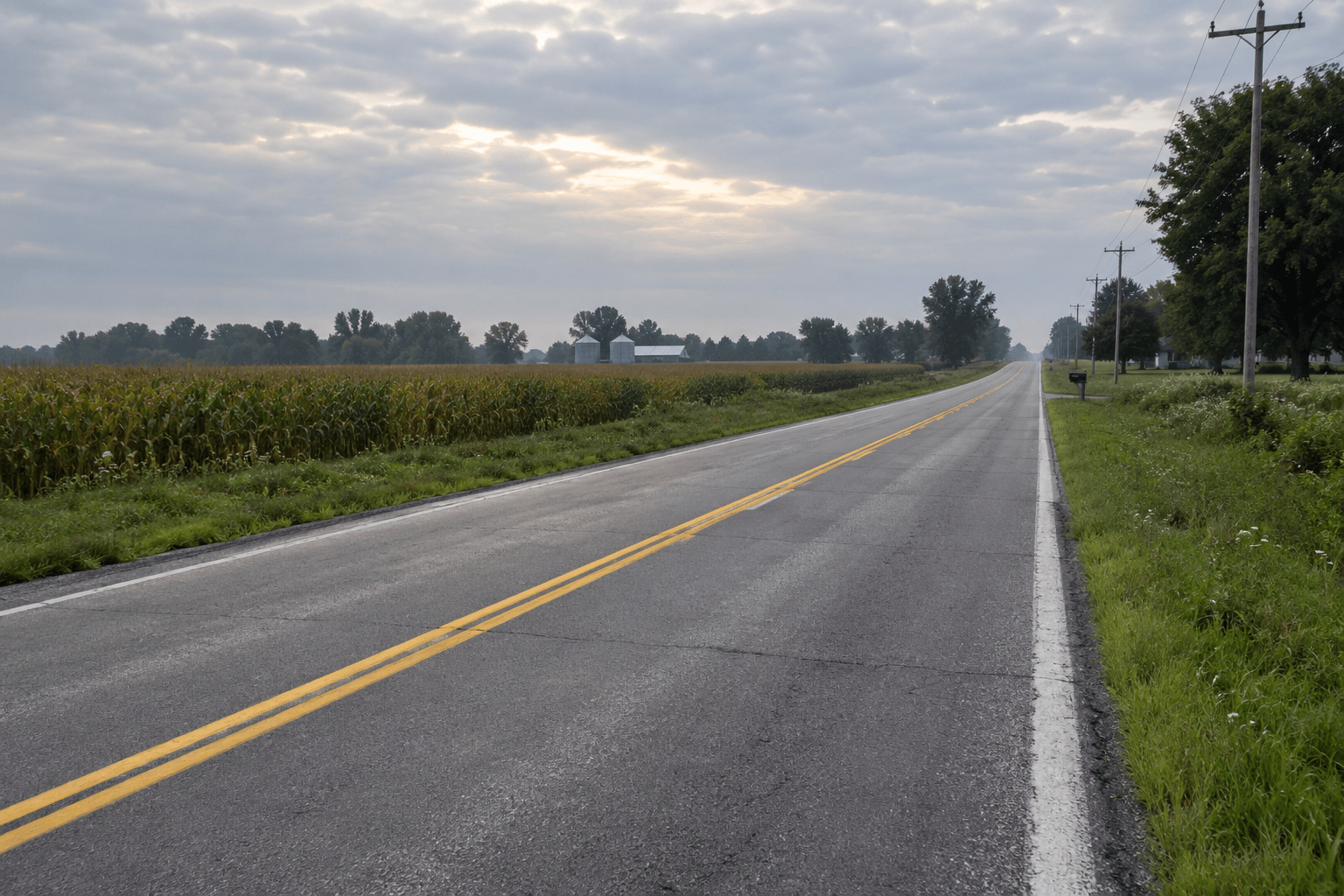
According to WLFI's report on the Clinton County head-on crash[1], the collision happened at about 5:20 a.m. in the 4500 block of North State Road 29, in the Michigantown area, in pre-dawn darkness. WLFI reported that a southbound Chevrolet Cruze crossed the center line into the northbound lane and struck a northbound Toyota Prius head-on. The Clinton County Sheriff's Office investigated.
WLFI reported that Virgil Richardson, 76, of Michigantown, died at the scene. His wife, Tina Richardson, 64, of Michigantown, was injured and hospitalized in stable condition. The report also stated that both were taken to an Indianapolis hospital, which was not named.
The Chevrolet driver, Quinton Landrum, 28, of Kokomo, was also hospitalized, and his condition was not detailed. WLFI reported that Clinton County authorities described preliminary charges of Level 4 felony operating while intoxicated causing death and Level 5 felony reckless homicide. A formal filing had not been confirmed as of this update, and no arrest had been reported. Landrum is presumed innocent unless and until convicted.
No source cited here has reported a finding about speed, weather, road condition, or another contributing factor beyond the account that one vehicle crossed the center line. The investigation remains ongoing.
What families should protect after a fatal crash
A fatal collision creates difficult legal questions at the worst possible moment. In Indiana, a wrongful death claim is brought by the personal representative of the estate, so opening an estate is often an early formal step. A family reviewing that process may find it useful to speak with a Fort Wayne wrongful death attorney.
The vehicles may contain information that an initial report does not capture, including event data, restraint and airbag information, tire and brake condition, and physical crush patterns. Tow lots and insurers may move, repair, or dispose of vehicles, so a prompt written preservation request can matter. The firm's guide to evidence in an Indiana car accident claim explains why records and physical evidence should be organized early.
When impairment is alleged, toxicology results and the reconstruction file may become important. Those records can take longer to complete than the initial crash report. A police report is not a determination of civil liability, and a preliminary criminal allegation is not a conviction.
Records about where alcohol came from may also matter in some cases. Nothing reported here identifies where Landrum may have obtained alcohol, and this article does not suggest that any person or business served him. Indiana's dram shop statute, Ind. Code 7.1-5-10-15.5, may impose liability only when its specific requirements are met.
Tina Richardson's injury claim would be separate from any wrongful death claim. Her medical records, bills, and other documentation should be kept complete and distinct. Families should also remember that a criminal case and a civil claim proceed on separate tracks. A pending or delayed criminal case does not extend the civil filing period.

Why the location and deadlines matter
The crash happened in the 4500 block of North State Road 29 in rural Clinton County, near Michigantown, and the Clinton County Sheriff's Office investigated. Venue questions can depend on where a crash happened and where the parties live, but those questions require review of the specific facts.
State Road 29 is a state highway. Nothing in the reporting identifies the roadway as a factor, and this article does not suggest that it was. If evidence later indicates that a state or local government entity may share responsibility, the Indiana Tort Claims Act has shorter notice requirements. Ind. Code 34-13-3-6 provides a 270-day notice period for a claim against the state, while Ind. Code 34-13-3-8 provides a 180-day period for a claim against a political subdivision. More information appears in the firm's guide to Indiana government tort claim notices.
Indiana's wrongful death statutes address who may bring a claim and what may be recovered. Ind. Code 34-23-1-1 is the general wrongful death statute. Ind. Code 34-23-1-2 concerns an adult who leaves no spouse or dependents, and Ind. Code 34-23-2-1 covers the death of a child. Which statute applies depends on the person's family circumstances and can change the available damages.
Indiana's Comparative Fault Act, Ind. Code 34-51-2-6, generally bars recovery when an injured person's fault is greater than 50 percent. Otherwise, recovery is reduced by that person's percentage of fault. The reported account states that the northbound occupants were in their lane, but civil fault should not be treated as finally decided while the investigation continues.
Indiana's minimum auto liability limits under Ind. Code 9-25-4-5 are $25,000 per person and $50,000 per accident for bodily injury, plus $25,000 for property damage. When one collision causes a death and an injury, available liability coverage may be disputed or insufficient. Indiana insurers must offer uninsured and underinsured motorist coverage under Ind. Code 27-7-5-2, and the terms of the family's own policies should be reviewed carefully.
Most Indiana personal injury and wrongful death claims must be filed within two years under Ind. Code 34-11-2-4. Because the published reports differ on whether this crash occurred September 20 or September 21, 2026, relying on the earlier date is the safer approach. The firm's explanation of Indiana accident claim deadlines provides additional general guidance.
How Delventhal Law Office can help
Delventhal Law Office, LLC is a Fort Wayne personal injury law firm founded by attorney Chad E. Delventhal in 2009. The firm handles serious injury and wrongful death matters, including head-on crashes and collisions involving alleged impairment. Insurance companies may aggressively defend these claims, especially when fault, causation, or available coverage is contested.
Delventhal Law Office can help an Indiana family identify the proper personal representative, request available crash and reconstruction records, send evidence-preservation letters, review liability and underinsured motorist policies, and explain the deadlines that may apply. The firm offers a free case evaluation.
This post is based on public reporting, the investigation may be ongoing, and nothing here is legal advice or creates an attorney-client relationship.