

Four people were in two cars that collided nearly head-on on a two-lane highway in southern Bartholomew County. One person died, and three others were taken to hospitals. When several losses may be directed toward one auto liability policy, the policy's per-person and per-accident limits can become important immediately.
What happened
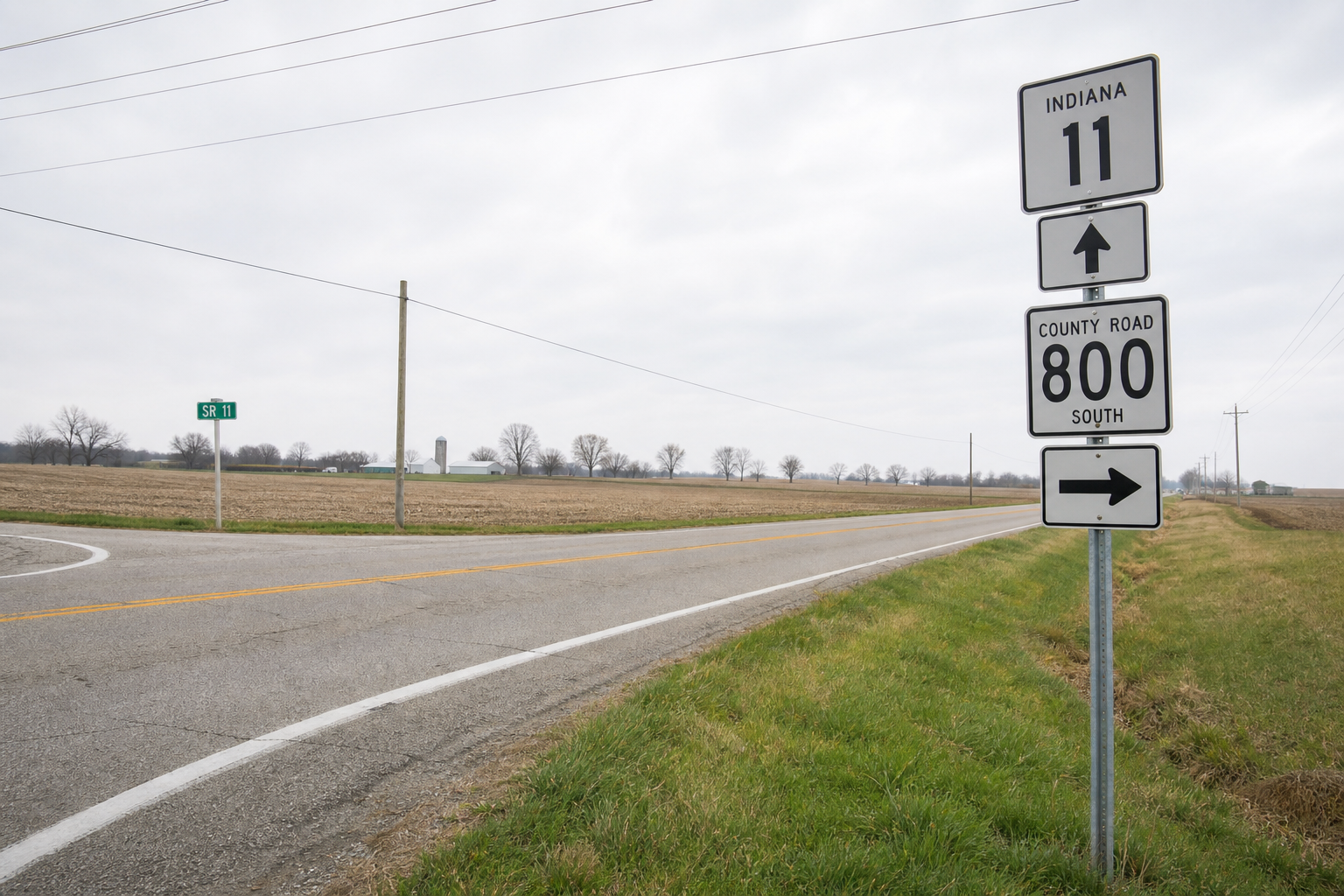
According to an Indiana State Police, Versailles Post release carried by WKKG[1], WCSI[2], and WISH-TV[3], the crash happened shortly before 7:30 a.m. on Thursday, August 20, 2026. The location was State Road 11 near County Road 800 South in southern Bartholomew County.
Police reported that a northbound 2009 Pontiac G6 driven by a 17-year-old crossed the centerline and collided nearly head-on with a southbound 2020 Hyundai Sonata. Investigators stated that the collision occurred in the southbound lane. Both vehicles left the roadway after impact.
The Hyundai's 42-year-old front-seat passenger was pronounced dead at the scene. The Pontiac's 17-year-old driver and a 15-year-old rear-seat passenger in the Hyundai were taken to Indianapolis-area hospitals. The Hyundai's 18-year-old driver was treated at Columbus Regional Hospital.
The Columbus Fire Department, Columbus Township Fire and Rescue, Columbus Regional Hospital EMS, Bartholomew County Sheriff's Office, and Bartholomew County Coroner's Office responded. No citations or arrests had been announced. The ISP Crash Reconstruction Team continued to investigate, toxicology results were pending, and ISP had not alleged impairment.
What injured passengers and families should do next
A passenger generally has a separate injury claim because a passenger does not control either vehicle. The driver may be a relative or friend, but an insurance claim seeks coverage purchased for a loss. Responsibility still depends on the evidence, and insurers may aggressively defend disputed claims.
Notify every insurer that might provide coverage. That may include the liability insurer for a responsible driver, the vehicle owner's insurer, the policy covering the vehicle in which you were riding, your own policy, and policies held by relatives in your household. The firm's guide to which policy may pay for an injured passenger explains why more than one policy may need review.
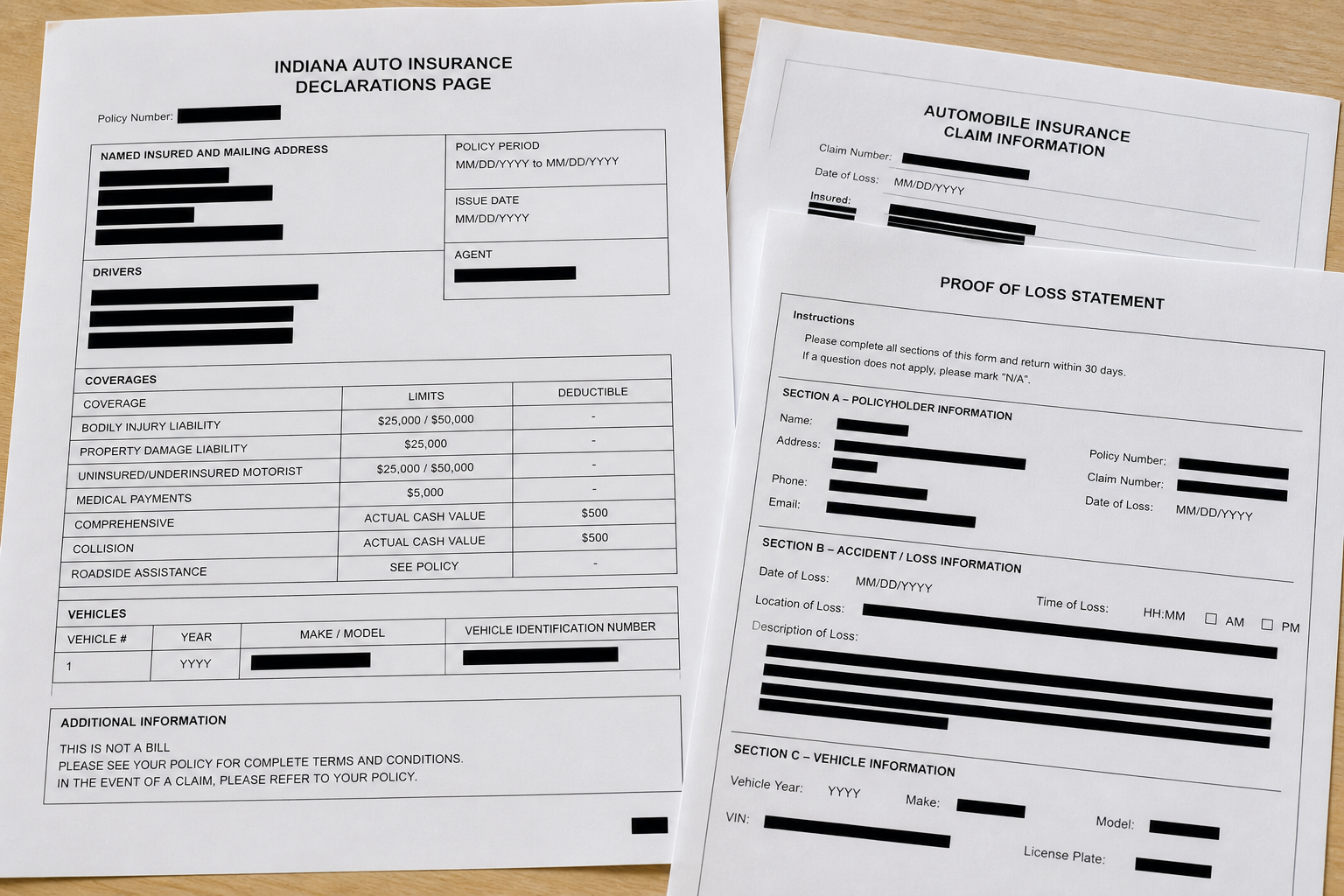
Request each declarations page, not merely a policy number. The declarations page identifies the available liability and UM/UIM limits. Indiana's minimum auto liability coverage is $25,000 per person and $50,000 per accident. One death and three injury claims can exceed a minimum-limits policy quickly, making underinsured motorist coverage especially important.
Ask that the vehicles be preserved before salvage. Crush patterns, restraint evidence, and electronic data may help explain how a centerline crossover occurred. You should also obtain the crash report and, when completed, the reconstruction materials. The preliminary account describes where the vehicles collided, but it does not establish why the crossover happened.
Keep records from every treating provider, including EMS records, hospital records, imaging, prescriptions, therapy notes, mileage, and proof of missed work. Avoid giving another party's insurer a recorded statement before you understand your medical condition, available coverage, and legal position.
Why the location and policy limits matter
State Road 11 near County Road 800 South anchors the police, coroner, emergency-response, and roadway records. It also identifies the scene where photographs and measurements may document lane markings, shoulder width, sight distance, road geometry, and physical marks. That evidence can change or disappear with traffic and weather.
On an undivided rural highway, opposing vehicles are separated by a painted centerline rather than a median or barrier. Whether road design, visibility, vehicle condition, driver conduct, or another factor contributed here remains a question for the reconstruction investigation. Early documentation matters in a head-on collision claim.
Liability policy limits are not increased because several people were hurt. If combined claims exceed the per-accident limit, the insurer may seek a coordinated resolution or ask a court to determine how limited funds should be distributed. Claimants should identify all potentially applicable liability and UM/UIM policies before signing a release.
A minor's claim also requires separate attention. Indiana generally tolls the limitation period during minority, and a minor's settlement ordinarily requires court approval and supervised handling of the proceeds. Insurance policies may still impose notice duties much earlier, so families should not assume that tolling permits them to ignore a claim.
For an adult claim arising from an August 20, 2026 loss, the ordinary two-year period under Indiana Code § 34-11-2-4[4] and § 34-23-1-1 would run to approximately August 20, 2028. That general date should not be treated as the deadline for every person or every insurance claim. Minor claimants and contractual UM/UIM requirements must be evaluated individually.

Getting help with overlapping claims
A fatal crash involving injured passengers can produce several competing claims, separate medical records, and multiple insurance policies. Delventhal Law Office handles wrongful-death, passenger-injury, and underinsured-motorist claims throughout Indiana, including matters involving minors and limited shared coverage.
If your family is affected by a similar crash, you can speak with a Fort Wayne accident attorney about preserving evidence, identifying insurance, and protecting deadlines. You may also request a free case evaluation before providing a recorded statement or signing a release.
This post is based on public reporting, the investigation may be ongoing, and nothing here is legal advice or creates an attorney-client relationship.