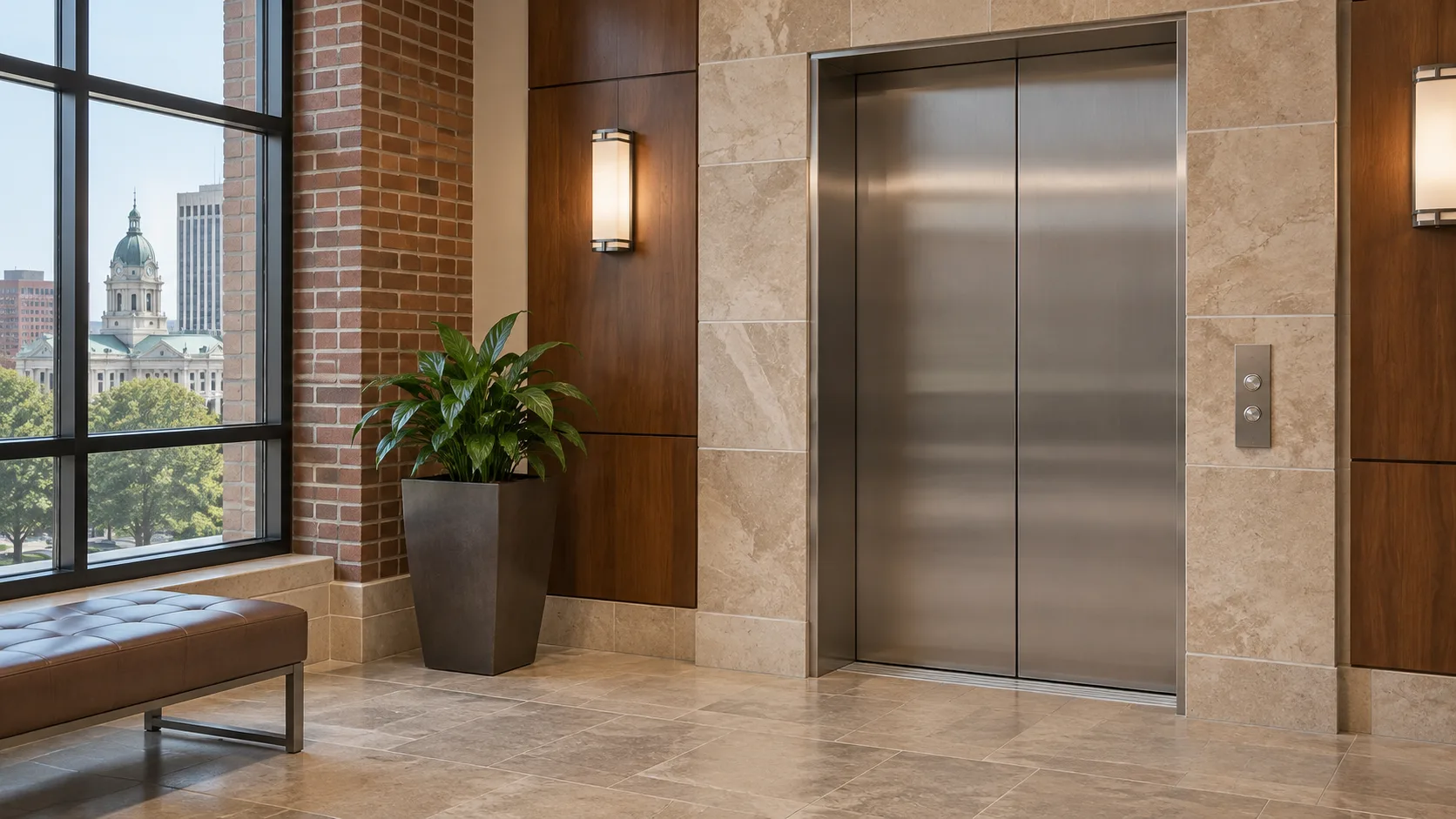
An elevator door that closes unexpectedly, an escalator step that shifts, or a poorly marked floor-level difference can leave you unsure whom to contact. After attending to immediate safety and care, a useful practical step is to identify the device and ask that records and video be saved. The evidence suggestions below are preparation tips, not a statutory checklist.
- Record the building address, floor, device number and exact time.
- Separate what you saw from your guess about the mechanism.
- Request equipment records as well as scene photographs.
- Have counsel check the proper parties and applicable filing requirements early.
Responsibility depends on control and cause
An Indiana negligence claim requires a duty, a breach of that duty, and injury proximately caused by the breach. In premises cases, control of the property when the incident occurred is a central duty question. Kaur v. Amazon, paragraphs 16–17[1] states those general principles; it is not an elevator decision.
For practical investigation, separate the location from the mechanism. A loose mat near an elevator calls for different photographs and records than a car that stops above the landing. Note what happened before, during and after the incident without testing the equipment yourself.
For more property-specific context, read the firm’s Fort Wayne property-injury overview for the property side of the inquiry. This article focuses on equipment identification, service history and the separate potential legal theories.

Potentially responsible parties
Practical investigation checklist: Ask who performed each role below. This is a list of records to investigate, not a conclusion that every listed person should be sued. A job title or contract alone does not establish a negligence claim; duty, breach and causation still matter. Kaur, paragraph 16[1].
| Party to investigate | Questions to ask | Records that may help |
|---|---|---|
| Property owner or occupier | Who controlled the area, received complaints, and decided whether the equipment stayed open? | Incident reports, inspection logs, complaints, photographs, and video |
| Property manager | Who handled tenant reports, repair requests, warnings, and vendor access? | Emails, work orders, vendor contracts, and management logs |
| Maintenance contractor | What work was promised, performed, deferred, or recommended? | Service tickets, callback records, test results, invoices, and technician notes |
| Installer or repair company | Was recent installation, alteration, replacement, or repair work connected to the event? | Permits, project files, parts records, and acceptance documentation |
| Manufacturer or seller | Did the design, manufacture, warnings, or a component contribute to the incident? | Model and serial numbers, manuals, recalls, parts, and expert examination |
| Your own account | What did you observe, where were you positioned, and what happened in sequence? | Contemporaneous notes, photographs, witness details, clothing, footwear, and care records |
Contractor work: The Indiana Supreme Court explains that acceptance of completed work and the absence of a direct contract with the injured person do not automatically insulate a contractor from a personal-injury claim arising from foreseeably harmful negligent work. U.S. Automatic Sprinkler Corp. v. Erie Insurance Exchange, pages 12–15[2]. That decision concerned a sprinkler system and distinguished property-only loss; it does not decide the facts of your incident.
Product defects: IC 34-20-1-1[4] governs actions brought by a user or consumer against a manufacturer or seller for physical harm caused by a product, regardless of the theory pleaded. IC 34-20-2-1 through -3[3] sets out additional requirements and distinguishes manufacturing defects from design or warning claims. Strict-liability claims generally target a manufacturer, not every seller; statutory qualifications matter.
Practical question for counsel: should the investigation focus on the original product, later work, the surrounding floor, or more than one condition? Save the model and serial numbers and ask before any part is discarded. Do not remove equipment yourself.
If a defective component may be involved, the firm’s product-defect practice overview provides additional context.

Different incidents point to different evidence
Trip or fall near the entrance
Photograph the elevator threshold, escalator landing, floor covering, lighting, warning signs, handrail, and surrounding walkway from several angles. Record whether the condition changed after the event, but do not enter a restricted machinery area.
Entrapment or door contact
Save the time, floor, car number, direction of travel, alarm or call-button details, and the names of responders. Describe what the doors did without guessing why.
Sudden movement or misleveling
Record where the car stopped relative to the landing and identify anyone who saw the movement. A precise description is more useful than a conclusion about why the equipment moved.
Escalator step or handrail event
Identify the escalator, direction of travel, step location, emergency-stop activity, footwear, carried items, and witnesses. Preserve photographs of visible conditions without touching or removing equipment.
For a trip at the entrance, the separate guide to visitor status and property duties provides context. Do not assume that the rules for a shopper, employee and unauthorized visitor are identical.

What to do after an elevator or escalator incident
Optional preparation steps, not legal filing requirements:
- Address immediate safety. Move away from operating equipment if you can do so safely, notify on-site staff, and follow emergency personnel’s instructions.
- Identify the device. Photograph the car, escalator, landing, posted permit, state number, manufacturer plate, and any out-of-service notice that is visible from a public area.
- Report what happened. Ask the property representative to document the event and write down the representative’s name and role.
- Find witnesses. Ask witnesses for their names and contact information.
- Request preservation. Identify relevant surveillance video, service records, inspection records, complaints, and removed parts in writing.
- Keep your own file. Save photographs, communications, receipts, appointment records, work notes, and a factual timeline.
Do not rely on memory for details such as the floor, time, direction of travel, or device number. Those identifiers can help distinguish one elevator or escalator from several others in the same building.
If you are preparing to discuss the event with counsel, the firm’s first personal-injury consultation checklist can help you organize the material.

Indiana inspection and permit records
The Indiana Department of Homeland Security Elevators and Amusement Rides Section[5] regulates lift devices, including elevators and escalators. Its page directs requests for elevator database information to the public-records process and asks requesters to specify a date range and the permit or report information sought.
For an incident in Fort Wayne or elsewhere in Allen County, identify the precise building and device rather than only the business name. A building may contain multiple elevators with different records.
Sample records-request description: “Please provide available operating permits, inspection reports, reported safety-test results and violation correspondence for the elevator identified as [state/device number] at [street address], covering [date range]. The incident occurred on [date].” This is suggested wording, not an agency-required form. The agency will respond about the available records.
The IDHS page also says results of all applicable safety tests, including failed tests, must be submitted during renewal. Ask about failed results as well as passed results. IDHS safety-test reminder[5].
Keep state records and private service records separate in your request list. Ask the owner and contractor to preserve callback tickets, repair recommendations, work orders and video. A permit is one item to collect, not a substitute for investigating what happened that day.

Indiana filing deadlines can change the investigation
General personal injury: IC 34-11-2-4(a)[6] generally requires filing within two years after the cause of action accrues. Ask counsel to calculate accrual and any applicable exceptions; do not assume the same calculation fits every person or claim.
Product claim: IC 34-20-3-1[7] contains a two-year limitation and a separate ten-year period measured from delivery to the initial user or consumer. If the claim accrues at least eight but less than ten years after that delivery, the statute permits filing within two years after accrual. Installation age and delivery history therefore deserve attention even when the injury is recent. This product provision applies regardless of minority or legal disability. Whether a product theory applies to particular equipment needs individual review.
Government claim: IC 34-13-3-6[8] generally requires State notice within 270 days after the loss; IC 34-13-3-8[8] generally requires political-subdivision notice within 180 days after the loss. These are notice periods, not the general lawsuit-filing period. The statutes contain exceptions, including an incapacity provision in section 9[9]. The correct recipient and service method also matter.
A building open to the public is not necessarily government-owned. Check ownership and operation rather than guessing from the name. See the separate Indiana government tort-claim notice guide for that process. Do not treat an incident report to front-desk staff as a substitute for legal notice or a filed lawsuit.
Frequently Asked Questions
Is the building owner always responsible?
No. A negligence claim requires duty, breach and injury caused by the breach. Control of the premises is important, while negligent contractor work and product defects require separate analysis. Kaur, paragraphs 16–17[1]; Automatic Sprinkler[2]; product-defect requirements[3].
What records should I save after an elevator incident?
As practical preparation, save the device number, building address, time, photographs, witness contacts and your factual account. Ask that video, service tickets, complaints and removed parts be preserved. Do not enter machinery spaces or take parts yourself.
Can I request Indiana elevator inspection records?
Yes. IDHS[5] directs requests for elevator database information to the public-records process. Identify the date range and type of permit or report information requested.
How long do I have to file an Indiana elevator or escalator injury case?
The general personal-injury period is two years after accrual under IC 34-11-2-4(a)[6]. Product claims can also face the separate delivery-based period in IC 34-20-3-1[7], and government notice may be due sooner. Have counsel check your dates and the applicable rules.
What if the incident happened in a public building?
First determine whether a government entity is actually involved. IC 34-13-3-6 and -8[8] generally require notice within 270 days for the State or 180 days for a political subdivision, subject to exceptions. A building being open to the public does not answer the ownership question.
If you were hurt in an elevator or escalator incident and are unsure which records or parties matter, Delventhal Law Office can review the available information, explain the process, and help you decide what to do next through a free consultation.
This article is general information about Indiana law and is not legal advice. Reading it does not create an attorney-client relationship, and neither does contacting us.
Sources
- Kaur, paragraphs 16–17 (public.courts.in.gov) ↩
- U.S. Automatic Sprinkler, pages 12–15 (public.courts.in.gov) ↩
- IC 34-20-2-1 through -3 (iga.in.gov) ↩
- IC 34-20-1-1 (iga.in.gov) ↩
- Indiana Department of Homeland Security Elevators and Amusement Rides Section (in.gov) ↩
- IC 34-11-2-4(a) (iga.in.gov) ↩
- IC 34-20-3-1 (iga.in.gov) ↩
- IC 34-13-3-6 (iga.in.gov) ↩
- section 9 (iga.in.gov) ↩