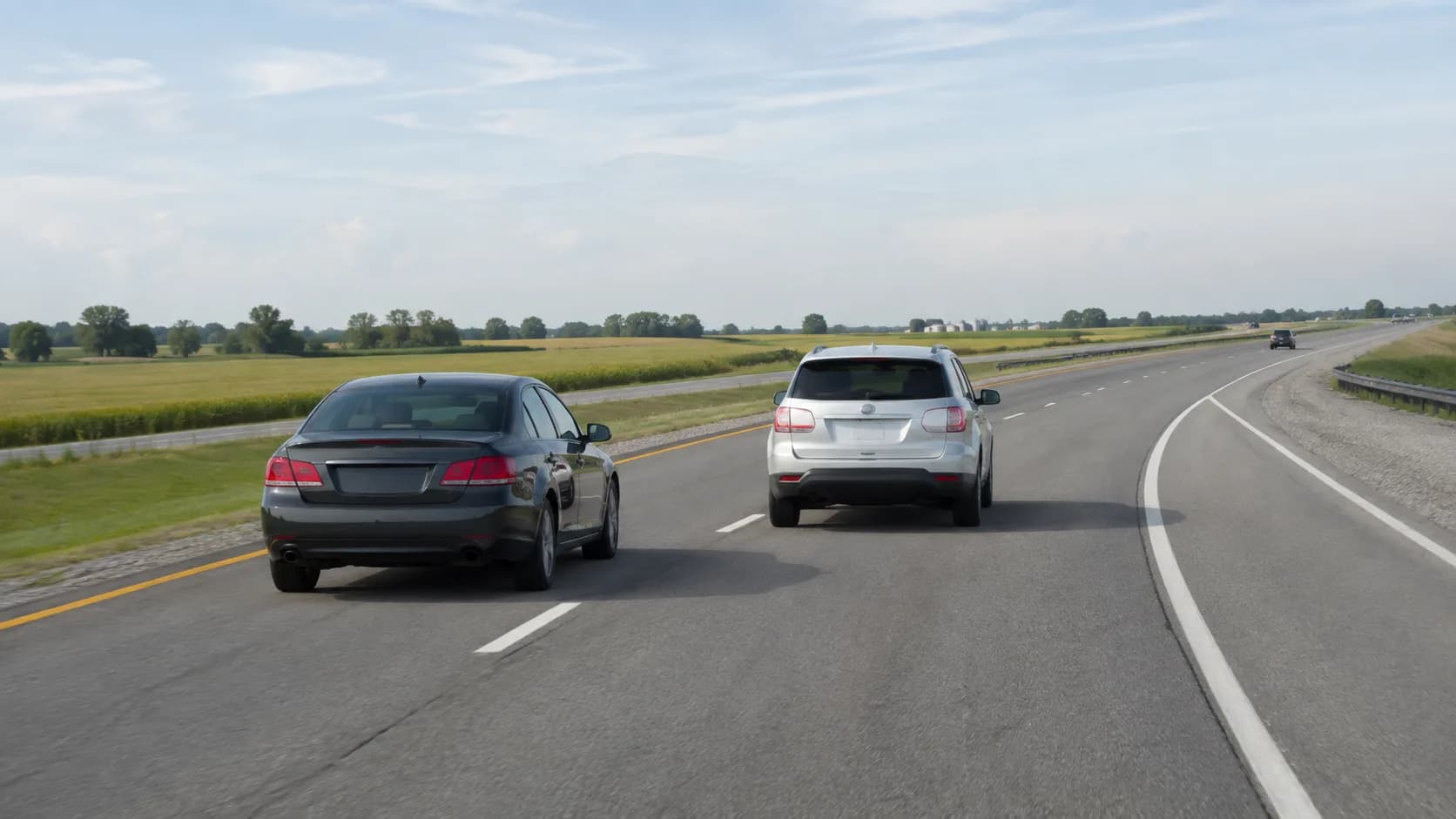
Merging and lane-change crashes often produce competing accounts: each driver may say the other vehicle crossed the line, sped up, or failed to yield space. The location of the damage can help, but it rarely answers every question by itself. Photographs, video, lane markings, witnesses, and the sequence of both vehicles’ movements can be important.
Key takeaways
- Indiana Code § 9-21-8-24(a)[1] requires a driver to make a right-or-left movement only when it can be made with reasonable safety.
- Under § 9-21-8-24(b), the driver must give the appropriate stop or turn signal before making the movement.
- Indiana Code § 9-21-8-11.5[2] separately requires a vehicle on a marked multi-lane roadway to remain as nearly as practicable within one lane and not move from that lane until the driver has first ascertained that the movement can be made safely.
- The conduct of all involved drivers still matters.
- For ordinary negligence claims governed by Indiana’s Comparative Fault Act, a claimant’s fault reduces damages proportionately. Recovery is barred when the claimant’s fault is greater than the combined fault of all persons who proximately contributed to the damages.
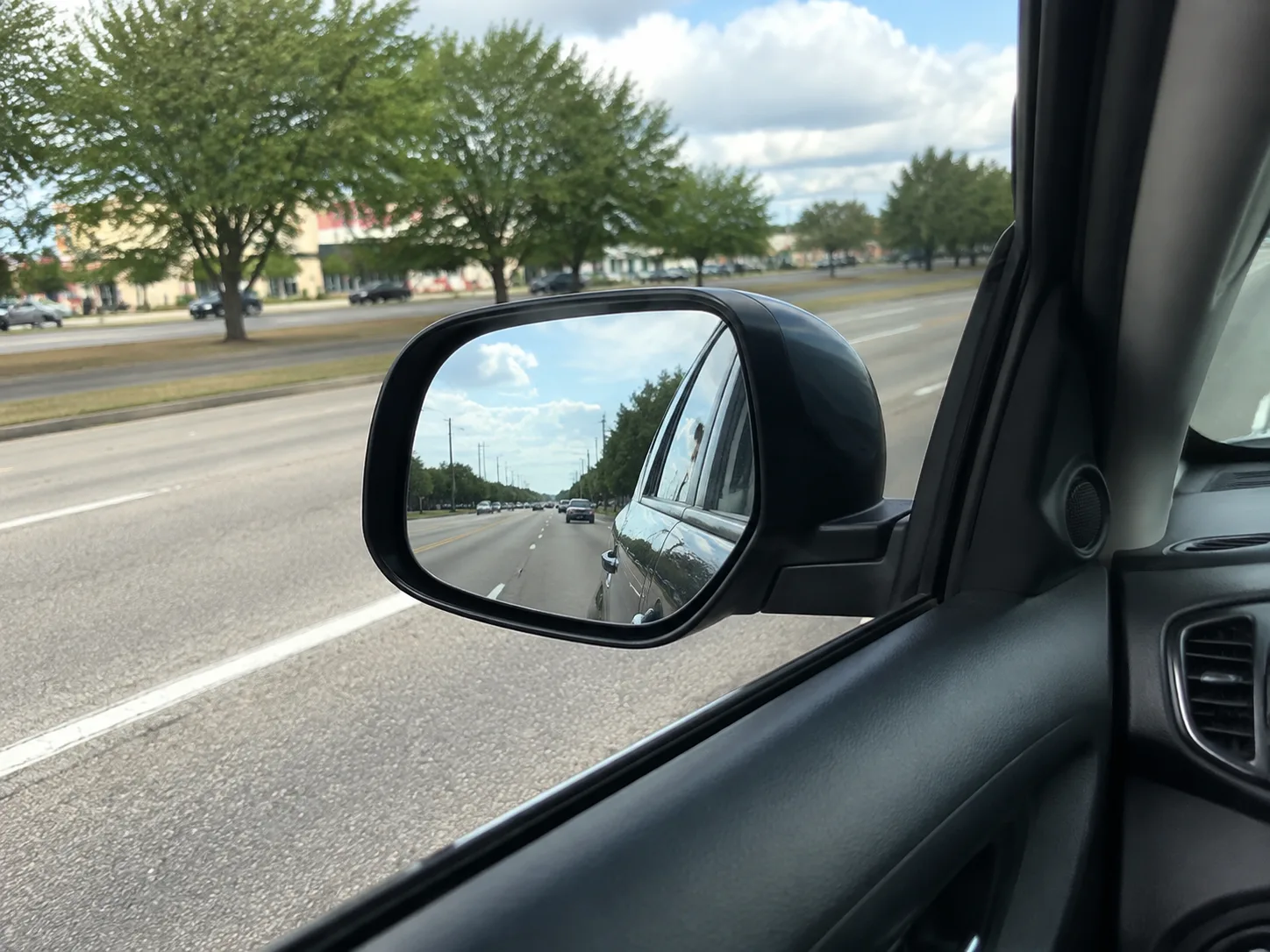
What does Indiana law require before a lane change?
Indiana Code § 9-21-8-24(a)[1] says a person may not turn a vehicle from a direct course or move right or left on a highway unless and until the movement can be made with reasonable safety.
Under § 9-21-8-24(b), before making the movement, a driver must sound a horn if a pedestrian may be affected and must give the appropriate stop or turn signal in the manner provided by Indiana law. The pedestrian-horn clause is conditional; the current vehicle-signal clause is not conditioned on another vehicle being affected.
On a roadway divided into two or more clearly marked lanes, Indiana Code § 9-21-8-11.5(1)[2] requires a vehicle to be driven as nearly as practicable entirely within a single lane and not moved from that lane until the driver first ascertains that the movement can be made safely.
A turn signal communicates an intended movement, but the driver must still comply with the reasonable-safety requirement.
Is every merge collision governed by the same right-of-way rule?
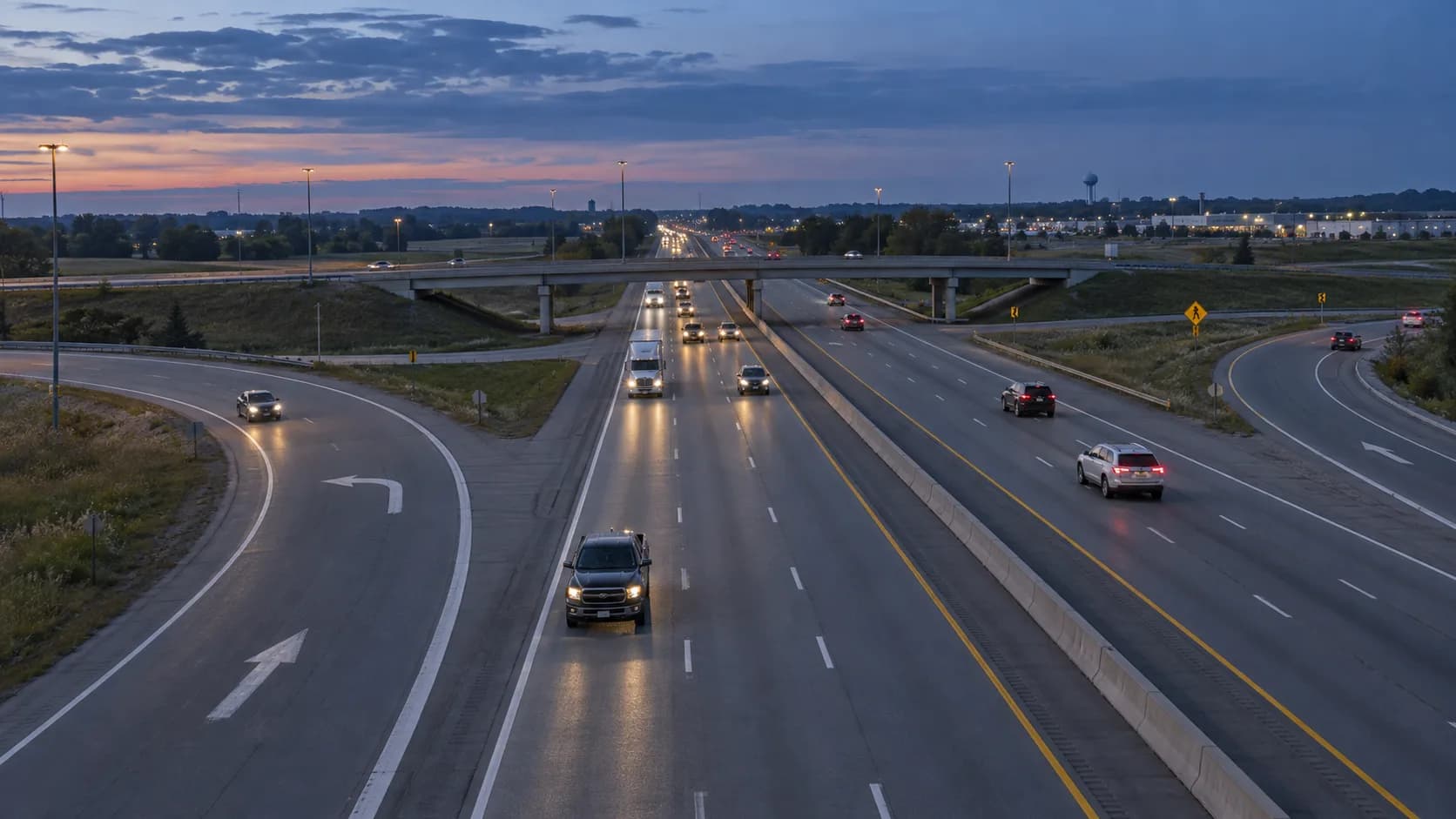
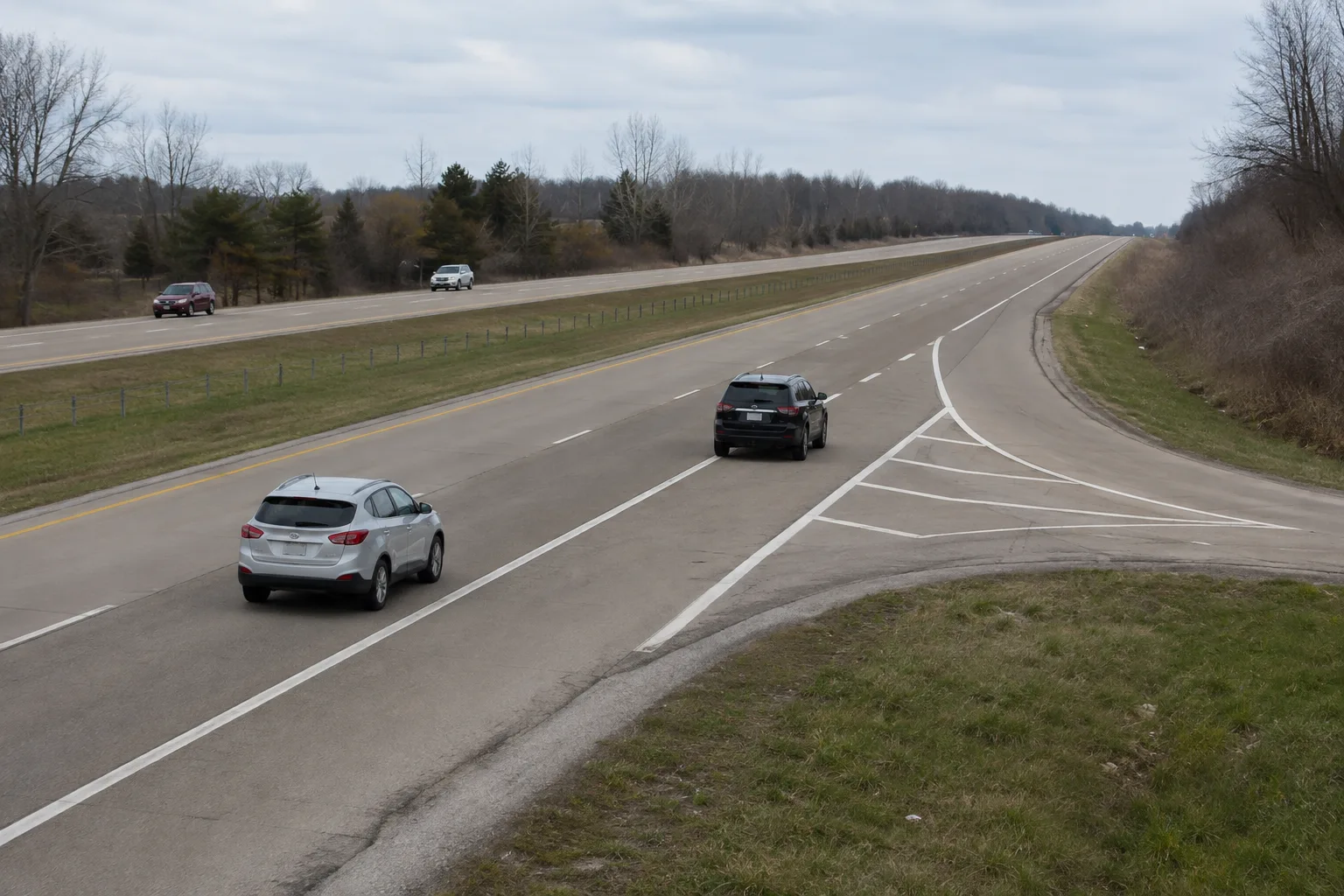
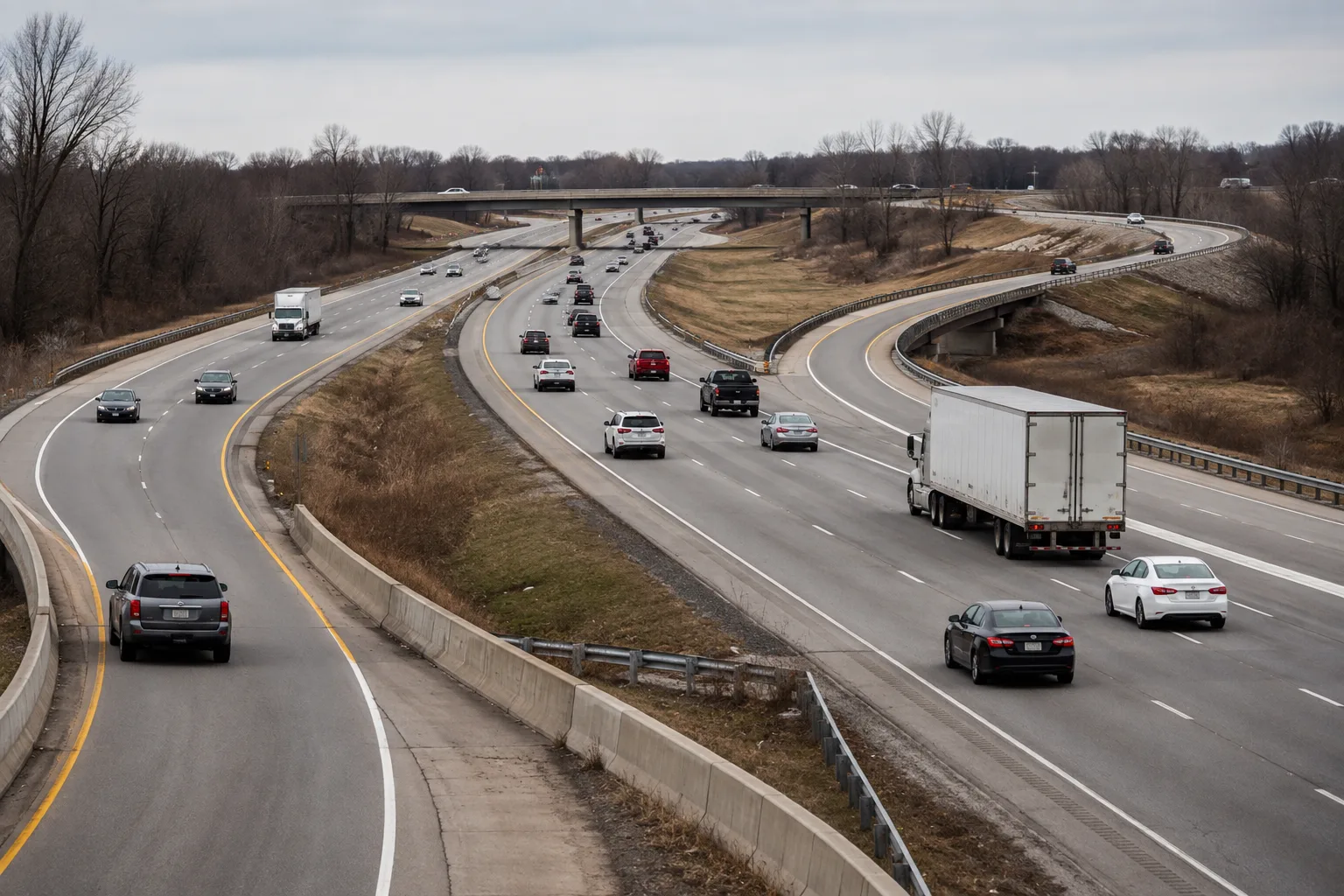
No. “Merging accident” can describe several different roadway layouts. One vehicle may be leaving an acceleration lane, two marked lanes may narrow into one, or a driver may simply change lanes near an interchange. The applicable traffic rule depends on the roadway markings, signs, and the movement each driver actually made.
That is why fault should not be assigned from the word “merge” alone. The analysis should identify the lane boundaries, traffic-control devices, positions of both vehicles, and whether either driver moved from a lane without first determining that the movement was safe.
For broader information about injury claims, see Delventhal Law Office’s Fort Wayne car accident guide.
What conduct may matter in common lane-change crashes?
| Scenario | Questions to investigate | Potential evidence |
|---|---|---|
| One vehicle enters an occupied lane | Where were the vehicles when the movement began? Could the movement be made safely? | Side-impact damage, video, lane markings, witness viewpoints |
| Two vehicles move toward the same lane | Which vehicle began moving first? What could each driver see? | Dashcam footage, mirror position, scrape direction, roadway geometry |
| A lane ends or narrows | What did the signs and pavement markings require? When did each driver respond? | Scene photographs, official roadway layout, video, vehicle positions |
| A driver changes lanes near an entrance ramp | Did either driver leave a marked lane, accelerate, brake, or fail to maintain position? | Video, vehicle data if available, damage pattern, witness accounts |
The table identifies factual questions, not automatic fault rules. A traffic-law violation can be important, but a civil claim also requires proof connecting the conduct to the collision and claimed harm.
What evidence can clarify who moved from the lane?
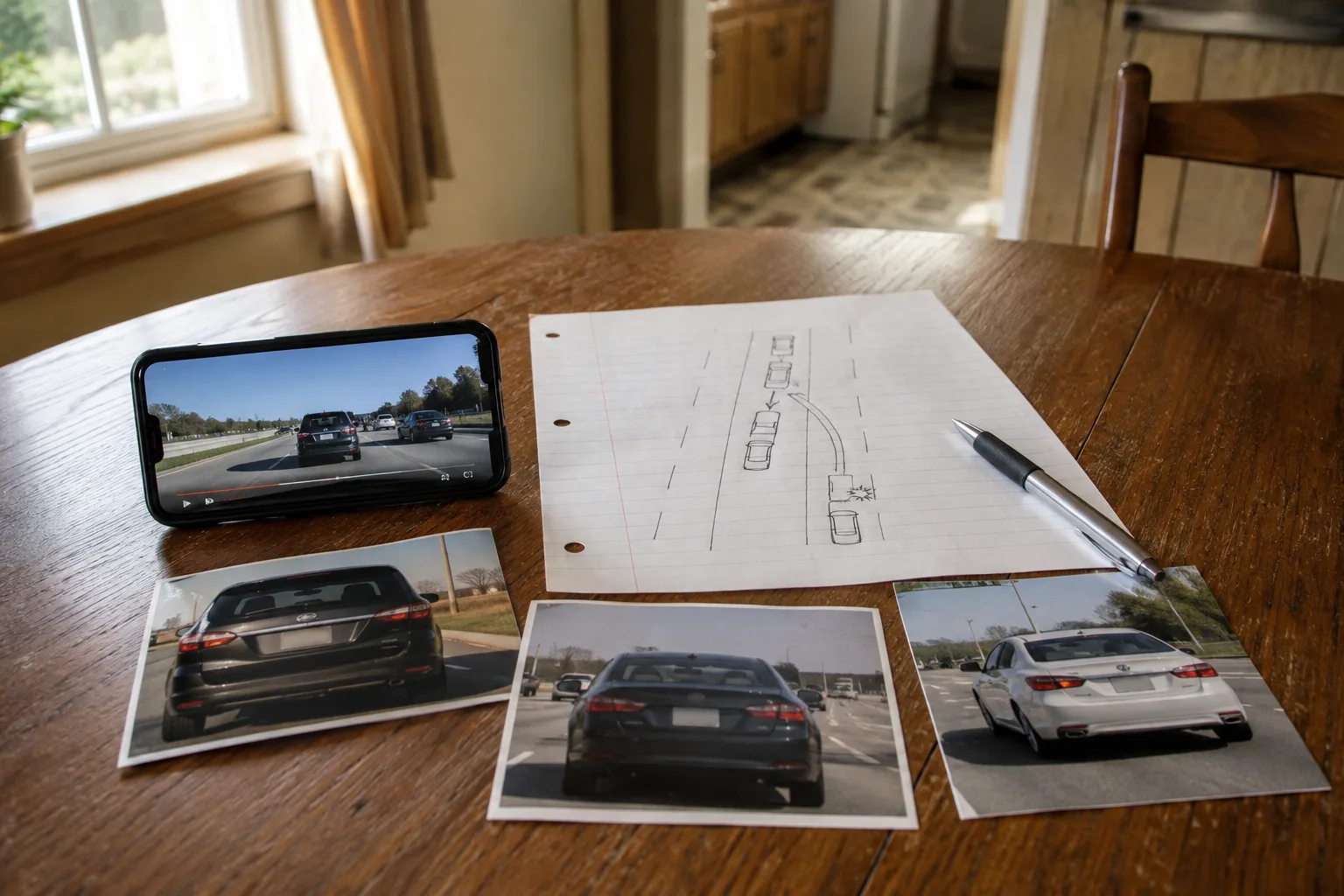
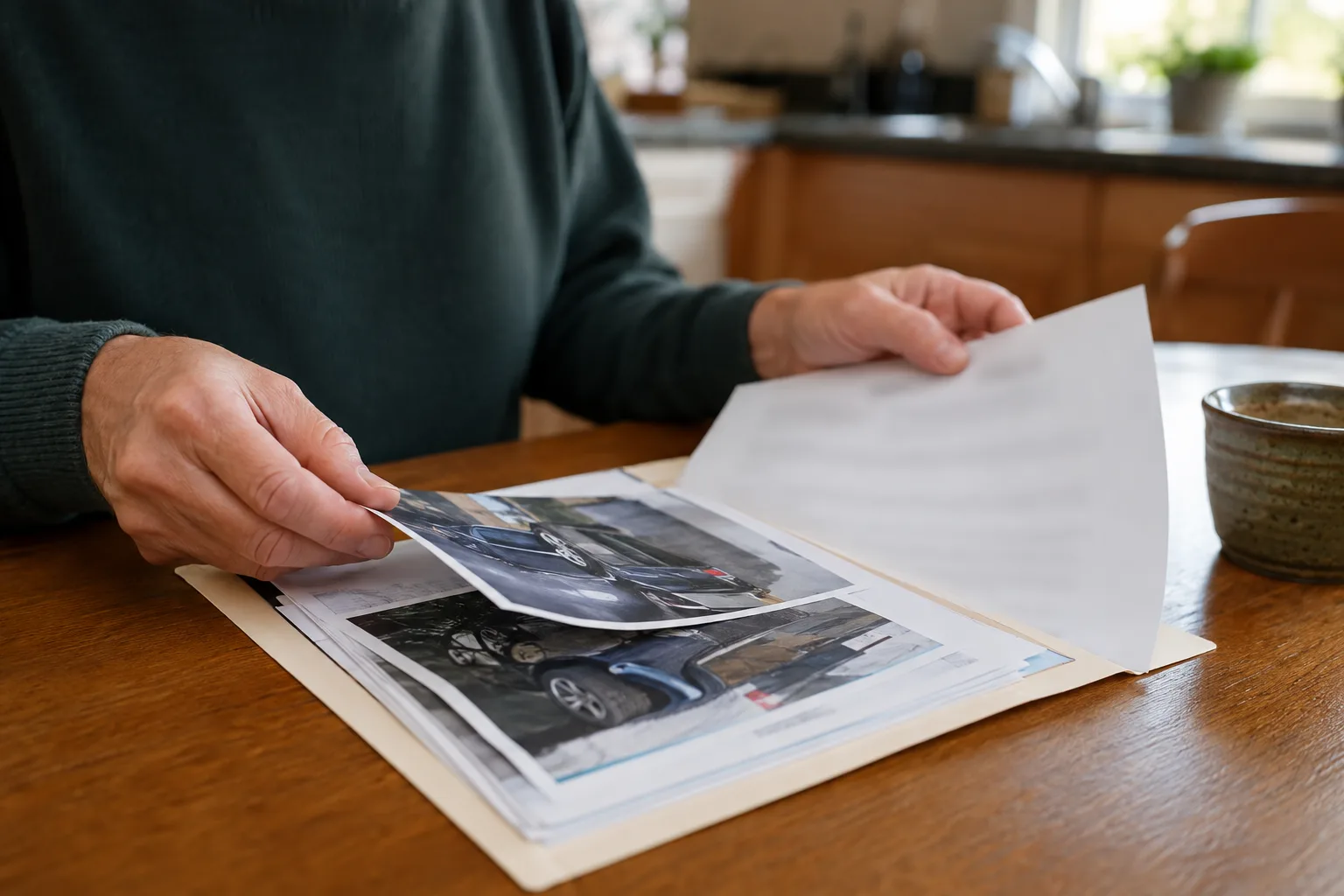
When the drivers give different accounts, preserve evidence before vehicles are repaired and recordings are overwritten:
- wide and close photographs of both vehicles, the roadway, lane lines, signs, debris, and final positions;
- original dashcam files, including footage before and after the impact;
- nearby business, home, traffic, or parking-lot video;
- witness names, contact information, and where each person was located;
- the police report, report number, and any officer photographs or diagrams;
- repair estimates and photographs taken during inspection or repair; and
- dated notes recording what you remember without filling gaps with guesses.
Damage location and scrape direction may help test the drivers’ accounts, but they should be considered with the full scene and movement sequence. A crash report can provide useful information and investigative leads. An attorney can assess how particular portions may be used in a claim or court case.
The firm’s guide to preserving dashcam footage explains why saving the original file and surrounding footage matters. If basic identifying facts are wrong, see the guide to correcting factual errors in an Indiana crash report.
Can both drivers share fault in Indiana?
Yes, for claims governed by Indiana’s Comparative Fault Act. Indiana Code § 34-51-2-5[3] provides that contributory fault chargeable to a claimant proportionately reduces compensatory damages. Under § 34-51-2-6[4], the claimant is barred if the claimant’s fault is greater than the fault of all persons whose fault proximately contributed to the claimant’s damages.
When total fault is allocated as 100%, that rule is commonly described as Indiana’s “51% bar”: 50% claimant fault does not itself trigger the bar, but 51% does. If recovery is allowed, the claimant’s damages are reduced by the claimant’s percentage of fault. The firm’s guide to Indiana’s 51% fault rule explains the framework in more detail.
In a lane-change case, the allocation must come from the evidence rather than solely from which part of each vehicle was damaged.
What should you do if an insurer disputes fault?
The Indiana Department of Insurance’s claim guidance[5] advises consumers to file promptly, provide complete and correct information, keep copies and records of communications, ask questions about disagreements, obtain a written explanation for a denial, and avoid rushing into a settlement.
- Ask the adjuster to identify the facts supporting the decision.
- Provide relevant photographs, original video, witness information, and a clear diagram while keeping copies.
- Correct factual mistakes, but do not guess about speed, distance, or timing.
- Keep a dated record of calls, emails, letters, offers, and responses.
- Before accepting a settlement, make sure you understand the agreement and seek professional advice if needed.
An adjuster’s position does not eliminate your ability to preserve additional evidence, point out factual errors, or obtain legal advice about a disputed injury claim.
A practical record-organizing checklist
Create one folder for the collision and keep:
- original photographs and video files;
- the crash report and report number;
- witness contact details;
- vehicle estimates and repair photographs;
- insurance letters, emails, offers, and claim numbers;
- medical records and bills if an injury is involved; and
- a dated list of nearby cameras and preservation requests.
Frequently Asked Questions
Is the merging driver always at fault in Indiana?
No. Indiana’s lane-movement statutes require safe movement and the appropriate stop or turn signal before the movement. The result depends on the roadway layout, each driver’s conduct, and the evidence.
Does using a turn signal give a driver the right of way?
No. A signal gives notice of an intended movement. The driver must still comply with the statute’s separate reasonable-safety requirement.
Is a vehicle signal required before every lane movement?
Section 9-21-8-24(b) requires the appropriate stop or turn signal in the manner provided by Indiana law before the movement.
Can fault be shared after a lane-change crash?
Yes, when the claim is governed by Indiana’s Comparative Fault Act. A claimant’s percentage of fault reduces damages. Recovery is barred if the claimant’s fault is greater than the combined fault of all persons whose fault proximately contributed.
Does the location of vehicle damage prove fault?
Damage location can be relevant, but it should be evaluated with vehicle positions, roadway markings, video, witness accounts, and the sequence of movement.
Sources and legal authorities
- Indiana Code § 9-21-8-24 — Slowing, turning from a direct course, and changing lanes[1], Indiana General Assembly (accessed September 7, 2026).
- Indiana Code § 9-21-8-11.5 — Roadways divided into marked lanes[2], Indiana General Assembly (accessed September 7, 2026).
- Indiana Code § 34-51-2-5 — Effect of contributory fault[3], Indiana General Assembly (accessed September 7, 2026).
- Indiana Code § 34-51-2-6 — Barring recovery and degree of contributory fault[4], Indiana General Assembly (accessed September 7, 2026).
- Indiana Code § 34-51-2-7 — Jury instructions for a single-party defendant[6], Indiana General Assembly (accessed September 7, 2026).
- Insurance Claim Tips[5], Indiana Department of Insurance (accessed September 7, 2026).
Talk with an Indiana car accident attorney
If you were injured in a merging or lane-change collision and fault is disputed, Delventhal Law Office can review the available records, explain the Indiana rules that may apply, and discuss possible next steps. You may contact the firm for a no-obligation consultation.
This article provides general information about Indiana law, not legal advice. Contacting the firm does not guarantee that the firm will agree to represent you. Representation begins only through an agreement confirmed by the firm, subject to applicable law and professional duties.