

If you were hurt at work in Fort Wayne, Allen County, or elsewhere in Indiana, a simple recordkeeping system can make conversations with your employer, medical providers, the insurance adjuster, and your attorney more manageable. This guide explains what to save and how to organize it without turning the process into another full-time job. For the broader claim, start with our Indiana workers’ compensation guide.
If you want an audio record of a visit, see how to approach recording an Indiana workers’ comp medical appointment, including clinic requests and written-report alternatives.
Key takeaways
- Save the injury report, related messages, claim correspondence, medical records, work-status notes, wage records, and receipts.
- Indiana’s Board provides separate forms for documents such as the First Report of Injury, Agreement to Compensation, Report of Temporary Total or Temporary Partial Disability Termination, Notice of Denial of Benefits, and Request for Assistance.
- Under HIPAA, you generally may inspect, review, and obtain copies of medical and billing records maintained by covered health plans and health care providers, subject to limited exceptions.
- Keep original files when possible, make a backup, and preserve the date and sender for emails, texts, photographs, and portal messages.
- A personal folder is not a submission to your employer or the Board. Ask separately what notice, response, or claim filing your situation requires.
A practical recordkeeping checklist
You do not need a complicated filing system. A paper binder, secure digital folder, or combination of both can work. The useful approach is the one you will maintain consistently. The categories and tips below are our organizational suggestions, not a list prescribed by the Board or HHS.
| Record category | Examples to save | Organization tip |
|---|---|---|
| Injury and notice | Incident report, supervisor messages, witness names, photographs, and the date you reported the injury | Keep the earliest version and note who received it |
| Claim administration | Claim number, adjuster contact information, letters, emails, portal messages, and Indiana Board forms | File items by date and keep envelopes |
| Medical care | Visit summaries, test reports, referrals, prescriptions, bills, and appointment notices | Use a separate folder for each provider |
| Work status | Off-work slips, restrictions, return-to-work notes, light-duty offers, schedules, and attendance records | Save every version, including later changes |
| Pay and expenses | Pay stubs, time records, tax documents, mileage notes, receipts, and payment records | Compare pre-injury and post-injury records |

Keep injury reports and claim communications
Start with the records closest in time to the event: your written incident report, photographs, witness information, and messages to a supervisor or human-resources representative. Write down when you reported the injury, how you reported it, and who received the report.
Save communications from the employer, insurance carrier, claims administrator, nurse case manager, and the Indiana Worker’s Compensation Board. Preserve the full message rather than a cropped screenshot whenever possible. For email, keep the sender, recipient, date, time, subject line, and attachments.
The Board’s official workers’ compensation forms page[1] identifies the current state forms used for matters including injury reporting, compensation agreements, benefit termination, denials, and informal assistance.
For more on the Indiana process, see Delventhal Law Office’s Indiana workers’ compensation practice guide and the explanation of reporting a work injury in Indiana.

Keep medical records and every work-status note
For each appointment, save the visit summary, referrals, test reports, therapy notes provided to you, medication list, appointment notice, bill, and work-status document. File each version of a written restriction, including the date and the provider’s name. Put the newest note at the front and retain the earlier ones.
The HHS Your Medical Records guide[2] explains that, with limited exceptions, you may inspect, review, and receive copies of medical and billing records held by covered health plans and health care providers. That access right is not a requirement to collect every record before asking for help.
You may request an amendment if you believe information in a medical or billing record is inaccurate or incomplete; if the provider or health plan declines the request, HIPAA allows you to submit a statement of disagreement for the record.
Practical journal tip: Use a short daily log as a memory aid. Record the date, what you observed, the activity involved, and any resulting appointment or work issue. Separate what you personally observed from what someone else told you. List questions for your medical provider without trying to answer them yourself.
If your restrictions change, keep the earlier note as well as the replacement. Delventhal Law Office’s guide to light duty and work restrictions explains why the exact written language may matter during a claim.
Keep wage, schedule, and benefit-payment records
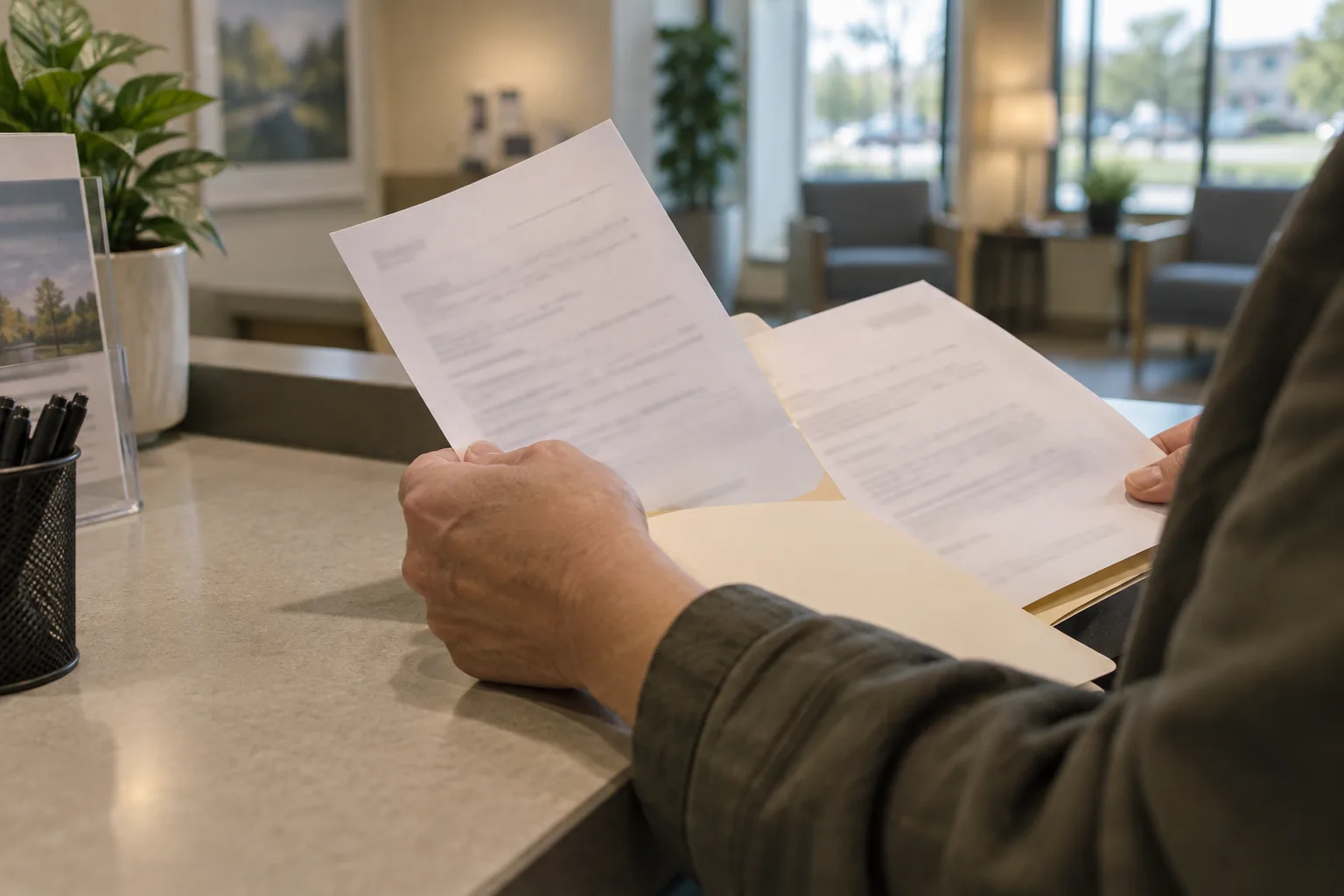
Collect pay stubs from before and after the injury, timecards, work schedules, attendance records, overtime records, bonus information, and tax documents that are already available to you. If you held more than one job, keep the corresponding records for each employer.
Save each workers’ compensation check stub, electronic-payment notice, compensation agreement, termination notice, and written explanation of payment. A simple spreadsheet can list the payment date, amount received, period identified on the document, and any question you want to raise. Saving a receipt does not establish that an expense is reimbursable; keep it for review without assuming that it will be repaid.
The Board’s Forms directory[1] lists an Agreement to Compensation and a Report of Temporary Total Disability or Temporary Partial Disability Termination. Listing a form here does not mean it is yours to file; the directory identifies some forms as electronic submissions through an approved EDI process.
If wage information appears incomplete, compare it with your own payroll records and read the guide to addressing an incorrect employer wage statement.

How to organize your work-injury file
If a recording is raised in a dispute, our guide to surveillance and video requests in Indiana workers’ comp explains questions to discuss with counsel.
- Create one master timeline. List the injury, notice, appointments, work-status changes, missed work, payments, and important communications in date order.
- Separate records by category. Use folders for incident evidence, claim correspondence, medical care, work status, wages, expenses, and Board documents.
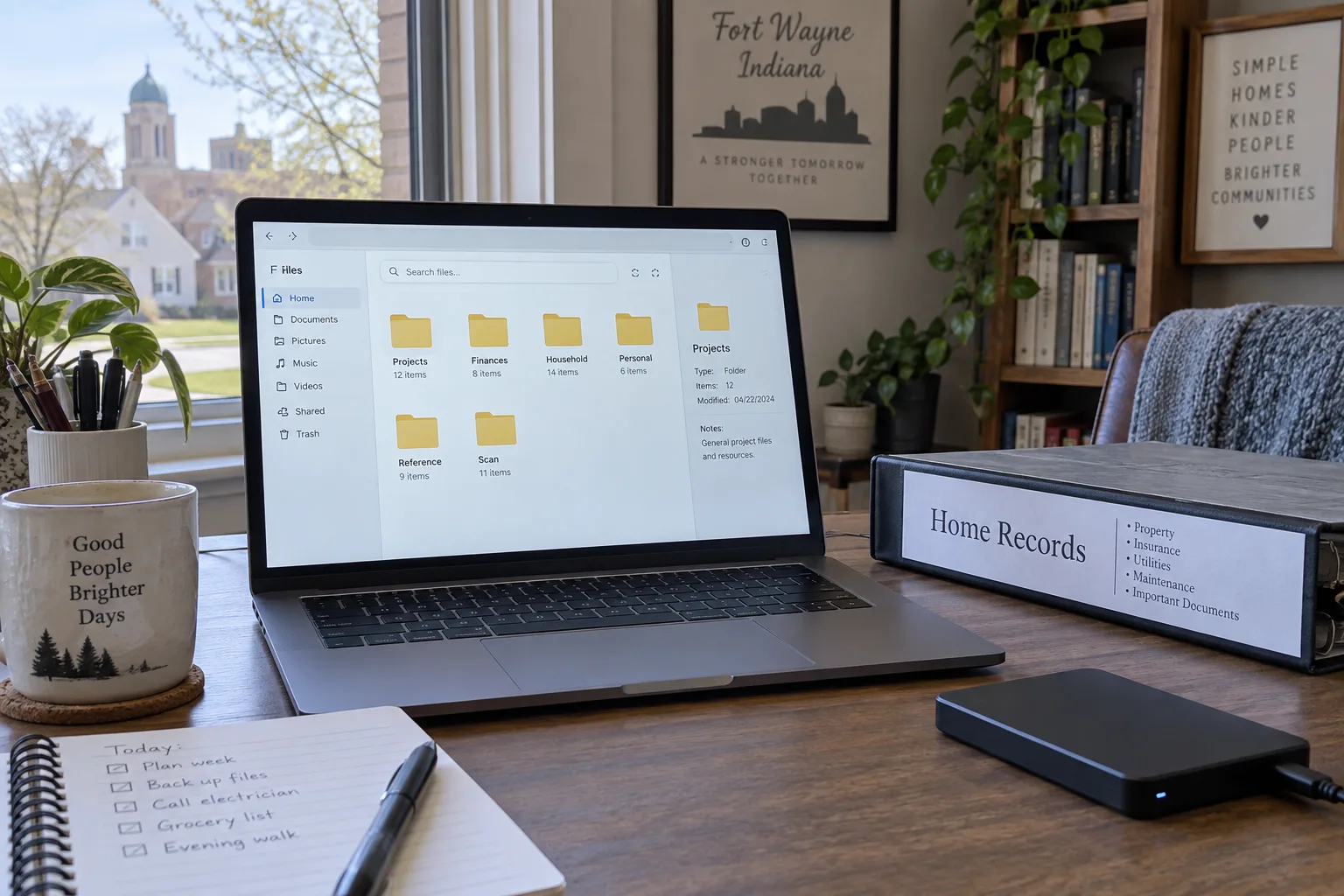
- Use consistent filenames. A format such as “2026-09-15-work-status-note-provider” sorts naturally and makes searching easier.
- Preserve originals. Keep unedited photographs, complete emails, original PDFs, envelopes, and documents containing signatures or mailing information.
- Make a backup. Store a second copy somewhere secure and separate from the device or folder you use every day.
- Protect private information. Use secure storage and avoid sending medical, payroll, or identifying information through public posts or unsecured shared links.
A consultation folder can contain your timeline, claim number, contact list, latest restrictions, important correspondence, and a short list of questions. The firm’s consultation-document checklist offers additional organization ideas.
Illustrative log entry: “September 15 — new work-status note received from clinic; copy sent to HR by email; waiting for confirmation.” Keep the note and email with the entry. If a later correction is needed, add a dated explanation rather than editing the original document. This is a fictional organization example, not a client story.
If someone asks for your earlier files, see our separate guide to prior medical records and Indiana workers’ compensation authorizations.
What if a record is missing?
Ask the person or organization that created the document for a copy. Depending on the missing item, that may be the employer, medical provider, pharmacy, insurance carrier, payroll office, or Board.
Missing-items list: Record the document requested, who has it, the request date, and whether you received a complete response. For example, a visit summary and a work-status note may be separate items. Mark an estimate or a memory as such; do not recreate a missing document as if it were an original.
The Board’s Informal Disputes page[3] describes a process initiated by filing a completed Request for Assistance, State Form 45442. The listed issues include failure-to-report allegations and unpaid medical bills. This is a dispute-resolution process, not a general medical-record ordering service.
For medical and billing records held by covered entities, the U.S. Department of Health and Human Services medical-records guide[2] explains access and correction rights. Keep your copy of the original record and the amendment request or response together; a personal annotation is not a provider amendment.
If a disagreement remains, the Board explains on its disputed-claims page[4] that medical evidence is extremely important and identifies the formal Application for Adjustment of Claim process. Keeping documents or requesting missing records is different from submitting that application. Ask an attorney to review any time-sensitive notice or claim issue; do not wait to finish your binder before seeking advice.
Frequently Asked Questions
Should I keep original documents?
Yes. Keep original signed papers, envelopes, photographs, electronic files, and complete messages when available, then use copies for routine reference.
Should I request records from every medical provider?
Consider requesting the work-injury records you do not already have from each provider you visited. HHS explains that HIPAA generally provides access to medical and billing records held by covered providers and plans, subject to limited exceptions. Ask for help identifying relevant records if the file is extensive.
Should I save texts and emails with my employer?
Yes. Save complete work-injury messages with their dates, participants, and attachments. Add them to your dated folder.
Should I keep a personal journal?
A concise, factual journal can help you remember dates, appointments, work changes, and questions. Describe what you personally observed and identify any information supplied by someone else.
Do I need every record before speaking with an attorney?
No. Bring what you already have and identify what appears to be missing. A review can help you decide which additional records are relevant to your situation.
Official source links checked September 27, 2026. The automatically generated references below identify the Board and HHS materials discussed in this guide.
If you were injured at work and want help reviewing the records you have collected, Delventhal Law Office offers a free, private consultation to discuss your situation and possible next steps. Bring what you have and a list of missing items; do not post medical or payroll records publicly.
This article is general information about Indiana law and is not legal advice. Reading it does not create an attorney-client relationship, and neither does contacting us.