
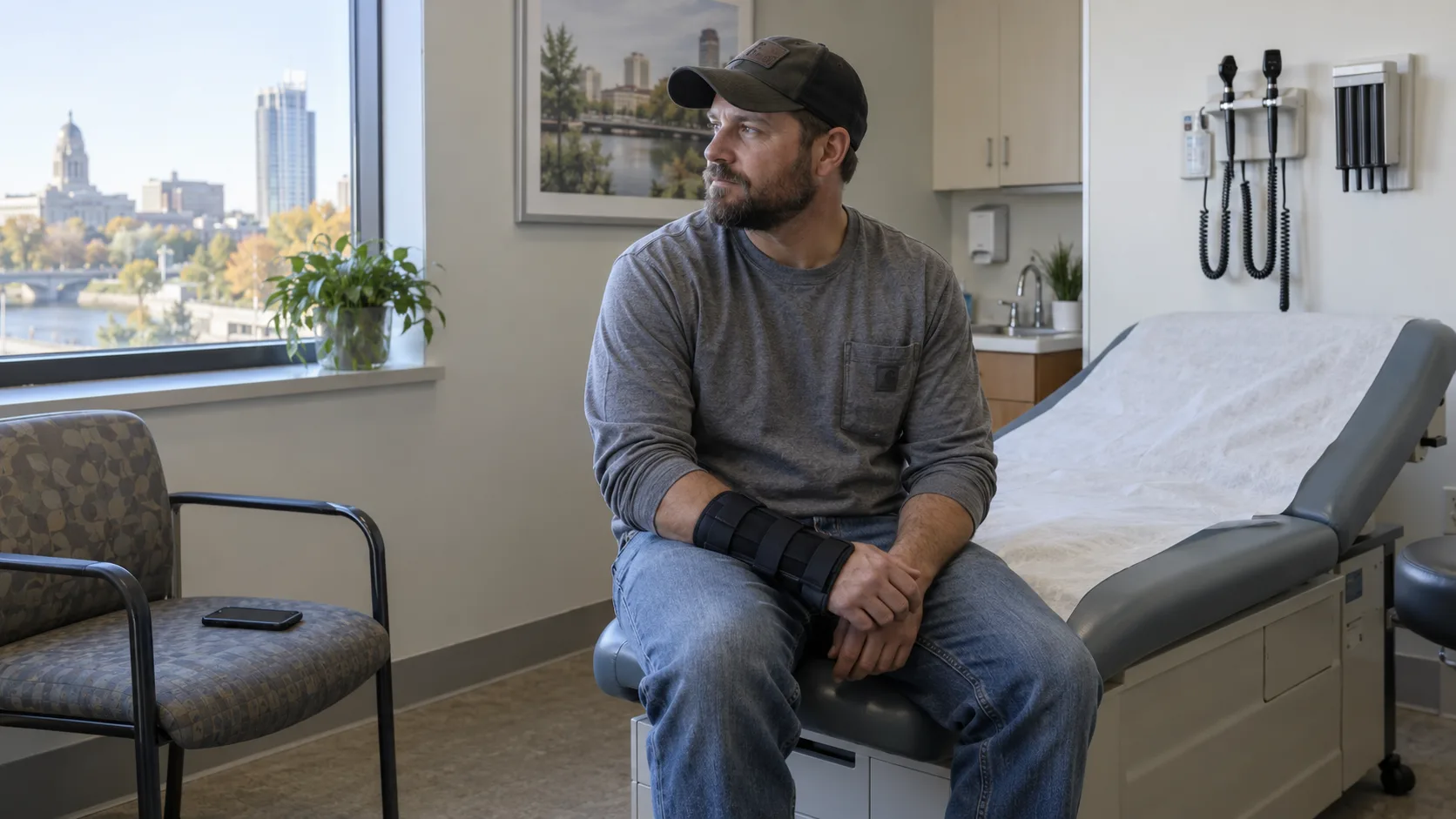
It is understandable to want an accurate record of the visit and return-to-work instructions. The goal is to preserve that information without turning the visit into a dispute about the phone. This guide distinguishes recording-law rules from the examination and documentation rules that matter in an Indiana workers’ compensation claim.
Key takeaways
- Participant-consent rules address interception of conversations; they are not a complete answer about clinic policies, video, other patients, or an examination order.
- Asking permission is a practical recommendation here—not a claim that Indiana always requires everyone’s consent.
- Do not assume a recording disagreement excuses missing or obstructing an employer-requested examination.
- Written visit notes, work-status forms, and the statutory examination report can provide a separate record.
- The Board’s nurse case manager guidance addresses examination-room attendance separately from recording.

What recording law does—and does not—answer
Federal participant-consent rule. 18 U.S.C. § 2511(2)(d)[1] says a person not acting under color of law may intercept a wire, oral, or electronic communication when that person is a party or a party has given prior consent, unless the purpose is to commit a criminal or tortious act. That is a rule about legality under that federal chapter, not permission to disregard every other legal restriction.
Indiana’s definitions matter. Indiana Code 35-31.5-2-176[2] defines “interception” in terms of someone other than a sender or receiver recording or acquiring an electronic communication without the sender’s or receiver’s consent. Section 110[3] defines electronic communication by reference to transmission through wire, radio, or specified electronic systems. These provisions explain why a broad slogan about “one-party consent” should not replace analysis of how and what you are recording.
Clinic agreement is a different question. A consent exception in a recording law is not itself an order requiring a clinician to conduct an examination on your preferred recording terms. Likewise, a clinic’s objection does not by itself establish that recording would be a crime. This article does not decide whether a particular clinic policy, examination condition, or accommodation request is enforceable. If there is a conflict, have your attorney review the actual policy and appointment notice.
For an ordinary in-person visit, our practical approach is to request an agreed audio recording of your own discussion. Do not leave a device recording after you leave, capture unrelated patients, or assume audio-consent rules settle video or interstate telehealth questions. Those situations need their own review.
How to ask before the appointment
Contact the clinic before the visit when possible. Explain the purpose without accusing anyone: “I want to remember the instructions accurately. May I make an audio recording of my discussion with the clinician for my own notes?”
| Question to ask | What to clarify |
|---|---|
| May I record our conversation, with the phone visible? | Whether the clinician agrees and whether the request is audio only. |
| Does your office have a written recording policy? | Any consent form, restrictions, or person who can resolve the request. |
| When should I start and stop? | Keep the recording limited to the agreed discussion, not waiting-room activity. |
| If there is an objection, how can I get written instructions? | Visit notes, work-status forms, and an opportunity to clarify the plan. |
Keep the office’s written response. If you need communication assistance, explain what would help beforehand and ask about available options; do not assume a general recording-policy answer resolves your individual situation.

What to do if recording is denied
Do not turn a disagreement about recording into an argument in the examination room. As practical preparation, ask for the reason and proposed alternative, save the response, and contact your attorney if the dispute threatens the appointment. Avoid making attendance conditional on recording without advice about that examination.
- Bring a concise list of questions, medications, and work tasks you want to discuss.
- Ask to take written notes and request clear written restrictions.
- Request the visit note, work-status form, referrals, and orders through the office’s records process.
- Write a dated account of what you understood immediately afterward.
- Use a brief portal message to ask about an unclear instruction or discrepancy; do not alter the clinician’s document.
Under 45 C.F.R. § 164.524(a)(1)[4], an individual generally has access to protected health information about that individual in a covered entity’s designated record set. There are exceptions, including psychotherapy notes and information compiled in reasonable anticipation of, or for use in, a civil, criminal, or administrative proceeding, along with other specified grounds for denial. Do not assume every litigation examination file is available through HIPAA. This is a records-access rule, not an appointment-recording authorization.
Employer-requested examinations require extra care
Indiana Code 22-3-3-6(a)[5] requires an injured employee, during a period of claimed resulting disability or impairment, to submit to examinations at reasonable times and places when requested by the employer or ordered by the Worker’s Compensation Board, by the qualified physician or surgeon designated and paid as the statute provides.
The statute says refusal or obstruction suspends the right to compensation and to pursue proceedings until the refusal or obstruction ends. It also says compensation for that suspension period is not payable unless the Board considers the circumstances justified. The employee must be served with notice of the consequences in the Board-prescribed form. A request to record is not automatically a refusal or obstruction; whether conduct amounts to either requires attention to the facts and applicable process. Do not assume you can safely skip the examination over a recording disagreement.
Section 6(a) and (c) expressly allow a duly qualified physician or surgeon provided and paid by the employee to be present. That particular attendance provision concerns a medical professional; arrange any request for a friend, relative, or other support person separately instead of assuming they are interchangeable.
A written examination statement is a separate protection. Under section 6(c), when an employer-engaged physician examines the worker and the worker has no physician present, the examiner must give the worker or representative a written statement disclosing the facts reported to the employer. It must be furnished as soon as practicable, and no later than 30 days before the case is set for hearing—not necessarily within 30 days after the appointment. Section 6(e) specifies required information, including the injury history, diagnosis, causation opinion and reasons, disability or impairment opinion and reasons, and physician’s signature. See section 6(c)–(g) for the statement and evidence rules[5].
For background on medical visits, see who chooses the doctor in an Indiana workers’ compensation claim.

Can a nurse case manager attend?
The Indiana Worker’s Compensation Board’s Nurse Case Manager Guidelines[6] say the nurse case manager must inform the employee that the employee may require the nurse case manager not to be present during a medical examination. If the nurse case manager meets with the physician before or at the conclusion of an appointment, the injured worker must be invited to participate.
Those attendance guidelines are separate from whether a conversation is recorded. If you want the case manager outside during the examination, communicate that request calmly. Our Indiana nurse case manager guide explains that role in more detail.
Preserve an accurate record, with or without audio
Use a consistent file for appointment notices, the clinic’s response to a recording request, visit notes, work-status forms, and your own dated notes. Compare what you understood with the written restrictions and ask the clinician to clarify discrepancies. The injured-worker recordkeeping checklist can help organize the broader claim file.
If you make an agreed recording, preserve the original file and note the date, participants, and agreed scope. Avoid editing the original or posting it publicly. Discuss use or sharing with your attorney rather than assuming a recording will be accepted as evidence or resolve a medical disagreement. These are preservation recommendations, not predictions about acceptance as evidence or the outcome of a claim.

Frequently Asked Questions
Does one-party consent mean I never need to ask the doctor?
The federal participant-consent rule generally allows a private participant to record a conversation unless the purpose is criminal or tortious. Indiana’s interception definition also distinguishes participants from outsiders recording without consent. Neither point resolves every clinic-policy or examination-order dispute. Asking first is our practical recommendation, not a statement that everyone’s consent is always legally required.
What if the clinic refuses my recording request?
Ask for its policy and an alternative way to document the visit. If the objection affects your ability to complete a required examination, have your attorney review the notice and response. This guide does not determine whether a particular refusal or policy is legally enforceable.
Can I skip an employer-requested examination if recording is refused?
Do not assume that is safe. Indiana Code 22-3-3-6[7] contains suspension consequences for refusal or obstruction, a required notice provision, and a Board-justification provision concerning compensation during suspension. Seek advice before making participation conditional on recording.
Do I have to let the nurse case manager stay in the examination room?
The Board’s guidelines say you may require the nurse case manager not to be present during the medical examination. That is separate from a recording request.
Can I obtain notes or an examination report afterward?
HIPAA generally provides access to records in a covered entity’s designated record set, subject to exceptions. For an employer-engaged examination with no employee-provided physician present, Indiana Code 22-3-3-6[7](c) separately requires a written statement to the employee or representative. Ask which process applies to the document you need.
Is permission for audio also permission for video?
Do not assume so. Specify the format when asking, and keep any agreed recording within that scope. This article does not analyze hidden-camera law or give clearance to record other patients, changing areas, or an examination on video.
If an examination notice, recording dispute, missing report, or inaccurate restriction is affecting your Indiana workers’ compensation claim, Delventhal Law Office can review the documents and discuss next steps. Request a free consultation; do not post private medical details publicly.
This article is general information about Indiana law and is not legal advice. Reading it does not create an attorney-client relationship, and neither does contacting us.