When the weather warms up across Allen County, motorcycles return to roads like Coliseum Boulevard, Lima Road, US-30, and the downtown grid. For most drivers, a motorcycle is easy to overlook — it is smaller, narrower, and harder to judge for speed and distance than a car or truck. That single gap in awareness is behind a large number of serious motorcycle crashes. This guide gives Fort Wayne and northeast Indiana drivers concrete, Indiana-specific habits that help keep riders safe.
- Riders have the same legal rights you do. Indiana law gives a motorcycle full use of a traffic lane.
- "I didn't see them" is the core problem. Most multi-vehicle motorcycle crashes happen because a driver failed to spot the rider.
- Intersections and left turns are the danger zones. Yielding and a second look matter most where traffic crosses.
- Small habits prevent crashes. Blind-spot checks, full following distance, signaling early, and no phone use protect riders.
- The stakes are not equal. A rider has far less protection than you do in a crash, so the margin for error is small.
Why drivers miss motorcycles
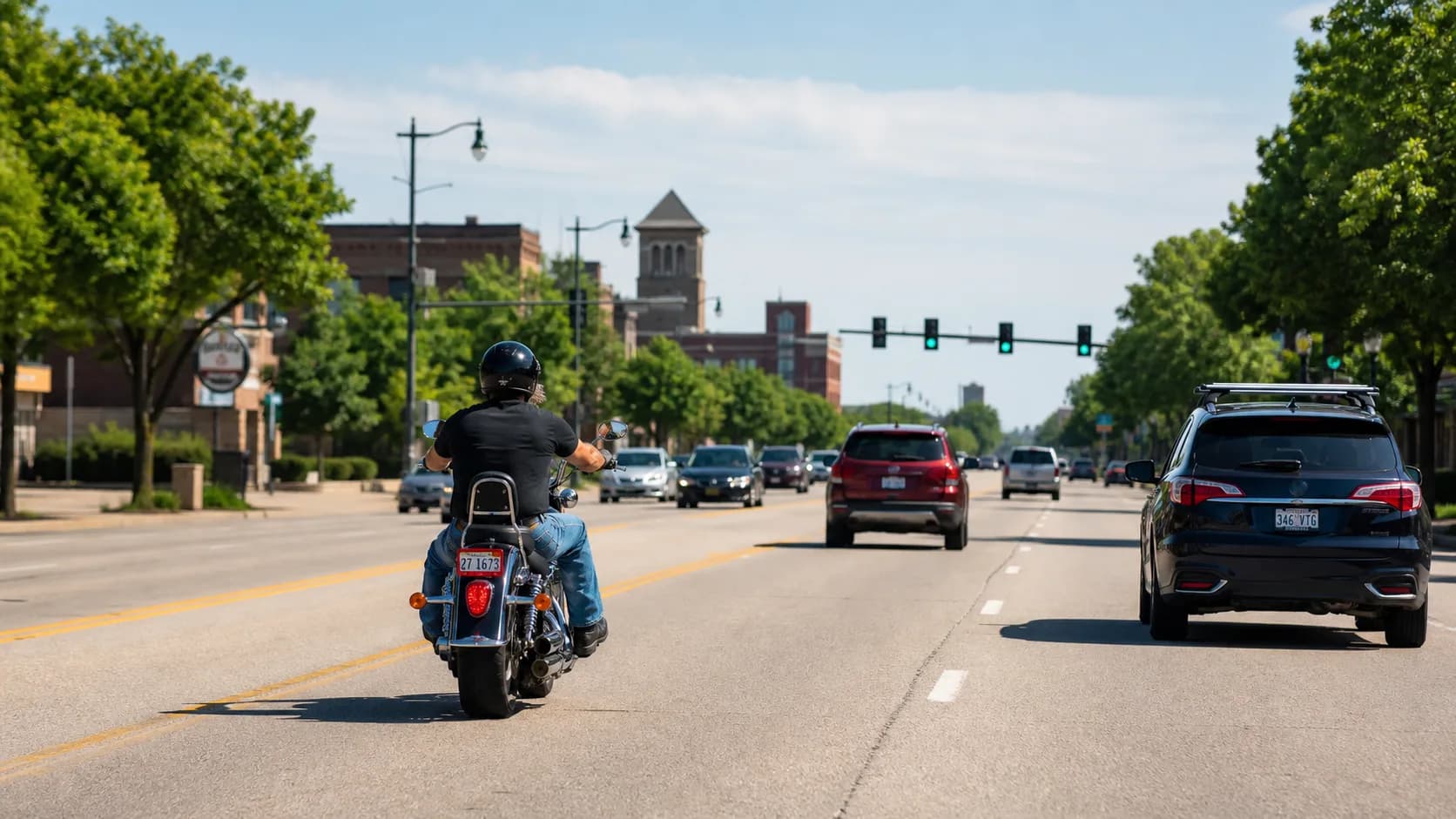
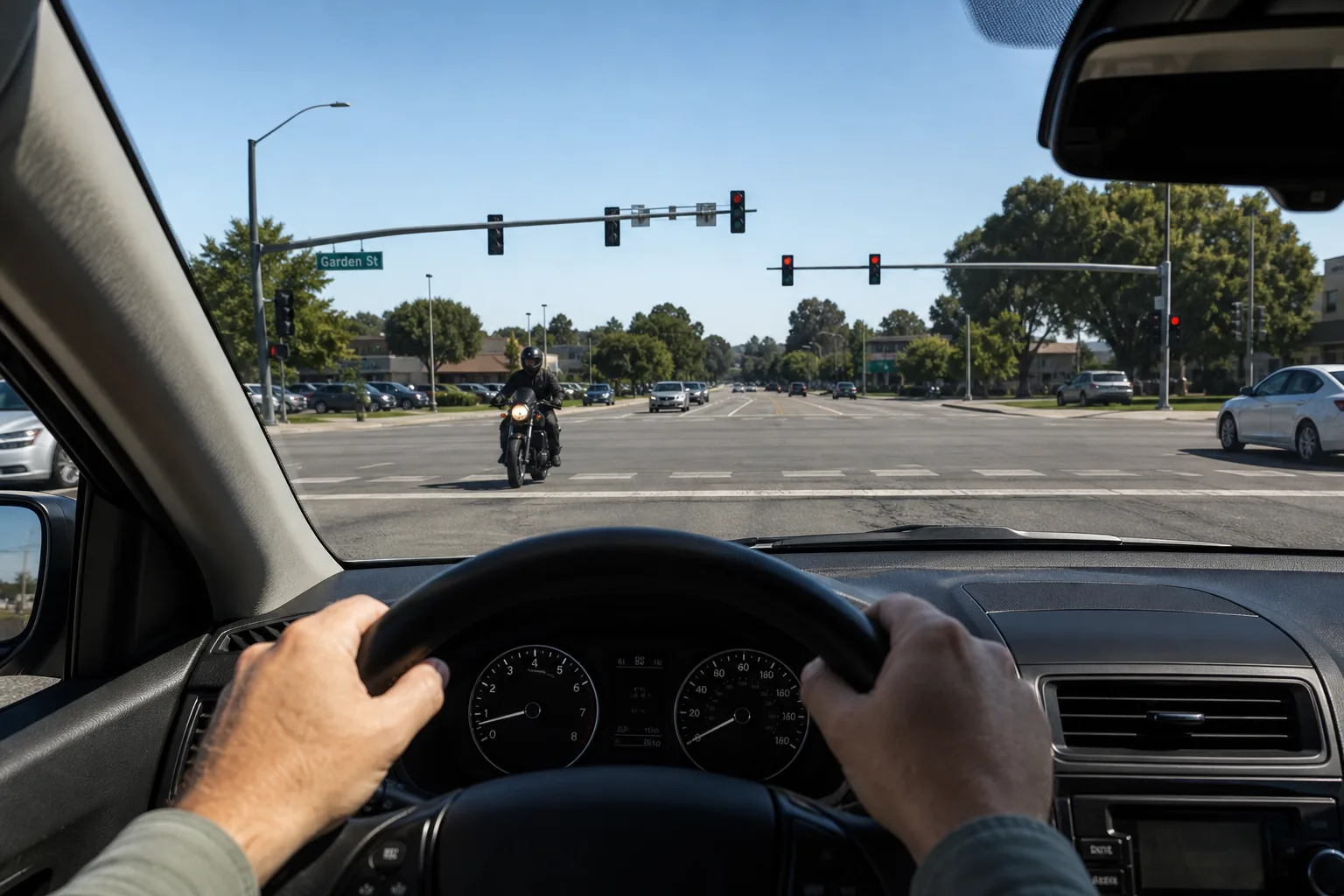
A motorcycle presents a much smaller visual profile than a car. Your brain is trained to scan for car-sized and truck-sized objects, so a single headlight or a narrow silhouette is easy to filter out — a problem researchers call "inattentional blindness." It is also genuinely harder to judge how fast a motorcycle is approaching and how far away it is, which is why a left turn that feels safe can put you directly in a rider's path.
This is not a minor factor. According to the National Highway Traffic Safety Administration, the majority of multi-vehicle motorcycle crashes happen because the other driver simply did not see the motorcyclist[1]. The good news: that means the most common cause is also one of the most preventable.
What Indiana law says about a motorcycle's lane
A common mistake is treating a motorcycle as something you can "share" a lane with, squeezing past it or crowding it toward the shoulder. Under Indiana law, that is both unsafe and improper. In Indiana, a motorcycle is entitled to the full use of a traffic lane, and other vehicles may not be driven in a way that deprives a rider of that full lane (Indiana Code 9-21-10-6[2]). The same statute allows two motorcyclists to ride two abreast in a single lane if both riders agree.
Riders need that full lane width on purpose. They move within the lane to dodge potholes, gravel, manhole covers, and wind gusts, and to stay visible. When you see a motorcycle shift to one side of its lane, it usually is not an invitation to pass in the same lane — it is the rider managing a hazard you may not see.
A driver's checklist for sharing the road safely
You do not need to memorize statistics to be a safer driver around motorcycles. You need a handful of habits that close the "I didn't see them" gap. These mirror the driver guidance promoted by NHTSA and Indiana's annual Motorcycle Safety Awareness campaign.
- Look twice at every intersection. Most car-motorcycle conflicts happen where traffic crosses or turns. Actively look for a motorcycle, not just "anything car-sized." A quick glance is not enough.
- Yield before you turn left. Left turns across oncoming traffic are among the deadliest scenarios for riders. Wait for a clear, confident gap and re-check before you commit.
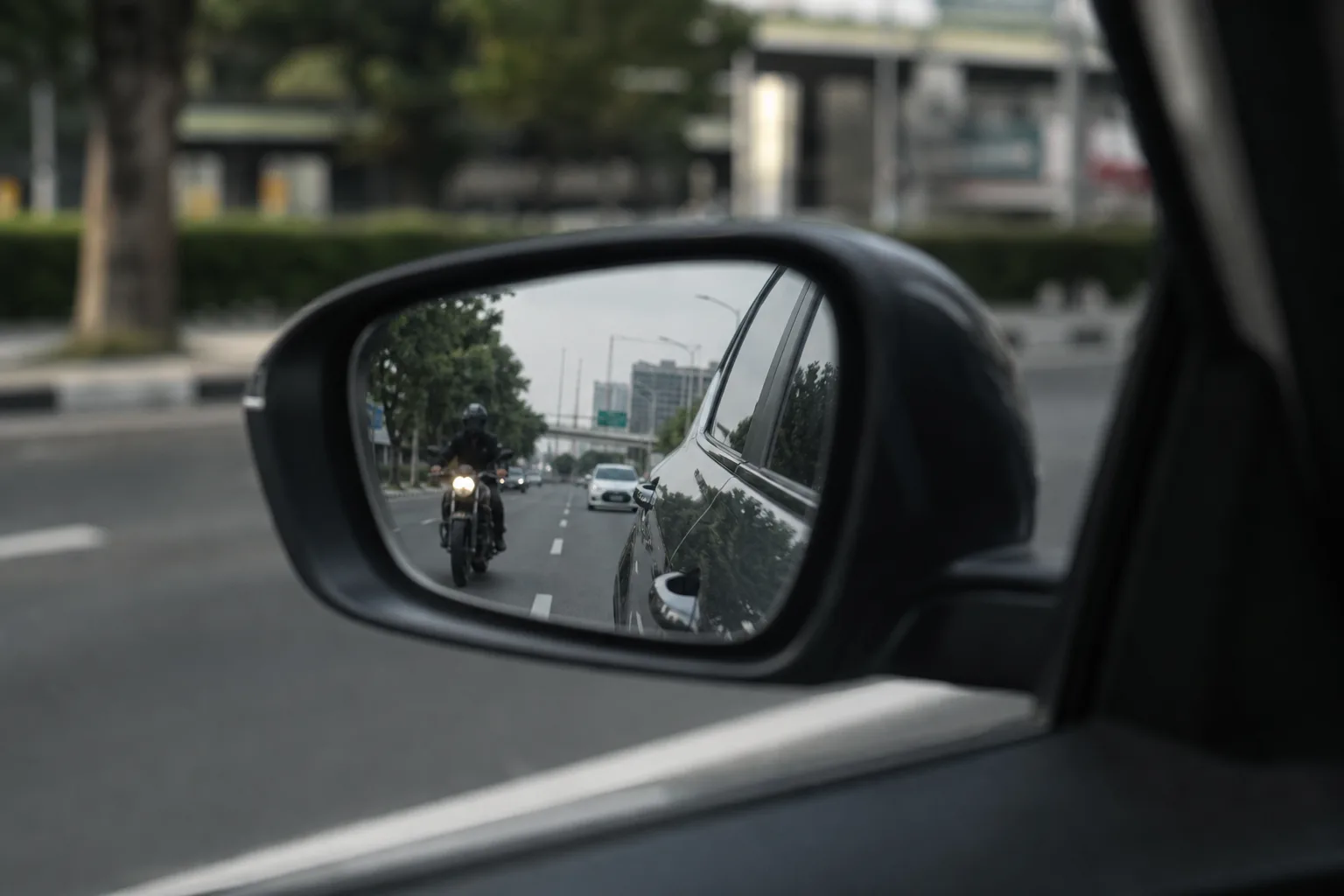
- Check your blind spots and signal early. A motorcycle can disappear in a blind spot completely. Turn your head, use your mirrors, and signal well before changing lanes or merging.
- Give a full following distance. A motorcycle can stop quickly and can slow by downshifting without its brake light coming on. Leave extra space — at least three to four seconds of following distance — so a sudden slowdown does not become a rear-end crash.
- Allow the whole lane. Do not pass a motorcycle within the same lane, and give wide clearance when you pass in an adjacent lane so your wind blast does not destabilize the rider.
- Put the phone down. A two-second glance at a text is plenty of time to miss a motorcycle entirely.
- Account for weather and road surface. Rain, leaves, and loose gravel are far more dangerous for two wheels than four. Give riders more room in bad conditions.
If distraction is your weak spot behind the wheel, our overview of how to prevent distracted driving in Fort Wayne pairs well with these habits.
Riding season in Fort Wayne and northeast Indiana
Motorcycle traffic in Indiana climbs sharply once the cold breaks, which is why the state recognizes May as Motorcycle Safety and Awareness Month and why the "look twice, save a life" message shows up every spring. But riders are out from early spring through late fall, on commutes, weekend rides, and group rides along rural routes in Allen, DeKalb, Whitley, and Huntington counties.
For drivers, the takeaway is seasonal awareness: after a winter of seeing almost no motorcycles, your scanning habits get rusty. Re-train your eyes early in the season to expect riders at intersections, on-ramps, and two-lane country roads where passing and left turns are common.
It is also worth knowing that Indiana only requires helmets and eye protection for riders under 18 and those operating on a learner's permit (Indiana Code 9-19-7-1[3]). Many adult riders you pass are legally riding without a helmet — another reason your margin for error as a driver is so small.
Why the stakes are not equal
When a car and a motorcycle collide, the outcomes are rarely comparable. A rider has no crumple zones, no airbags, and no steel cage. National data reflect that gap: NHTSA reports that, per mile traveled in 2024, motorcyclists were almost 27 times more likely than passenger-car occupants to die in a crash[1] and almost five times more likely to be injured.
That imbalance is exactly why prevention is worth the small effort. A single extra look or a one-second pause before a left turn costs you almost nothing, but for a rider it can be the difference between an uneventful day and a life-altering injury. If you ride yourself, our guide to avoiding rear-end collisions for Indiana motorcyclists and our broader look at motorcycle accidents in Indiana cover the rider's side of the same problem.
If a crash happens anyway
Even careful drivers and riders end up in collisions. If you are involved in a crash with a motorcycle in Fort Wayne or Allen County, the basics a Fort Wayne motorcycle accident lawyer would stress after a collision still apply: stop, call 911, get a police report, exchange information, photograph the scene, and seek medical care. Injuries to riders are often more serious than they first appear, so an ambulance is rarely an overreaction.
Indiana also has firm deadlines if anyone is hurt. Most personal injury claims in Indiana must be filed within two years of the crash (Indiana Code 34-11-2-4[4]), though some situations can shorten or change that window. If you or a loved one was a rider hurt by another driver, you can learn how a Fort Wayne motorcycle accident attorney approaches these cases, or read about how Delventhal Law Office helps injured motorcyclists preserve evidence and deal with insurers.
Frequently Asked Questions
Can I share a lane with a motorcycle in Indiana?
No. Indiana law gives a motorcycle the full use of a traffic lane, and you may not drive in a way that deprives a rider of that lane (Indiana Code 9-21-10-6[2]). Two motorcyclists may ride side by side in one lane, but a car should never share a lane with a motorcycle.
What is the most dangerous moment for drivers around motorcycles?
Intersections — especially left turns across oncoming traffic. Because a motorcycle is small and its approach speed is hard to judge, drivers frequently turn into a rider's path. Looking twice and waiting for a clear gap prevents many of these crashes.
How much following distance should I leave behind a motorcycle?
More than you would behind a car. A motorcycle can stop quickly and can slow without its brake light activating. A following distance of at least three to four seconds gives you time to react to a sudden slowdown.
Do all Indiana motorcyclists have to wear helmets?
No. Indiana requires helmets and eye protection only for riders under 18 and those operating on a learner's permit (Indiana Code 9-19-7-1[3]). Many adult riders legally ride without a helmet, which is one more reason drivers should give them extra room.
A calm next step
Most motorcycle crashes are not freak accidents — they are predictable, preventable moments where a driver did not see a rider in time. Building a few simple habits protects everyone on Fort Wayne's roads. If you or someone you love was hurt in a motorcycle crash and you are not sure what to do next, a free consultation can help you understand your options and the deadlines that may apply. You can contact Delventhal Law Office to talk through what happened with no pressure and no obligation.
This article is general information about Indiana road safety and law, not legal or medical advice. Reading it does not create an attorney-client relationship. For advice about your specific situation, speak with a qualified Indiana attorney or medical professional.