A rider may remember only the impact and the pavement. Another driver may offer a different account. This guide focuses on motorcycle-specific evidence and documents. For the broader legal framework, see our guide to fault in Indiana rear-end collisions and our Fort Wayne motorcycle accident page.
Key takeaways
- A rear impact is a fact, not an automatic legal conclusion.
- Indiana law prohibits following another vehicle more closely than is reasonable and prudent, considering speed, the time interval between vehicles, and highway conditions.
- When Indiana’s Comparative Fault Act applies, the claimant’s fault percentage affects damages, and recovery is barred when the claimant’s fault is greater than the fault of all persons whose fault proximately contributed.
- Photograph and safeguard the motorcycle and gear before repair or disposal if their condition may be disputed.
- Keep the policy, claim number, carrier correspondence, estimates, bills, and receipts together.
Does a rear impact automatically make the following driver at fault?
No. In Moore v. Negrelli[1], a nonprecedential memorandum decision, the Indiana Court of Appeals stated that a rear-end collision by itself does not create a presumption or authorize an inference of negligence. That proposition does not decide any particular crash.
Indiana Code § 9-21-8-14[2] prohibits following another vehicle more closely than is reasonable and prudent, considering speed, the time interval between vehicles, and highway conditions. Photos, video, physical damage, witness accounts, and vehicle information may help evaluate the sequence rather than relying only on the point of impact.
When Indiana’s Comparative Fault Act applies, Indiana Code § 34-51-2-6[3], a claimant is barred from recovery when the claimant’s fault is greater than the fault of all persons whose fault proximately contributed. Indiana Code § 34-51-2-5[4] provides that fault chargeable to a claimant proportionately diminishes compensatory damages awarded to the claimant, and it does not bar recovery except as provided in section 6.
What evidence should be preserved after a motorcycle rear-end crash?
| Evidence | What to preserve | Question it may help answer |
|---|---|---|
| Motorcycle and vehicle | Post-crash condition, damage areas, lamps, tires, brakes, controls, measurements, storage location, and repair records. | Where did contact occur, and was vehicle condition disputed? |
| Scene | Wide and close photographs, final positions, debris, marks, lane geometry, traffic controls, lighting, weather, sight lines, and nearby camera locations. | What did the scene look like at the relevant time? |
| Witnesses and video | Names, contact details, vantage points, and original dashcam or helmet-camera files. | What did an independent person or recording capture? |
| Gear and visibility | Helmet, jacket, reflective material, footwear, damaged clothing, lights, reflectors, and photographs. | What was the condition of the gear and visibility equipment? |
| Records | Crash report, towing and storage papers, estimates, medical bills and records, wage records, and carrier correspondence. | What was documented, charged, or communicated after the crash? |
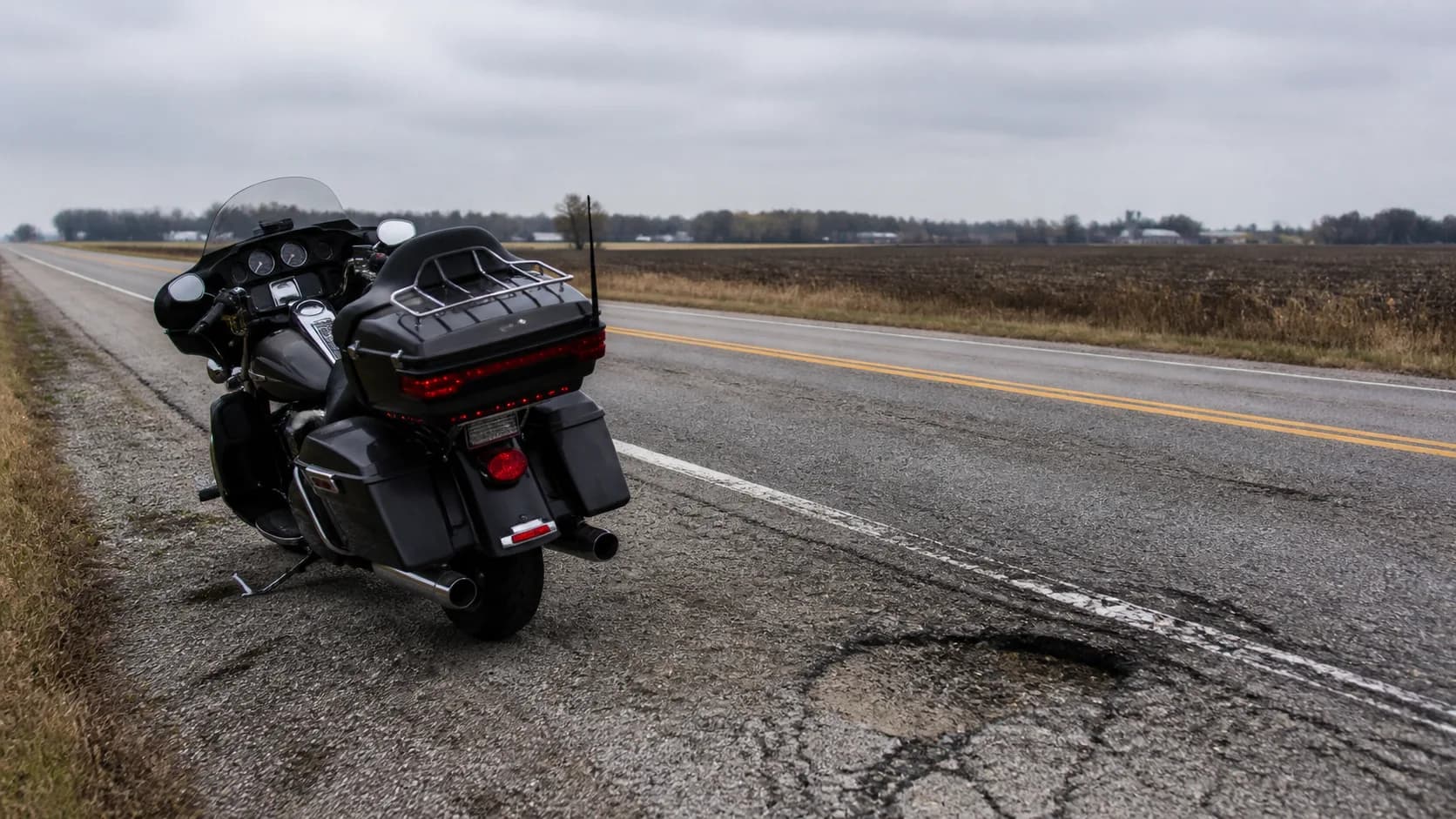
Keep original photographs and recordings when possible. Record where the motorcycle and gear are stored and who has possession. Before authorizing repair or disposal, consider whether their unchanged condition is relevant to a disputed issue.
What electronic data may matter?
Depending on the vehicle and event, an event data recorder may record information related to a crash. The National Highway Traffic Safety Administration[5] explains that EDRs record technical vehicle and occupant information for a brief period before, during, and after a crash. The available fields vary, so identify the vehicle’s make, model, and year before assuming useful data exists.
Other possible sources include dashcams, helmet cameras, navigation records, paired-phone or infotainment records, and fleet telematics. Save devices and original files without altering them. Questions about access, consent, or extraction should be evaluated for the specific device and circumstances.
Which insurance and claim documents should a rider gather?
The Indiana Department of Insurance[6] advises policyholders to report a claim promptly, keep copies of correspondence, and ask for a written explanation that identifies the policy language when a claim is denied. Save the claim number and gather:
- the crash report and exchanged contact and insurance information;
- copies of insurance papers and carrier letters;
- damage photographs, estimates, towing and storage invoices, and receipts;
- medical bills and records, wage records, and work restrictions; and
- carrier emails, letters, requested forms, and proposed settlement papers.
For another document checklist, see our guide to papers to collect after a crash involving an uninsured driver.
Prevention guidance that remains useful
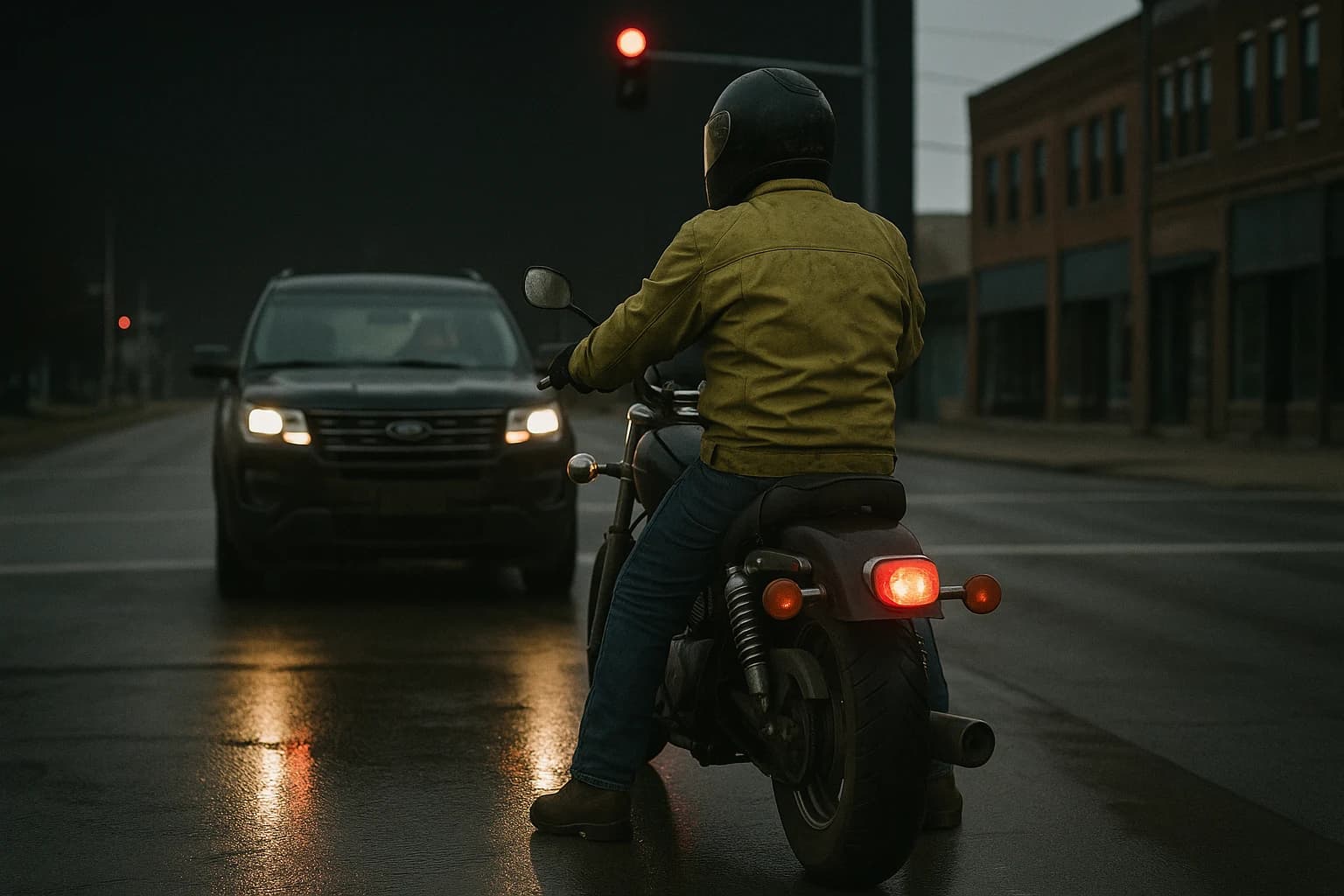
Safety habits do not transfer responsibility for another road user’s conduct. At a stop, the Indiana Motorcycle Operator Manual[7] advises riders to stop well behind the vehicle ahead and watch vehicles approaching from behind.
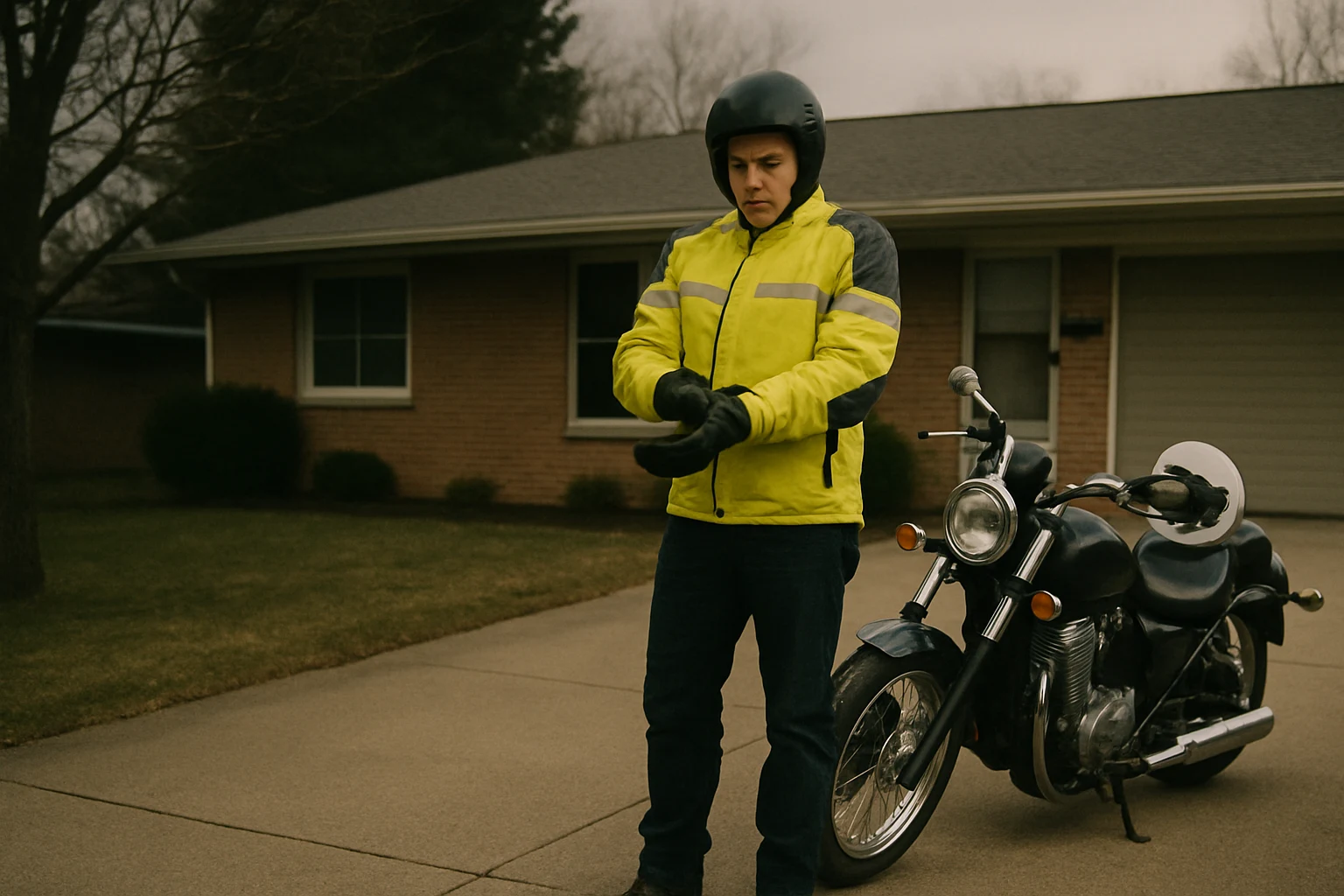
Signal and slow progressively when conditions permit. Adjust lane position for surface hazards and current traffic conditions. Check mirrors for approaching traffic.
A careful next step
If you were injured in an Indiana motorcycle rear-end crash and want help reviewing the available evidence and policy documents, you may request a free case evaluation. Delventhal Law Office can determine whether the firm is able to assist. No particular fault allocation or result is promised.
This article is not legal advice.
Sources
- Indiana Court of Appeals, Moore v. Negrelli, Memorandum Decision 22A-CT-3056. Accessed September 7, 2026. Official opinion[1].
- Indiana General Assembly, Indiana Code § 9-21-8-14[8], which prohibits following another vehicle more closely than is reasonable and prudent, considering speed, the time interval between vehicles, and highway conditions. Accessed September 7, 2026. Official code[2].
- Indiana General Assembly, Indiana Code § 34-51-2-6[9], under which a claimant is barred from recovery when the claimant’s fault is greater than the fault of all persons whose fault proximately contributed. Accessed September 7, 2026. Official code[3].
- Indiana General Assembly, Indiana Code § 34-51-2-5[10], which provides that claimant fault proportionately diminishes compensatory damages and does not bar recovery except as provided in section 6. Accessed September 7, 2026. Official code[4].
- National Highway Traffic Safety Administration, Event Data Recorder. Accessed September 7, 2026. Official resource[5].
- Indiana Department of Insurance, Insurance Claim Tips. Accessed September 7, 2026. Official consumer guidance[6].
- Indiana Bureau of Motor Vehicles, Indiana Motorcycle Operator Manual. Accessed September 7, 2026. Official manual[7].
Sources
- Moore v. Negrelli (public.courts.in.gov) ↩
- Indiana Code § 9-21-8-14 (iga.in.gov) ↩
- Indiana Code § 34-51-2-6 (iga.in.gov) ↩
- Indiana Code § 34-51-2-5 (iga.in.gov) ↩
- National Highway Traffic Safety Administration (nhtsa.gov) ↩
- Indiana Department of Insurance (secure.in.gov) ↩
- Indiana Motorcycle Operator Manual (in.gov) ↩
- Indiana Code § 9-21-8-14 (iga.in.gov) ↩
- Indiana Code § 34-51-2-6 (iga.in.gov) ↩
- Indiana Code § 34-51-2-5 (iga.in.gov) ↩