
A short-term-rental injury can involve an unfamiliar property, remote communications, and records stored in a listing or app. The core Indiana premises-liability questions are still fact-specific. The rental format mainly changes where the useful records may be found.
Key takeaways
- A condition on the property and an injury do not, by themselves, prove negligence.
- Indiana premises-liability duty depends primarily on who controlled the premises when the incident occurred.
- For an invitee’s condition-based claim, the evidence may address what the possessor knew or reasonably would have discovered and what protective care was used.
- The listing, reservation, messages, photographs, and maintenance records can help reconstruct the condition and identify the people connected to it.
- A work-trip stay raises a separate workers’ compensation question only when the injury arose out of and in the course of employment.

How does Indiana premises-liability law apply?
In Isgrig v. Trustees of Indiana University[1], the Indiana Supreme Court explained that a premises-liability plaintiff must prove a duty, a breach of that duty, and damages proximately caused by the breach. The Court also said that duty in a premises case depends primarily on who controlled the premises when the incident occurred.
For an invitee injured by a condition on land, Isgrig applies the rule that a possessor may be liable when the possessor knows or, through reasonable care, would discover a condition and should realize it presents an unreasonable risk; should expect invitees will not discover or protect themselves from it; and fails to use reasonable care to protect them. The Court also cautioned that a landowner is not an insurer of an invitee’s safety.
That framework requires evidence about a particular condition and the people who controlled it. A loose handrail, unstable deck, uneven floor, unlit stair, broken lock, or alarm concern may present different factual and technical questions. For related background, see the firm’s property conditions overview and its guide to stairs, handrails, and uneven flooring.

Why does control of the rental matter?
The deed, listing, and host name may not identify everyone who controlled the relevant area. Isgrig explains that control matters because the party controlling property ordinarily has the power to admit or exclude people and the ability to inspect, repair, or maintain the premises.
A focused investigation may therefore compare the deed, rental or management agreements, guest communications, inspection practices, repair requests, and work records. Those materials can help answer who had the right and practical ability to address the specific condition. A name in one record is only one data point.
What evidence can preserve the condition and timeline?
| Question | Records that may help |
|---|---|
| What was the condition? | Wide and close photographs, video, measurements, and the original listing photographs |
| When did it exist? | Time-stamped files, guest messages, prior reports visible to the guest, and repair communications |
| Who controlled the area? | Deed information, host and manager communications, agreements, work orders, and invoices |
| What was disclosed? | The saved listing, house rules, safety disclosures, check-in instructions, and messages |
| How did the incident occur? | Witness information, incident reports, scene photographs, and medical records describing the history given |
Keep original digital files when possible. Indiana Evidence Rule 901[2] requires evidence sufficient to support a finding that an item is what its proponent claims it is; retaining the original file and information about when, where, and by whom it was created can assist that authentication inquiry.
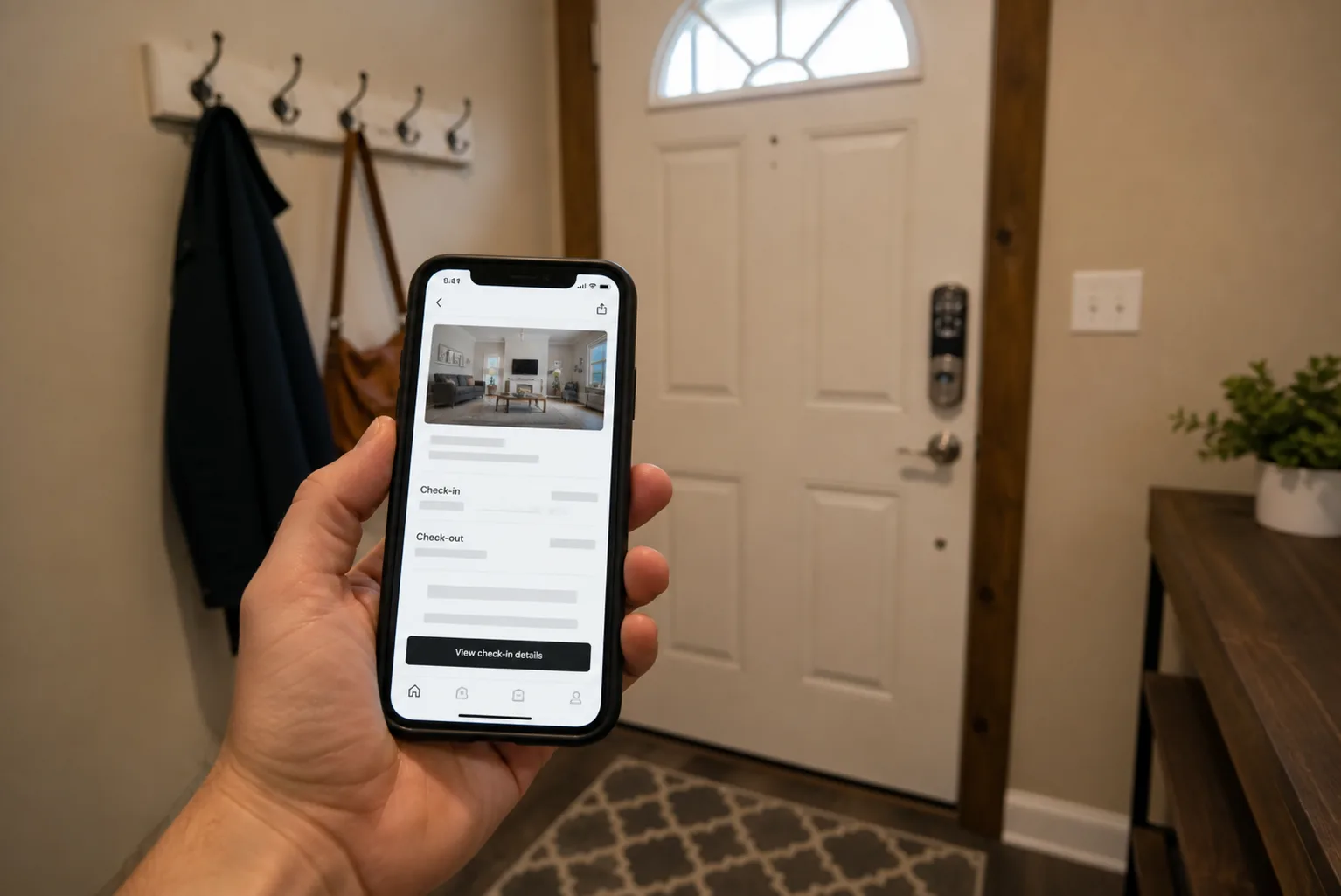
What should be preserved from the booking platform?
Save the listing as it appeared for the stay, the reservation confirmation, receipt, house rules, safety disclosures, support communications, and messages with the host or manager. Record the property address and the names displayed in the reservation. A later edit to a listing can make the original version difficult to reconstruct.
This guide does not evaluate the reservation service.
What if the rental stay was for work?
Indiana Code 22-3-2-2[3] provides workers’ compensation for personal injury or death by accident arising out of and in the course of employment.
If the incident may be work-related, preserve the travel assignment, itinerary, expense approval, schedule, and communications explaining why the employee was at the rental at that time. Indiana Code 22-3-3-1[4] contains a 30-day notice rule subject to the knowledge and other provisions stated in the statute. For additional reading, see Indiana work travel and off-site events.

Which Indiana deadlines and fault rule may apply?
Indiana Code 34-11-2-4[5] generally requires an action for injury to person or character to be commenced within two years after the cause of action accrues.
Indiana Code 34-51-2-6[6] provides that, in an action governed by that chapter, a claimant’s damages are reduced by the claimant’s percentage of fault. It bars recovery when the claimant’s fault is greater than the fault of all persons whose fault is allocated to the defendant. The allocation is fact-specific, so a guest’s conduct should not be assigned a percentage without the evidence.
What practical steps can protect the record?
- Address immediate safety and health needs.
- Photograph the condition and the route used, if that can be done safely.
- Save the original listing, reservation, house rules, receipt, and messages.
- Record witness contact information and the names shown for the owner, host, or manager.
- Report what happened in writing without adding facts you did not observe.
- Keep original photographs, video, correspondence, and damaged items together.
- If the stay was work-related, promptly preserve the employer’s travel records and address the statutory notice issue.

Frequently asked questions
Is a short-term-rental owner automatically liable for a guest’s injury?
No. Isgrig requires proof of duty, breach, and damages proximately caused by the breach, and it explains that a landowner is not an insurer of an invitee’s safety.
Does the host name in the listing prove who controlled the property?
No. The listing is one record. Agreements, communications, inspection practices, repair records, and actual authority over the area may be needed to determine control.
What does this guide say about the reservation service?
This guide does not evaluate the reservation service.
Why save the original listing and messages?
They can help identify the property, the people involved, the condition as represented, the timeline, and communications about inspection or repair.
What statutory requirement applies to a work-trip event?
Indiana Code 22-3-2-2[7] requires the injury to arise out of and in the course of employment.
Is the deadline always two years?
No. Indiana Code 34-11-2-4[5] supplies the general two-year rule, but the applicable time limit and any separate notice requirement must be checked against the claim and parties involved, with prompt individualized review.
If you were hurt at a short-term rental in Fort Wayne or elsewhere in Indiana, Delventhal Law Office can review the available records and explain the legal questions through a free consultation.
This article provides general information about Indiana law, not legal advice for a specific situation.