
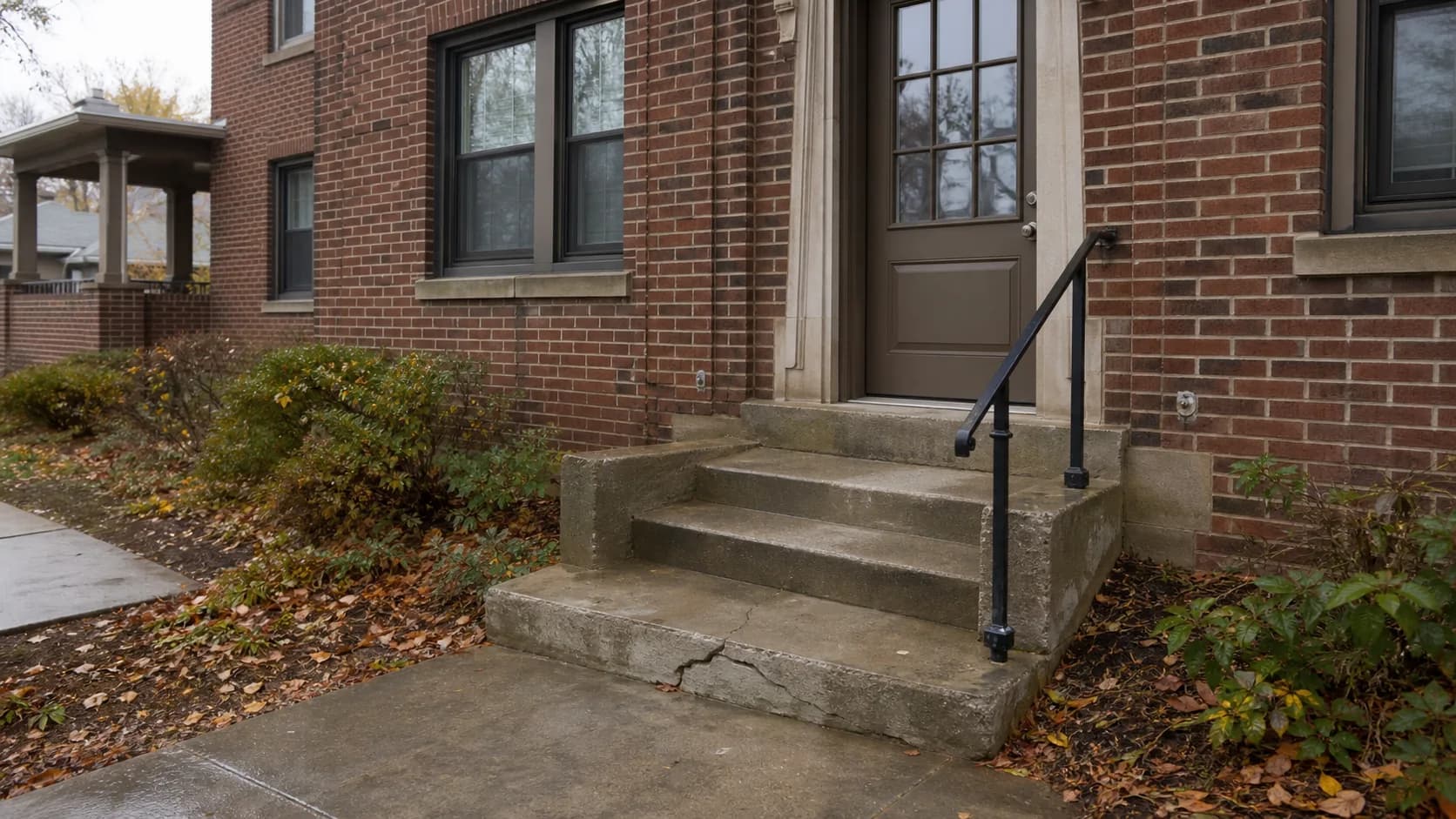
If you fell at a Fort Wayne store, apartment building, restaurant, hotel, workplace, or another property, preserve the scene and identify who controlled the particular stairway or walking surface. For a broader overview, see Indiana slip-and-fall evidence.
Key takeaways
- An Indiana premises-liability claim requires proof of a duty, a breach, and damages proximately caused by the breach.
- Control of the area matters because the party with control ordinarily has the ability to inspect, repair, warn, or restrict access.
- For an invitee injured by a property condition, Indiana examines what the possessor knew or reasonably would have discovered and whether reasonable protective care was used.
- A detached handrail does not, by itself, create an automatic inference of negligence.
- The code in effect for a particular building may depend on its use and regulatory history, so code compliance should be checked against the actual property.
When may a broken stair, missing handrail, or uneven floor support a claim?
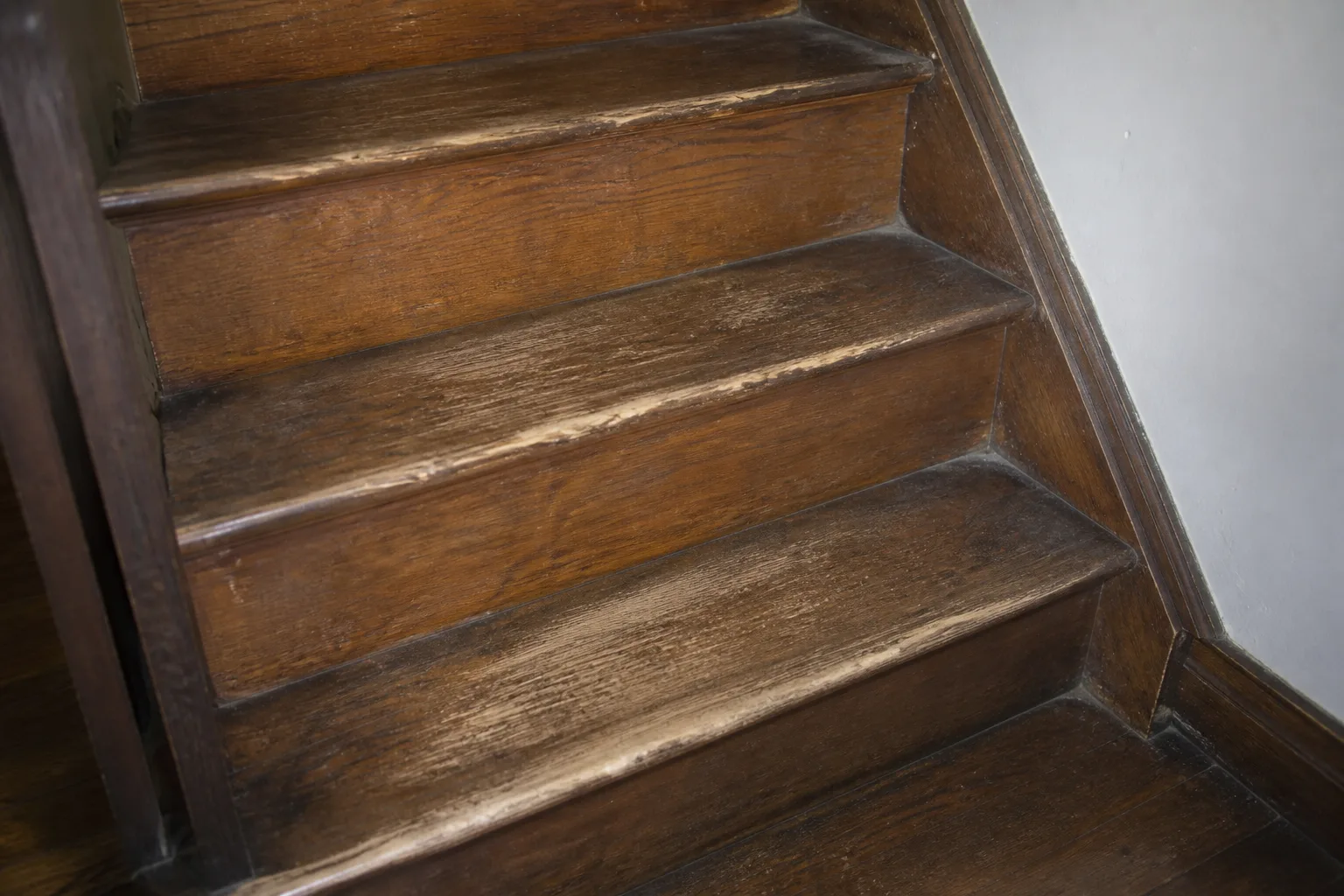
The condition deserves investigation when it created an unreasonable risk and appears connected to the fall. Examples include a stair tread that shifted, a railing that pulled away from its anchors, a concealed change in floor height, or a damaged walking surface left in use. Those facts begin the inquiry; they do not finish it.
In Isgrig v. Trustees of Indiana University[1], the Indiana Supreme Court stated that a premises-liability plaintiff must prove a duty, a breach, and damages proximately caused by the breach. The court also explained that duty in premises cases depends primarily on who controlled the premises when the incident occurred.
How does Indiana analyze the property condition?
The duty analysis starts with the injured person’s status on the property. An invitee is owed reasonable care for the invitee’s protection while on the premises; a property possessor is not an insurer of an invitee’s safety.
For an invitee injured by a condition on the land, Indiana uses the three-part rule quoted in Isgrig: the possessor must know or, through reasonable care, would discover the condition and should realize it presents an unreasonable risk; should expect invitees will not discover or protect themselves from it; and fail to use reasonable care to protect them.
Control can be divided in leased or managed property. An owner, tenant, property manager, or maintenance company may have different responsibilities, so a deed alone may not answer who controlled the exact stairway or floor. Our guide to Indiana visitor classifications and property duties explains how a visitor’s status fits into the analysis.
What evidence should you preserve?
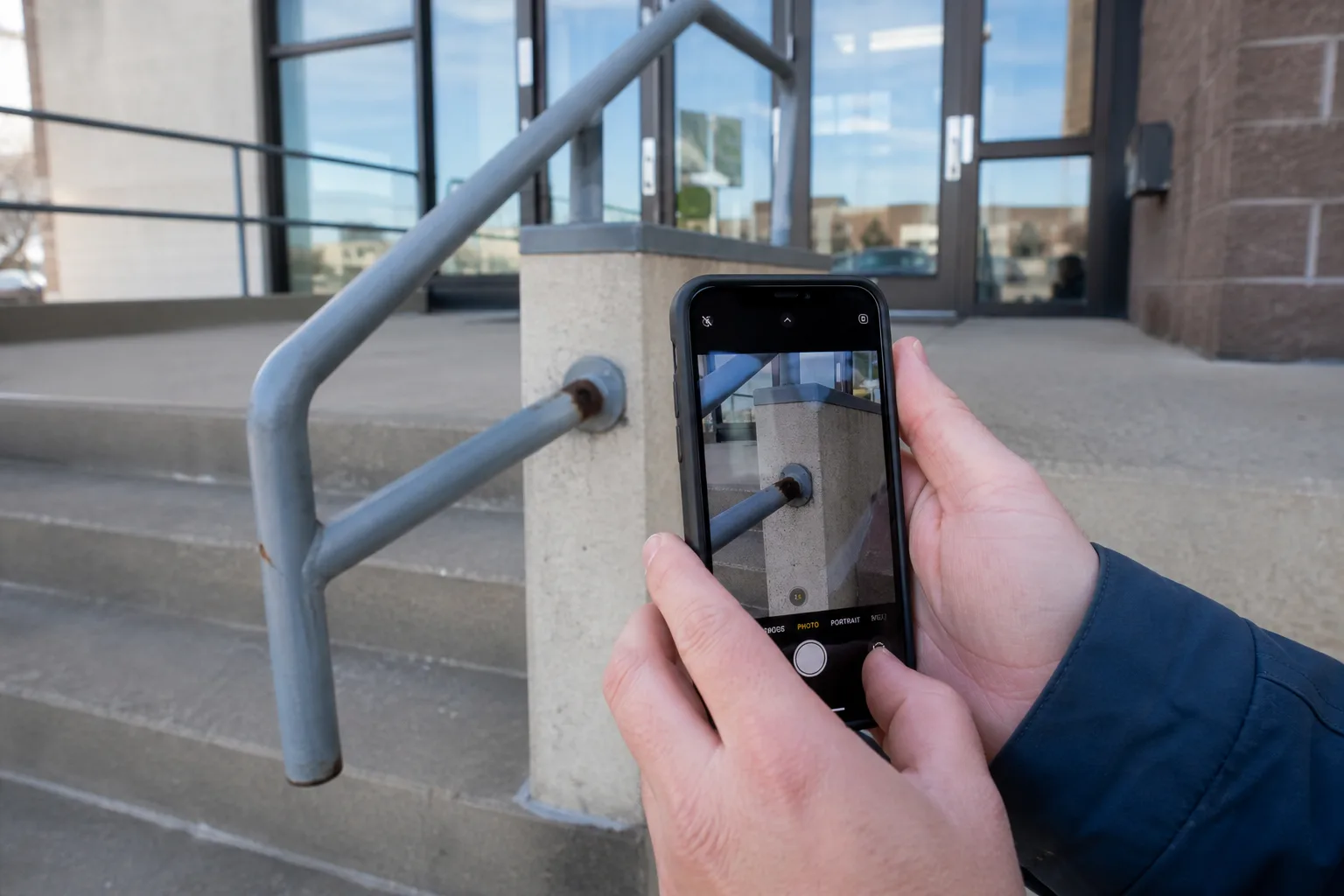
Useful evidence shows the defect, the surrounding route, how the fall occurred, and who controlled or maintained the area. Indiana Evidence Rule 901 requires enough evidence to support a finding that an item is what its proponent claims, so retaining original files and the details needed to identify them can matter. The official text is available in Indiana Evidence Rule 901[2].
| Evidence | What to preserve | Question it may help answer |
|---|---|---|
| Scene photographs | Original wide, medium, and close views, including a safe size reference. | What was the defect, and how did it relate to the walking route? |
| Video | Original phone, dashcam, or surveillance files and available timestamps. | How did the event happen, and did the scene change afterward? |
| Witness information | Names, contact details, and what each witness personally observed. | Who saw the condition, the fall, or a later repair? |
| Incident records | Your copy of any report, plus related emails, texts, or photographs. | When, where, and to whom was the incident reported? |
| Property records | Repair requests, notices, work orders, leases, or correspondence already available to you. | Who controlled maintenance, and was the condition reported before? |
| Loss records | Bills, receipts, work records, and a dated account of events. | What losses followed the incident, and when did they occur? |
Avoid editing the only copy of a photograph or video. If the condition changes before you can return, write down what you observed and identify anyone else who saw the original condition.
How do building codes affect a stair or handrail analysis?
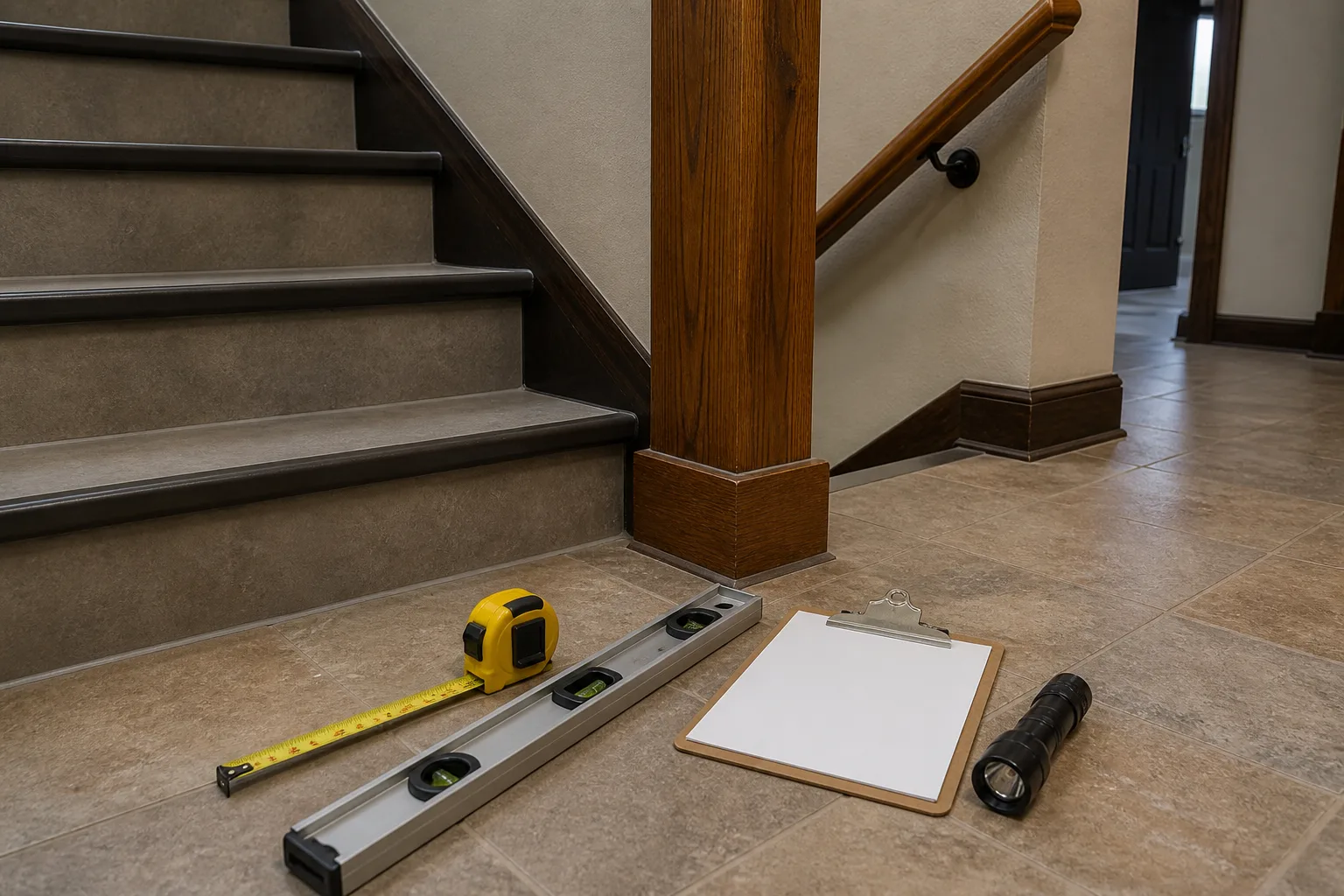
Indiana has separate building and residential code rules, and the official rule set identifies different incorporated code editions. The Indiana Department of Homeland Security lists the rules currently in effect on the Fire Prevention and Building Safety Commission rules page[3].
The correct code inquiry depends on the kind of structure and the rules applicable to that property. The date of construction, later alterations, and local enforcement history may also require review. For that reason, the absence of a handrail should not be labeled a code violation without first identifying the governing provision.
A code issue also does not replace the remaining civil-case questions. The evidence must still establish the duty that applied, a breach of that duty, and an injury proximately caused by the breach.
Why does control of the location matter?
The place of the fall helps identify records and responsible parties:
- Store, restaurant, or hotel: Identify the business operating the premises and anyone assigned inspections or maintenance.
- Apartment common area: Review the lease, repair requests, management arrangements, and responsibility for shared stairs or hallways.
- Leased commercial space: Determine whether the tenant, landlord, or another contractor controlled the specific area.
- Worksite: List each owner, contractor, and maintenance company connected to the property and the specific area.
The practical question is not simply whose name appears on the deed. It is who had the right and ability to inspect, maintain, repair, warn about, or restrict access to the area where the fall occurred.

What should you do next?
- Address immediate safety and health needs.
- Photograph the exact condition and the route you were using, if it can be done safely.
- Record witness names and contact information.
- Describe the incident without guessing about facts you did not observe.
- Keep original files, documents, correspondence, and expense records together.
- Identify the owner, occupant, manager, and any contractor connected to the area.
- Ask that available surveillance footage and incident records be preserved.
Delventhal Law Office’s Fort Wayne property-injury practice page provides additional context. If you are unsure who controlled the property or what evidence to request, a free consultation can help identify the next questions.

Frequently asked questions
Does a broken step automatically prove negligence?
No. A broken step may be important evidence, but Indiana premises-liability law still requires proof of the applicable duty, a breach, and damages proximately caused by that breach. The available facts may answer those questions differently in every matter.
What if the owner says it did not know about the defect?
For an invitee’s condition-based claim, the Indiana rule addresses both what the possessor knew and what reasonable care would have discovered. Evidence about the defect’s duration, inspection practices, repair history, prior reports, and control of the area may be relevant.
Does a handrail breaking create an automatic inference of negligence?
No. Isgrig says the res ipsa loquitur doctrine can apply to a premises fixture only when its requirements are supported by the evidence. The opinion also discusses an Indiana handrail case in which a railing’s detachment, without additional proof, was not enough.
Can a visible uneven floor still matter?
Yes, but visibility is one fact among several. The analysis may include the floor’s contrast and lighting, the route a visitor was expected to use, any warning, what the possessor should have anticipated, and the conduct of the people involved.
Who controlled a defective stairway at a rental property?
Responsibility depends on control of the stairway and the parties’ actual inspection, repair, and maintenance roles. The lease, common-area provisions, repair requests, management agreement, and work records can help identify who had the ability to address the condition.
If a dangerous stairway, handrail, or floor injured you in Fort Wayne or elsewhere in Indiana, Delventhal Law Office can review the available facts and help you identify the next evidence and legal questions through a free consultation.
This article provides general information, not legal advice for a specific situation.