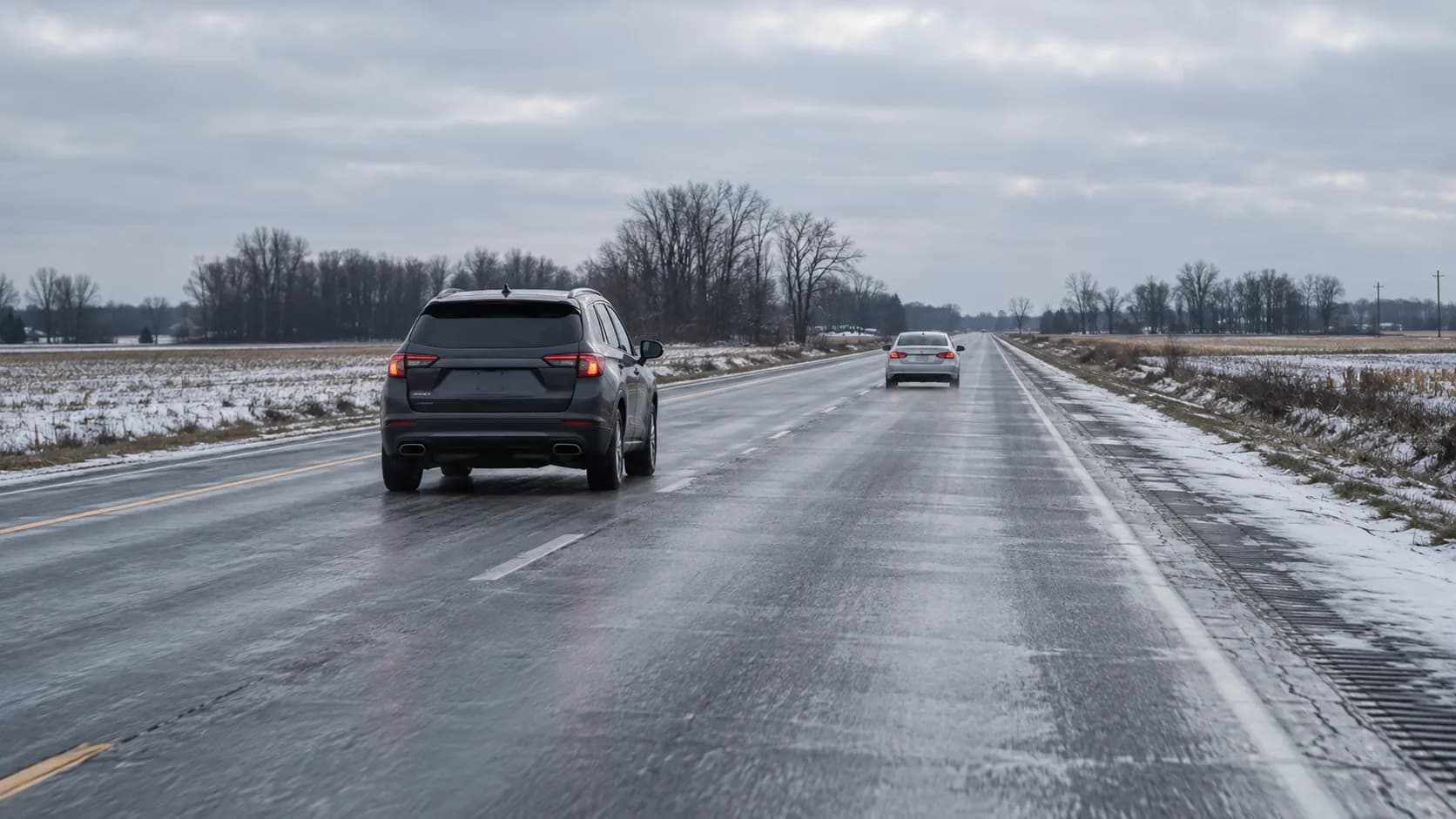
Insurance information shown to a law-enforcement officer is not transmitted to the BMV or noted on your driving record.
Key takeaways
- A COC verifies financial responsibility for a specific past accident or citation and a specific vehicle.
- The insurance provider submits the COC electronically to the BMV.
- The 90-day period runs from the date the BMV mails its verification request.
- A COC verifies past coverage; an SR-22 provides proof of future financial responsibility.
- An SR-22 requirement for an insurance suspension is satisfied after 180 consecutive days of SR-22 coverage.
- State Form 55434 applies to qualifying employer-owned or rental vehicles and must reach the BMV at least seven days before the suspension date on the notice.
Why did the Indiana BMV send an insurance-verification letter?
According to the BMV's proof-of-financial-responsibility page[1], the BMV requests proof of insurance after:
- an auto accident for which the BMV receives an accident report;
- a pointable moving violation within one year of two other pointable moving violations;
- a serious traffic violation, such as a misdemeanor or felony; or
- any pointable violation by a driver who was previously suspended for failing to provide proof of financial responsibility.
It sends the verification request to the mailing address on file with directions for providing proof.
Showing insurance information to an officer does not satisfy the BMV request. If the accident report lists incorrect vehicle information, the BMV instructs the driver to contact the officer who wrote the report and request a correction. See our guide to correcting factual errors in an Indiana crash report.
What should you do after receiving the request?
- Read the notice. It identifies the accident or offense date, vehicle information if provided, and a customer identification number.
- Contact the insurance provider. Ask it to submit the COC electronically through the BMV’s Electronic Insurance Forms Submission system.
- Use matching information. The accident or citation date on the COC must exactly match the applicable record, or processing may fail.
- Confirm processing. A successful electronic submission page confirms receipt, but does not guarantee that the proof fulfills the requirement.
- Review your driver record if necessary. Other suspensions or reinstatement requirements may prevent reinstatement.
The official BMV proof-of-financial-responsibility page[1] explains the request and electronic filing process.
COC versus SR-22: what is the difference?
| Document | What it shows | Who files it | Role |
|---|---|---|---|
| Certificate of Compliance (COC) | Financial responsibility for a specific past accident or citation and a specific vehicle. | The insurance provider submits it electronically. | Responds to a BMV request about the past incident. |
| SR-22 | Proof of future financial responsibility, carried forward for a set period. | The insurance provider submits it electronically. | May be required to regain driving privileges after certain suspensions. |
If a matching COC is not received within 90 days, the BMV says driving privileges will be suspended indefinitely unless it receives a matching COC. The BMV also says receipt of an SR-22 will stay that suspension and allow driving privileges to be regained. Other suspensions or reinstatement requirements on the driver record may still prevent reinstatement.
How long an SR-22 must be carried. An SR-22 is not a one-time filing. The BMV states that the SR22 requirement for insurance suspensions is satisfied after maintaining SR22 coverage for 180 consecutive days. The word that matters is consecutive: a lapse during that period can restart the obligation, so the coverage has to stay continuously in force rather than simply add up to 180 days.
The BMV’s Electronic Insurance Forms Submission FAQs[2] define the COC and SR-22.

What if you were driving an employer or rental vehicle?
State Form 55434 is for a driver who was operating an employer-owned vehicle in the course of employment or a rental vehicle during the rental term. An administrator of the employer or rental company that manages its automotive insurance policies completes the form.
The form instructs the employer or rental company to mail the completed affidavit directly to the BMV so that it is received at least seven days before the suspension date listed on the financial-responsibility notice.
Use the official Affidavit—Proof of Financial Responsibility for Employer or Rental Vehicle[3]. The BMV warns that use by drivers who were not operating a rental or company vehicle is considered fraudulent and may result in suspension.
Frequently Asked Questions
What is a Certificate of Compliance for the Indiana BMV?
It is an electronic filing from your insurance company showing that you and the vehicle involved were insured at Indiana's minimum liability limits on the date of the crash or citation. You cannot file it yourself; the insurer submits it to the BMV.
Can I send the BMV a copy of my insurance card?
No. Showing proof to an officer does not relieve you from providing proof to the BMV, and the COC must be submitted through the insurance provider.
When does the 90-day deadline start?
The COC must be received and processed within 90 days after the BMV mails its request for financial-responsibility verification.
What if my driving privileges are already suspended?
The BMV says the suspension may be removed from the driver record when the insurance provider electronically submits a COC covering the incident date and vehicle involved.
What information must match on the COC?
The accident or citation date must exactly match the applicable record. The BMV also identifies the accident or citation date, vehicle year, and vehicle make as common mismatch points.
What should I do if the BMV rejects or cannot match the proof?
Ask the insurer to review the rejection, verify or correct the policy and incident data, and resubmit the electronic record through EIFS. If the policy data is correct but conflicts with the accident report, ask the law-enforcement officer who prepared the report to submit an amended report. After the BMV applies the amendment, ask the insurer to resubmit the corrected EIFS record. The BMV’s official EIFS FAQs[2] describe this correction-and-resubmission workflow. Continue to track the existing 90-day period stated in the BMV notice; this workflow does not create a new deadline.
How long do I have to keep an SR-22?
The BMV states that the SR22 requirement for insurance suspensions is satisfied after maintaining SR22 coverage for 180 consecutive days. Confirm the requirement on your own record before cancelling, because other suspensions can carry their own conditions.
Do I need both a COC and an SR-22?
They serve different purposes. A COC verifies financial responsibility for a specific past accident or citation and vehicle; an SR-22 provides proof of future financial responsibility.
Delventhal Law Office can review the notice and related documents. Learn about the firm’s Fort Wayne car-accident practice, read Chad Delventhal’s attorney profile, or request a free case evaluation.
This article provides general information, not legal advice. Do not send confidential or time-sensitive information until the firm confirms representation.