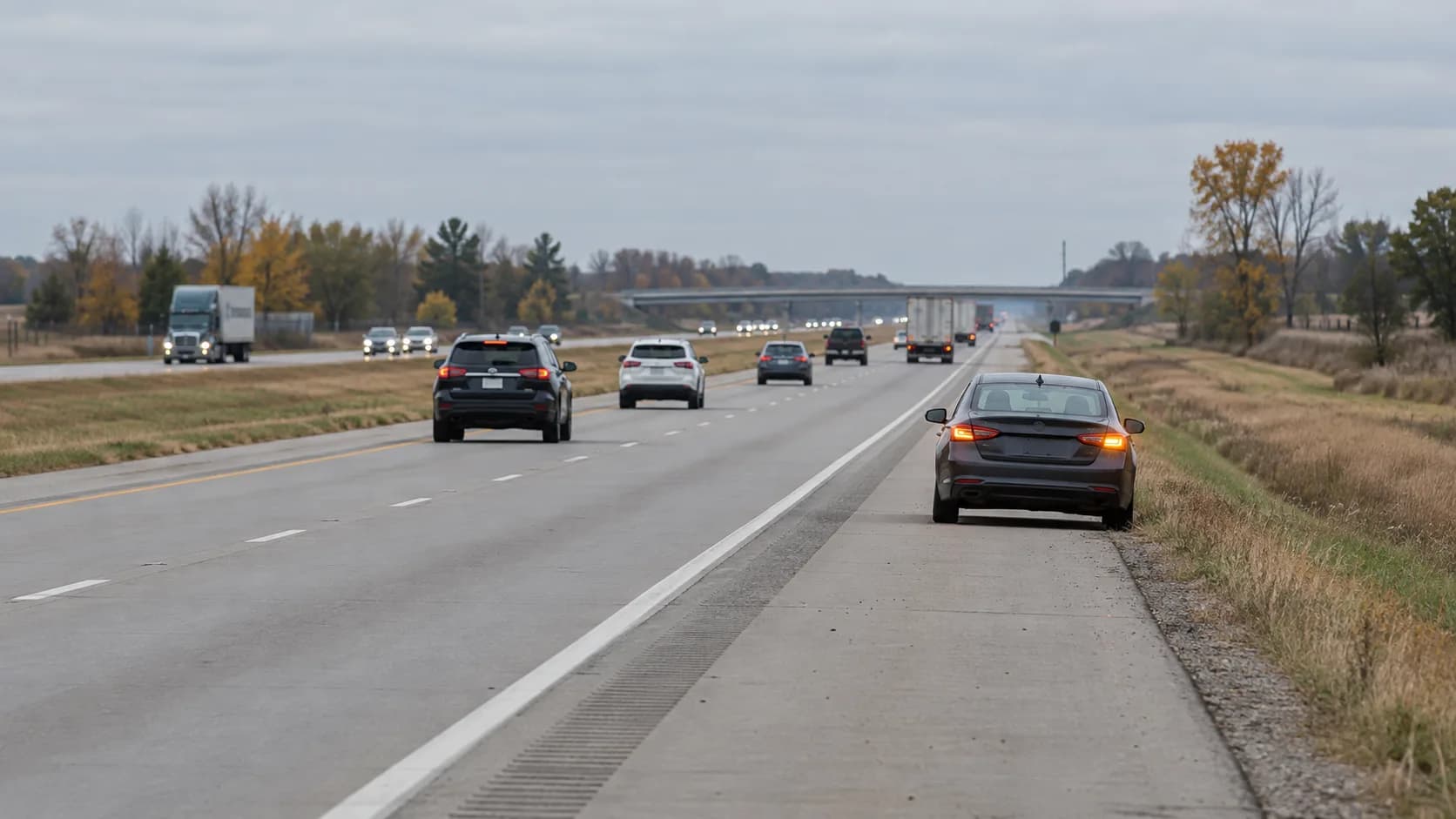

Receiving a bankruptcy notice after a collision can be unsettling. It is not, by itself, an answer to every question about your injury claim. This guide focuses on a driver who files bankruptcy—not an injured person’s own bankruptcy and not a carrier’s liquidation.
For the broader crash claim, our Fort Wayne car accident practice page is the starting point. Here, the immediate task is to connect the injury file with the bankruptcy notice before taking the next litigation or collection step.
Key takeaways
- A filing, an automatic stay, and a discharge are not interchangeable.
- Insurance review and permission to continue litigation are separate questions.
- Chapter 7 and ordinary Chapter 13 discharge use different intentional-injury provisions.
- A proof of claim and a complaint about dischargeability serve different purposes.
- Bring the complete notice and court papers for an individual review.
What changes when the driver files bankruptcy?
Section 362(a)(1)–(2)[1] generally stays starting or continuing a proceeding against the debtor on a pre-bankruptcy claim and enforcement of a pre-bankruptcy judgment against the debtor or estate property. The statute contains exceptions and limits, so the actual filing and orders matter.
While the stay applies, an insurer’s willingness to discuss a claim should not be treated as permission to continue a lawsuit against the driver. Section 362(d)[1] provides for relief from the stay on a party in interest’s request, after notice and a hearing, including relief for cause. Whether relief is available in a particular injury case requires a case-specific analysis.
A later discharge is different. Section 524(a)(2)[2] generally prohibits acts to collect a discharged debt as the debtor’s personal liability. The end of the automatic stay does not mean personal collection of a discharged debt is permitted.

Separate insurance from personal collection
Section 524(e)[2] states, subject to its stated exception, that discharge of the debtor’s debt does not affect another entity’s liability on that debt or another entity’s property for it. That is why the driver’s personal discharge and an insurer’s potential obligation must be analyzed separately.
That provision does not itself establish coverage, eliminate policy defenses, set policy limits, or authorize every proposed step in a lawsuit. Avoid both extremes: assuming bankruptcy ends all insurance possibilities, or assuming insurance means the lawsuit may continue unchanged.
Suggested questions for counsel: Which policy was in effect? Has the insurer accepted or disputed coverage? What litigation step is proposed? Does the stay or a discharge order restrict that step? The policy and the bankruptcy file should be reviewed together.
| Separate question | Document to bring for review |
|---|---|
| May the lawsuit proceed? | Petition notice, docket, and stay-related orders. |
| Is insurance potentially available? | Policy information and carrier letters. |
| Could the bankruptcy estate pay a claim? | Creditor notices and proof-of-claim instructions. |
| Was personal liability discharged? | Chapter information, discharge order, and any dischargeability decision. |
For the uninsured-motorist topic, see our uninsured-driver guide. For a carrier’s financial failure, see our guide to a failed auto carrier.

Chapter 7 and Chapter 13 are not identical
Do not assume every injury debt survives bankruptcy. The applicable discharge provision and the facts must match the claimed exception.
Chapter 7: willful and malicious injury
For a Chapter 7 discharge, § 523(a)(6)[3] excepts debt for a willful and malicious injury by the debtor to another entity or its property. Merely describing a collision as serious or blaming the driver does not establish the statutory requirements. Under § 523(c)(1)[3], subject to its stated exception, the creditor must obtain a determination of nondischargeability for debt within § 523(a)(6).
Ordinary Chapter 13: a different provision
For an ordinary Chapter 13 discharge after plan completion, § 1328(a)(2)[4] incorporates selected § 523 exceptions but does not include § 523(a)(6). Instead, § 1328(a)(4)[4] separately addresses restitution or damages awarded in a civil action against the debtor as a result of willful or malicious injury causing personal injury to, or death of, an individual.
The words “or,” the civil-action award language, and the personal-injury/death scope matter. This is not a statement that the Chapter 7 provision applies unchanged to Chapter 13. A Chapter 13 hardship discharge under § 1328(b) is different again: § 1328(c)(2)[4] retains the § 523(a) exceptions. Counsel should analyze the actual chapter, discharge sought, and procedural posture rather than assume the label “intentional injury” resolves the issue.
Intoxicated-driving death or personal injury
Section 523(a)(9)[3] addresses debt for death or personal injury caused by operating a motor vehicle, vessel, or aircraft unlawfully because the debtor was intoxicated from alcohol, a drug, or another substance. Section 1328(a)(2)[4] includes that exception in an ordinary Chapter 13 discharge. The text concerns death or personal injury; do not assume it answers a property-damage-only claim.
A proof of claim is a separate question
A request to participate in bankruptcy distributions is not the same as a request to establish that a debt cannot be discharged. Under § 501(a)[5], a creditor may file a proof of claim. Under § 501(c), if the creditor does not timely file one, the debtor or trustee may file a proof of that claim.
For Chapter 7 distributions, § 726(a)(2)–(3)[6] addresses allowed unsecured claims, including specified claims filed under § 501(b) or (c), and different treatment of certain late-filed claims. It is therefore too broad to say payment is possible “only if the creditor personally files.” That does not make missing a deadline harmless or assure any distribution.
Practical question: Ask counsel whether a proof of claim is appropriate, which notice controls, whether one has already been filed, and whether any separate dischargeability complaint is needed. Do not assume that sending documents to an adjuster completes a bankruptcy filing.
Keep the timing questions separate
The injury lawsuit, proof of claim, and a dischargeability complaint can involve different timing rules. Ask for a coordinated review of the Indiana claim and the federal bankruptcy case; this guide does not calculate your filing date.
Federal Rule of Bankruptcy Procedure 4007(c)[7] generally requires a complaint under § 523(c) within 60 days after the first date set for the meeting of creditors, subject to Rule 4007(d). A motion to extend that time must be filed before it expires. Rule 4007(d) separately addresses a § 523(a)(6) complaint when a Chapter 13 debtor requests a hardship discharge. Do not apply the same 60-day rule to every exception discussed above.
Section 108(c)[8] addresses certain periods for commencing or continuing a civil action outside bankruptcy when the period had not expired before the petition. It uses the later of the end of the applicable period, including any applicable suspension, or 30 days after notice of termination or expiration of the specified stay with respect to the claim. It is not a simple instruction to add the entire bankruptcy’s duration to every Indiana deadline, and it should not be treated as reviving an already-expired claim.

What to bring for a coordinated review
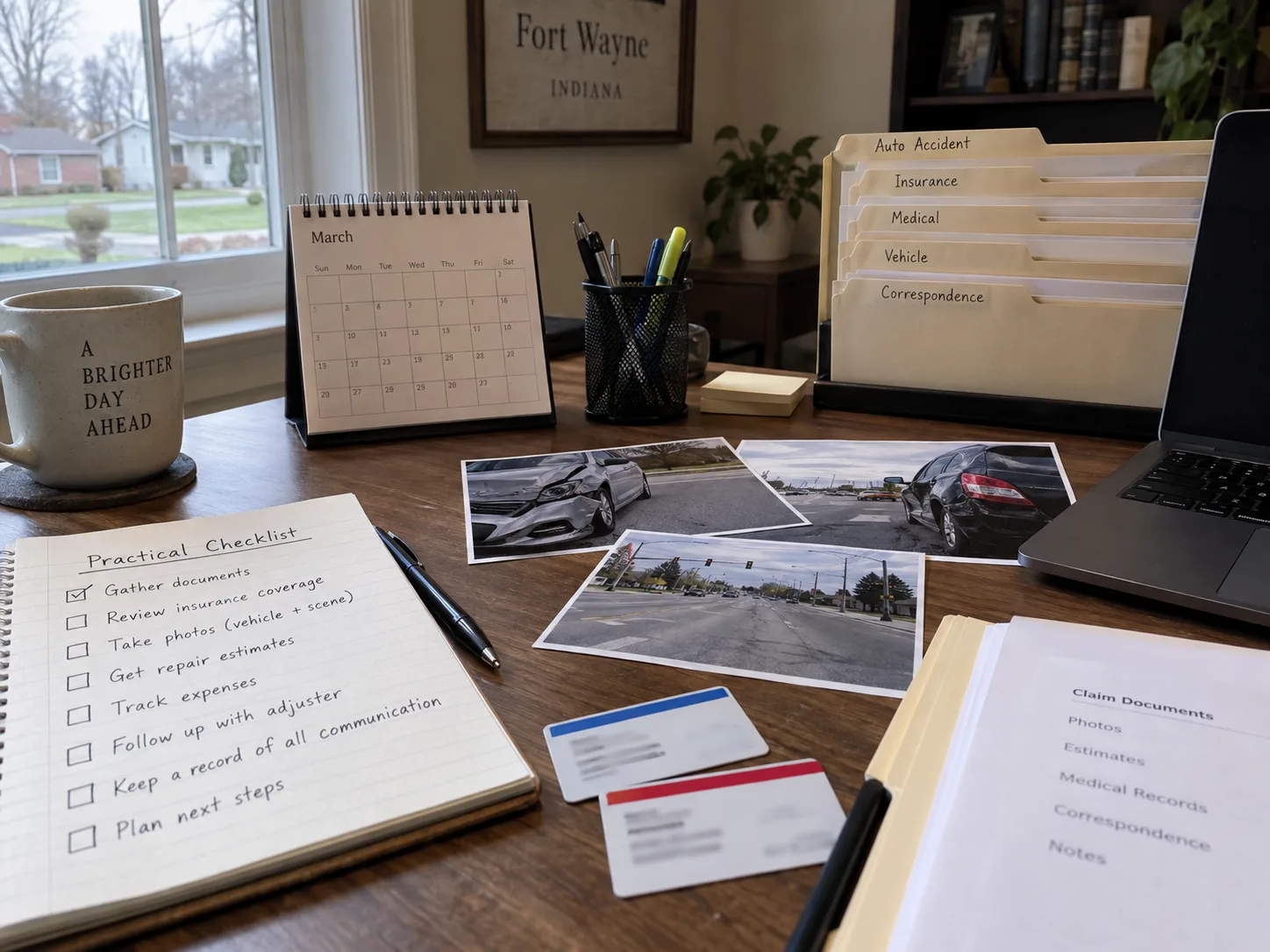
This is an organizational checklist, not a required court filing:
- The complete bankruptcy notice: include the court, case number, chapter, filing date, meeting information, and every accompanying page.
- The injury-case papers: complaint, summons, any judgment, settlement correspondence, and the dates you received them.
- Insurance correspondence: claim numbers, available policy information, carrier decisions, and proposed agreements.
- The current docket and orders, if available: especially stay, discharge, conversion, and claim-related entries.
- A short timeline: crash date, lawsuit events, notices received, and recent communications. Keep the actual documents alongside your notes.
Hypothetical example: An injured Fort Wayne motorist receives a driver’s bankruptcy notice while an adjuster is still discussing medical bills. The useful response is to give counsel both files and ask what may continue, what needs court action, and what dates to calendar. Neither the insurance conversation nor the bankruptcy notice alone supplies those answers. This example predicts no outcome.

Frequently asked questions
Does bankruptcy automatically end the insurance claim?
No. Section 524(e)[2] generally preserves another entity’s liability despite the driver’s discharge, but coverage and the permitted procedure still need review. It does not automatically authorize continued litigation against the driver.
Can I keep suing the driver?
A pre-bankruptcy lawsuit against the driver is generally subject to § 362’s automatic stay[1]. Determine whether the stay applies and whether relief is needed before continuing. A discharge can impose a separate restriction on personal collection.
Are all injury debts nondischargeable?
No. The debt must fit an applicable exception. Chapter 7’s § 523(a)(6) and ordinary Chapter 13’s § 1328(a)(4) have different wording and scope; the chapter-specific discussion above explains why the distinction matters.
Is a proof of claim enough to dispute dischargeability?
Do not treat them as the same filing. Section 501 governs proofs of claim; Rule 4007 addresses a complaint to determine dischargeability. Ask counsel which procedures apply to the particular debt.
Can I assume all deadlines are paused?
No. Review the injury deadline, bankruptcy claim instructions, and any dischargeability deadline separately. Section 108(c) has specific conditions; it is not a blanket extension for every deadline.
Have the injury and bankruptcy papers reviewed together
If another driver’s bankruptcy has complicated your Indiana injury claim, a free case evaluation with Delventhal Law Office can help identify the injury-claim issues and whether coordination with bankruptcy counsel is needed. Bring the complete notice and insurance correspondence rather than just a summary.
This article is general information about Indiana law and is not legal advice. Reading it does not create an attorney-client relationship, and neither does contacting us.