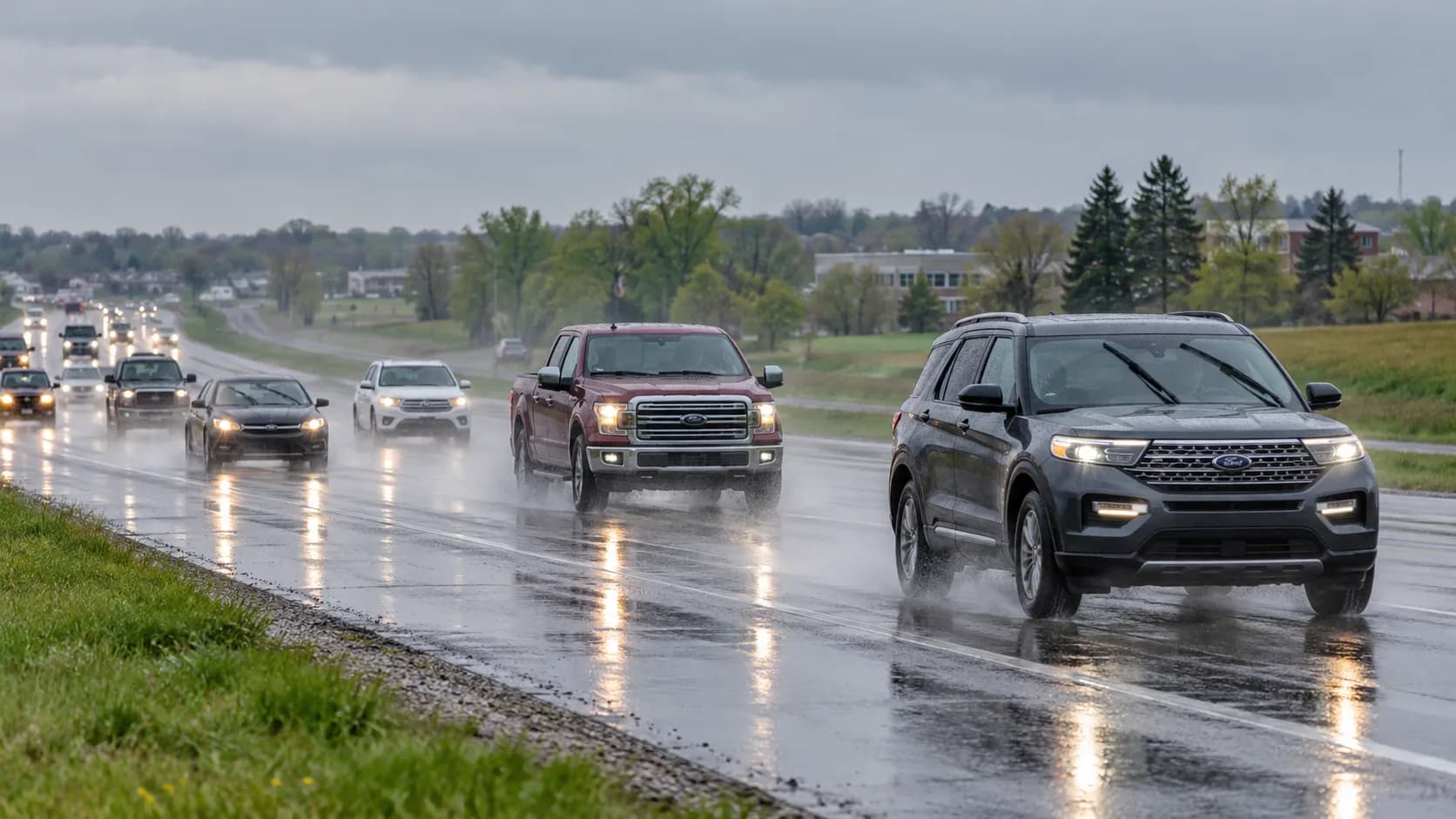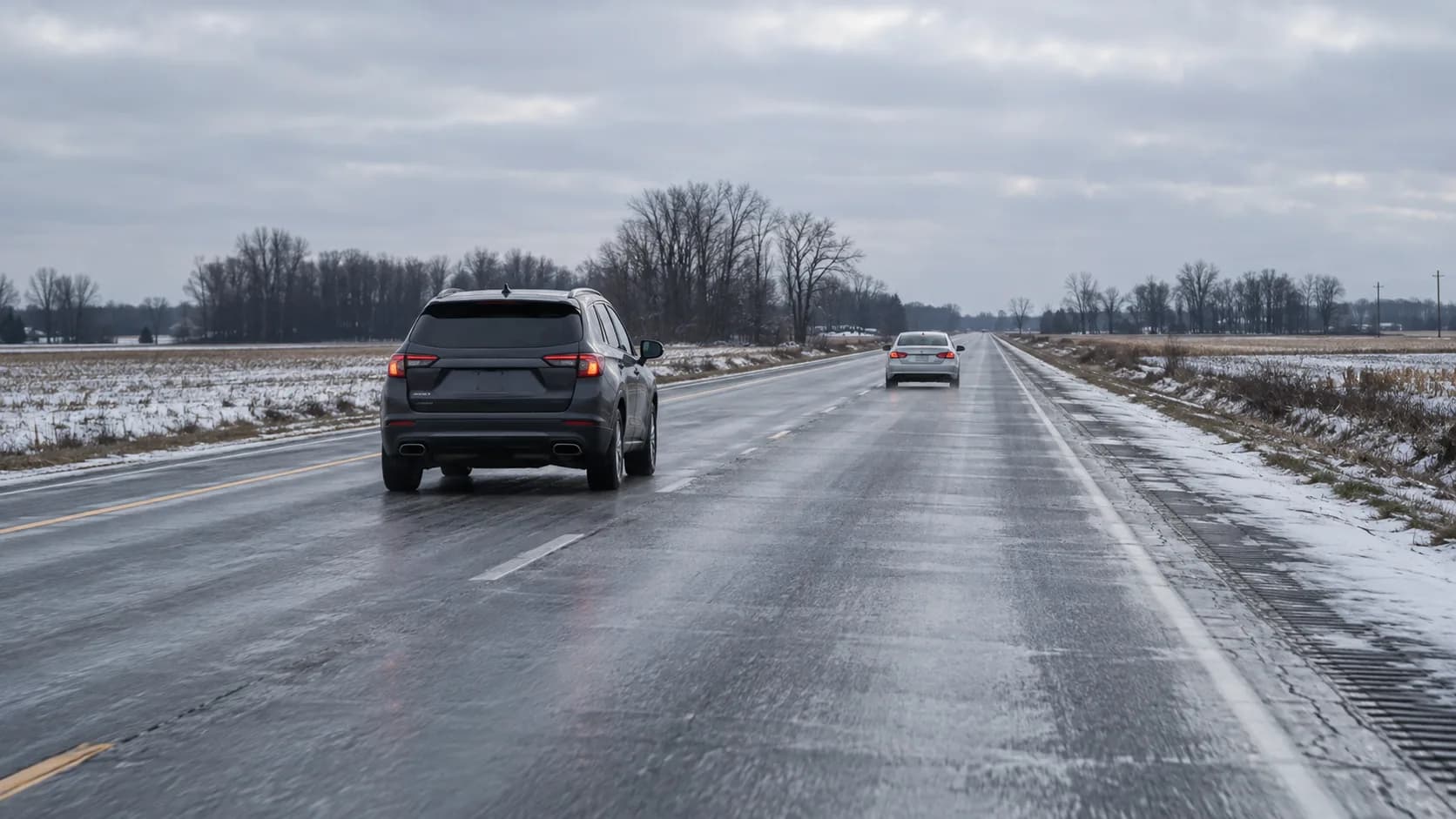
An icy Fort Wayne or Allen County road presents questions about both the pavement and the driving. This guide focuses on the ice-specific questions: where the slippery patch began, what warnings were visible, and how the driver approached it. For broader claim help, see our Fort Wayne car-accident attorney page.
Key takeaways
- Indiana requires a driver to use a reasonable and prudent speed under the conditions and to reduce speed when weather or highway conditions create a special hazard.
- Indiana requires a reasonable and prudent following distance based on speed, traffic, and highway conditions.
- A posted speed limit does not make that speed safe when the road is icy.
- For claims governed by Indiana’s Comparative Fault Act, a claimant’s damages are reduced by the claimant’s percentage of fault, and recovery is barred when that share exceeds 50%. Government claims require a different analysis.
- Scene photographs, original video, witness information, vehicle records, and road-condition records can help establish what happened.
Does black ice automatically decide fault?
No. Indiana law requires drivers to adjust their conduct to the conditions they actually face. Indiana Code 9-21-5-1[1] addresses reasonable and prudent speed and restricting speed as necessary to avoid collisions under the conditions described in the statute. The specific requirement to use an appropriate reduced speed for special weather or highway hazards appears in Indiana Code 9-21-5-4[2](a)(5).
That rule applies even when the driver is traveling below the posted limit. A speed that is ordinarily lawful can still be unreasonable for an icy bridge, shaded curve, hill, intersection, exit ramp, or line of stopped traffic.
The Indiana Department of Transportation’s winter-driving guidance[3] warns that apparently dry pavement may be slippery and identifies intersections, off-ramps, bridges, and shaded areas as black-ice trouble spots. INDOT advises drivers to slow down and leave additional room between vehicles on slick roads.

Which Indiana driving rules matter after an icy-road crash?
Speed for the conditions
The Indiana reasonable-speed statute[4] focuses on actual and potential hazards, not only the number printed on a speed-limit sign. The separate reduced-speed rule, IC 9-21-5-4(a)(5)[5], requires an appropriate reduction for special hazards caused by weather or highway conditions. The Comparative Fault Act preserves the requirement of a causal connection between alleged fault and the claimed harm. A skid alone does not establish every element of a claim.
Following distance
Indiana Code 9-21-8-14[6] prohibits following another vehicle more closely than is reasonable and prudent after considering the vehicles’ speed, traffic, and highway conditions. The safe amount of space can therefore change when ice increases the distance needed to slow or stop.
Shared responsibility
For claims governed by the Comparative Fault Act, Indiana Code 34-51-2-5[7] reduces a claimant’s damages in proportion to the claimant’s fault. Indiana Code 34-51-2-6[8] bars recovery when the claimant’s fault is greater than the fault of all persons whose fault contributed to the damages, which is commonly described as Indiana’s 51% fault rule.
The Indiana Comparative Fault Act[9] addresses fault allocation among claimants, defendants, and nonparties. Sections 7 and 8 direct juries to consider defendants and nonparties, not just the two drivers named in a claim. Section 2 excludes tort claims against governmental entities or public employees under the Indiana Tort Claims Act. Do not apply the ordinary private-driver percentage rule to a claim involving a public snowplow or alleged road-maintenance failure without separate legal review. Our guide to Indiana’s 51% fault rule explains the private-claim framework.
| Fault question | What investigators may examine |
|---|---|
| What warning existed before the icy patch? | Visible frost or snow, wet-looking pavement, prior loss of traction, a bridge or shaded curve, and accounts of other vehicles sliding |
| Was the following distance reasonable? | Distance between vehicles, traffic flow, road condition, braking, and the sequence of impacts |
| When did the driver react? | Whether braking or steering began before or after reaching ice; distinguish personal observations from later assumptions |
| Did conditions differ along the route? | A dry approach versus an icy bridge deck, sunlight versus shade, changing precipitation, and the exact location of each observation |
| Was fault shared? | The conduct of each person whose actions may have contributed to the claimed harm |
This is a practical consultation worksheet, not a statutory checklist or a substitute for a reconstruction. Write “unknown” when you did not observe a detail. A later photograph or weather report may not establish the precise pavement condition at the moment of impact.

How is fault evaluated in common winter-crash scenarios?
A vehicle slides into stopped traffic
The rear driver’s speed and following distance are central questions, but the impact location alone does not conclusively assign fault. Investigators may also examine the lead vehicle’s movements, visibility, warnings, traffic conditions, and whether an earlier impact pushed a vehicle forward.
For more context, read our guide to fault in an Indiana rear-end collision.
Several vehicles collide
In a winter pileup, record each impact separately rather than assuming the entire event happened at once. For private-driver claims governed by the Comparative Fault Act, the rules discussed above allow consideration of persons whose fault caused or contributed to the claimed harm.
An impact-by-impact account can help distinguish a driver who stopped and was pushed forward from a driver who independently entered the crash. Our chain-reaction impact timeline provides a practical way to organize those details.
A vehicle crosses the center line
Loss of traction does not automatically resolve fault. The investigation may consider whether the driver reduced speed, maintained a lookout, allowed sufficient space, and responded reasonably to the known conditions.
A four-wheel-drive vehicle loses control
INDOT states that four-wheel drive may help a vehicle begin moving but does not make it stop sooner after traction is lost. A driver still must account for the road conditions; the traction system is not a substitute for assessing speed and stopping space.

What evidence can help explain an Indiana black-ice crash?
The following are practical documentation suggestions, not duties imposed by a discovery rule. If you can do so without entering traffic or placing anyone in danger, record what you actually observed. Note the time of each photograph so it is not mistaken for a view from the moment of impact.
- Photograph the road surface, icy patches, tire paths, shoulders, curves, bridges, intersections, traffic controls, and final vehicle positions.
- Save original dashcam files before the device records over them.
- Record the time, exact location, direction of travel, precipitation, visibility, and road conditions you personally observed.
- Collect names and contact information from witnesses.
- Keep the crash-report number, towing paperwork, repair documents, insurance correspondence, and photographs together.
- If a vehicle inspection may matter, ask a lawyer promptly about preservation before repairs, salvage, or disposal. Do not attempt to access electronic data yourself or assume every vehicle records the same information.
Do not stand in an active travel lane to gather evidence. Safety comes before photographs. For reporting and information-exchange questions, follow responding officers’ instructions and seek advice about the requirements that apply to your crash.
Our broader Indiana car-accident evidence guide explains how photographs, witnesses, reports, and vehicle information may fit together.

How should you organize claim correspondence?
Keep letters, emails, claim numbers, and the names of people you speak with in one folder. Write down questions about any account of the crash that differs from your own observations.
A careful response separates observations from assumptions. It may compare the drivers’ accounts with photographs, video, witness statements, vehicle positions, physical evidence, and the governing policy documents.
If someone requests a recorded statement, save the request and discuss questions about it with your lawyer. Our guide to recorded statements after an Indiana car accident offers additional context.
What should you do after a black-ice crash?
- Move away from active traffic if you can do so safely and contact emergency services when needed.
- If you are hurt, seek medical care.
- Document the roadway only from a safe location.
- Keep the responding officer’s instructions, crash-report information, and any information exchanged with the other driver.
- Review your own policy’s notice and cooperation requirements; keep copies of claim submissions and ask questions about anything you do not understand.
- Do not guess about speed, fault, or whether a road was salted. Describe what you personally observed.
- Consider a prompt legal review when injuries are serious, fault is disputed, several vehicles are involved, or important evidence may be lost.
If you are organizing the financial details of a personal-injury claim, the Fort Wayne car-accident settlement calculator can help you list bills, wage information, fault questions, and insurance factors. It is an educational organizer and does not predict a settlement.

Frequently Asked Questions
Can a driver avoid fault by saying the weather caused the crash?
Not merely by blaming the weather. The speed rules discussed above still apply, but the fact that a car skidded does not automatically prove negligence. The driver’s conduct, available warnings, and causal connection to the crash must be evaluated.
Can a driver be at fault while traveling below the speed limit?
Yes. Indiana’s reasonable-speed statute requires drivers to account for actual and potential hazards, so traveling below the posted limit does not establish that the speed was reasonable for ice.
Is the rear driver always at fault after sliding on ice?
No. Indiana requires a reasonable and prudent following distance, but fault still depends on all relevant conduct and circumstances, including the actions of other drivers and the sequence of impacts.
Can I recover if I was partly responsible?
For a claim governed by the Comparative Fault Act, damages are reduced by your share of fault, and a share greater than 50% bars recovery. Fault assigned to nonparties can also affect the calculation. Government claims are excluded from that Act and need separate analysis.
What evidence is most useful after a black-ice crash?
Useful materials may include safe scene photographs, original video, witness information, vehicle positions, insurance documents, towing records, repair records, and contemporaneous notes about the road and weather.
When may a legal review help?
Consider discussing the matter with a lawyer if you were seriously hurt, disagree with another account of the crash, or need help obtaining video or arranging a vehicle inspection.
If you were hurt in an Indiana winter crash and are unsure how the road conditions, driver conduct, or insurance issues fit together, Delventhal Law Office can review the available information and help you understand your options through a free consultation.
Legal sources checked October 21, 2026. This discussion concerns Indiana private-driver injury claims; it does not address claims against government entities.
This article is general information about Indiana law and is not legal advice. Reading it does not create an attorney-client relationship, and neither does contacting us.
Sources
- Indiana Code 9-21-5-1 (iga.in.gov) ↩
- Indiana Code 9-21-5-4 (iga.in.gov) ↩
- Indiana Department of Transportation’s winter-driving guidance (in.gov) ↩
- Indiana reasonable-speed statute (iga.in.gov) ↩
- reduced-speed rule, IC 9-21-5-4(a)(5) (iga.in.gov) ↩
- Indiana Code 9-21-8-14 (iga.in.gov) ↩
- Indiana Code 34-51-2-5 (iga.in.gov) ↩
- Indiana Code 34-51-2-6 (iga.in.gov) ↩
- Indiana Comparative Fault Act (iga.in.gov) ↩