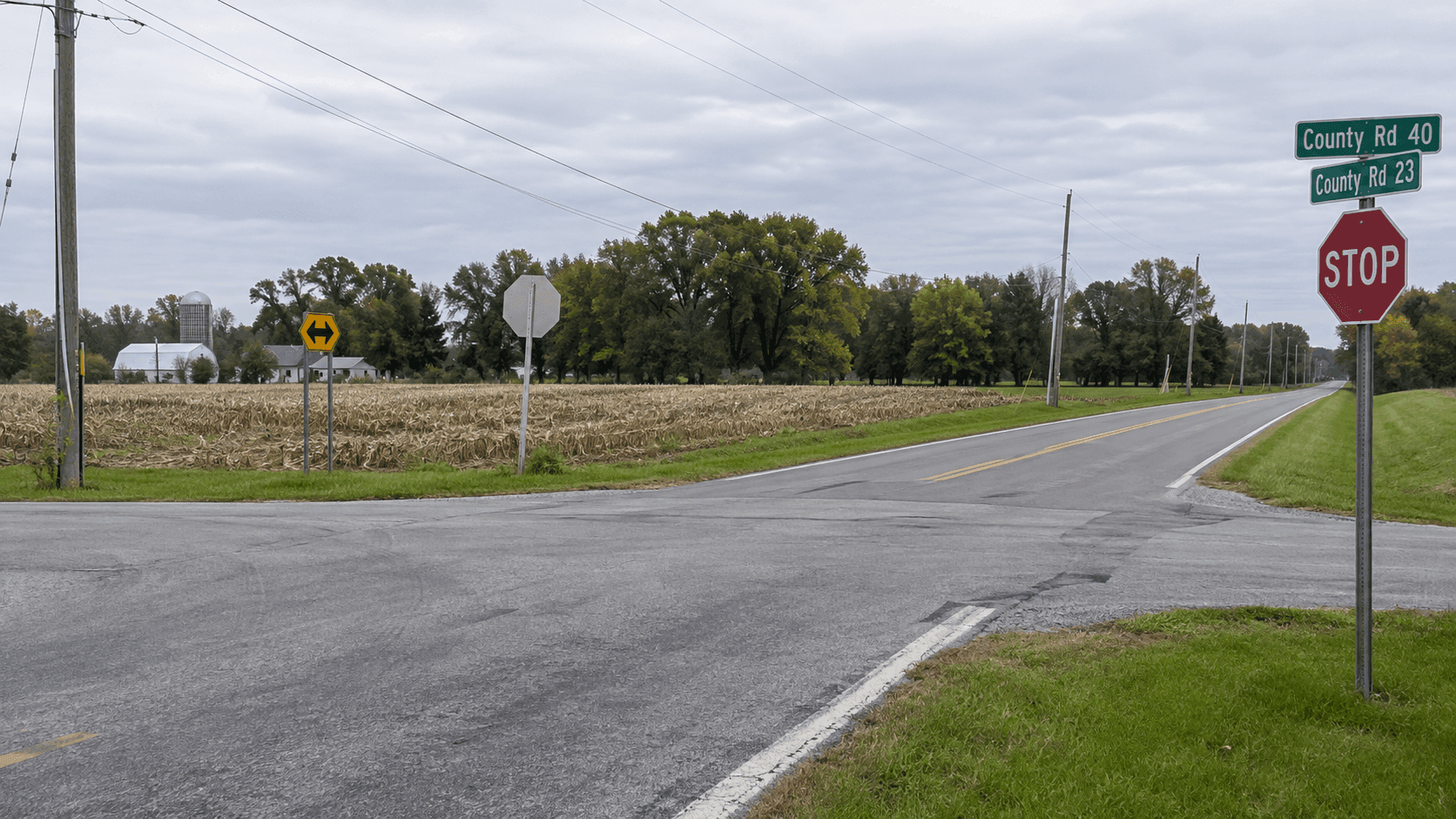
A driver was sentenced on Thursday, Nov. 12, 2026, to nine years in connection with a November 2022 crash near County Road 32 and County Road 15 that killed his passenger, according to the Elkhart Truth[1].
What the Elkhart Truth reported
The crash happened on Wednesday, Nov. 16, 2022. The newspaper reported that a 2020 Jeep Wrangler driven by a woman struck the passenger side of a 2012 Chrysler 200 driven by Cameron Woolf, now 25. Woolf's passenger and friend, Adam Maxon-Jones, 30, of Goshen, was killed. The Jeep driver was not named.
The case was heard in Elkhart Circuit Court in Goshen. According to the Elkhart Truth, a jury in October convicted Woolf of two counts of causing death when operating a vehicle with a controlled substance in his system, a Level 4 felony. Trial evidence showed THC and cocaine in his blood, the newspaper reported.
The jury found Woolf not guilty of causing death while operating while intoxicated, and a marijuana possession count was dismissed. The defense argued at trial that the Jeep was traveling 73 mph, according to the report. This article is based on that single published source.

What passengers and families should know
A criminal case and a civil claim serve different purposes. A criminal conviction does not itself compensate a family for a death. Civil responsibility must be evaluated separately, based on the available evidence and applicable Indiana law.
When two drivers are involved, more than one person may share responsibility. Each driver's insurance coverage may therefore matter. A police crash report can be useful, but it is not a final determination of civil liability. Families may also need court records, reconstruction materials, insurance information, funeral costs, and other records connected to the loss. The firm's guide to evidence in an Indiana crash claim explains why preserving records matters.
Passengers and families sometimes hesitate to ask questions when the driver was a friend or relative. An insurance claim is distinct from the personal relationship. A passenger injury claim can involve several policies and more than one potentially responsible party.

Why the Goshen location and timing matter
A crash on county roads near Goshen would generally place a related civil case in Elkhart County. The investigating agency's reconstruction and other preserved evidence may be important when the drivers' actions are disputed.
Indiana's modified comparative fault rule, IC 34-51-2-6[2], allows responsibility to be divided between drivers. An injured person whose own fault is greater than 50 percent recovers nothing; otherwise, the recovery is reduced by that person's percentage of fault. The site's explanation of Indiana's 51 percent fault rule provides additional context.
Timing is also critical. Indiana's wrongful death statute, IC 34-23-1-1[3], generally requires a claim to be filed within two years of the death. This criminal case took about four years to reach sentencing, which illustrates why a family should not assume that a criminal case pauses a civil deadline.
Indiana drivers must carry at least 25/50/25 liability coverage under IC 9-25-4-5[4]. Uninsured and underinsured motorist coverage under IC 27-7-5-2[5] may matter when available liability insurance is insufficient, depending on the policies and facts.

How Delventhal Law Office can help
Delventhal Law Office, LLC is a Fort Wayne personal injury law firm founded by attorney Chad E. Delventhal in 2009. The firm helps injured people and families understand how a civil claim differs from a criminal prosecution, which insurance policies may apply, and what deadlines require prompt attention.
Insurance companies may aggressively defend claims involving disputed responsibility or multiple drivers. Careful review of the crash evidence, court records, and available coverage can help identify the issues without assuming that a criminal verdict decides every civil question. Families can request a free case evaluation. No lawyer can promise a particular outcome.
This post is based on public reporting, the investigation or related proceedings may be ongoing, and nothing here is legal advice or creates an attorney-client relationship.