
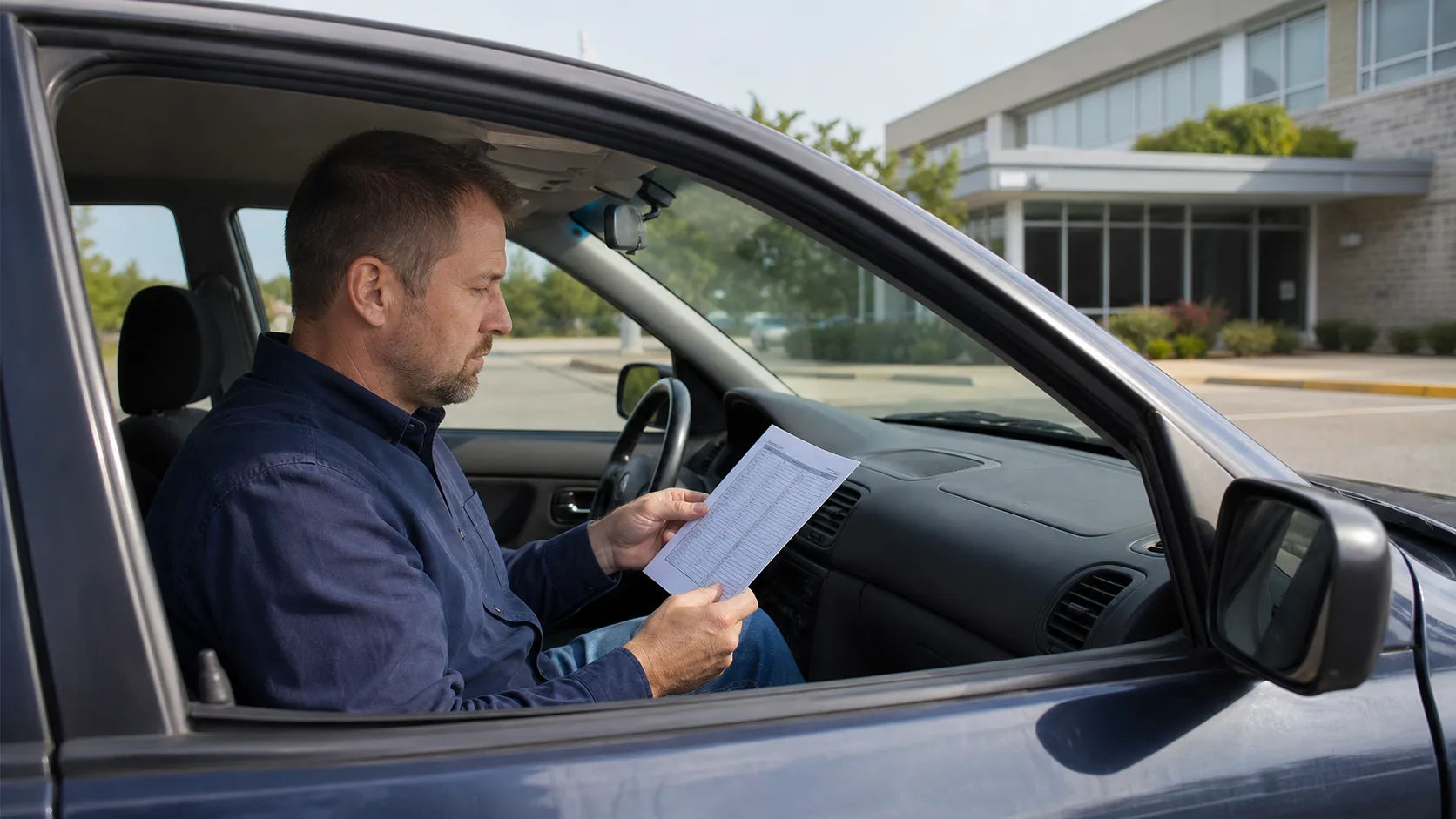
For organization, put trip costs and time-related pay in distinct sections of the same written request. A simple trip log, appointment notices, work schedules, and pay records can help explain each section.
Key takeaways
- Reasonable travel expenses are required when authorized services or supplies involve travel outside your county of employment.
- If you are not receiving TTD, normal wages are required for time spent attending authorized examination or treatment during regular working hours.
- The IDOA memorandum linked from the Board’s resources lists 64 cents per mile effective August 7, 2026.
- The earlier IDOA memorandum lists 49 cents per mile effective June 15, 2022.
- The applicable amount depends on the date of each trip.
Mileage and appointment-time wages are different
Indiana Code 22-3-3-4[1] addresses travel expenses and normal wages for appointment time in separate sentences. This distinction helps you identify what may be missing from a payment.
| Payment | When it applies | Useful records |
|---|---|---|
| Reasonable travel expenses | Indiana Code 22-3-3-4[1] requires the employer to pay reasonable travel expenses when authorized services or supplies require travel outside the county of employment. | Trip date, provider, destination, miles, and receipts. |
| Normal wages for appointment time | Indiana Code 22-3-3-4[1] requires normal wages for time spent attending an authorized examination or treatment during regular working hours when the employee is not receiving TTD. | Appointment times, regular schedule, time records, and pay stub. |
For related medical-care questions, see who generally chooses the doctor in an Indiana workers’ compensation claim and the firm’s Fort Wayne workers’ compensation practice.

When is mileage reimbursable?
Indiana Code 22-3-3-4[1] requires the employer to pay reasonable expenses for travel to and from the place of authorized services or supplies when the travel is outside the county of employment.
The Worker’s Compensation Board directs users seeking mileage rates to the Indiana Department of Administration’s official rate page. The state travel-rate page links to the official August 7, 2026 mileage memorandum[2], which lists 64 cents per mile. The Board’s resources page points readers to the IDOA mileage figures. Indiana Code 22-3-3-4[1] itself requires reasonable travel expenses rather than naming a cents-per-mile amount.
The official June 15, 2022 mileage memorandum[3] lists 49 cents per mile. The posted effective dates place travel on August 6, 2026, at 49 cents per mile and travel on August 7, 2026, at 64 cents per mile.
Indiana Code 22-3-3-4[1] uses the phrase “reasonable expenses” for qualifying travel, rather than limiting the provision to mileage alone. Preserve receipts for any additional travel cost and ask the employer or carrier to respond to each item.
Are you paid for time at an authorized appointment?
If you are not receiving temporary total disability benefits, Indiana Code 22-3-3-4[1] requires the employer to pay your normal wages for time spent attending an authorized medical examination or treatment during regular working hours.
The Board’s employee information page[4] gives the same answer: when the appointment occurs during normal working hours and you are not off on TTD, you are paid normal wages during the time you are at the appointment.
This rule concerns qualifying appointment time, not every hour missed for any medical visit. Authorization, regular working hours, and whether you are receiving TTD all matter under the statutory text.
For more context about wage-replacement checks, read when Indiana workers’ compensation checks start.

What records should you keep?
A consistent file can help the employer or adjuster match your request to the authorized visit.
- Date and address of the authorized provider.
- Appointment confirmation or visit record.
- Starting point, destination, and round-trip mileage.
- Receipts for additional travel costs.
- Your regular work schedule for that day.
- The time you arrived at and left the appointment.
- Timecard, leave record, and pay stub for the affected pay period.
- A copy of every request and response.
You may use a calendar, spreadsheet, or paper log. Keep the original documents or clear copies for your records.

How to request mileage or missing wages
- Confirm that the visit or item was authorized.
- Create one line for each trip and note its date, miles, and amount requested.
- Show how you calculated the travel amount.
- Keep the appointment-time request distinct from the trip request.
- Attach the mileage log, appointment record, work schedule, and relevant payroll documents.
- Send the request in writing and retain a copy.
- Ask for a written explanation if any part is denied.
If an informal request does not resolve the issue, the Board says its alternative-dispute process begins with a Request for Assistance. The Board’s informal-disputes page[5] explains that process.
Delventhal’s guides also explain the Indiana Request for Assistance and practical steps when a workers’ compensation adjuster is not responding.
Frequently Asked Questions
Does every trip to a workers’ comp doctor qualify for mileage reimbursement?
Indiana Code 22-3-3-4[1] requires reasonable travel expenses when authorized services or supplies require travel outside the county of employment.
How do the effective dates affect a request?
The Indiana Department of Administration lists 64 cents per mile effective August 7, 2026, and 49 cents per mile effective June 15, 2022. Those mileage figures appear on the IDOA page referenced by the Board’s resources page. Indiana Code 22-3-3-4[1] separately requires reasonable travel expenses for qualifying travel.
Must my employer pay me for an appointment during my shift?
If you are not receiving TTD, the employer must pay your normal wages for time spent attending an authorized examination or treatment during regular working hours.
Does the wage rule expressly include driving time?
Indiana Code 22-3-3-4[1] expressly provides normal wages for time spent attending the examination or treatment, while a separate sentence addresses travel expenses. The text does not expressly classify all driving time as paid appointment time.
What if mileage or appointment wages are missing?
Send an itemized written request with the supporting records and ask for a written explanation of any denial. The Board’s alternative-dispute process may be started by filing a completed Request for Assistance.

If mileage or appointment-time wages remain unpaid, Delventhal Law Office can review your travel log, authorization records, work schedule, and pay records and explain your options during a free consultation.
This article provides general educational information and is not legal advice. Reading this page alone does not establish representation; any engagement must be confirmed in writing.