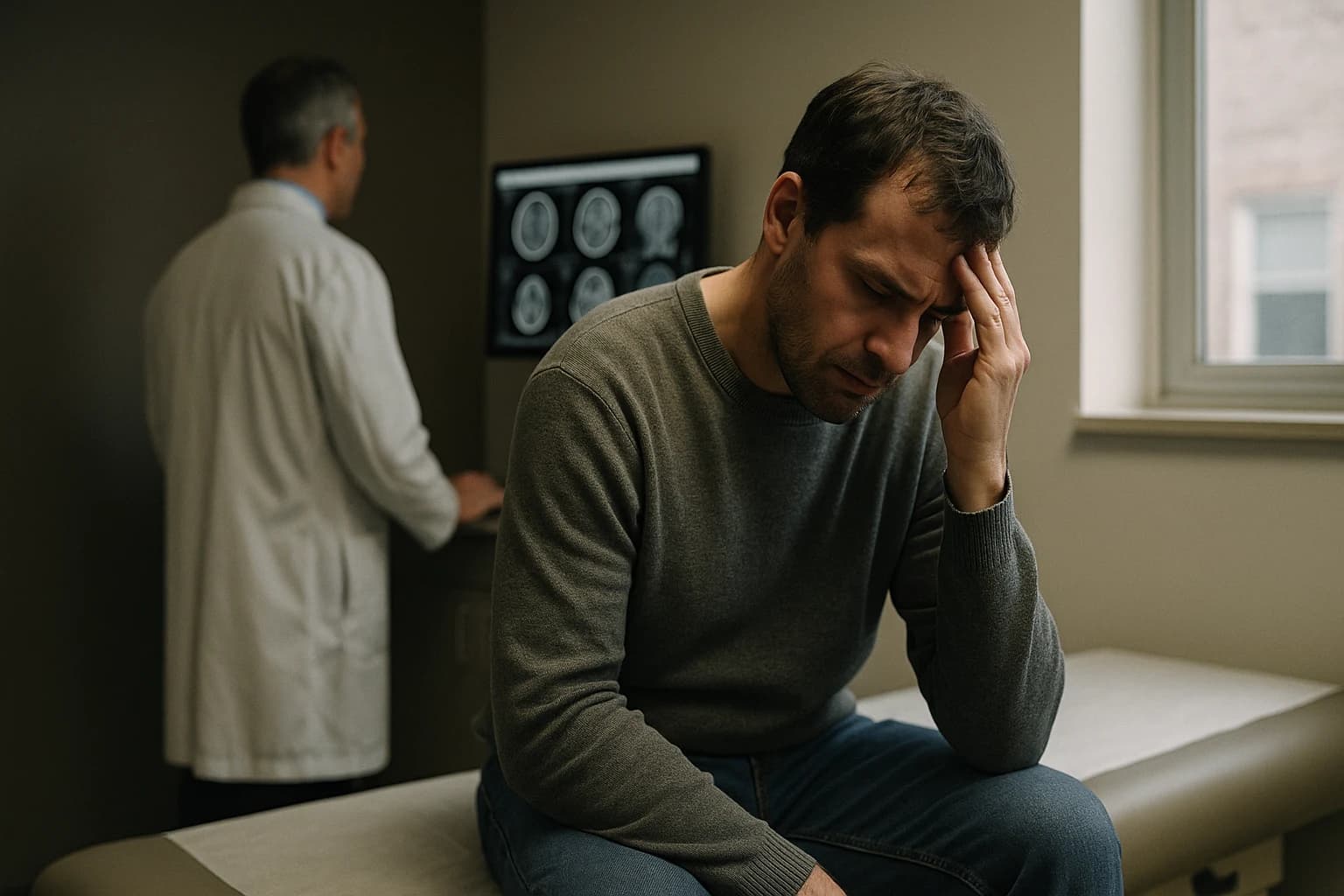
Traumatic brain injuries from car crashes are the injuries that look smallest on day one and turn out largest on day 365. The medicine has caught up with this reality. The law has caught up. Insurance companies, as always, are last. This article walks through what a TBI from an Indiana car crash actually involves, why these cases are routinely undervalued, and what the law allows when the damage is real and the imaging is “normal.”
What a Traumatic Brain Injury Actually Is
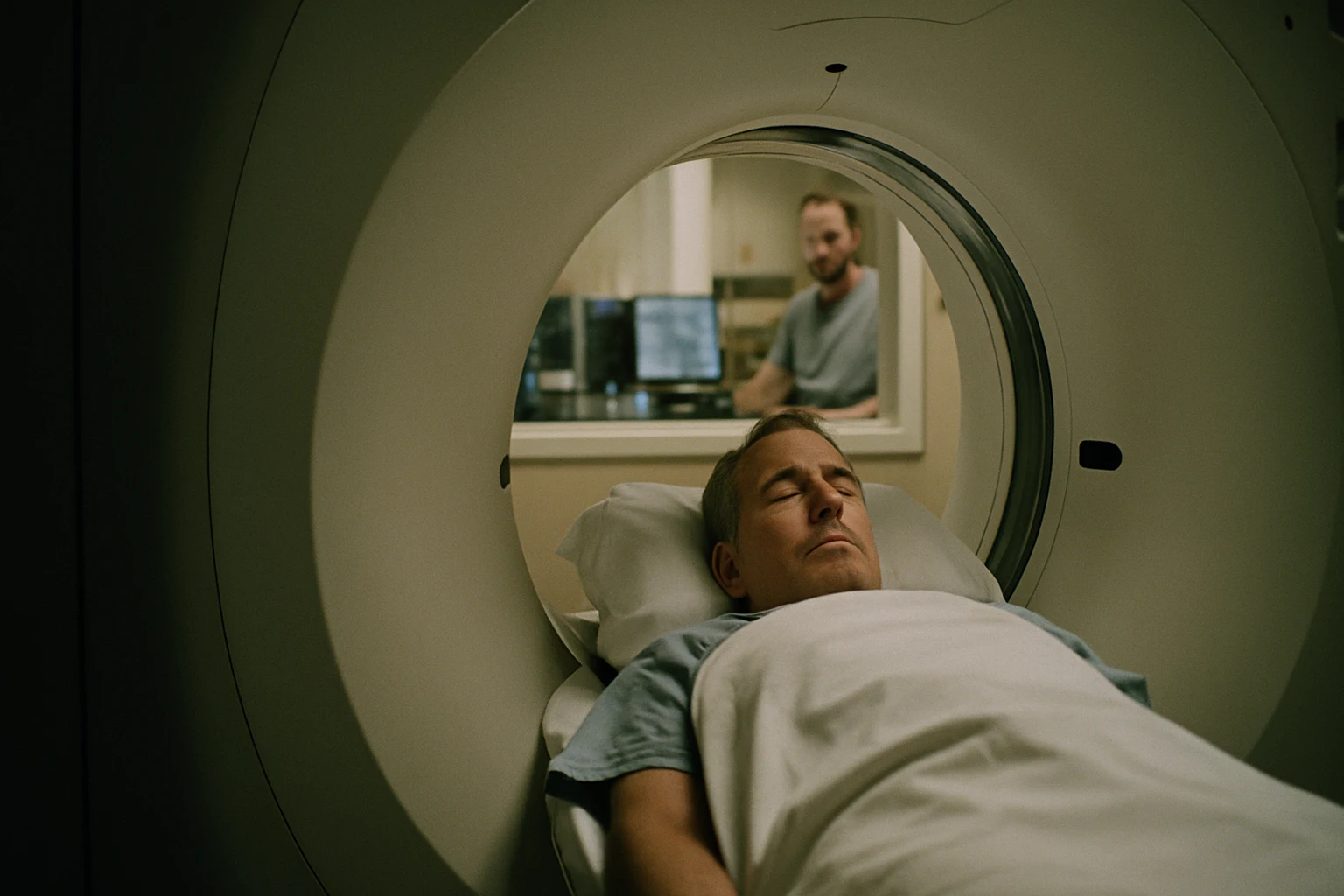
A traumatic brain injury, or TBI, is any disruption to brain function caused by an external force. In car crashes that force is almost always one of two things: a direct impact (the head striking the steering wheel, dashboard, or window) or an acceleration-deceleration event (the brain slamming against the inside of the skull as the head whips forward and back). Either mechanism can produce serious neurological damage even when there is no visible cut, no fracture, and no loss of consciousness.
The brain sits inside the skull in a thin layer of cerebrospinal fluid. At highway speed, a sudden stop sends it forward against the inside of the front of the skull (the “coup” injury) and then rebounds backward against the back of the skull (the “contrecoup” injury). The shearing forces between gray and white matter stretch and tear axons, the long fibers that connect neurons. Some of that damage shows on imaging. Most of it does not.
The medical classification runs on a severity scale:
- Mild TBI (concussion): brief or no loss of consciousness, transient confusion, headache, dizziness, possible amnesia for the event. Glasgow Coma Scale 13 to 15. The majority of crash-related TBIs fall here.
- Moderate TBI: loss of consciousness up to 24 hours, persistent confusion, neurological deficits, abnormal imaging. Glasgow Coma Scale 9 to 12.
- Severe TBI: loss of consciousness more than 24 hours, persistent neurological deficits, often abnormal CT or MRI. Glasgow Coma Scale 3 to 8. These are the cases that involve ICU stays, ventilators, and sometimes permanent disability.
The Types of Brain Injuries Crashes Produce
Within those severity bands, the specific diagnoses vary. Each one has its own treatment path and its own implications for the legal claim.
Concussion
The most common diagnosis. A functional disruption rather than a structural one. CT and MRI typically look normal. Symptoms include headache, dizziness, fogginess, light and sound sensitivity, mood changes, and sleep disturbance. Most resolve in days to weeks. About 15 to 20 percent develop post-concussion syndrome lasting months or longer.
Contusion
Bruising of brain tissue, usually at the point of impact or directly opposite (the coup-contrecoup pattern). Visible on imaging. Symptoms depend on the area of the brain affected and can include focal neurological deficits, seizures, or cognitive changes.
Hematoma
Bleeding inside or around the brain. Subdural hematomas (between the brain and the dura) and epidural hematomas (between the dura and the skull) can require emergency surgical drainage. Subarachnoid hemorrhages, bleeding in the space around the brain, can cause severe headache and require ICU monitoring.
Diffuse axonal injury
Widespread damage to axons throughout the brain caused by rotational forces. This is the injury that does not show on a standard CT scan and often does not show on routine MRI. Specialized imaging (DTI) can sometimes detect it. Symptoms can be devastating and persistent.
Penetrating injury
Less common in modern car crashes due to airbags and reinforced cabins, but possible when debris, glass, or vehicle structure intrudes into the skull. Always severe.
Why Mild TBIs Are Routinely Undervalued

The most common TBI from a car crash is a concussion, and the most common legal mistake is treating it like a sprained ankle. The damage is real. The functional consequences are real. The imaging is often normal, and that is where the insurance carrier plants the flag.
An adjuster reviewing a file with a normal CT scan and a normal MRI will see “no objective injury” and value the claim accordingly. Without specific evidence to the contrary, that adjuster’s opening offer will be a fraction of what the case is worth. The fix is to build the file with the evidence the imaging cannot capture:
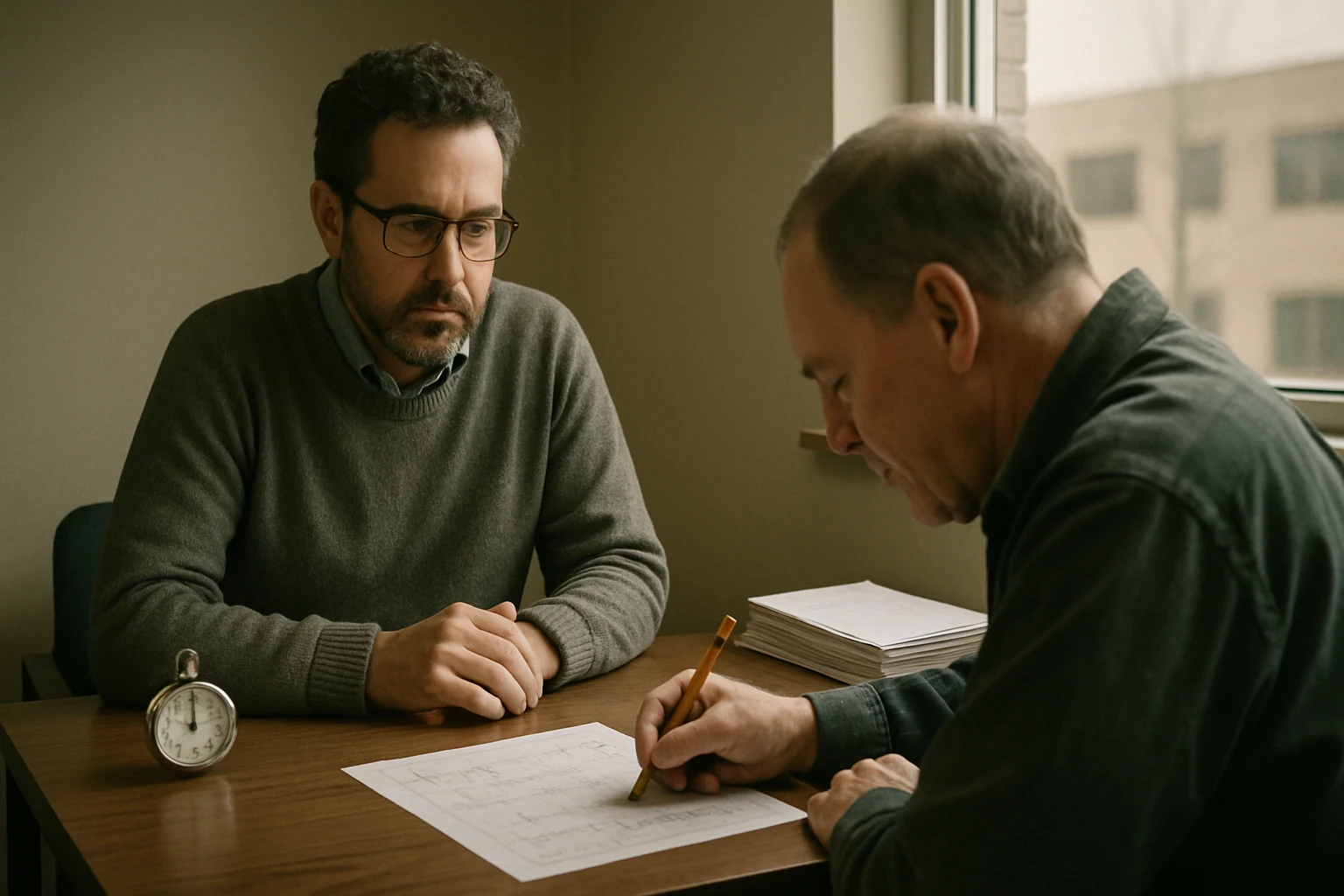
- Neuropsychological testing. A six-to-eight hour battery administered by a neuropsychologist that measures memory, attention, processing speed, executive function, and mood. It produces objective scores that document cognitive deficits.
- Treating physician documentation. Neurologists, physiatrists, and primary care doctors writing clear notes about symptoms, functional limitations, and prognosis.
- Vocational evaluation. A formal assessment of what work the injured person can and cannot do after the injury, compared to before.
- Day-in-the-life evidence. Family statements, work performance reviews, school records, and a symptom journal documenting the cognitive and behavioral changes.
- Advanced imaging. Diffusion tensor imaging or functional MRI when warranted, although these are not standard of care for every concussion.
Without that scaffolding, a mild TBI claim looks like a soft-tissue case to the adjuster. With it, the file presents differently.
The Symptoms That Should Send You Straight to a Doctor

Any of the following symptoms after a Fort Wayne car crash warrants medical evaluation, the same day if possible:
- Loss of consciousness, even briefly, at the scene
- Confusion or memory gaps about the crash itself
- Headache that worsens rather than improves over hours
- Repeated vomiting or persistent nausea
- Dizziness, balance problems, or unsteady gait
- Visual disturbances (blurring, double vision, light sensitivity)
- Slurred speech, word-finding difficulty, or trouble understanding speech
- Numbness, weakness, or tingling in any limb
- Seizure activity
- Unusual irritability, mood changes, or behavioral shifts noticed by family
- Sleep disturbance lasting more than a few days
- Difficulty concentrating or completing routine tasks
Symptoms can appear immediately or be delayed by hours to days. Slow-developing symptoms are not a sign that the injury is mild. Subdural hematomas can develop over 24 to 72 hours. If anything feels off after a crash, see a doctor, do not wait it out.
What Indiana Law Allows You to Recover
Indiana’s fault-based system covers the full economic and non-economic losses of a brain injury. The exact recovery depends on severity, but the categories are consistent.
- Medical expenses: ambulance, ER, imaging, hospitalization, surgery, rehabilitation, neuropsychology, ongoing therapy, medication, and reasonable future care including home modifications when needed.
- Lost wages and lost earning capacity: time missed from work and reduced future income if the injury limits employability. TBI claims often have the largest lost-earning-capacity component because cognitive function affects every job.
- Pain and suffering: physical pain, emotional distress, mental anguish, sleep disruption, and the cognitive and behavioral changes that accompany brain injury. Indiana does not cap these in standard auto claims.
- Loss of consortium: spouses can recover for the loss of companionship, intimacy, and the partner the injured person was before the wreck.
- Future care costs: life care plans for severe TBIs can run into seven figures, and Indiana law allows recovery of the full present value of those projected costs.
- Property damage: separate two-year statute under IC § 34-11-2-7[2].
If the at-fault driver was a government employee on duty (a school bus driver in Huntington, a county vehicle in DeKalb, an INDOT plow on I-69), the Indiana Tort Claims Act imposes notice deadlines of 180 days for political subdivisions under IC § 34-13-3-8[3] and 270 days for state defendants under IC § 34-13-3-6[4]. Miss the notice and even the strongest TBI case can be dismissed.
How Delventhal Law Office Handles Brain Injury Cases
Brain injury cases are not won with rhetoric. They are won by building a record the carrier cannot ignore. That means assembling treating physicians, neuropsychologists, vocational experts, and life care planners into a single coherent file that documents what the injury actually took from the client.
Our work on a suspected TBI case starts with imaging review. If a CT scan and routine MRI came back normal, the next step is usually a neuropsychological evaluation, ordered through the treating physician. Objective cognitive scores anchor the claim. A vocational evaluation follows when the injury affects work. A life care plan follows when long-term care is on the table.
We also push back hard on the carrier’s pattern of claiming that mild TBI symptoms are subjective. They are not. Neuropsychological testing produces objective, replicable data. Family observations, employer reports, and treating-physician notes corroborate it. The defense narrative falls apart when the file is built that way.
Every case at Delventhal Law Office is handled by Chad directly. Indiana State Bar, admitted 2008. Hundreds of Fort Wayne, Allen County, DeKalb, Whitley, and Adams County injury claims. One direct line to your attorney, day or night.

FAQs About Brain Injuries After an Indiana Car Accident
Can I have a TBI if my CT scan was normal?
Yes. Most concussions and many diffuse axonal injuries do not show on a CT scan. CT is good for ruling out bleeding and fractures. It is not designed to detect the kind of microscopic axonal damage that causes most mild TBIs. Neuropsychological testing is the standard tool for documenting cognitive deficits.
How long does post-concussion syndrome last?
Most concussions resolve in two to four weeks. Roughly 15 to 20 percent persist as post-concussion syndrome for three months or more. A smaller subset becomes chronic, lasting a year or longer. Symptoms include headache, dizziness, cognitive fog, mood changes, and sleep disturbance.
What if I had a previous concussion before the crash?
The eggshell-plaintiff rule applies. Indiana law takes the victim as found. A prior concussion does not bar recovery if the crash worsened, aggravated, or caused new injury. Prior history is relevant to baseline but not to defeating the claim.
Should I accept the insurer’s first offer on a brain injury claim?
No. TBI claims are routinely undervalued in the early months because the long-term consequences are not yet clear. Wait until you reach maximum medical improvement and have neuropsychological testing in hand before considering any settlement. Once you sign a release, the file is closed forever.
How long do I have to file a brain injury lawsuit?
Two years from the crash date for personal injury under IC § 34-11-2-4[1]. If a government vehicle or employee was involved, notice deadlines under the Indiana Tort Claims Act are much shorter (180 or 270 days). Get legal advice within weeks of the crash, not months.
Talk to a Fort Wayne Brain Injury Attorney
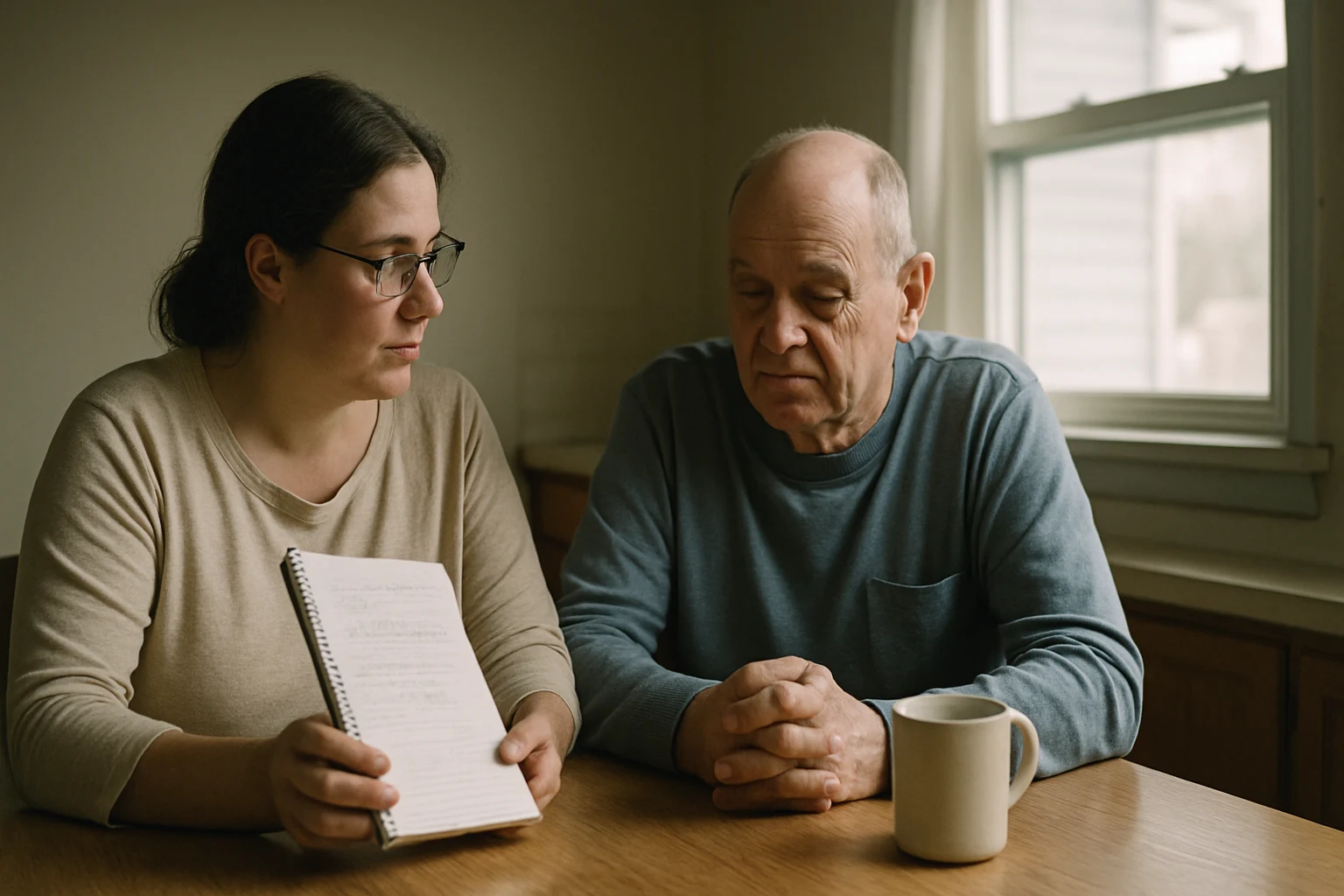
Brain injury cases are the ones where the gap between the medicine and the insurance carrier’s view is widest. The damage is real. The science is solid. The carrier’s incentive is to call the imaging normal and the symptoms exaggerated, and that incentive holds until a lawyer with the right tools forces the file to change shape.
If you or a family member suffered a brain injury in a crash in Allen County, DeKalb County, Whitley County, Adams County, or anywhere in Indiana, call Delventhal Law Office before the carrier’s narrative hardens. The consultation is free and you will be talking to Chad directly. Call (260) 484-6655 or contact us online to schedule a free case evaluation.
Talk to a Fort Wayne car accident attorney. Every Fort Wayne crash claim is different, and the carrier knows the playbook. Our Fort Wayne car accident attorneys read every page of every file — not just the police report.