Key takeaways
- Social media can create claim problems even when a post is innocent or taken out of context.
- Do not post about the accident, injuries, treatment, settlement, or daily activities while the claim is pending.
- Do not delete old posts without legal advice; preserve evidence and stop creating new material.
- Ask friends and family not to tag you or discuss your injury online.
- Privacy settings help, but screenshots, tags, subpoenas, and discovery can still expose posts.
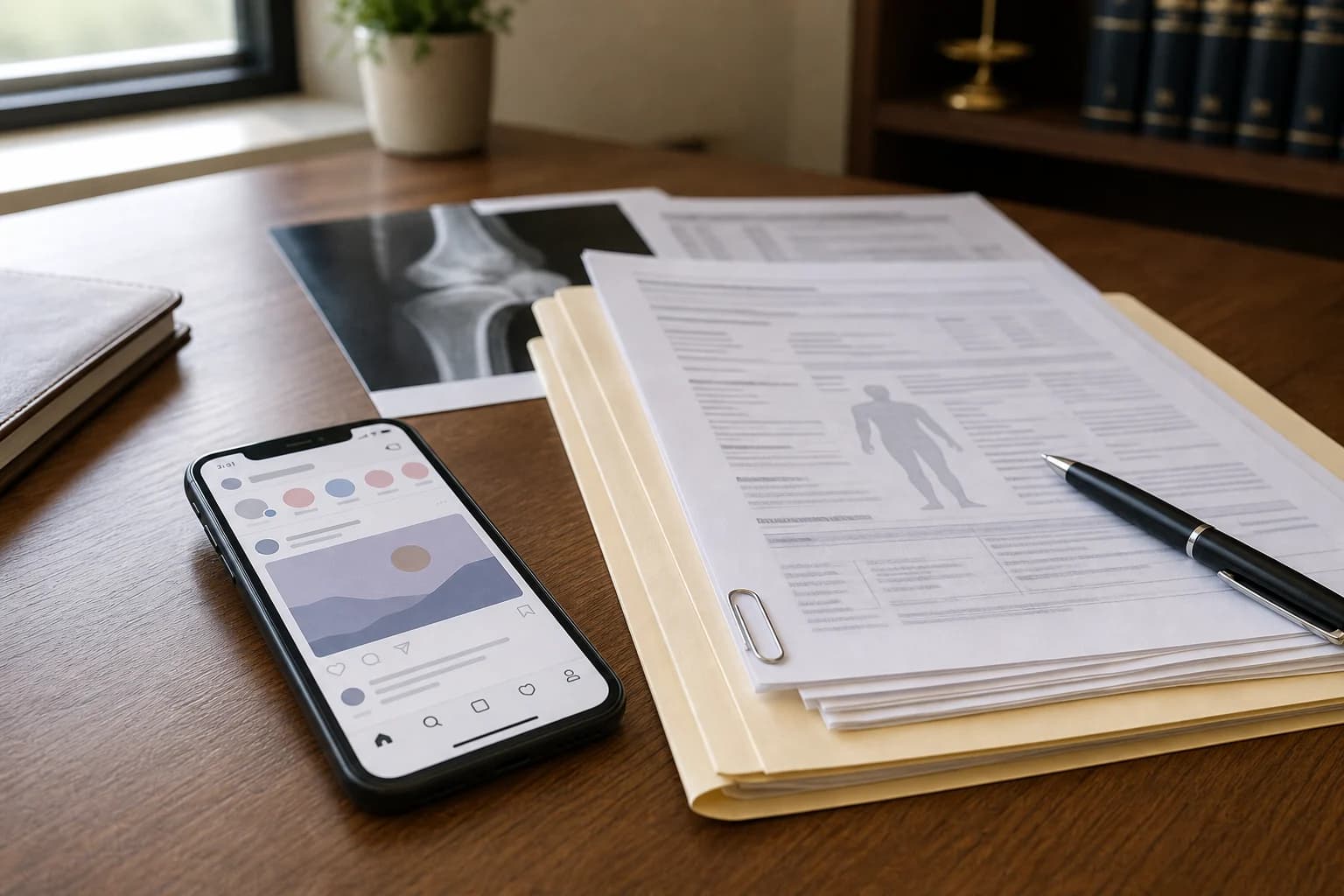
Yes. Social media can hurt an Indiana personal injury claim when posts, photos, comments, check-ins, videos, or tags give the insurance company something to use against you. A single post rarely destroys a legitimate case by itself, but social media can create doubt about your injuries, your activity level, your pain, your work restrictions, or even how the accident happened.
If you were hurt in a crash, the safest rule is simple: **do not post about the accident, your injuries, your treatment, the insurance company, or your daily activities until you have talked with your lawyer.**
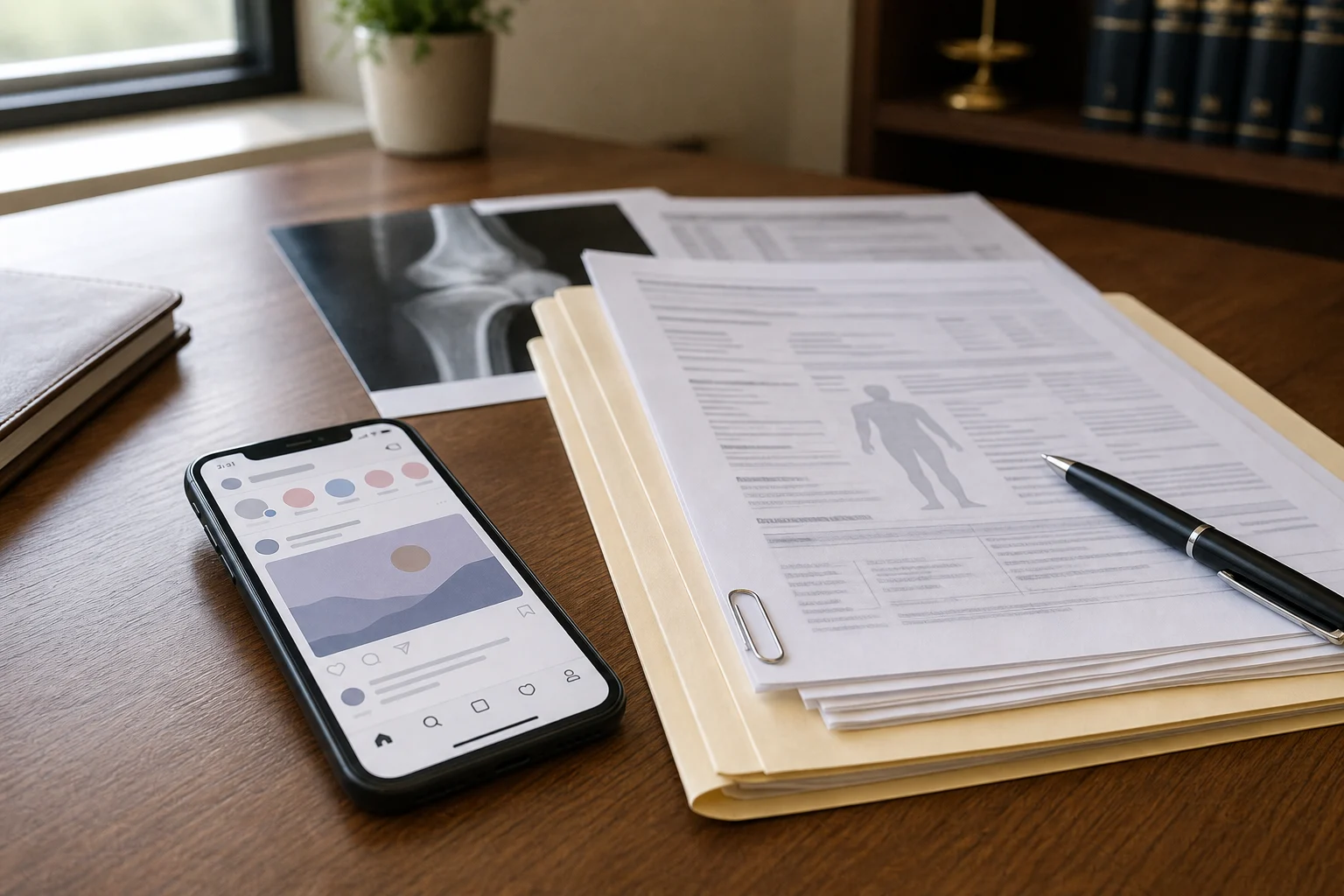
That does not mean you should delete evidence. It means you should stop creating new material the insurance company can twist.
Delventhal Law Office handles Indiana injury claims every day. We see the same pattern repeatedly: an injured person posts something ordinary, the insurance company removes the context, and suddenly that post becomes a settlement argument.
Why insurance companies care about your social media

Insurance companies evaluate injury claims by looking for reasons to pay less. They review medical records, photos, wage records, crash reports, prior claims, prior injuries, and sometimes social media.
They are not just looking for a post that says, “I am not hurt.” They are looking for anything that can be framed as inconsistent with the claim.
Examples:
- You claim back pain, but a photo shows you standing at a graduation party.
- You claim headaches after a concussion, but someone tags you at a concert.
- You claim you cannot lift much, but an old or out-of-context photo shows you holding a child.
- You claim the crash disrupted your life, but your feed looks cheerful because you do not post the hard parts.
- You say you were home resting, but a location tag places you somewhere else.
The problem is not always the truth of the post. The problem is the way it can be used.
A photo captures one second. It does not show the pain afterward, the medication before, the hours spent resting, the activities you avoided, or the treatment you are still receiving. Insurance adjusters know that. They may use the image anyway.
The first mistake: posting about the accident
After a crash, people naturally want to tell friends and family what happened. That is understandable. But public posts about the accident can create problems.
Avoid posting:
- “I’m okay” or “I’m fine.”
- Blame statements about the other driver.
- Apologies or comments like “I didn’t see them either.”
- Guesses about speed, traffic lights, weather, or fault.
- Photos of the vehicles without context.
- Anger toward the other driver, police, witnesses, or insurance company.
- Updates about settlement talks.
A casual “I’m okay” often means “I survived” or “please do not worry.” An insurance company may treat it as “I was not injured.”
That is unfair, but it happens.
If you need to update family, do it privately and carefully. Better yet, call or text the people who need to know.
The second mistake: posting activities without context

Most injured people are not bedridden every minute of every day. They may still attend a child’s game, go to church, sit through a family dinner, walk around a store, or try to live a normal life between appointments.
That does not mean they are not hurt.
But social media does not show the full story.
A person with a neck injury might smile in a photo for ten seconds and spend the next day in pain. A person with a concussion might attend a family event for an hour and then have light sensitivity and headaches afterward. A person on work restrictions might carry something light for a photo but still be unable to perform their job.
Insurance companies often ignore that nuance.
That is why the safest approach is to avoid posting activity photos while your claim is pending. If someone else tags you, ask them to remove the tag or adjust privacy settings.
The third mistake: letting friends and family accidentally create evidence
Even if you stop posting, other people may create problems for you.
Friends may tag you in photos. Family may comment, “Glad you’re finally back to normal!” Someone may post a video of a birthday party, a cookout, a vacation, or a sports event where you appear in the background.
Those posts may be innocent. They may also create questions.
Practical steps:
- Ask close friends and family not to tag you while the claim is pending.
- Review tag settings on Facebook, Instagram, and other platforms.
- Do not discuss your injuries or legal claim in comment threads.
- Do not respond emotionally to people asking what happened.
- Do not let someone else post updates about settlement or legal strategy.
This is not about hiding. It is about avoiding misleading fragments.
Should you delete old posts after an accident?
Be careful. Do not start deleting posts, photos, messages, or account history after you know a legal claim may exist without legal advice.
Deleting material can create a separate problem if the other side argues evidence was destroyed. The better approach is:
- Stop posting new claim-related material.
- Tighten privacy settings.
- Preserve what already exists.
- Talk with your lawyer before deleting anything.
Your lawyer can help decide what should be preserved and how to handle posts that may be misunderstood.
Privacy settings help, but they do not solve everything
You should review privacy settings, but do not assume “private” means invisible.
Social posts can be shared, screenshotted, subpoenaed, requested in discovery, or shown through tags and mutual contacts. If a case is filed in court, social media may become part of formal discovery if it is relevant.
The safest test is this:
If you would not want the insurance adjuster, defense lawyer, or a jury seeing it without context, do not post it.
How social media connects to Indiana comparative fault
Indiana uses modified comparative fault. If you are partly at fault, your recovery can be reduced. If you are found more than 50% at fault, you may recover nothing.
That matters because social media can be used in two ways:
- to argue you were more responsible for the crash than you say; or
- to argue your injuries are not as serious as your medical records suggest.
A post before the crash showing distracted driving jokes, speeding, drinking, or reckless behavior may be used to paint a picture. A post after the crash may be used to minimize injury.
The insurance company is not just evaluating facts. It is building a story.
DLO’s job is to build the accurate story: what happened, why it happened, what the medical evidence shows, and how the injury changed your life.
Internal link: What if the police report says you are partly at fault after an Indiana car accident?
What about surveillance?
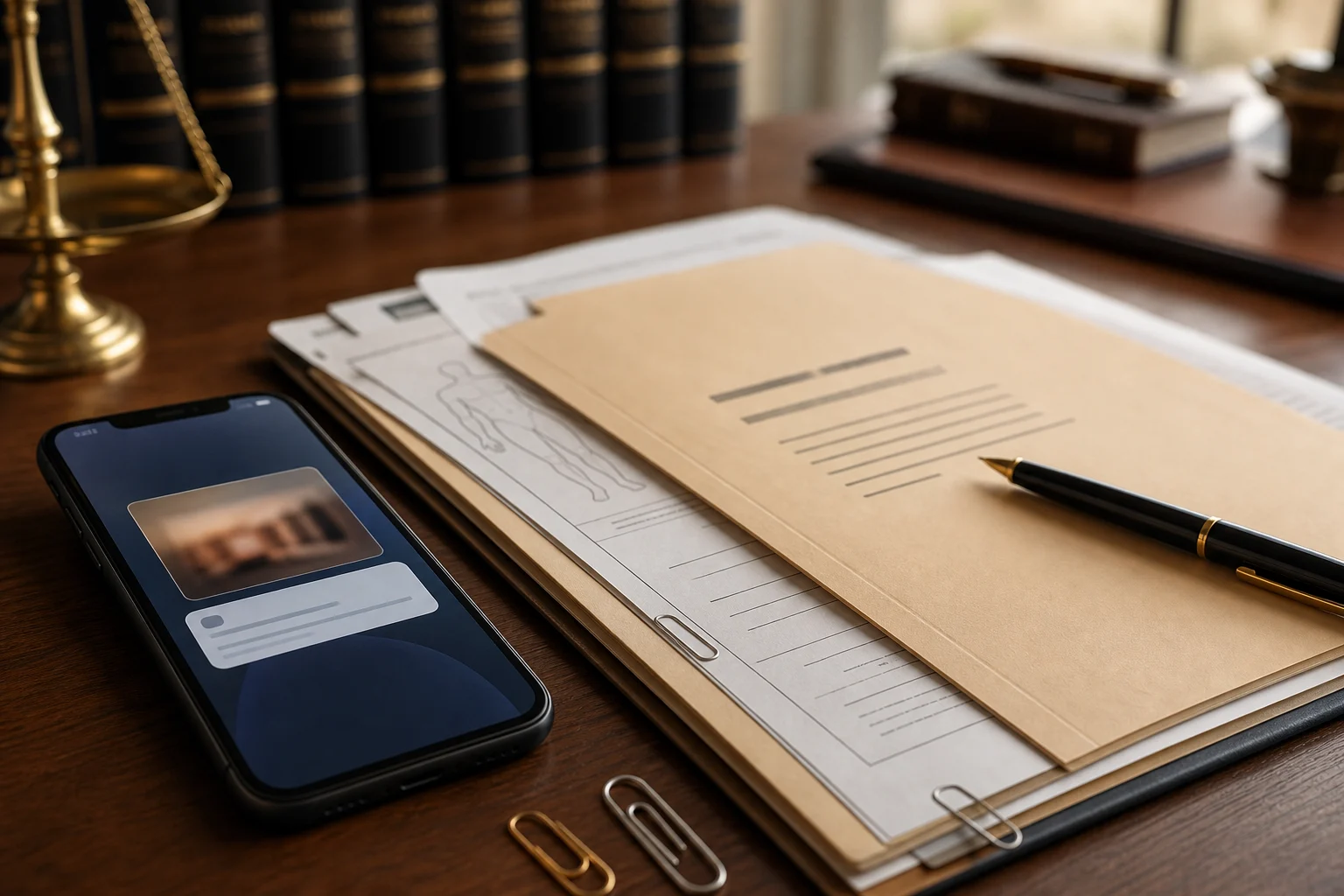
Social media is not the only way insurers look for activity evidence. In larger claims, especially cases involving serious injury, work restrictions, or disputed disability, an insurer may use surveillance.
That may include:
- investigators watching outside a home;
- video of driving, walking, shopping, lifting, or yard work;
- online searches;
- public database checks;
- social media monitoring.
Again, the issue is context. A short video may not show pain, limits, or what happened before and after. But it can still affect negotiations.
The best advice is not “never leave your house.” The best advice is: follow your medical restrictions, be honest with your doctors, and do not exaggerate. If your doctor says do not lift more than ten pounds, do not lift more than ten pounds. If you have good days and bad days, make sure your medical records reflect that.
What to do instead of posting
If you are documenting your recovery, do it privately and usefully.
Consider keeping:
- a symptom journal;
- appointment calendar;
- medication list;
- mileage to medical appointments;
- missed-work records;
- photos of visible injuries over time;
- notes about activities you cannot do;
- receipts and out-of-pocket expenses.
These records may help your lawyer present the real impact of the injury.
Internal link: Why gaps in treatment matter in an Indiana injury claim
A safer social media checklist after an Indiana accident
Use this checklist until your claim is resolved:
- Do not post about the accident.
- Do not post about injuries, pain, treatment, or settlement.
- Do not post activity photos that could be misread.
- Do not accept new friend requests from people you do not know.
- Ask friends and family not to tag you.
- Review privacy and tag settings.
- Do not delete old content without legal advice.
- Do not message about legal strategy.
- Assume screenshots exist.
- Tell your lawyer if there is a post you are worried about.
When should you call a lawyer?

If you were injured, needed medical care, missed work, or the insurance company is already asking questions, call before giving them more material to use.
Internal link: Insurance adjuster wants a recorded statement or medical release after an Indiana accident — what should you do?
At Delventhal Law Office, we help injured people in Fort Wayne and throughout Indiana protect their claims from the mistakes insurance companies look for. We review the evidence, the medical timeline, the coverage, and the details that can change the value of a case.
We Find What Others Miss.
If you were hurt in an accident and are worried about what to say, what to post, or what the insurance company is asking for, call us. The consultation is free, and there is no fee unless we recover compensation for you.
Frequently Asked Questions
Can the insurance company look at my social media after an Indiana accident?
Yes. Adjusters and defense lawyers may review public posts, tagged photos, check-ins, comments, and other online activity. In a filed lawsuit, relevant social media may also become part of discovery.
Should I delete posts after an accident?
Not without legal advice. Deleting posts after you know a claim may exist can create evidence-preservation problems. The safer move is to stop posting and ask your lawyer what should be preserved.
Can one photo ruin my injury claim?
Usually one photo does not decide a legitimate claim by itself, but it can be used to create doubt. A smiling photo or activity post may not show pain afterward, medication, restrictions, or the rest of the recovery story.
What should I tell friends and family?
Ask them not to tag you, post updates about your injury, discuss settlement, or share activity photos while your claim is pending.
What if I already posted something I regret?
Tell your lawyer. Do not panic and do not start deleting things without advice. The context may be explainable, but your lawyer needs to know early.
Related DLO resources
- Fort Wayne Car Accident Attorney
- Insurance adjuster wants a recorded statement or medical release
- Why gaps in treatment matter
- Who pays medical bills after an Indiana crash
Bottom line
If you were hurt in Indiana and the insurance issues are already getting complicated, Delventhal Law Office can help you protect the claim, document the evidence, and avoid mistakes that give the insurance company leverage. The consultation is free, and there is no fee unless we recover compensation for you.
Sources and further reading
- National Highway Traffic Safety Administration — Distracted Driving[1]
- Indiana Code Chapter 34-51-2 — Comparative Fault Act[2]
- Indiana Code § 34-11-2-4 — Personal injury statute of limitations[3]
- Federal Rule of Civil Procedure 26 — Discovery scope[4]
- Delventhal Law Office — Fort Wayne Car Accident Attorney
Sources
- National Highway Traffic Safety Administration — Distracted Driving (nhtsa.gov) ↩
- Indiana Code Chapter 34-51-2 — Comparative Fault Act (iga.in.gov) ↩
- Indiana Code § 34-11-2-4 — Personal injury statute of limitations (iga.in.gov) ↩
- Federal Rule of Civil Procedure 26 — Discovery scope (law.cornell.edu) ↩