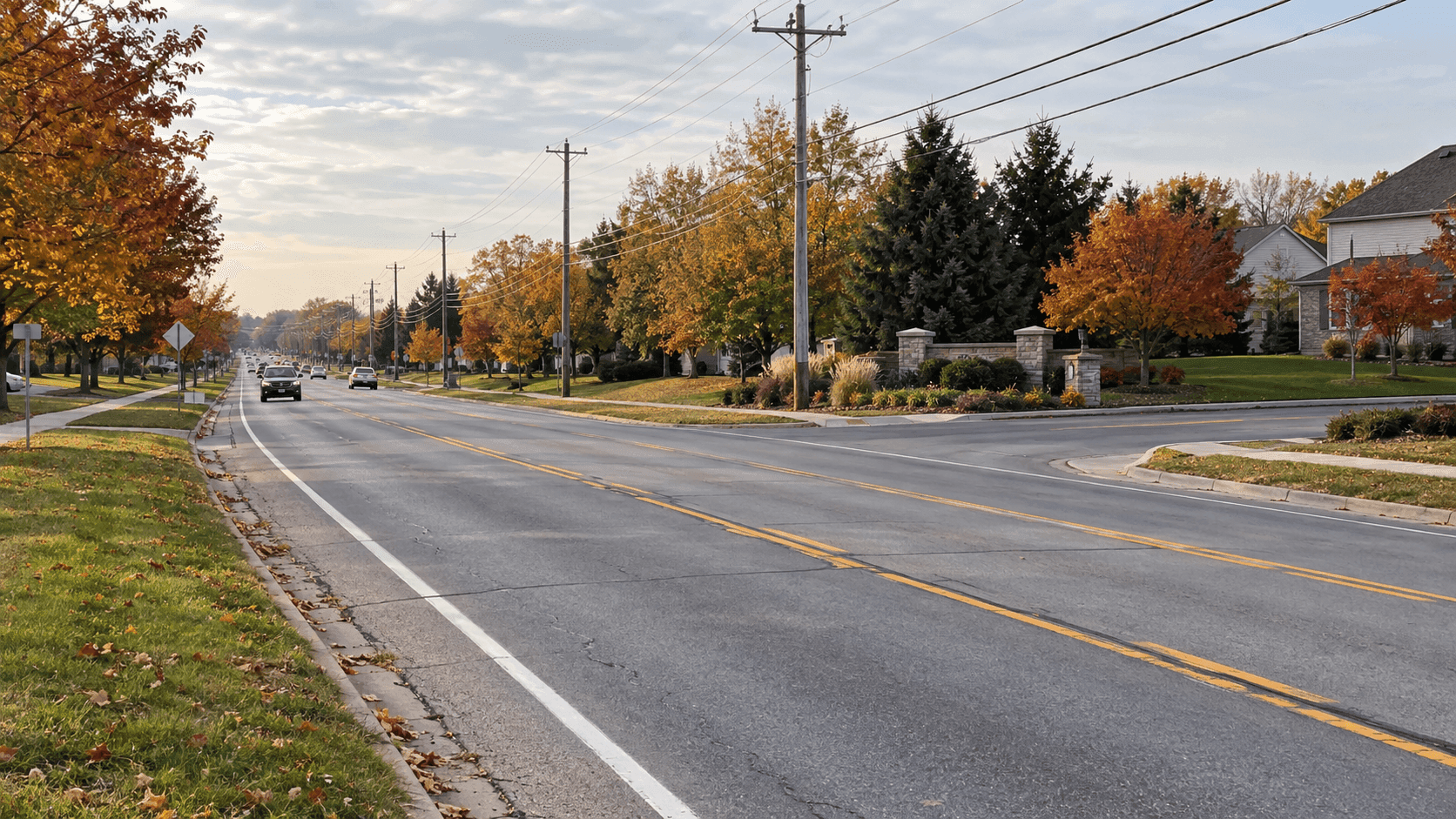
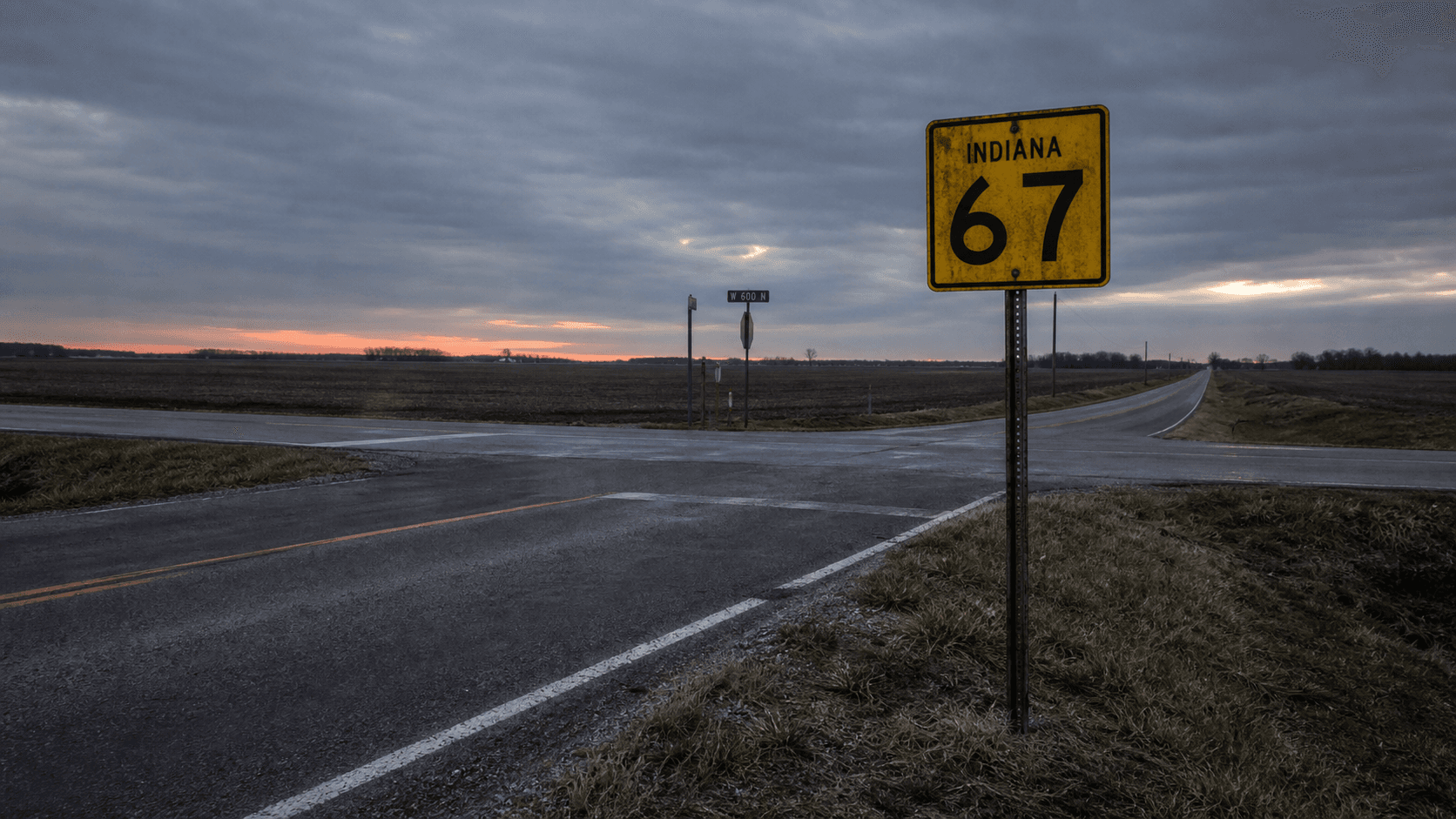
A person was killed in a crash involving an SUV and a semi-tractor on the afternoon of Wednesday, July 29, 2026, at about 4:50 p.m. on State Road 9 at County Road 100 South in a rural part of Huntington County. The Huntington County Coroner released the identification of the person who died on July 31.
What Happened
According to WANE 15[1], an SUV was traveling in the southbound passing lane of State Road 9 when it struck the rear of a semi-tractor that was turning east, or left, off the highway onto County Road 100 South. The SUV became wedged under the semi's trailer, and the driver of the SUV was pronounced dead at the scene of multiple blunt-impact injuries. The Huntington County Coroner ruled the death accidental.
The driver of the semi was medically cleared at the scene, and no citations or arrests were reported. The crash is being investigated by the Huntington County Sheriff's Office, the Indiana State Police, and the Huntington County Coroner's Office, and that investigation was still ongoing as this was written.
Fault has not been officially assigned. This post is for general educational purposes only. It does not assert who was at fault, and nothing here should be read as a legal conclusion about this incident or any person involved.
What Should Accident Victims Do Next?
The death of a family member in a highway crash is devastating, and the practical and legal questions that follow can feel impossible to think about. When a loved one is killed in a collision involving a commercial truck, a few steps tend to protect a family's options while the investigation is still developing.
Let the official investigation run, but preserve the record independently. Multiple agencies are typically involved after a fatal crash, and their findings take time. In the meantime, a family can note which agencies responded, ask how to obtain the crash report once it is complete, and identify any witnesses, nearby cameras, or businesses along the highway that may have captured what happened.
Think about physical evidence early. Crashes involving semis often turn on details that disappear quickly: the position of the vehicles, the truck's lights and signals, damage patterns, and the electronic data many commercial trucks record. When a commercial vehicle is involved, there may be a motor carrier, driver logs, maintenance records, and onboard data that matter to how the crash is reconstructed. Because these records can be overwritten or lost, families sometimes send a formal request that the truck and its data be preserved, a process explained in more detail in this overview of black box and ECM evidence in Indiana truck crashes.
Be cautious with insurance adjusters. After a serious crash, an insurer for the trucking company may reach out quickly. What is said early, before the full picture is known, can be used to shape the fault question later. It is reasonable to get advice before giving a detailed or recorded statement.
Understand how Indiana's fault rule works before accepting any resolution. Indiana uses a modified comparative fault system, and the general framework is described in this explanation of Indiana's 51% fault rule. A family can still recover if the person who died is found partly at fault, but the recovery is reduced by that share, and if the person is found more than 50 percent at fault, there is no recovery. In a rear-end crash involving a truck that was turning across or off a highway, the fault question is genuinely contested and turns on specific facts: whether the truck signaled, how and where it was turning, its visibility, and the movements of both vehicles in the moments before impact. That is exactly the kind of situation where an early, careful look at the evidence matters, and it is worth speaking with a Fort Wayne truck accident attorney before agreeing to anything with an insurer.
Why Location Matters in Indiana Injury Claims
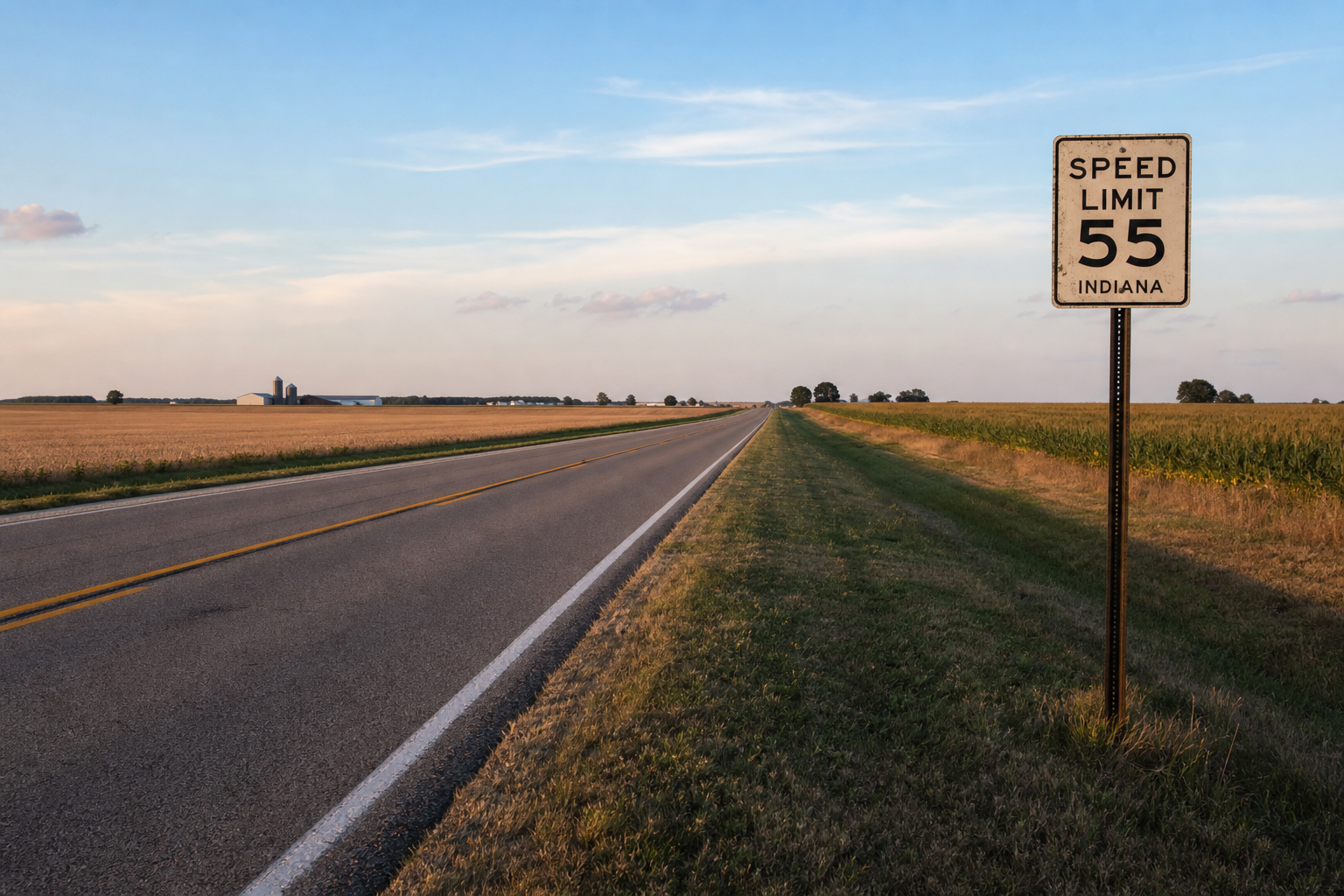
Where a crash happens shapes the claim in ways that are easy to overlook. This collision happened on a state highway, at a rural intersection with a county road, where a large commercial truck was turning off the through lanes.
That setting carries its own recurring hazards. On open state highways like State Road 9, traffic moves at highway speed, while trucks entering and leaving side roads must slow, signal, and turn across or out of fast-moving lanes. Right-of-way and fault at these locations depend on specific, location-tied facts: how the turn was executed, what the truck's signals showed, sightlines along the highway, and the lane each vehicle was in. Those facts, anchored to a particular intersection, frequently decide who bears what share of fault under Indiana's comparative fault rule, and they are the same kind of facts discussed in this look at why rear-end collisions involving semi-trucks are often catastrophic.
Location also determines which agencies investigate and hold the records. A fatal crash on a state highway in Huntington County typically involves the county sheriff's office, the Indiana State Police, and the county coroner. Knowing which agency to request records from, and doing so promptly, keeps the paper trail intact while it is still complete.
Finally, the county matters for practical claim-handling. Huntington County sits within the northeast Indiana region the firm's service area covers, and a fatal highway crash can involve investigators, records, and evidence spread across more than one jurisdiction. Indiana's deadline for filing a wrongful death claim is generally two years from the date of death, so the calendar starts running immediately, even while the crash investigation is still open.
How Delventhal Law Office Can Help
If your family lost someone in a truck or highway crash in Huntington County or anywhere in northeast Indiana, the fault dispute and the details of Indiana's comparative fault and wrongful death laws can make an enormous difference in the outcome. Chad Delventhal and the Delventhal Law Office help families in Fort Wayne and the surrounding counties understand their rights, gather the evidence that decides contested-fault cases involving commercial trucks, and deal with insurance companies so they can focus on their families. Families can learn more about how these claims work on the firm's wrongful death attorney page or set up a free case evaluation to discuss their situation and their options under Indiana law.
This post is based on public reporting and is provided for general informational purposes only. The investigation into this crash may still be ongoing, and the facts described here may change as more information becomes available. Nothing in this post is legal advice, it does not assign fault to any person involved, and it does not create an attorney-client relationship. Every case depends on its own facts.