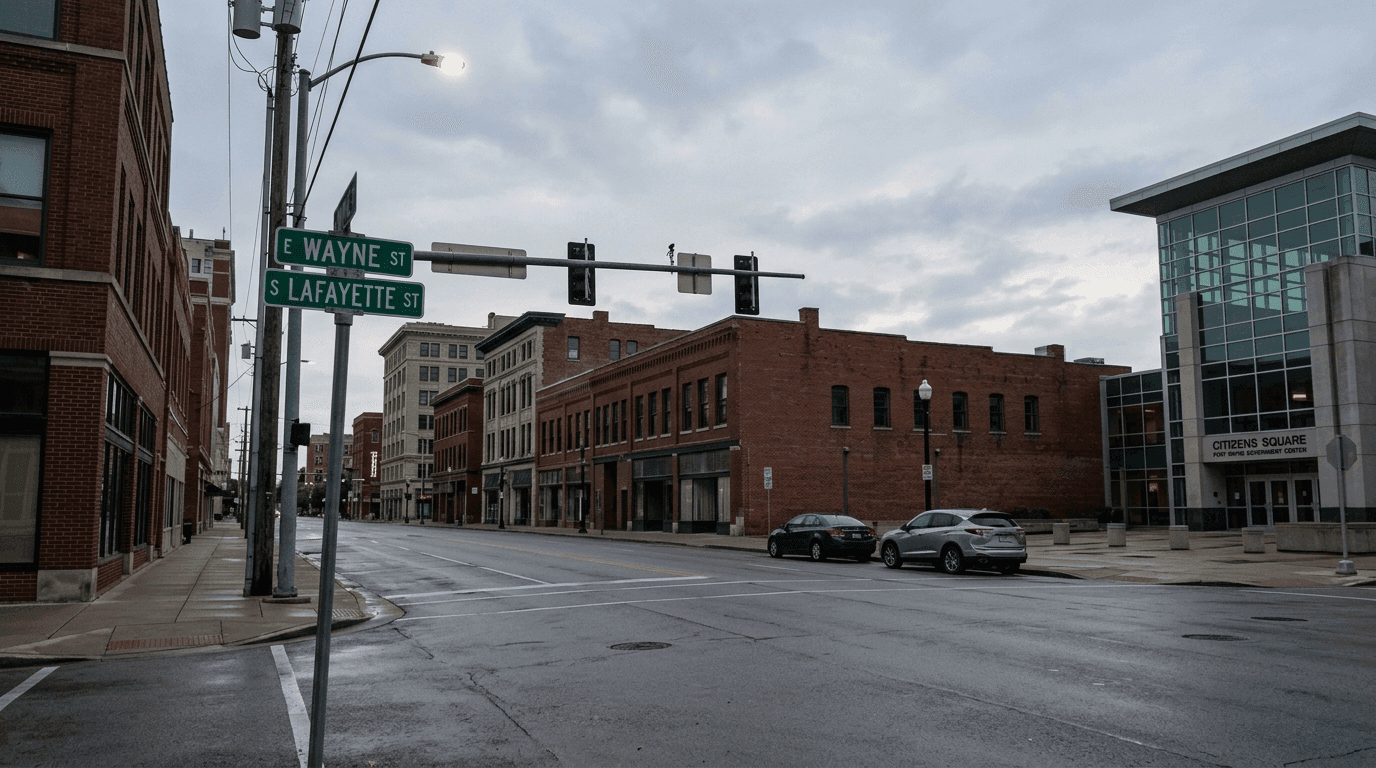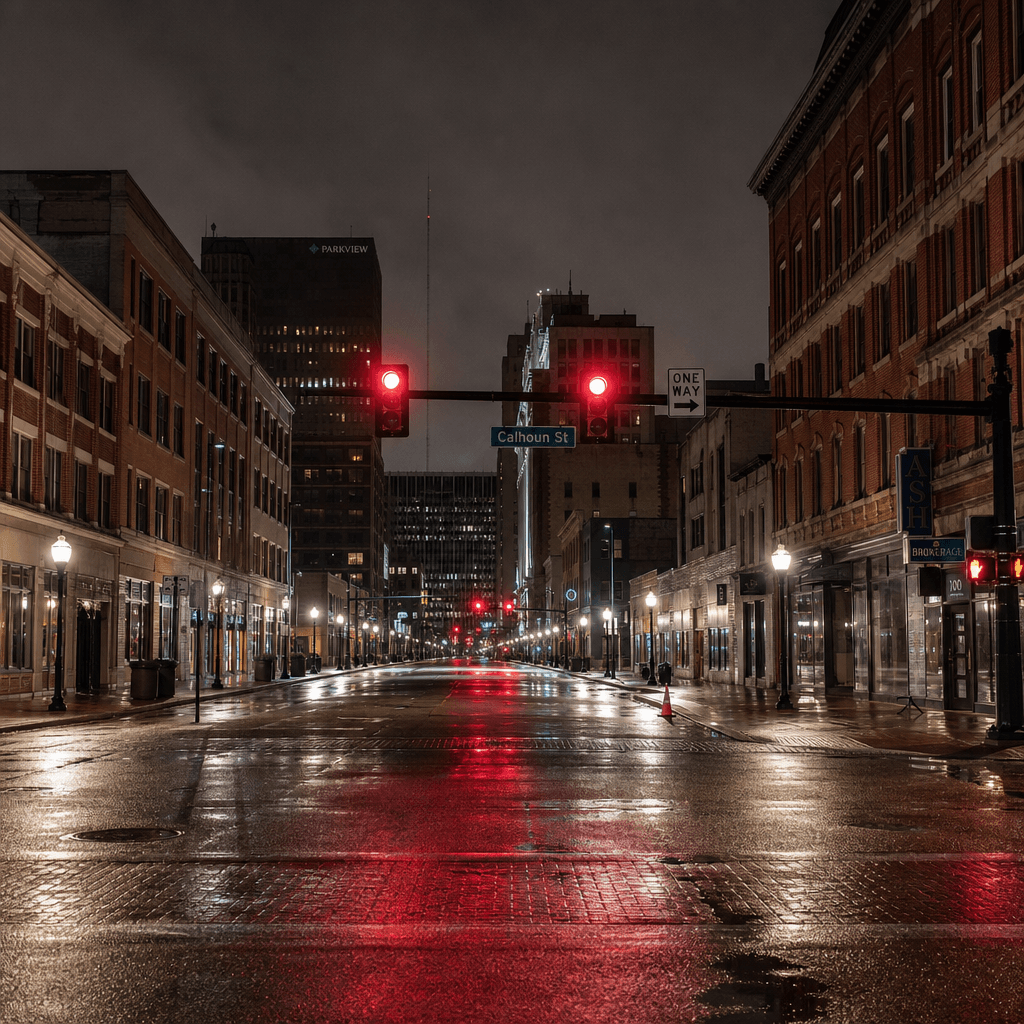
Just after midnight on Saturday, June 13, 2026, the Fort Wayne Police Department responded to a two-vehicle crash at the intersection of East Wayne Street and South Clinton Street in downtown Fort Wayne, Allen County. According to 21Alive (WPTA)[1], with additional reporting from WANE 15[2] and WOWO[3], a vehicle traveling southbound on South Clinton Street disregarded a red light and struck a westbound vehicle on East Wayne Street that was transporting Uber passengers.
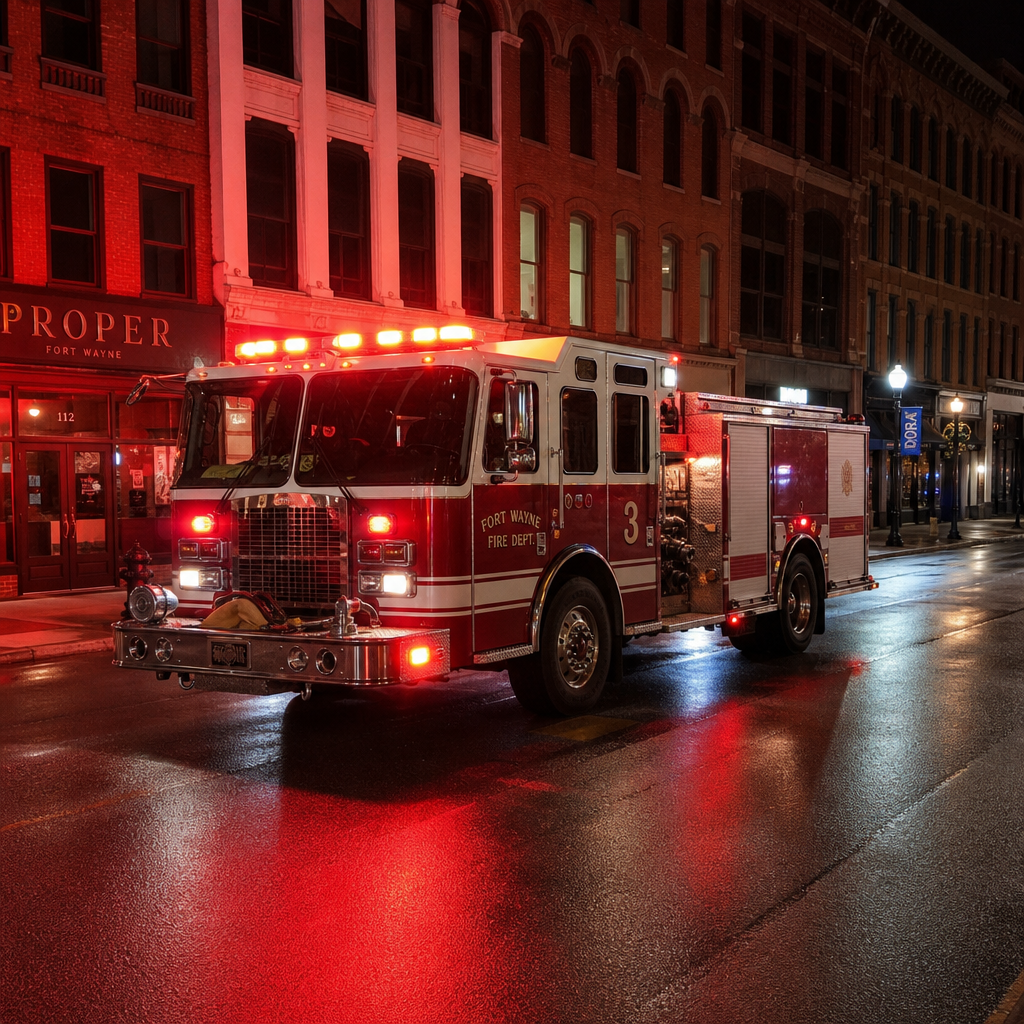
One of the vehicles caught fire, and the Fort Wayne Fire Department extinguished it. The signalized intersection was closed during the emergency response. WANE 15 and WOWO reported that three people were taken to the hospital, one in life-threatening condition and two with serious injuries. The primary 21Alive article noted that injuries were reported but did not disclose the number or extent. No fatality was reported. The Fort Wayne Police Department said that alcohol consumption is believed to be a contributing factor for the driver who ran the red light, and the investigation is ongoing.
This post is general Indiana legal information framed by the publicly reported facts above. It is not a comment on the conduct of any party, an opinion on civil liability, or legal advice on any particular claim, and it is not intended as solicitation of any individual. The injury counts above come from secondary reporting and were not confirmed by the primary source. The post will be updated as the identities of those involved, the conditions of the injured, any charging decision, the rideshare driver's app status, and other facts become part of the public record.
What Should Accident Victims Do Next?
After a serious nighttime intersection crash like the one at East Wayne Street and South Clinton Street, particularly one that involved a rideshare vehicle, a suspected-impaired driver, and a vehicle fire, the steps an injured person takes in the first days can shape both medical recovery and what the person is able to recover later.
The first step is to get medical care and to follow through on it. A high-energy angle collision serious enough to send three people to the hospital, one of them in life-threatening condition, can cause harm to the spine, head, or internal organs that is significant even when it is not obvious in the first hours, and a condition initially called life-threatening or serious can evolve in either direction over the following days. A prompt and complete medical record, with consistent follow-up treatment, both protects health and documents the injuries that any later claim depends on. Where a vehicle caught fire, burn and smoke-inhalation injuries deserve specific medical attention and documentation. Our guide to the first 72 hours after a Fort Wayne car accident walks through what to save and how to document early.
The second step is to request the official crash report. Indiana crash reports generally become available through the State of Indiana's BuyCrash portal once the investigating agency uploads the report, and a formal request under the Indiana Access to Public Records Act (Indiana Code 5-14-3[4]) is the standard mechanism where a report does not become available through routine channels. For this crash, the Fort Wayne Police Department is the investigating agency. The report, the officers' observations, any chemical-test results bearing on impairment, any scene measurements, and any citation noted in it are the foundation for understanding fault and any criminal OWI charge that follows.
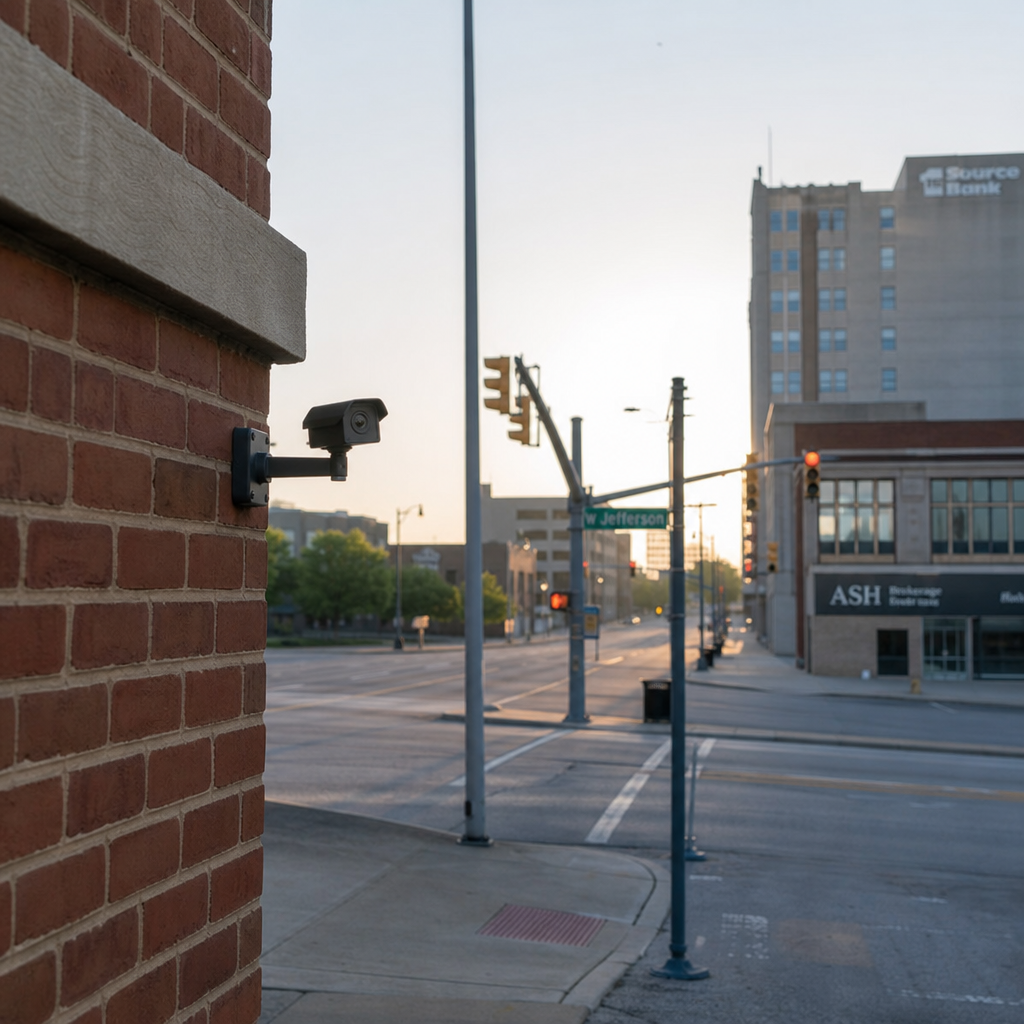
The third step is to preserve the evidence before it disappears. In a downtown intersection crash, the central facts are usually which driver had the green and whether the other driver was impaired, and the proof of that often lives outside the police report. Downtown Fort Wayne is densely covered by traffic-signal, business, parking, and security cameras, and footage from an intersection like East Wayne and South Clinton can capture the signal phase and the collision itself; that footage is frequently overwritten within days. Identifying and preserving it early can be decisive. Photographs of both vehicles, the intersection, the signal heads, and the final resting positions document conditions that change as soon as the vehicles are towed and the road reopens. Where one vehicle burned, the fire-damaged vehicle and any onboard event-data recorder should be preserved before salvage.
The fourth step, which is distinctive to a rideshare crash, is to capture the rideshare facts early. For passengers injured in an Uber or Lyft, the available insurance depends on the rideshare driver's app status at the moment of the crash. When a driver is on an active trip with passengers, transportation-network-company coverage is generally at its highest level and typically includes substantial third-party liability and uninsured/underinsured-motorist protection for occupants. Documenting that the trip was active, through the rider's app history, trip receipt, and the driver's status, helps establish which coverage layers apply. A non-negligent rideshare passenger is simply an innocent occupant, which is a strong position from which to seek recovery. The firm's general overview for passengers hurt while riding in a Lyft or Uber vehicle covers what to gather in the first hours.
The fifth step is to identify every insurance policy that might respond and to calendar the Indiana deadlines. The at-fault driver's liability coverage is the usual first source of recovery, but a suspected-impaired late-night driver may carry too little insurance, or none, for serious injuries. The rideshare company's contingent uninsured/underinsured-motorist coverage may then become the primary source of recovery for the injured passengers, and the injured parties' own UM/UIM and medical-payments coverage may also apply. Where alcohol is involved, Indiana's Dram Shop Act (Indiana Code 7.1-5-10-15.5) can, in some circumstances, extend liability to a business or social host that furnished alcohol to a visibly intoxicated person, which is one reason identifying the last point of alcohol service early matters. Indiana imposes a two-year statute of limitations on personal-injury claims under Indiana Code 34-11-2-4[5], which for a June 13, 2026, date of incident runs to approximately June 13, 2028. UM/UIM claims are governed by the deadlines and conditions in the applicable policies. If the at-fault motorist turns out to be uninsured or underinsured, the firm's Fort Wayne uninsured and underinsured accident attorneys work the coverage stack from every angle.
Why Location Matters in Indiana Injury Claims
The crash happened at the intersection of East Wayne Street and South Clinton Street in downtown Fort Wayne, Allen County, Indiana. The location shapes the claim in several ways.
This was a collision at a signal-controlled downtown intersection, and that setting puts the red-light question at the center of the case. Whether the southbound driver disregarded a steady red signal in violation of Indiana's traffic-signal law (Indiana Code 9-21-3[6]) is what fixes liability, and signal-timing data, witness accounts, and nearby camera footage are exactly the evidence that establishes it. Indiana's modified comparative-fault statute (Indiana Code 34-51-2[7]) then governs any dispute over shared fault: a claimant whose own share of the fault exceeds fifty percent is barred from recovering, and a lesser share reduces the recovery proportionally. A non-negligent rideshare passenger generally bears no comparative fault at all. People hurt at signalized crossings throughout the city often start with the firm's Fort Wayne intersection accident attorneys.
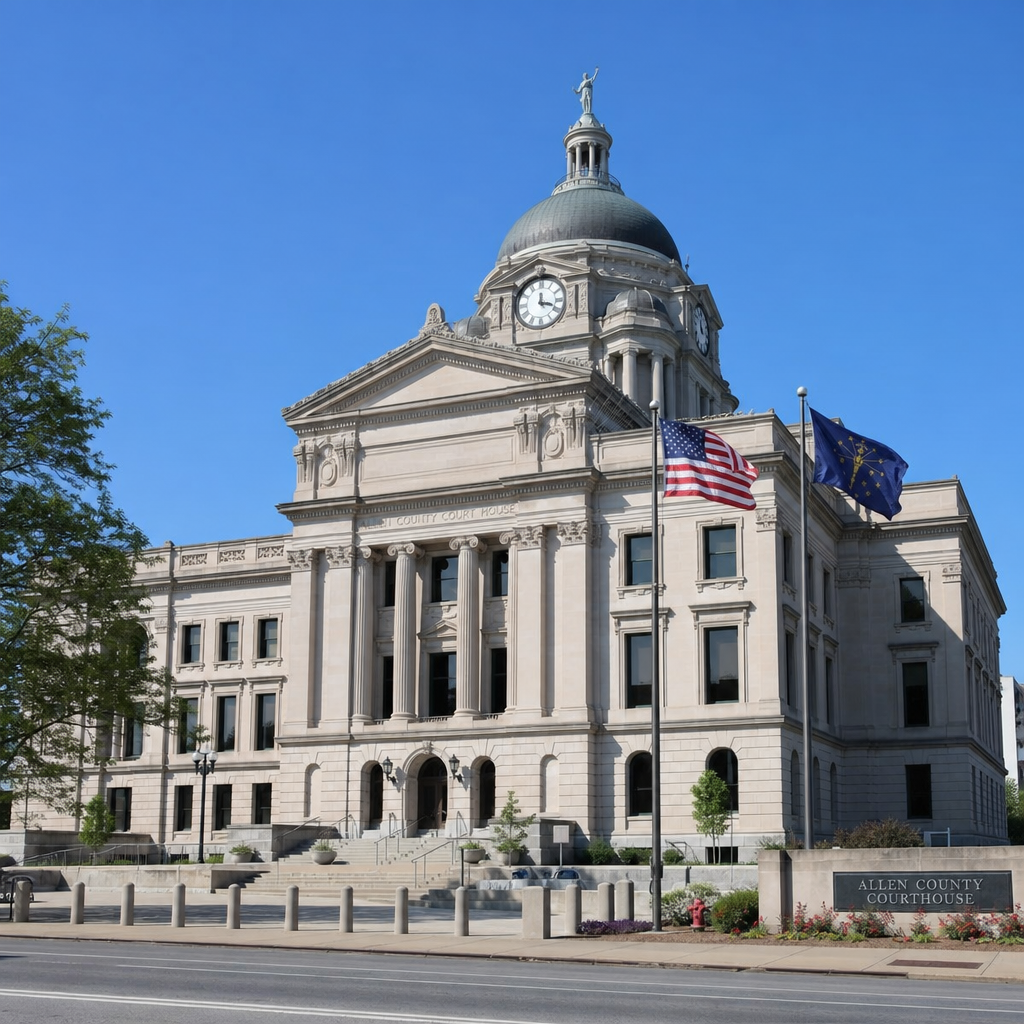
The crash also lies in Allen County, which places the investigating agency as the Fort Wayne Police Department and the civil-jurisdictional courts as the Allen Circuit and Superior Courts in Fort Wayne. Allen County and Fort Wayne sit at the center of the Delventhal Law Office service area. A downtown core intersection like East Wayne and South Clinton carries heavy late-night traffic from the surrounding bars, restaurants, and entertainment venues, which is one reason a suspected-impaired-driver crash here also raises the dram-shop question of where the alcohol was last served. The same downtown density that creates that risk also means an unusual concentration of cameras that can prove the case, but only if the footage is secured before it is overwritten, which is one of the most practical reasons acting early matters so much in a crash like this. Families harmed by an impaired motorist can also reach the firm's Fort Wayne drunk driver accident attorneys for a confidential review.
How Delventhal Law Office Can Help
Chad Delventhal and the Delventhal Law Office represent people seriously injured in Northeast Indiana car crashes, including downtown intersection collisions, rideshare crashes, and crashes caused by impaired drivers like the one at East Wayne Street and South Clinton Street in Fort Wayne. For a crash like this, the firm handles the work this kind of case demands: prompt collection of the Fort Wayne Police Department crash report and any OWI chemical-test and charging records; Indiana Access to Public Records Act requests where records do not become available through routine channels; early canvassing for and preservation of downtown traffic, business, and security camera footage before it is overwritten; preservation of both vehicles and any event-data recorder before repair or salvage, including the fire-damaged vehicle; documentation of the Uber driver's app status and the transportation-network-company insurance period that governs coverage for injured passengers; investigation of the last point of alcohol service for a possible Indiana Dram Shop Act claim; a careful review of every applicable liability, rideshare contingent, underinsured-motorist, uninsured-motorist, and medical-payments policy, along with the notice and cooperation requirements each imposes; and calendar management on the two-year Indiana personal-injury deadline running to approximately June 13, 2028. People injured as rideshare passengers, by drunk drivers, or in any Allen County crash can reach the Delventhal Law Office in Fort Wayne for a free case evaluation about their rights and options.
This post is based on public reporting and the investigation may be ongoing. Nothing in this post is legal advice, and reading it does not create an attorney-client relationship with Delventhal Law Office.