
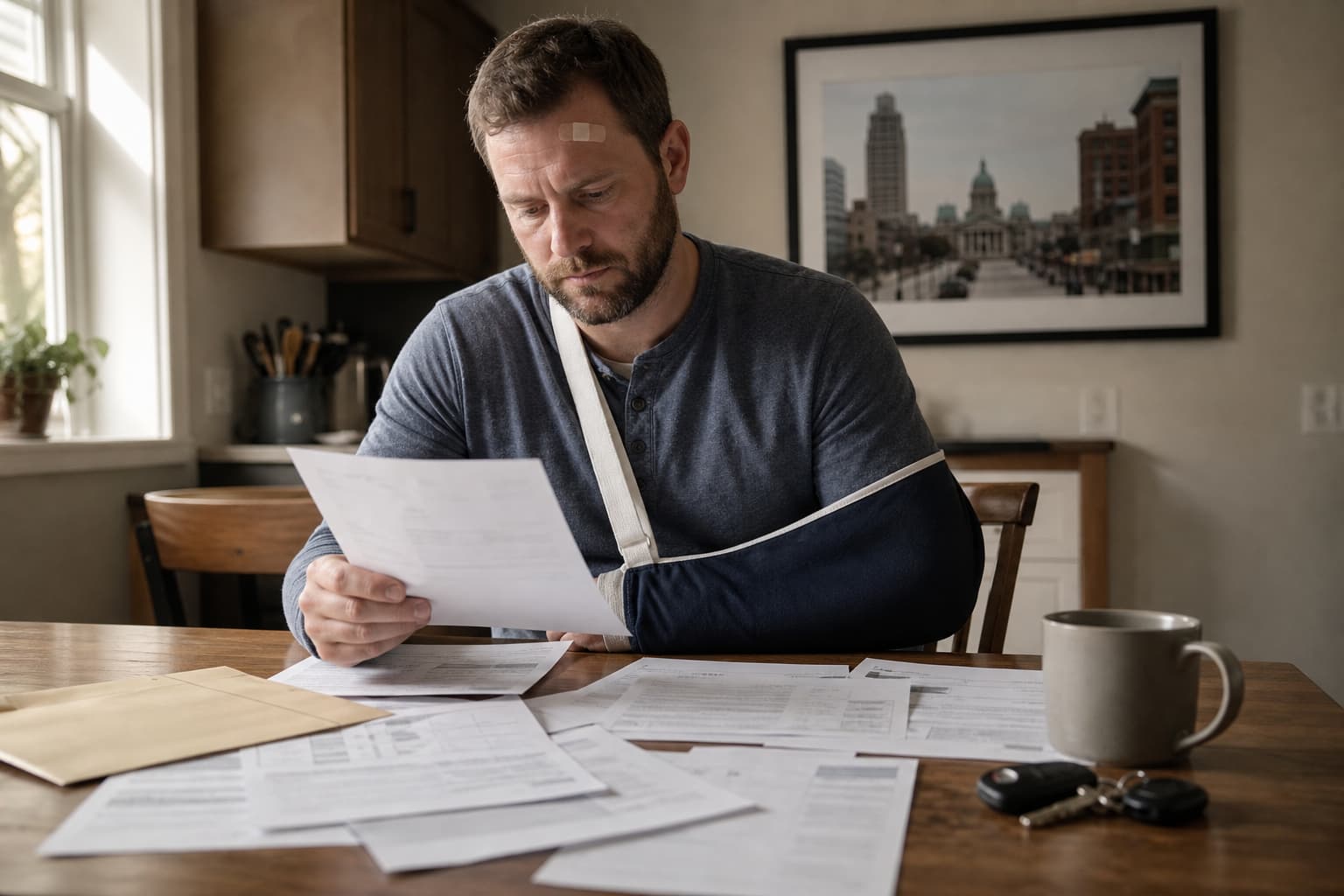
Medical bills show part of the damage. They do not show the night you could not sleep, the family event you missed, the fear of driving through the same Fort Wayne intersection, or the way a back injury changed your workday. Pain and suffering is how those losses are presented in a claim.

Key takeaways
- Pain and suffering can include physical pain, emotional distress, lost enjoyment, inconvenience, scarring, sleep disruption, and daily limitations.
- There is usually no automatic formula that fairly values the claim.
- Indiana comparative fault can reduce or bar recovery depending on fault allocation under Indiana Code chapter 34-51-2[1].
- Indiana personal-injury claims generally have a two-year lawsuit deadline under Indiana Code § 34-11-2-4[2], with shorter notice rules in some government cases.
- The strongest pain-and-suffering evidence is specific: what changed, how often, for how long, and who can confirm it.
What counts as pain and suffering?
Pain and suffering can include the physical pain itself, but it is broader than that. It may include headaches, stiffness, numbness, sleep loss, anxiety, fear of driving, missed hobbies, inability to lift a child, limits on housework, strain on relationships, and frustration from long treatment.
For car crash injuries that often create these issues, see our pages on Fort Wayne brain injury claims, catastrophic injuries, and Fort Wayne car accident cases.

Why “three times medical bills” is not reliable
Some people hear that pain and suffering is a multiplier of medical bills. That shortcut can be misleading. A small bill can hide a lasting injury if someone avoids care because of cost. A large bill can still be disputed if the insurer argues treatment was unrelated or excessive.
Adjusters usually look at injury type, treatment length, objective findings, gaps in care, impairment, restrictions, credibility, prior conditions, fault disputes, policy limits, venue, and how a jury might view the story. The Centers for Disease Control and Prevention notes that motor-vehicle crashes are a common cause of traumatic brain injury, and brain-injury symptoms can be difficult to capture with bills alone; see the CDC’s traumatic brain injury information[3].
Evidence that helps prove pain and suffering
| Evidence | What it can show |
|---|---|
| Medical records | Symptoms, exam findings, diagnosis, treatment plan, referrals, restrictions. |
| Photos | Bruising, swelling, scarring, mobility aids, vehicle damage, activity limits. |
| Pain journal | Frequency, triggers, sleep problems, flare-ups, missed events, daily limits. |
| Work records | Missed time, reduced duties, lost overtime, inability to perform physical tasks. |
| Family or coworker observations | Changes in mood, activity, household role, driving confidence, stamina. |
| Specialist opinions | Future care, impairment, permanent restrictions, surgical risk, prognosis. |

Examples in everyday Fort Wayne life
A pain-and-suffering claim becomes clearer when it is concrete. Maybe you cannot sit through a full TinCaps game, walk comfortably at Promenade Park, shovel snow, drive on I-69 without panic, sleep through the night, or return to the same warehouse job without restrictions. Those details matter because they show the injury in real life.
Do not exaggerate. A credible claim admits better days and worse days. It explains what you still do, what you do differently, and what you avoid because of symptoms.

How insurers attack pain and suffering
- claiming the crash was too minor to cause the injury;
- pointing to gaps in treatment;
- arguing symptoms came from age, work, or prior conditions;
- using social media photos out of context;
- suggesting you are exaggerating because tests are normal;
- blaming you for part of the crash;
- rushing settlement before the prognosis is known.
For related proof issues, read our article on why gaps in treatment matter and our guide to how social media can hurt an Indiana injury claim.
What affects settlement value?
Value depends on liability, medical proof, treatment, permanency, scarring, daily limits, work impact, future care, witness support, insurance limits, and trial risk. Indiana’s BMV proof-of-financial-responsibility information[4] is a reminder that minimum insurance may be limited, which can matter when damages exceed available coverage.
If coverage is a concern, our uninsured and underinsured motorist accident page explains the next layer to check.

Frequently asked questions
Can I sue for emotional distress after an Indiana accident?
Possibly. Emotional distress can be part of an injured person's pain-and-suffering damages, but anxiety after an accident does not automatically establish a claim. For negligence-based emotional-distress claims, Indiana generally requires either a direct physical impact under the modified-impact rule or satisfaction of the narrow bystander rule. The impact need not cause a physical injury, but the resulting emotional trauma must be serious and of a kind a reasonable person would experience.
The bystander rule can apply when a qualifying close relative witnesses, or comes upon the scene soon after, a loved one's death or severe injury; the relationship and circumstances matter. The Indiana Supreme Court explains these limits in Spangler v. Bechtel[5]. Preserve treatment records and specific examples of sleep, driving, work, or family-life changes. If someone died, an individual's emotional-distress claim and a wrongful-death claim require separate analysis; grief alone does not establish eligibility.
Do I need a pain journal?
You are not legally required to keep one, but a simple journal can help capture details that fade: sleep, flare-ups, missed work, missed events, and activity limits.
Can I recover pain and suffering if I had a prior condition?
Possibly. The issue is often whether the crash made the condition worse, changed symptoms, or created new limitations. Medical history should be handled honestly.
Will the insurance company pay pain and suffering automatically?
No. Insurers usually require proof and often dispute severity, causation, gaps, or fault. The claim needs to be documented and presented clearly.
Bottom line
Pain and suffering is not fluff. It is the real-life impact of an injury, but it must be proven with specific, credible evidence. If an insurer is reducing your experience to a bill total, Delventhal Law Office can help document the full story.
This article is general information about Indiana injury claims. It is not legal advice and does not create an attorney-client relationship.