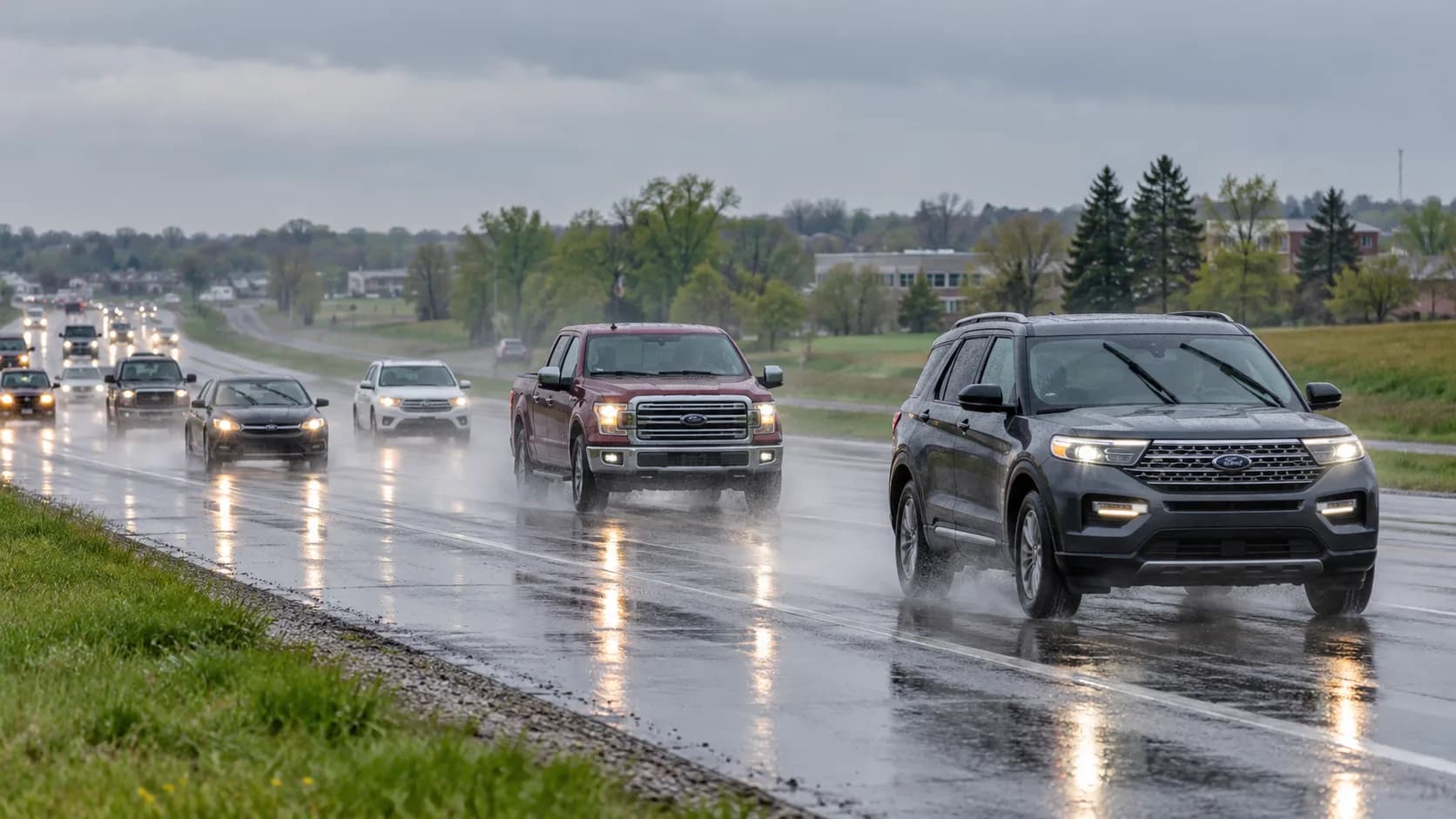
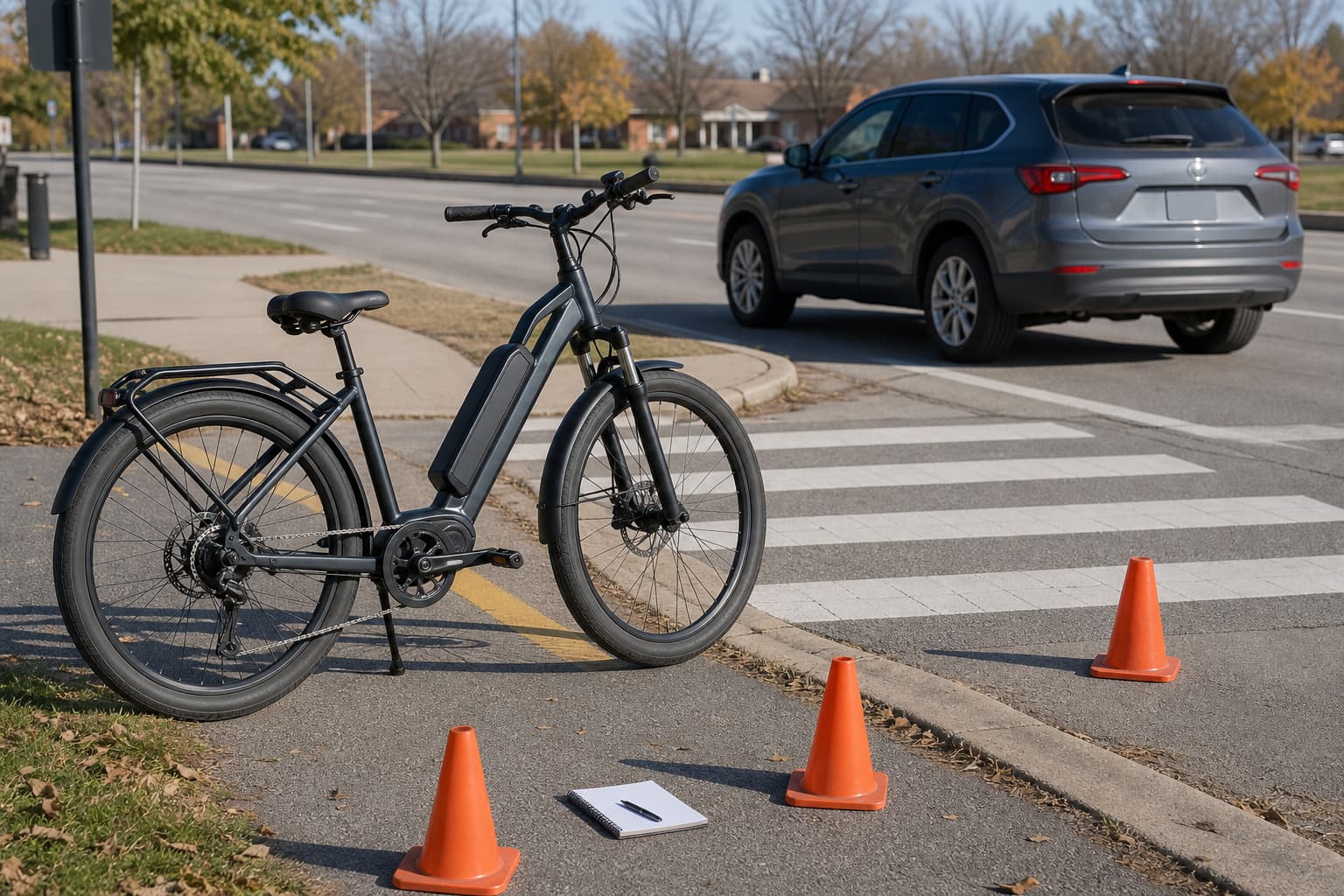
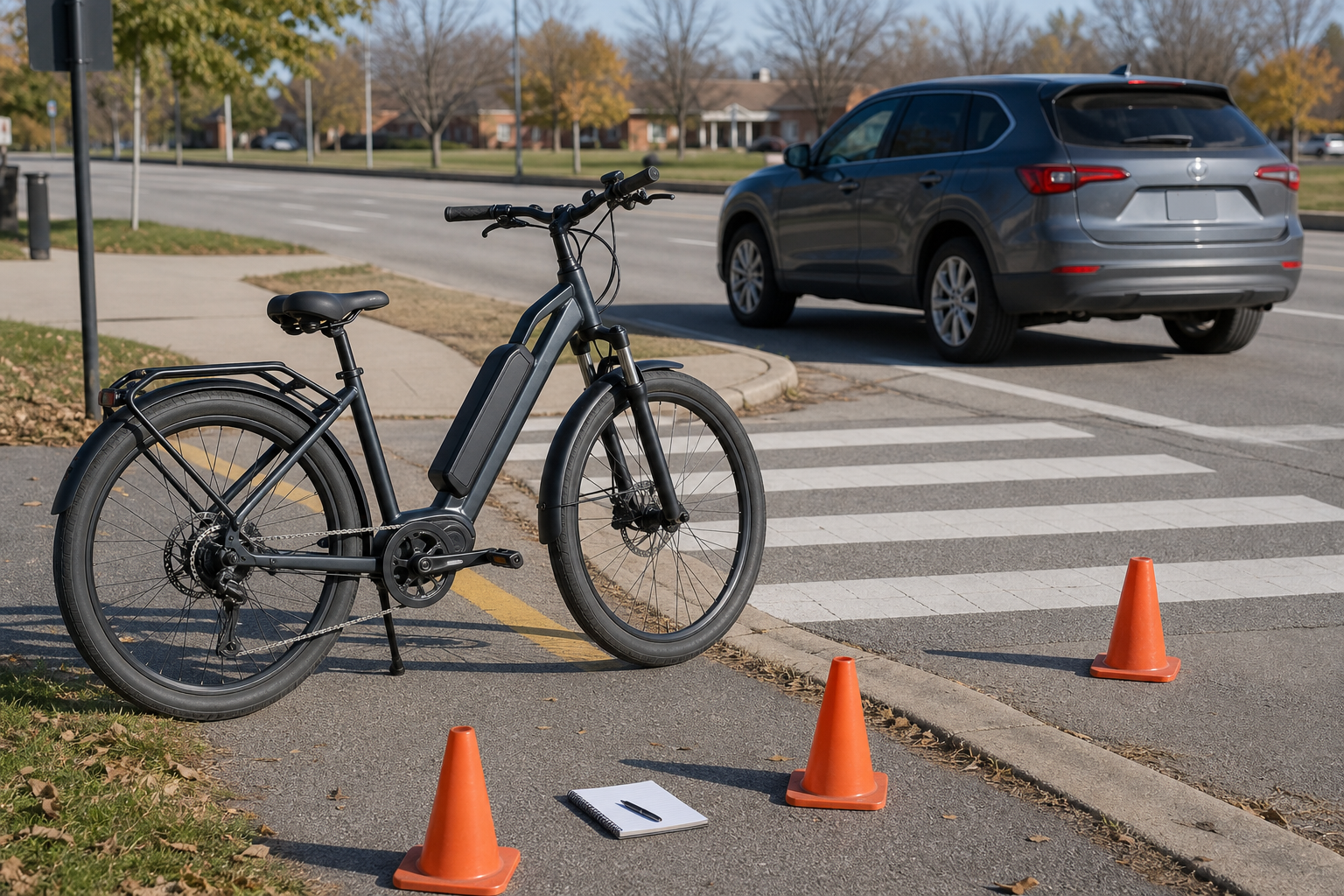
E-bikes are changing bicycle accident claims. They look like bicycles, move faster than many traditional bikes, may be ridden on roads, bike lanes, trails, or neighborhood streets, and often create insurance questions that do not fit neatly into an ordinary car-crash script.
This post supports Delventhal Law Office’s Fort Wayne Bicycle Accident Attorney page by focusing on electric bicycles and the claim issues they create.
Contents
- Why e-bike cases need their own analysis
- Indiana’s three e-bike classes
- Where the crash happened can change the questions
- Insurance coverage after an e-bike crash
- Evidence to preserve after an e-bike accident
- How fault disputes arise in e-bike claims
- What to do after an e-bike crash in Fort Wayne
- How Delventhal Law Office helps
- Frequently asked questions
Why e-bike cases need their own analysis
E-bike crashes are not automatically more complicated, but they often raise extra questions. Was the bike a Class 1, Class 2, or Class 3 e-bike? Was it modified? Was it being ridden on a road, sidewalk, bike lane, trail, crosswalk, parking lot, or private property? Did the driver fail to yield, open a door, pass too closely, or turn across the rider’s path? Did the rider’s speed or equipment become an issue?
Those questions matter because insurance companies may try to use the “electric” part of e-bike to shift attention away from the driver’s conduct. A driver who failed to yield is still a driver who failed to yield. But an injured rider should expect the insurer to ask about speed, throttle use, braking, lighting, helmet use, and whether the e-bike was legally allowed where it was being ridden.
Indiana’s three e-bike classes
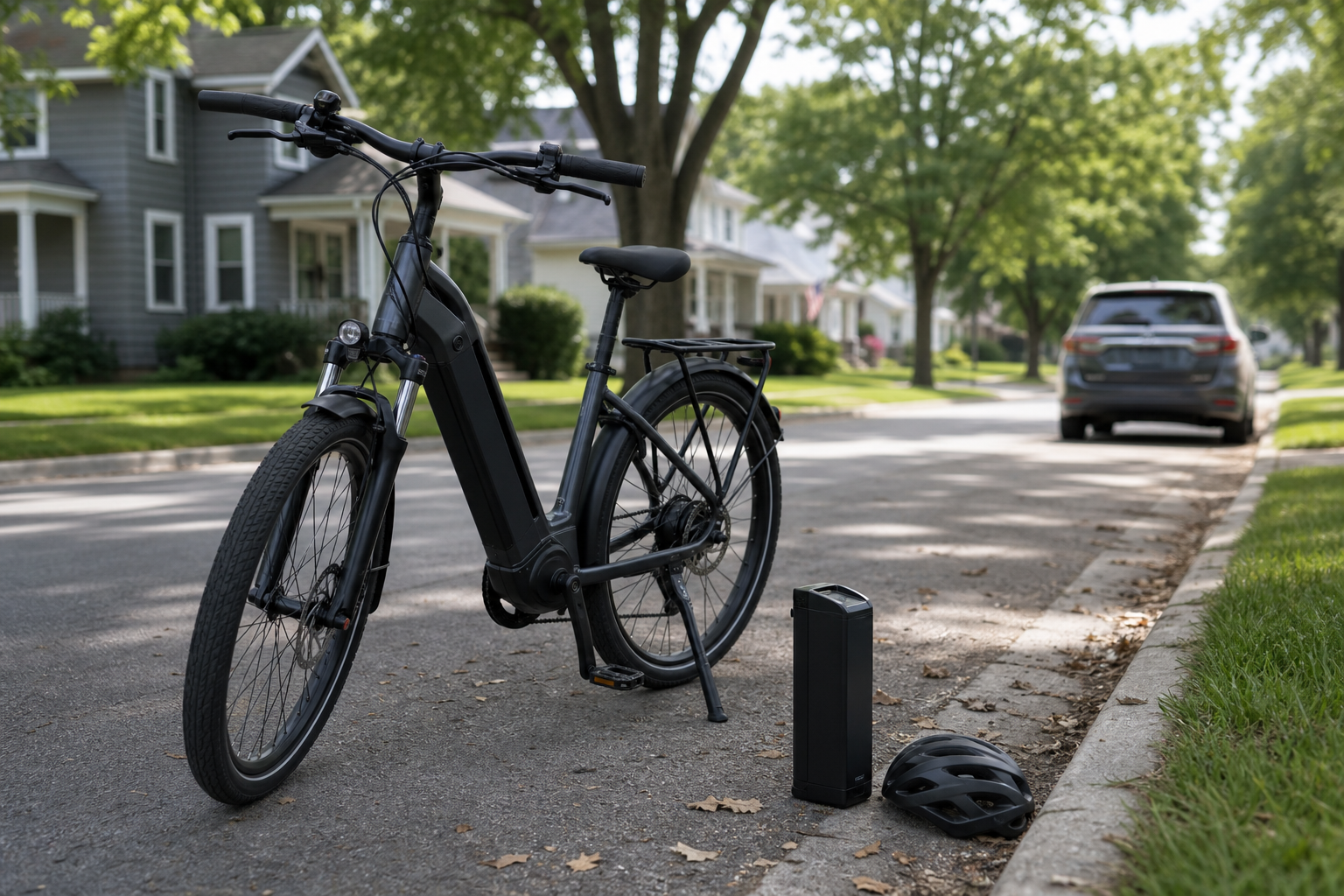
The Indiana Department of Natural Resources summarizes Indiana’s e-bike class system[1] and links to the Indiana Code definitions. In general:
- Class 1 e-bike: pedal assist only, motor of 750 watts or less, assistance stops at 20 mph.
- Class 2 e-bike: motor of 750 watts or less, throttle/pedal-assist capability, motor assistance stops at 20 mph.
- Class 3 e-bike: pedal assist only, motor of 750 watts or less, assistance stops at 28 mph.
DNR also notes that if a bike with an electric motor does not exactly meet one of the e-bike definitions, it may be treated as a motorized vehicle instead of an e-bike. That distinction can matter in a claim because an insurer may investigate whether the bike was modified or outside the statutory class definition.
For a legal article, the safe approach is to identify the class, preserve the bike, photograph the controller/display if safe, and avoid making assumptions about the legal category until the facts are reviewed.
Where the crash happened can change the questions
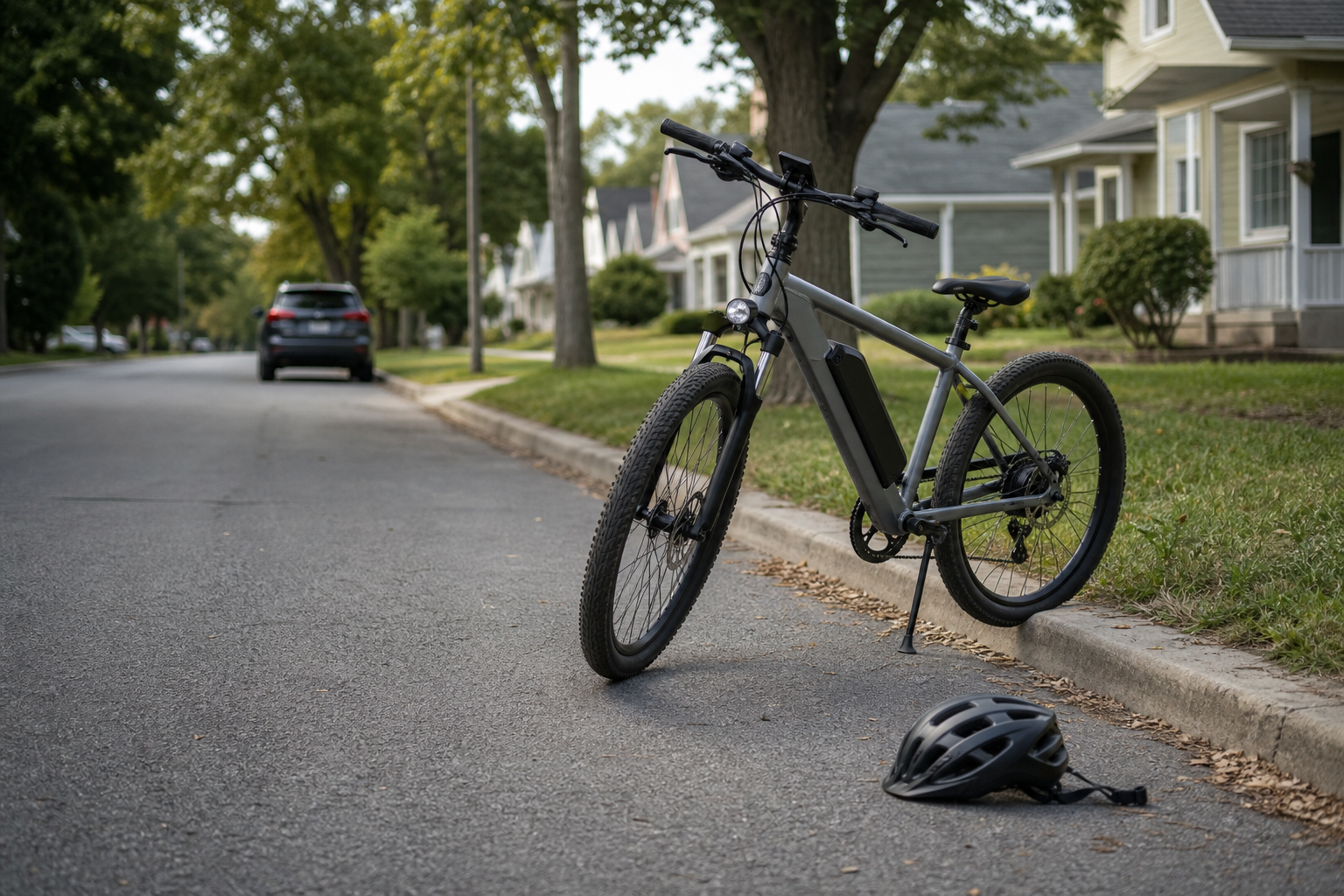
An e-bike accident on a Fort Wayne street may involve different questions than a crash on a multi-use path, trail crossing, parking lot, sidewalk, or DNR property.
On roads, the starting point is usually Indiana’s bicycle roadway framework. Indiana Code § 9-21-11-2[2] generally gives roadway bicyclists the rights and duties of vehicle drivers where the rules fit. That means traffic signals, stop signs, lane position, lighting, right-of-way, and safe passing may matter.
On trails or paths, the analysis may involve posted rules, local ordinances, property rules, trail design, visibility, crossing layout, and whether motor vehicles interacted with the e-bike at a road crossing. DNR’s e-bike page[1] explains that e-bike access differs by property type and trail surface on DNR properties. A private trail, city path, or neighborhood association path may have different rules.
The location also affects evidence. Trail cameras, business surveillance, nearby doorbell footage, maintenance records, construction records, and road design may all be relevant.
Insurance coverage after an e-bike crash
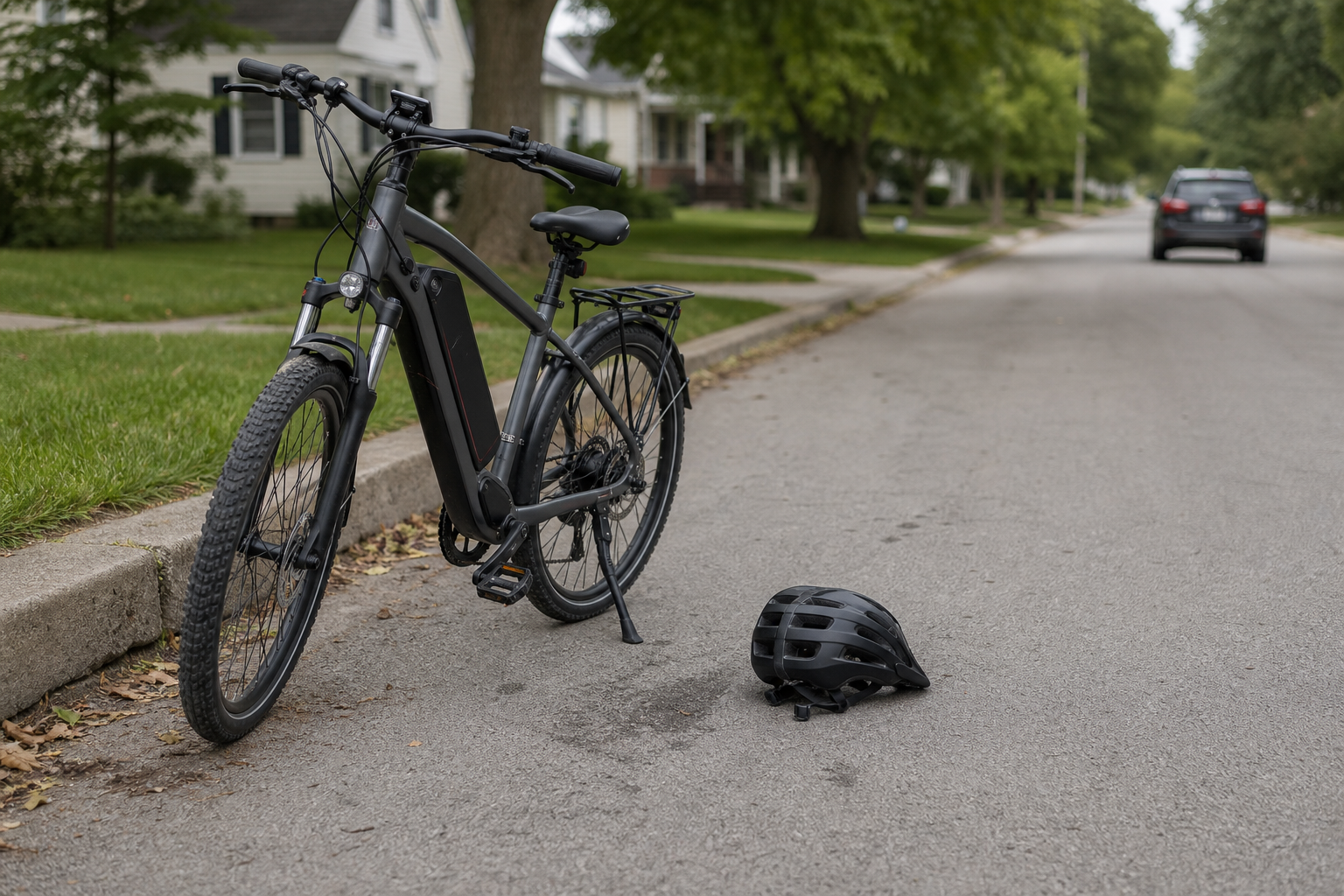
Coverage can be one of the most important parts of an e-bike claim. Serious bicycle injuries can exceed the at-fault driver’s available liability limits quickly. The available coverage may include:
- the at-fault driver’s auto liability insurance;
- uninsured or underinsured motorist coverage, depending on the policies and facts;
- medical payments coverage if available;
- health insurance, Medicare, Medicaid, ERISA, or other benefit plans with possible reimbursement issues;
- homeowners or renters coverage for limited property or liability issues in some situations;
- commercial coverage if a delivery driver, rideshare driver, business vehicle, or employee was involved;
- product or maintenance-related coverage if a defect or repair issue contributed.
Do not assume your ordinary auto policy covers every e-bike crash, and do not assume it covers none of them. Policy language matters. So does whether the e-bike qualifies as an electric bicycle, motor vehicle, recreational vehicle, or something else under the policy definitions.
Delventhal Law’s page on uninsured and underinsured accident claims is a useful related resource when the driver has too little insurance.
Evidence to preserve after an e-bike accident
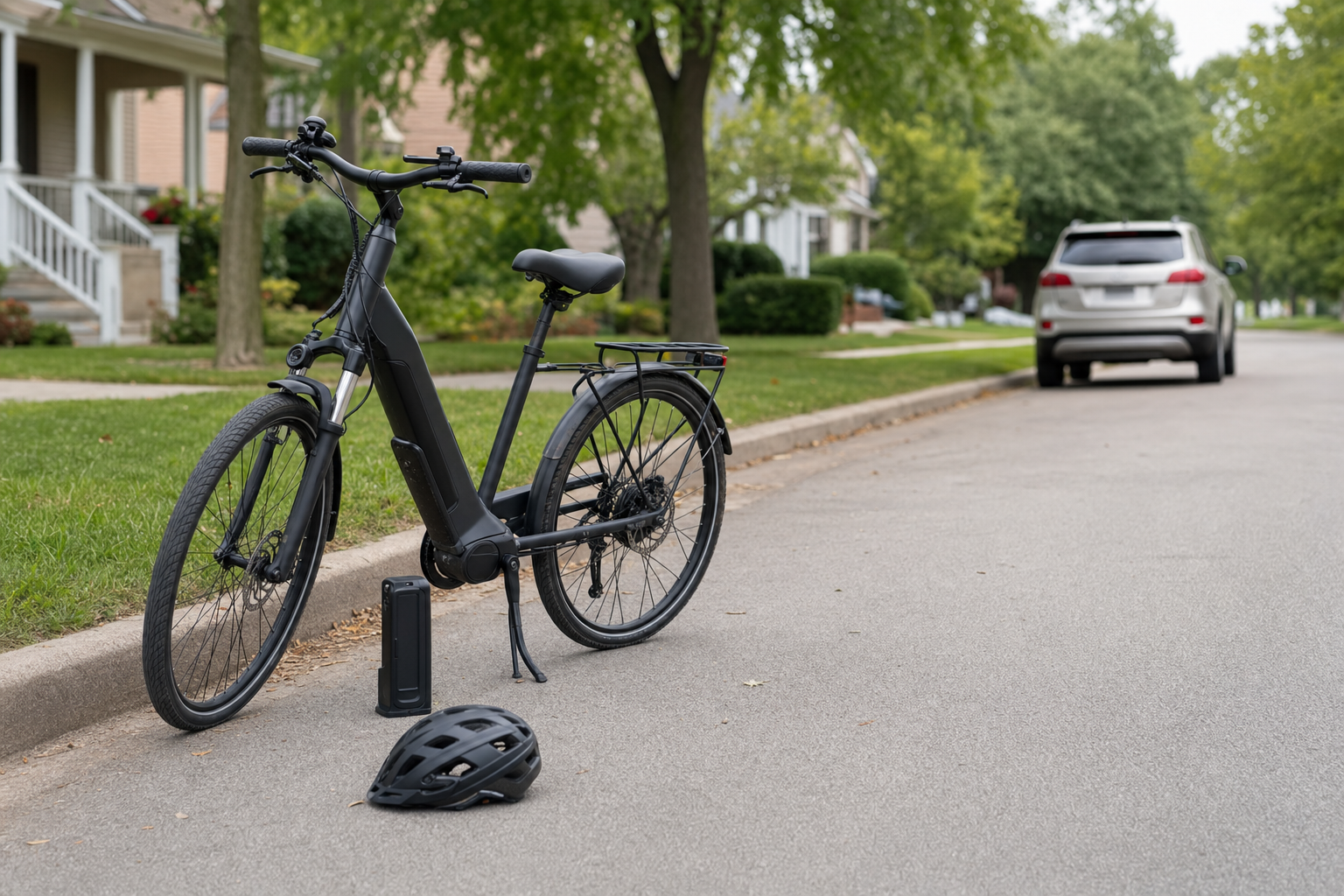
An e-bike is itself a key piece of evidence. Preserve it before repairs, disposal, or software changes if the injuries are significant or fault is disputed.
Important evidence may include:
- the e-bike frame, wheels, brakes, tires, battery, motor, controller, display, pedals, lights, and reflectors;
- photos of any speed display, assist level, error code, odometer, trip data, or app data if available;
- purchase records, owner’s manual, class label, modification records, and repair history;
- helmet, clothing, gloves, shoes, bags, child seat, cargo equipment, and other gear;
- vehicle damage, bike damage, scene photos, road/trail condition, lighting, sight lines, signs, and signals;
- witness names, 911 records, crash report, body-cam, dashcam, traffic camera, doorbell, or business video;
- medical records, work restrictions, bills, mileage, and lost-wage documentation.
This evidence helps answer both liability and damages questions. It can also prevent the insurer from making unsupported assumptions about speed, braking, or e-bike classification. You can use our Indiana car accident settlement calculator to organize the factors that may affect a claim’s value; it is an educational tool, not a promise of any result.
How fault disputes arise in e-bike claims
Indiana comparative fault[3] can become a major issue in e-bike cases. The insurer may argue the rider was going too fast, riding where e-bikes were not allowed, failing to use lights, failing to stop, riding against traffic, not wearing a helmet, or operating a modified bike.
Those arguments should be tested against facts:
| Dispute | What to check |
|---|---|
| E-bike class | Label, motor wattage, assist cutoff speed, throttle/pedal-assist setup, modifications |
| Speed | Display data, app data, grade of road, witness statements, video, damage pattern |
| Right of way | Traffic signal, stop sign, crosswalk, path crossing, driveway, turn lane, witness statements |
| Visibility | Lights, reflectors, clothing, time of day, weather, street lighting, driver sight lines |
| Location | Road, bike lane, sidewalk, trail, DNR property, private property, posted rules |
| Injury causation | ER records, imaging, treatment timeline, prior conditions, medical opinions |
The point is not to ignore rider conduct. The point is to keep the insurance company from treating “e-bike” as shorthand for “the rider must be at fault.”
What to do after an e-bike crash in Fort Wayne
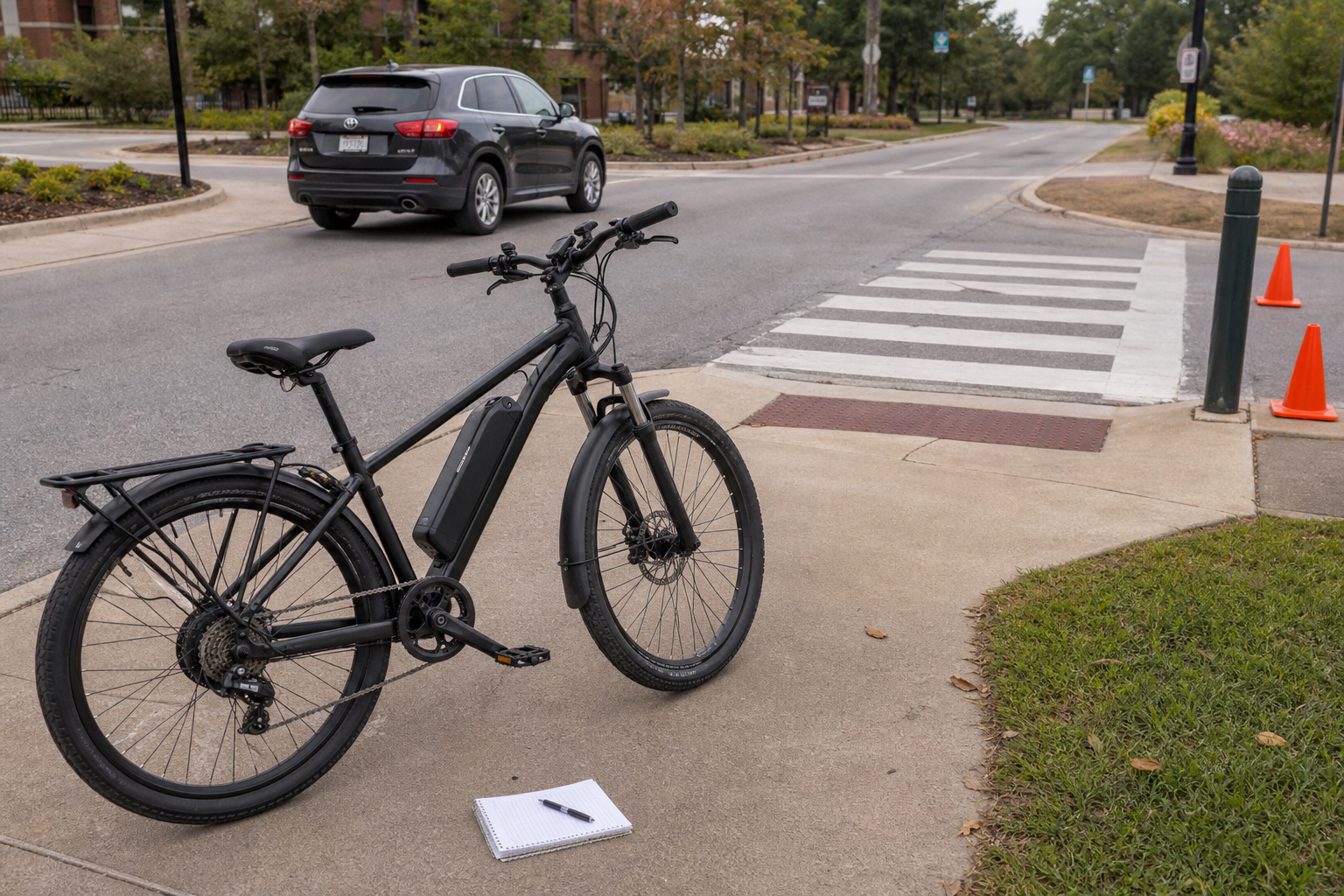
If you are hurt in an e-bike crash:
- Call 911 and report injuries.
- Get medical care promptly.
- Photograph the bike, vehicle, battery, controller/display, scene, traffic controls, road or trail surface, injuries, helmet, and lights.
- Get witness names and phone numbers.
- Preserve the e-bike, battery, helmet, clothing, and accessories.
- Do not reset, repair, sell, or dispose of the e-bike until evidence is documented.
- Save app data, purchase documents, repair records, and insurance letters.
- Avoid giving a recorded statement to the driver’s insurer before getting advice.
- Review Delventhal Law’s broader guide on what to do after an injury accident in Allen County.
How Delventhal Law Office helps
Delventhal Law Office can review what happened, identify what evidence needs to be preserved, examine the e-bike classification issue, request video, review the crash report, organize medical proof, evaluate insurance coverage, and respond to comparative-fault arguments.
If the driver had minimum insurance, fled the scene, denied fault, or blamed the e-bike rider, the coverage and evidence work becomes even more important. The goal is to build the claim from proof, not from assumptions about bicycles, e-bikes, or riders.
If you were hurt while riding an e-bike in Fort Wayne, Allen County, or northeast Indiana, call Delventhal Law Office at (260) 484-6655 or contact us online for a free consultation.
Frequently asked questions
Are e-bikes treated like bicycles in Indiana?
Often, a compliant e-bike is treated within Indiana’s electric bicycle framework, but the exact class and facts matter. DNR summarizes Class 1, Class 2, and Class 3 e-bikes and links to Indiana Code definitions. Modified or non-compliant bikes may raise different issues.
Do I need motorcycle insurance for an e-bike accident claim?
Not necessarily. A compliant e-bike is not automatically a motorcycle. But insurance coverage depends on policy language and facts. Auto liability, UM/UIM, med-pay, health insurance, homeowners/renters, or commercial policies may need to be reviewed.
What if the driver says my e-bike was going too fast?
That allegation should be supported by evidence. The e-bike class, assist setting, display/app data, video, road grade, damage pattern, witness statements, and physical evidence may help answer the speed question.
Should I preserve the battery and controller?
Yes, if injuries are serious or fault is disputed. The battery, controller, display, motor, and app records may help identify the class, assist level, malfunction issues, or whether the bike was modified.
What if the crash happened on a trail or path?
The location matters. Road rules, local ordinances, posted trail rules, property rules, DNR rules, path design, crossing layout, and visibility may all affect liability. Save photos of signs, markings, trail entrances, and the crossing area.
Can comparative fault reduce an e-bike claim?
Yes. Indiana comparative fault can reduce or sometimes bar recovery depending on the fault allocation and case type. That is why evidence about right of way, speed, lighting, location, and driver conduct matters.