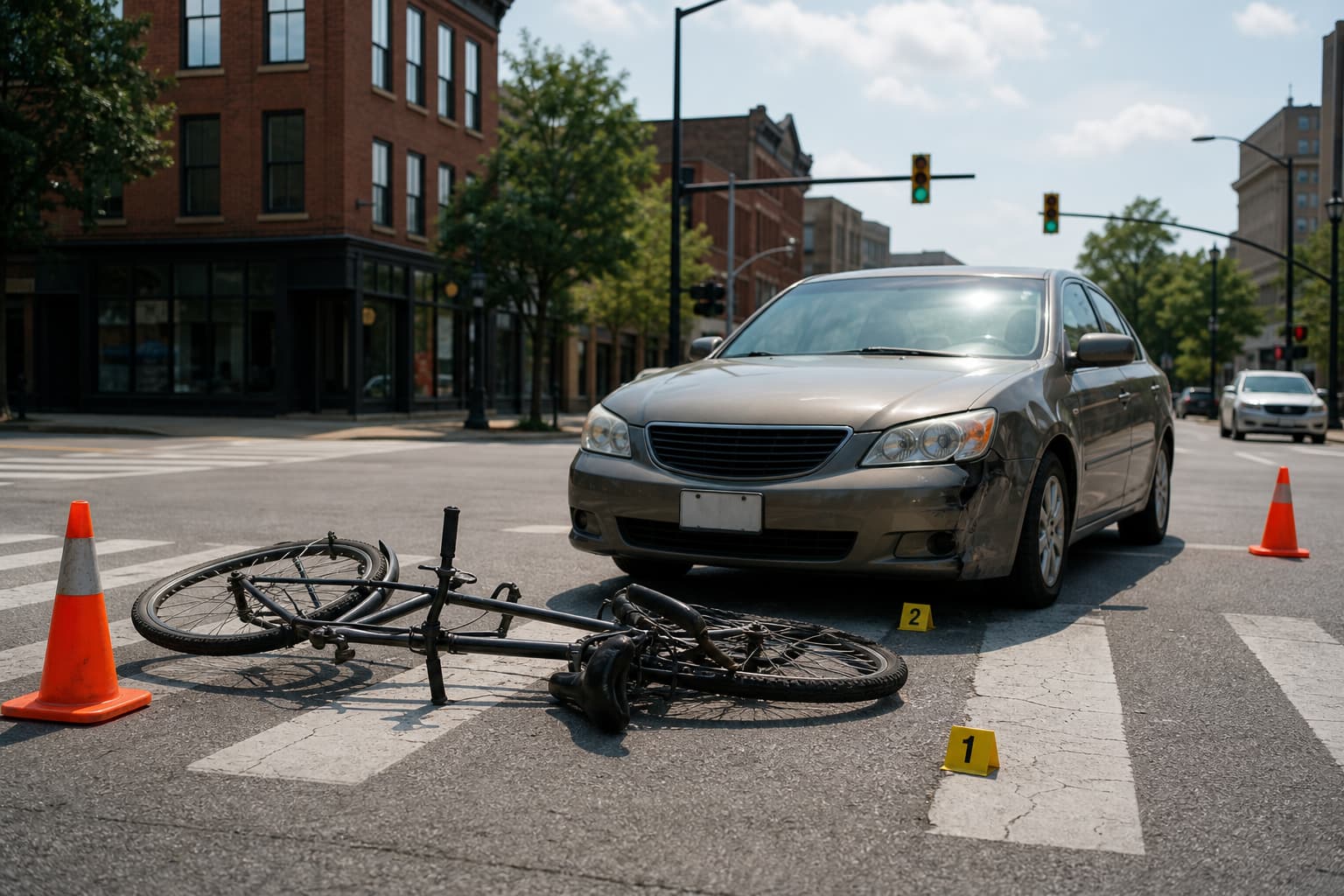
A driver does not have to hit a bicyclist at highway speed to cause a serious injury. A slow left turn, a right hook, a rolling stop, a door opened into a bike lane, or a driver pulling from a parking lot can be enough to throw a cyclist onto pavement, into traffic, or over the handlebars.
This article is a supporting guide for Delventhal Law Office’s main Fort Wayne Bicycle Accident Attorney page. It focuses on one common problem: drivers who fail to yield to people riding bicycles.
Contents
- Why failure-to-yield bicycle crashes are different
- Indiana law starts with the cyclist’s right to use the road
- Common ways drivers fail to yield to bicyclists
- The evidence that proves what happened
- How insurance companies shift blame to cyclists
- What to do after a Fort Wayne bicycle crash
- How Delventhal Law Office helps
- Frequently asked questions
Why failure-to-yield bicycle crashes are different
Failure-to-yield cases turn on seconds. Where was the cyclist? Where was the car? Who had the signal? Was the rider in a bike lane, a travel lane, a crosswalk, a driveway entrance, or near parked cars? Did the driver look but fail to see the cyclist, or did the driver never look at all?
Those details matter because bicyclists have almost no protection from impact. The National Highway Traffic Safety Administration’s bicycle safety guidance[1] notes that many states treat bicycles as vehicles on the roadway and that bicyclists must follow the same rules and responsibilities as motorists. NHTSA also emphasizes visibility, predictability, and driver awareness because crashes with cars are among the most serious bicycle collisions.
For an injured cyclist, the claim usually becomes more complicated than “the car hit me.” The insurance company may ask whether the cyclist stopped, signaled, used lights, rode too far left, rode too far right, came from a sidewalk, wore a helmet, or could have avoided the crash. Some of those questions may be fair. Others may be an attempt to assign blame before the evidence is complete.
Indiana law starts with the cyclist’s right to use the road
Indiana Code § 9-21-11-2[2] provides the core rule: a person riding a bicycle upon a roadway has the rights and duties that apply to a person who drives a vehicle, except for rules that by their nature do not apply. In plain English, a bicyclist is not automatically a trespasser in the lane just because a motorist is inconvenienced.
That rule does not mean cyclists can ignore traffic signals, stop signs, lane markings, lights, or other safety rules. It means both sides of the crash must be judged against the applicable rules of the road.
Other Indiana traffic rules can matter depending on the crash pattern. Indiana Code § 9-21-8-30[3] addresses a driver turning left across approaching traffic. Indiana Code § 9-21-8-40[4] addresses opening a vehicle door on the side available to moving traffic unless it is reasonably safe to do so. Indiana’s comparative fault chapter, Indiana Code § 34-51-2[5], can reduce or bar recovery if fault is assigned to the injured person.
Common ways drivers fail to yield to bicyclists
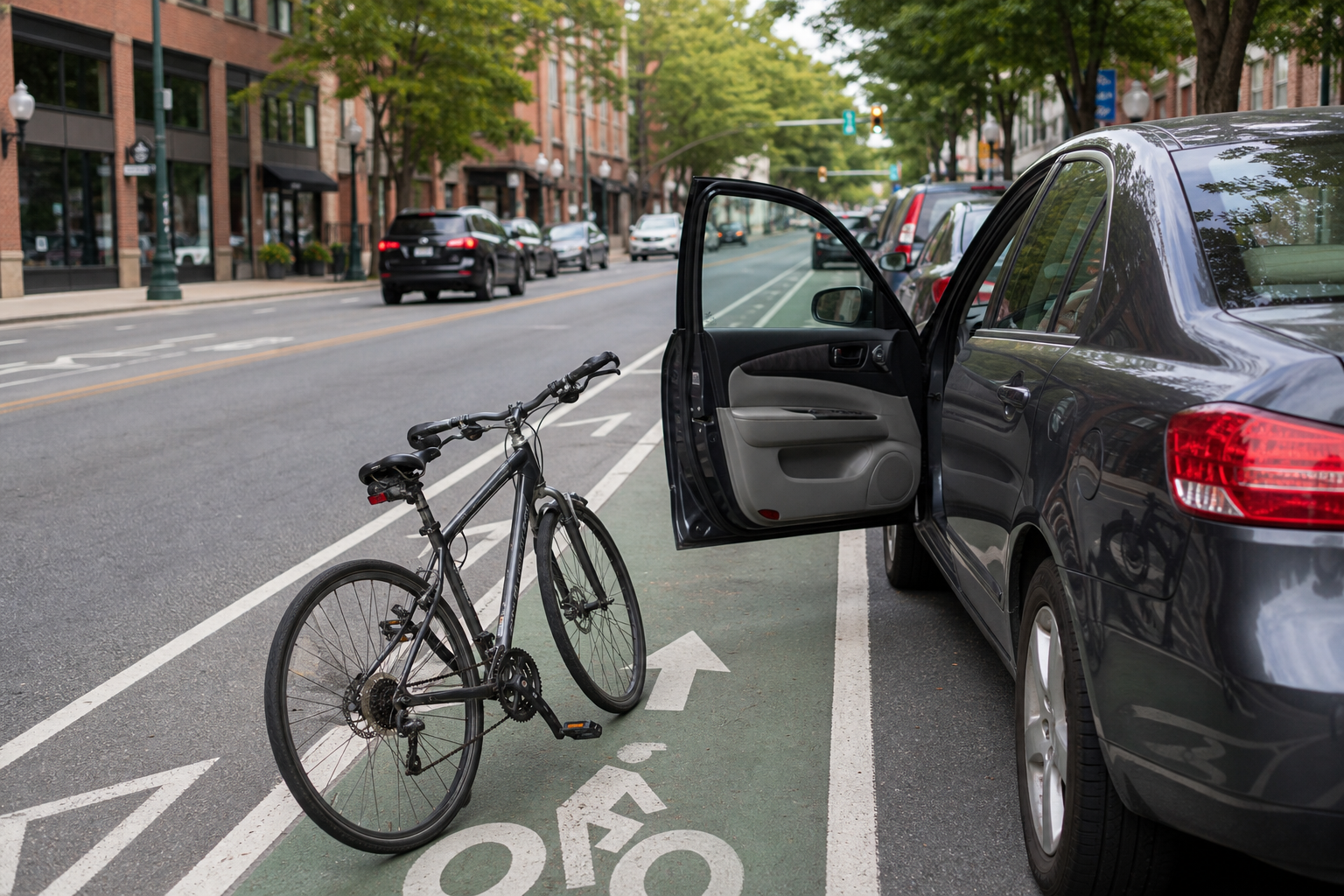
A failure-to-yield bicycle crash can happen in several ways around Fort Wayne, Allen County, and northeast Indiana:
- Left-turn crashes. A driver turns left across the bicyclist’s path and later says the bike “came out of nowhere.”
- Right-hook crashes. A driver passes a cyclist and immediately turns right across the bike’s path.
- Stop-sign and red-light conflicts. A driver rolls through a stop, turns on red, or enters the intersection before checking for bicycle traffic.
- Driveway and parking-lot exits. A driver pulls from a business, alley, driveway, or parking lot and looks only for cars.
- Dooring crashes. A driver or passenger opens a vehicle door into the cyclist’s lane of travel.
- Unsafe passing. A driver squeezes around a cyclist, cuts back too soon, or forces the rider into a curb, debris, or parked cars.
- Crosswalk or trail-crossing conflicts. A driver focuses on vehicle traffic and misses a bicycle entering from a multi-use path or crosswalk.
The legal theory may sound simple: the driver should have yielded. The proof is often not simple. A good bicycle crash investigation does not assume the answer. It tests the driver’s story against physical evidence.
The evidence that proves what happened
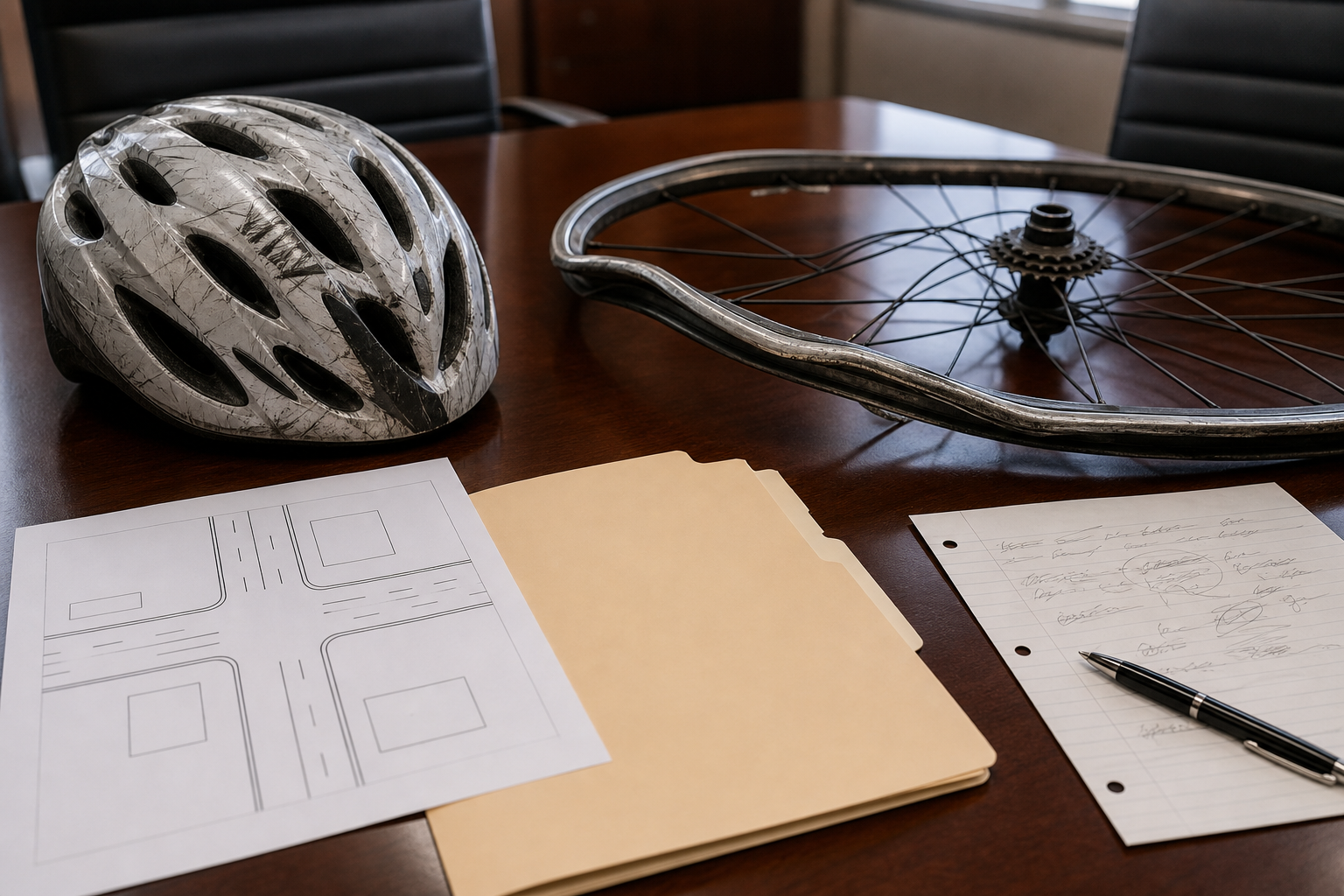
The best evidence often exists for a short time. Nearby business video may be overwritten. Vehicles and bikes may be repaired or scrapped. Road debris gets cleaned up. Witnesses leave. The cyclist’s bruising changes. That is why early preservation can matter as much as the legal rule.
Useful evidence may include:
- photos of the bicycle, vehicle, intersection, bike lane, crosswalk, driveway, signs, signals, skid marks, debris, and final resting positions;
- close-up photos of impact damage on the bike frame, wheels, fork, pedals, handlebars, helmet, and the vehicle;
- witness names, phone numbers, and statements before memories fade;
- the Indiana Officer’s Standard Crash Report and any citation or contributing-circumstance notes;
- 911 audio, body-cam footage, dashcam footage, traffic cameras, doorbell cameras, and business surveillance video;
- measurements or photos showing sight lines, lane width, shoulder conditions, parked vehicles, lighting, and weather;
- phone-use evidence if distracted driving is suspected;
- medical records connecting the injuries to the crash and documenting the treatment course.
The Indiana Criminal Justice Institute explains[6] that Indiana crash data comes from officer crash reports submitted through ARIES, and that Indiana law requires officer investigation/reporting for crashes involving injury, death, or property damage above the statutory threshold. That does not make the crash report the whole case, but it is often the first organized record of what happened.
How insurance companies shift blame to cyclists
Indiana’s comparative fault system makes blame allocation important. If the cyclist is assigned a percentage of fault, the value of the claim may be reduced. If the cyclist is placed over the applicable fault threshold, recovery may be barred in many ordinary negligence cases. That is why insurers often focus on cyclist conduct even when the driver made the unsafe turn or failed to yield.
Common blame arguments include:
| Insurer argument | Evidence that may answer it |
|---|---|
| “The cyclist was hard to see.” | Lighting, reflectors, clothing, headlamp, lane position, weather, witness statements, camera footage |
| “The cyclist was too fast.” | Damage pattern, video, witness estimates, grade of road, bike computer data if available |
| “The cyclist came from the sidewalk.” | Scene photos, path layout, crosswalk position, traffic-control devices, witness statements |
| “The cyclist should have stopped.” | Signal phase, stop line, right of way, driver statement, crash report, video |
| “The cyclist was not wearing a helmet.” | Injury type, causation analysis, actual Indiana law, medical records |
| “The cyclist was riding too far into the lane.” | Lane width, parked cars, hazards, debris, shoulder condition, safe-passing space |
A cyclist should not accept an early fault percentage just because an adjuster says it confidently. Fault should be tied to evidence.
What to do after a Fort Wayne bicycle crash
If you are injured and physically able, these steps can help protect your health and the claim:
- Call 911 and report injuries.
- Get medical care, even if adrenaline makes the injury feel smaller at first.
- Photograph the bike, vehicle, scene, traffic controls, road surface, injuries, clothing, helmet, and lights.
- Get witness names and phone numbers.
- Preserve the bicycle, helmet, clothing, lights, reflectors, and damaged parts.
- Avoid repairing or discarding the bike until the evidence is documented.
- Do not give the driver’s insurer a recorded statement before getting advice.
- Save medical bills, discharge papers, work notes, mileage, and claim letters.
- Review broader next steps in Delventhal Law’s guide on what to do after an injury accident in Allen County.
You can use our Indiana car accident settlement calculator to organize the factors that may affect a claim’s value; it is an educational tool, not a promise of any result.
How Delventhal Law Office helps
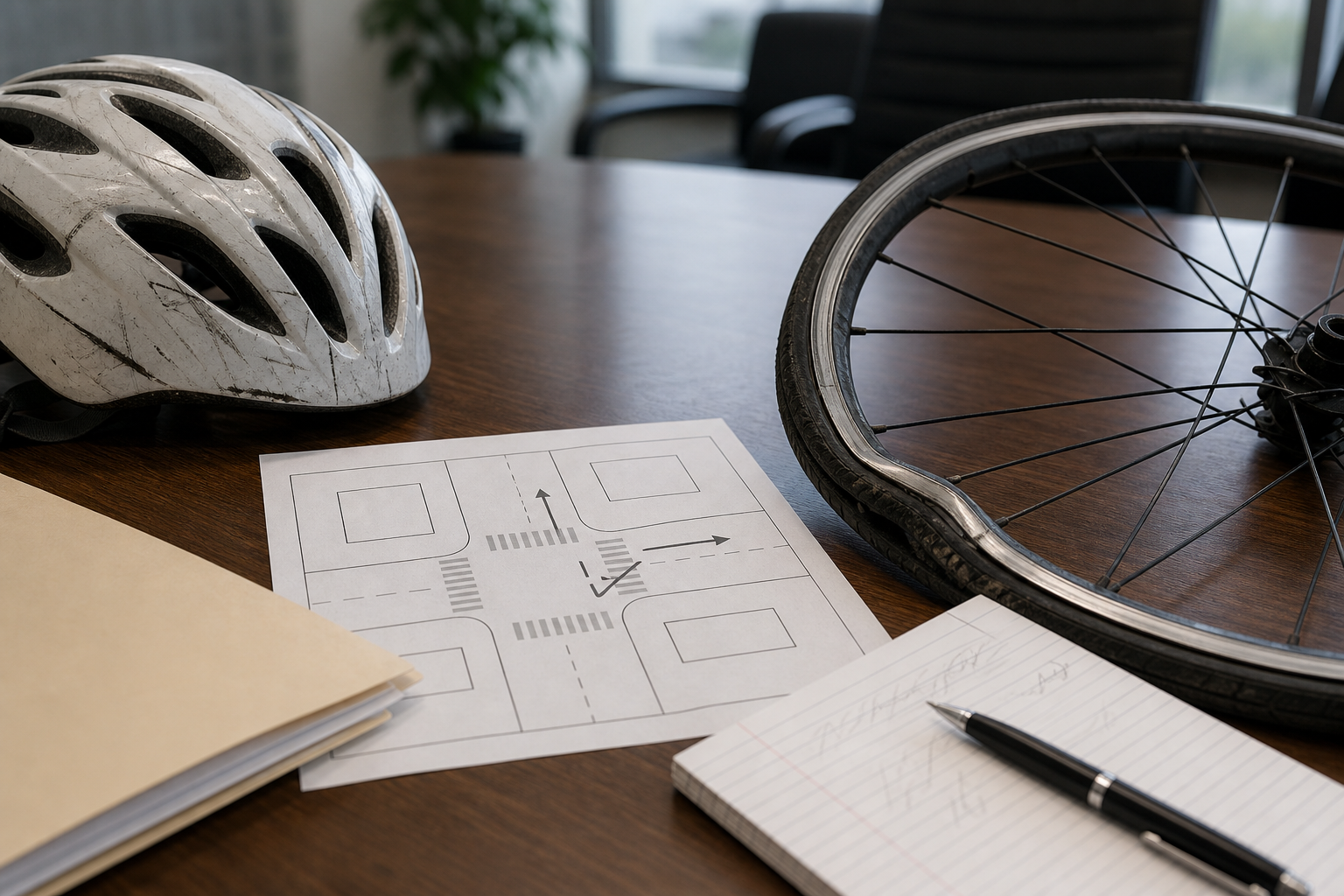
Delventhal Law Office helps injured cyclists by identifying the evidence that needs to be preserved, reviewing the crash report, finding available video, contacting witnesses, documenting the bike and gear, organizing medical records and bills, checking insurance coverage, and responding when an adjuster tries to blame the cyclist without proof.
A bicycle case may involve more than the driver’s liability coverage. Depending on the facts and the policies involved, uninsured or underinsured motorist coverage, medical payments coverage, health insurance, liens, or another responsible party may need to be evaluated. Delventhal Law also has a separate page for uninsured and underinsured accident claims.
If you were hurt in a bicycle crash in Fort Wayne, Allen County, or northeast Indiana, call Delventhal Law Office at (260) 484-6655 or contact us online for a free consultation.
Bicycle crash claims follow the same Indiana personal injury rules as other injury cases. Our Fort Wayne personal injury attorney page explains Indiana's filing deadlines, the comparative fault rule, and the damages Indiana law allows.
Frequently asked questions
Do bicyclists have the same rights as drivers in Indiana?
Generally, yes. Indiana Code § 9-21-11-2[7] gives a person riding a bicycle on the roadway the rights and duties applicable to vehicle drivers, except for rules that do not apply by their nature. The exact analysis depends on where the cyclist was riding and what traffic rule was involved.
Is the driver automatically at fault if they say they did not see the bike?
Not automatically, but “I did not see the cyclist” is not a complete defense by itself. The question is whether the driver kept a proper lookout, obeyed the traffic rules, yielded when required, and acted reasonably under the conditions.
What if the cyclist was partly at fault?
Indiana comparative fault can reduce or sometimes bar recovery depending on the fault percentages and case type. Do not assume the insurer’s first percentage is correct. Fault should be evaluated against actual evidence.
What if the crash involved an opened car door?
Indiana Code § 9-21-8-40[8] addresses opening a vehicle door on the side available to moving traffic unless it is reasonably safe and leaving it open longer than necessary. Door position, traffic lane, bike lane, parked cars, witness statements, and photos can all matter.
Should I keep my damaged bicycle?
Yes, if you can. The bike may show impact direction, speed-related clues, brake condition, lighting equipment, and force of collision. Photograph it, preserve it, and get advice before repair, sale, or disposal.
Sources
- National Highway Traffic Safety Administration’s bicycle safety guidance (nhtsa.gov) ↩
- Indiana Code § 9-21-11-2 (iga.in.gov) ↩
- Indiana Code § 9-21-8-30 (iga.in.gov) ↩
- Indiana Code § 9-21-8-40 (iga.in.gov) ↩
- Indiana Code § 34-51-2 (iga.in.gov) ↩
- Indiana Criminal Justice Institute explains (in.gov) ↩
- Indiana Code § 9-21-11-2 (iga.in.gov) ↩
- Indiana Code § 9-21-8-40 (iga.in.gov) ↩