
After a Fort Wayne or northeast Indiana work accident, these records can help you understand how the event was documented. They are only part of the evidence, however: OSHA expressly states that recording or reporting an injury does not establish fault, an OSHA violation, or eligibility for workers’ compensation benefits.
Key takeaways
- The OSHA 300 Log lists recordable cases for an establishment; the OSHA 300A summarizes the year; and an OSHA 301 report supplies incident-level information for each recorded case.
- A covered requester must receive a relevant OSHA 300 Log by the end of the next business day.
- You may request the OSHA 301 report concerning your own injury, but you generally do not receive every coworker’s complete 301 report.
- The first required copies are free; reasonable retrieval and copying charges may apply to additional copies.
- Covered employers must retain the OSHA 300 Log, privacy-case list, 300A annual summary, and OSHA 301 reports for five years after the end of the calendar year covered.
- An OSHA entry does not establish eligibility for workers’ compensation benefits.
The OSHA 300, 300A, and 301 forms serve different purposes
Under 29 C.F.R. § 1904.29[1], covered employers use OSHA Forms 300, 300A, and 301—or equivalent forms—for recordable injuries and illnesses. A case must be entered on the OSHA 300 Log and an OSHA 301 report within seven calendar days after the employer receives information that a recordable injury or illness occurred.
| Record | What it contains | Access point |
|---|---|---|
| OSHA 300 Log | A brief entry for each recordable injury or illness, including classification and outcome information. | A qualifying requester may obtain relevant current or stored logs for an establishment where the employee worked by the end of the next business day. |
| OSHA 300A Summary | Annual totals derived from the OSHA 300 Log, together with establishment and employment information. | A covered employer must post the summary from February 1 through April 30 of the following year. |
| OSHA 301 Incident Report | An incident-level report, or an equivalent form, for each recordable case entered on the OSHA 300 Log. | An employee, former employee, or personal representative may obtain the report about that employee by the end of the next business day. |
The OSHA 301 may be an equivalent form rather than a document carrying the OSHA title, provided the substitute contains the same information, is equally readable and understandable, and follows the same instructions.

Who can request an OSHA 300 Log or OSHA 301 report?
The federal employee-access rule in 29 C.F.R. § 1904.35[2] distinguishes among employees, former employees, personal representatives, and authorized employee representatives.
Employees and former employees
A current or former employee may request relevant OSHA 300 Logs for an establishment where that person worked. The employer must provide the logs by the end of the next business day.
A current or former employee may also request the OSHA 301 report describing that person’s own injury or illness, which must be supplied by the end of the next business day.
Personal representatives
A personal representative includes a person designated in writing by the employee or former employee, as well as the legal representative of a deceased or legally incapacitated employee or former employee.
Authorized union representatives
For this access rule, an authorized employee representative is an authorized collective-bargaining agent.
Such a representative may obtain relevant OSHA 300 Logs by the end of the next business day. When requesting OSHA 301 reports for an establishment represented under a collective-bargaining agreement, the representative must receive the permitted material within seven calendar days, but only the section titled “Tell us about the case”; the employer must remove the remaining information.
The employer may not charge for the first required copies, although it may assess a reasonable retrieval and copying charge for additional copies.

What privacy limits apply?
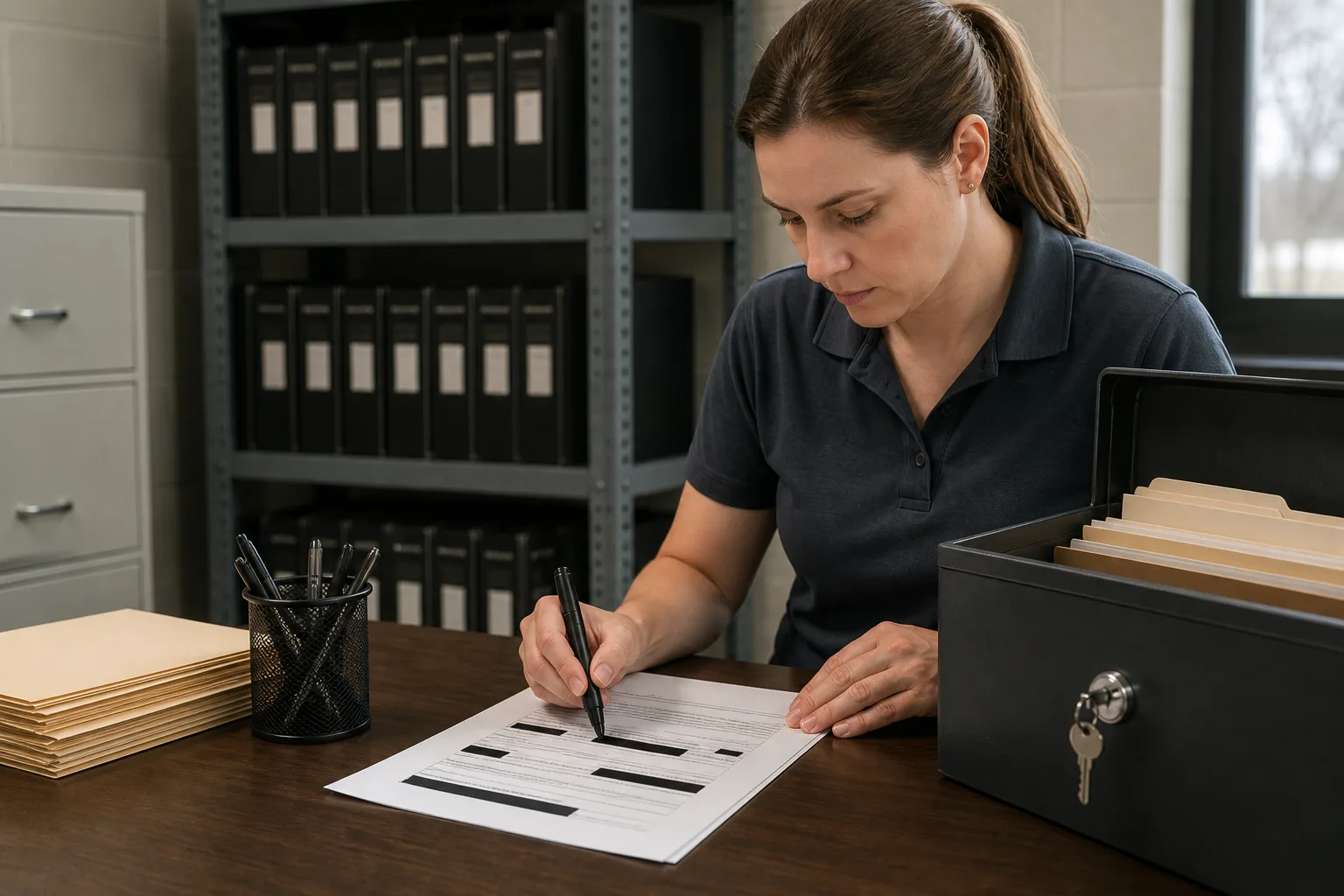
The copy of an OSHA 300 Log supplied to an employee or representative ordinarily retains employee names. For designated privacy-concern cases, however, the employer must enter “privacy case” instead of the employee’s name and keep a separate confidential list connecting the case number and name.
OSHA’s privacy categories include injuries or illnesses involving intimate body parts or the reproductive system, sexual assault, mental illness, HIV infection, hepatitis, tuberculosis, contaminated needlesticks or sharps, and another illness when the employee voluntarily asks that the name be omitted.
If even a name-free description could identify the employee, the employer may describe a privacy-concern case more generally while still recording the cause and general severity.
These protections explain why a log may not identify a coworker and why a union representative receives only a limited part of coworkers’ OSHA 301 reports.
What if your employer says it does not keep an OSHA 300 Log?
Not every employer must routinely maintain these forms. A company that had 10 or fewer employees throughout the previous calendar year is generally partially exempt unless OSHA or the Bureau of Labor Statistics requires recordkeeping in writing, and establishments in listed low-hazard industries may also be partially exempt.
The size exemption is based on peak employment across the entire company, while an industry exemption is evaluated by establishment.
Even when an employer is partially exempt from routine logkeeping, covered employers still have separate duties to report specified severe events. The Indiana Department of Labor’s IOSHA recordkeeping page[3] states that work-related fatalities must be reported within eight hours, while in-patient hospitalizations, amputations, and losses of an eye must be reported within 24 hours.
Indiana operates an OSHA-approved State Plan administered by the Indiana Department of Labor, and IOSHA has jurisdiction over most private- and public-sector workplaces in Indiana.
How long must covered employers keep OSHA records?
Under 29 C.F.R. § 1904.33[4], covered employers must retain the OSHA 300 Log, any privacy-case list, the 300A annual summary, and OSHA 301 reports for five years after the end of the calendar year covered.
During that storage period, the employer must update the OSHA 300 Log for newly discovered recordable cases and changes to previously recorded cases, but it is not required to update the 300A summary or OSHA 301 reports.
How to request the records in writing
A short written request creates a clear record of what you asked for. Send it to the safety manager, human-resources department, records custodian, or another person the employer identifies for OSHA records.
| Include | Example wording |
|---|---|
| Your identity and status | “I am a current employee,” “I am a former employee,” or “I am the employee’s written personal representative.” |
| The establishment | Give the workplace name and street address where you worked. |
| The requested record | Identify the OSHA 300 Log and calendar years, or request the OSHA 301 report for your own incident. |
| Incident details | Provide your name, incident date, department, shift, and a brief description so the correct record can be located. |
| Delivery method | Ask for a paper copy, secure electronic copy, or a time to pick it up. |
You might write: “Please provide copies of the current and stored OSHA 300 Logs for the Fort Wayne establishment where I worked for calendar years [years]. Please also provide the OSHA 301 Incident Report, or equivalent form, describing my incident on [date]. I am making this request under 29 C.F.R. § 1904.35(b)(2).”
Keep your request, proof of delivery, the response, and any supplied files in their original form. If the employer says no responsive record exists, ask it to confirm that response in writing without arguing about why.

What can OSHA records tell you after an Indiana work accident?
As a practical review method, compare the supplied records with documents you already have. Note dates, departments, job descriptions, case classifications, days away, restricted-work entries, and brief incident narratives, then list questions for a qualified professional.
Do not treat a log entry as a final legal conclusion. OSHA’s rule expressly says that recording or reporting a work-related event does not establish fault, prove an OSHA violation, or establish eligibility for workers’ compensation or other benefits.
If no entry appears, make a note of that fact and ask whether an equivalent form, another establishment, or a partial exemption is relevant. This is a question list, not an official conclusion about a particular employer.
For additional general reading, see the firm’s guides on reporting a work injury and Indiana workers’ compensation eligibility. Those questions should not be answered from the OSHA log alone.
An IOSHA report is not a workers’ compensation claim
The practical rule: a report your employer makes to a safety agency, and a record your employer keeps in its own files, are not the same thing as your claim. Your claim is a separate step with its own deadline, and no employer filing starts it for you.
Four different obligations are easy to confuse after a serious injury. They involve different people, different recipients and different clocks.
| Step | Who acts | Goes to | Time stated by the rule |
|---|---|---|---|
| Severe-injury report | Employer | IOSHA | 8 hours for a fatality; 24 hours for an in-patient hospitalization, amputation, or loss of an eye |
| OSHA recordkeeping (300, 300A, 301) | Employer | Kept at the establishment | Maintained and produced on request |
| Notice of injury | You | Your employer | As soon as practicable; a 30-day rule affects when compensation is paid |
| Claim for compensation | You | Worker’s Compensation Board | Two years from the accident |
Your notice to the employer. Under Indiana Code 22-3-3-1[5], an injured employee is to give written notice of the injury to the employer as soon as practicable, unless the employer already has actual knowledge of it. The statute then says that unless notice is given, or the employer acquires knowledge, within thirty days of the injury, “no compensation shall be paid until and from the date such notice is given or knowledge obtained.” The same section adds that a lack of knowledge, or a defect in the notice, does not bar compensation unless the employer shows it was prejudiced, and then only to the extent of that prejudice. Give written notice anyway, and keep a copy with the date.
Your employer’s report is about the employer’s duty, not yours. Indiana Code 22-3-4-13[5] requires every employer to keep a record of injuries and, within seven days of learning of an injury causing death or the need for medical care beyond first aid, to report it in writing to its insurance carrier, or to the Board if the employer is self-insured. The carrier then has its own deadline to deliver that report to the Board. The statute states that these reporting requirements are intended to be consistent with the OSHA recording requirements at 29 CFR 1904.7, which is precisely why the two systems look alike and are still not the same thing.
Your claim has its own deadline. Under Indiana Code 22-3-3-3[5], the right to compensation is “forever barred” unless a claim is filed with the Worker’s Compensation Board within two years after the accident, or within two years after death if the injury is fatal. If temporary total or temporary partial disability compensation has been paid, that two-year period to file an application for adjustment of claim runs from the last date for which that compensation was paid.
So an employer can report your injury to IOSHA within hours, record it on its OSHA 300 Log, and send a report to its insurance carrier, and none of that files your claim. Those records can help you prove what happened and when the employer knew, which is the reason to request them. They are evidence, not a filing.
If you are unsure whether anything has been filed on your behalf, the Board publishes a way to confirm whether a First Report has been filed[6] for your injury. Checking is quicker than assuming.
Other records worth preserving
An OSHA request should not replace a broader evidence checklist. Depending on what exists, preserve your incident report, photographs, witness names, work restrictions, schedules, pay records, training materials, safety policies, equipment identifiers, communications, and workers’ compensation correspondence.
Keep private copies of records you already receive, and avoid posting sensitive information publicly. The firm’s Indiana PPI calculator is an educational worksheet for entering figures; it does not determine an outcome.
You can also review the broader Fort Wayne workplace-injury information page.

Frequently Asked Questions
Can I see the entire OSHA 300 Log, not just my entry?
For an establishment where you worked, a current employee, former employee, personal representative, or authorized employee representative may request the relevant current or stored OSHA 300 Log, subject to the rule for privacy-concern cases.
Can I obtain my coworkers’ complete OSHA 301 reports?
An individual employee’s access right covers the OSHA 301 report about that employee’s own injury or illness. An authorized union representative may obtain only the “Tell us about the case” portion of 301 reports for the represented establishment, with the other information removed.
How quickly must my employer respond?
A qualifying OSHA 300 Log request and a request for your own OSHA 301 report are due by the end of the next business day; an authorized union representative’s qualifying request for OSHA 301 material is due within seven calendar days.
Can the employer charge me?
The first required copies must be provided without charge, but the employer may impose a reasonable retrieval and copying charge for additional copies.
Does an OSHA record prove my workers’ compensation claim?
No. OSHA states that recording or reporting an injury does not establish fault, an OSHA violation, or eligibility for workers’ compensation or other benefits.
What if my employer refuses or does not respond?
Preserve the request and response, confirm that you directed the request to the correct establishment and records contact, and consider contacting IOSHA or a lawyer about the facts rather than assuming the missing record decides your work-injury claim.
If you are unsure which workplace records matter, Delventhal Law Office can review the available documents and help you prepare questions through a free case evaluation.
This article provides general information, not legal advice. An attorney–client relationship is formed only if the firm and client enter an agreement confirmed by the firm, subject to applicable professional duties.