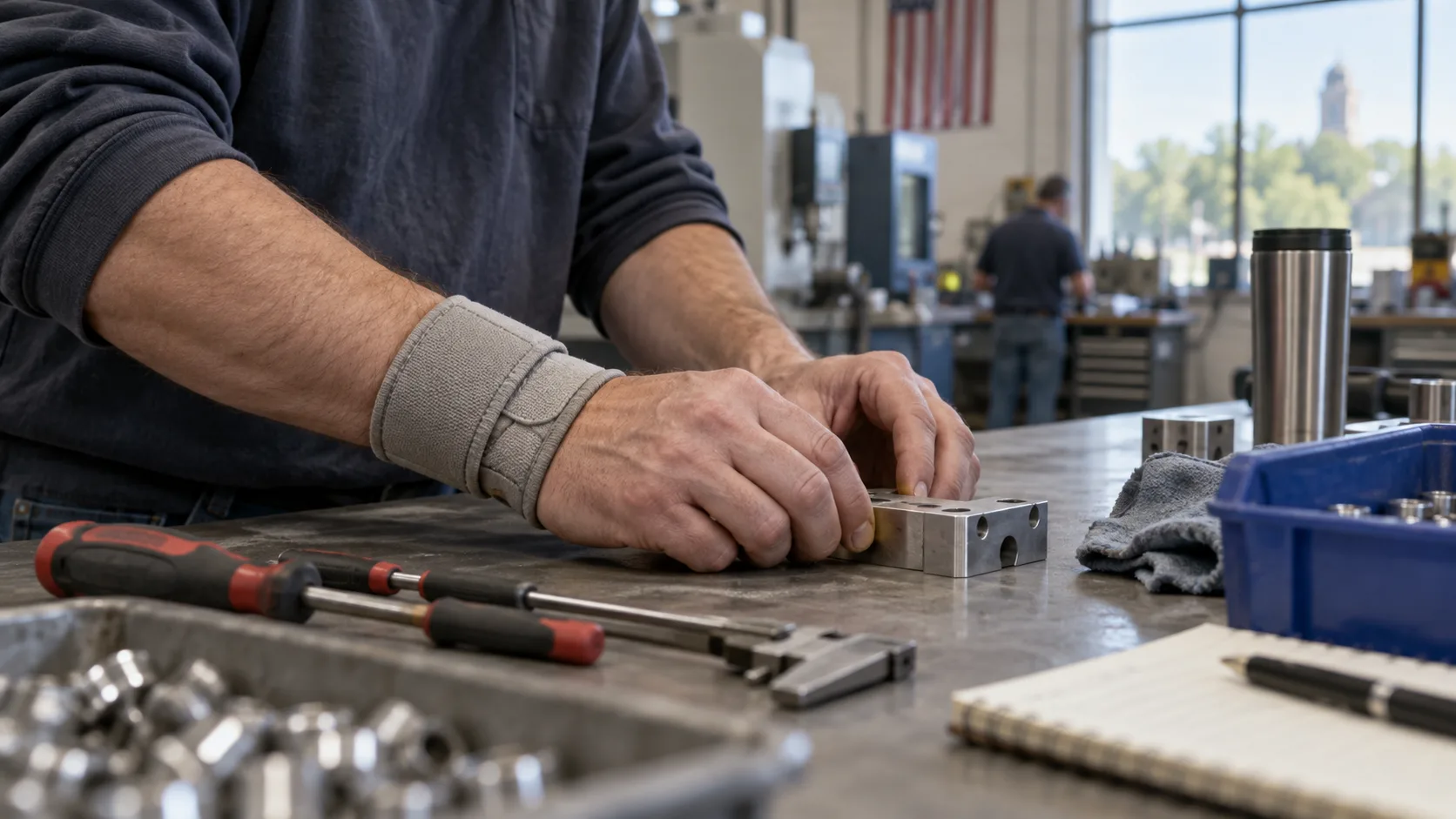

This is a narrower question than general workers’ compensation eligibility. If you were hurt at work in Fort Wayne, Allen County, or elsewhere in Indiana, the details surrounding the rule, test, and accident matter.
Key takeaways
- Breaking a safety rule does not automatically disqualify you from Indiana workers’ compensation.
- For the written-rule defense, Indiana Code 22-3-2-8[1] requires a knowing failure to obey a reasonable written or printed employer rule that was posted conspicuously at work.
- A failed drug test is not automatically the same as proving that an injury was due to intoxication.
- The employer or carrier bears the burden of proving a defense listed in Indiana Code 22-3-2-8[1].
- A denial can be disputed through the Indiana Worker’s Compensation Board’s informal or formal processes.
What does Indiana law say about misconduct and workers’ comp?
Indiana Code 22-3-2-8[1] identifies specific conduct that can bar compensation when the injury or death is due to that conduct. The list includes a knowingly self-inflicted injury, intoxication, commission of an offense, knowing failure to use a safety appliance, knowing failure to obey a qualifying posted workplace rule, and knowing failure to perform a statutory duty.
The statute also places the burden of proof on the defendant. You can review the current text in Title 22 of the Indiana Code[1].
The practical distinction is between making a mistake and satisfying every part of a statutory defense. Indiana workers’ compensation is not automatically lost whenever an employee acts carelessly or violates a workplace policy.
| Issue raised by the employer | What Indiana Code 22-3-2-8[1] requires | Questions to investigate |
|---|---|---|
| Safety rule | A knowing failure to obey a reasonable written or printed employer rule posted conspicuously in the workplace, with the injury due to that failure. | Was the rule written, reasonable, posted, known, enforced, and connected to the accident? |
| Safety appliance | A knowing failure to use a safety appliance, with the injury due to that failure. | Was suitable equipment supplied, available, understood, and relevant to how the injury occurred? |
| Alcohol or drugs | Intoxication, with the injury due to that intoxication. | What did the test measure, when was the sample taken, and what evidence connects intoxication to the accident? |
| Burden of proof | The defendant bears the burden of proving the statutory defense. | What documents, testimony, test records, and accident evidence support or contradict the defense? |

When can breaking a safety rule affect an Indiana workers’ comp claim?
A verbal instruction alone does not match the statute’s written-or-printed-rule language. For this particular defense, the statute also requires the employer rule to be reasonable, posted conspicuously in the place of work, knowingly disobeyed, and causally connected to the injury.
That makes the actual workplace evidence important. Useful items may include the policy in effect on the injury date, photographs showing where it was posted, orientation records, training acknowledgments, disciplinary records, equipment logs, and statements from coworkers who observed normal workplace practices.
For example, a carrier may point to a written lockout rule after a machine injury. The disputed questions may include whether you knew the rule, whether it was posted, whether the required equipment was available, and whether the alleged violation actually caused the injury.
For a broader explanation of who may qualify for benefits, see our guide to Indiana workers’ compensation eligibility and the firm’s Fort Wayne workers’ compensation practice.

Does failing a drug test automatically prove intoxication?
No. Indiana Code 22-3-2-8[1] uses the word “intoxication” and requires the injury to be due to that intoxication; it does not state that every positive or failed workplace drug test automatically bars compensation.
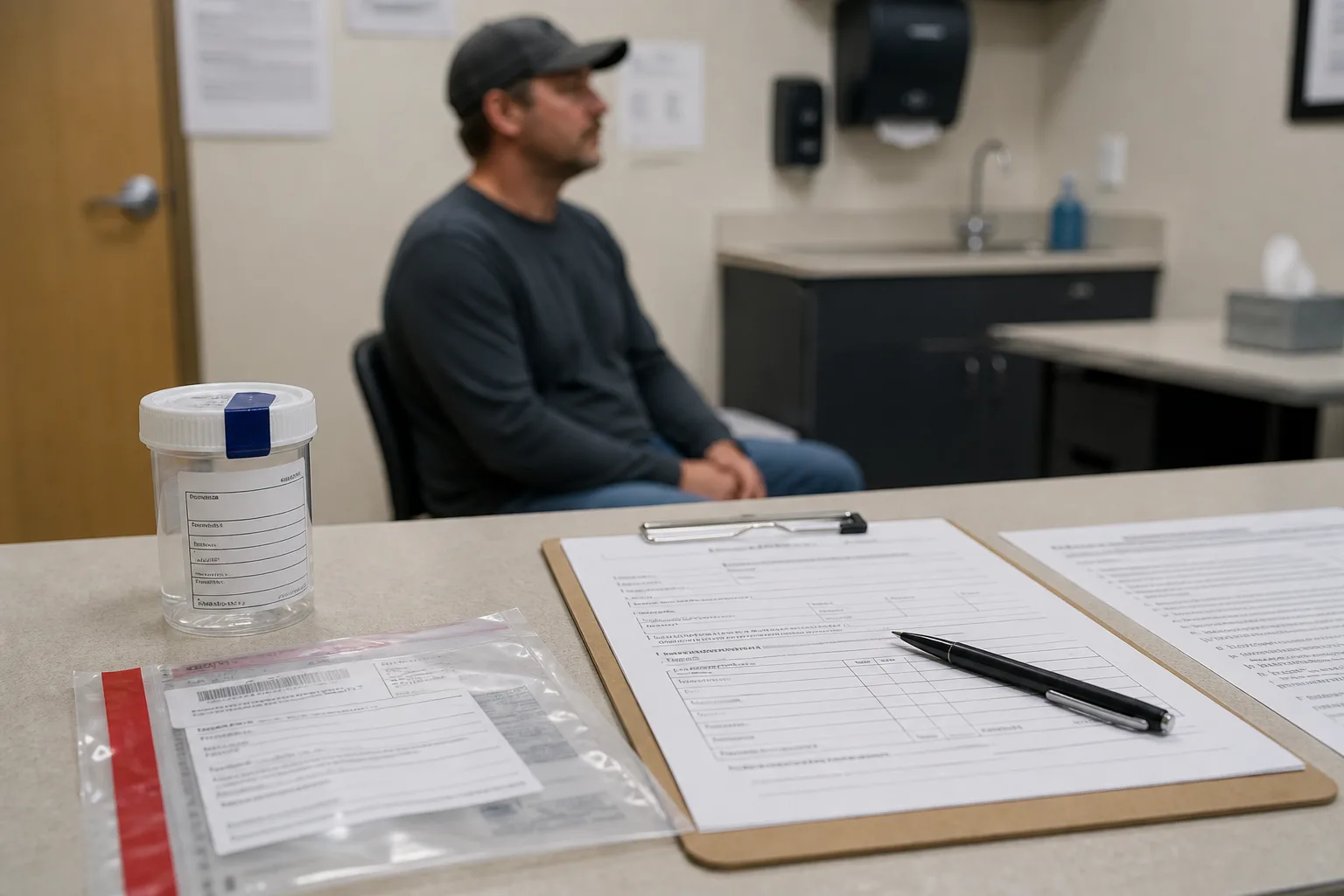
A drug-test dispute can turn on the substance tested, collection timing, chain of custody, laboratory documentation, applicable thresholds, medications disclosed, observed behavior, accident mechanics, and other evidence addressing whether intoxication contributed to the injury.
An employer may separately impose workplace consequences under its employment policies. That employment decision does not by itself resolve whether the statutory workers’ compensation defense has been proven.
As a practical step, keep any test paperwork you receive and provide accurate information when an attorney reviews the denial.
What evidence should you preserve?
As a practical step, gather records that may help show what happened and what the employer knew. Keep only materials you may lawfully possess.
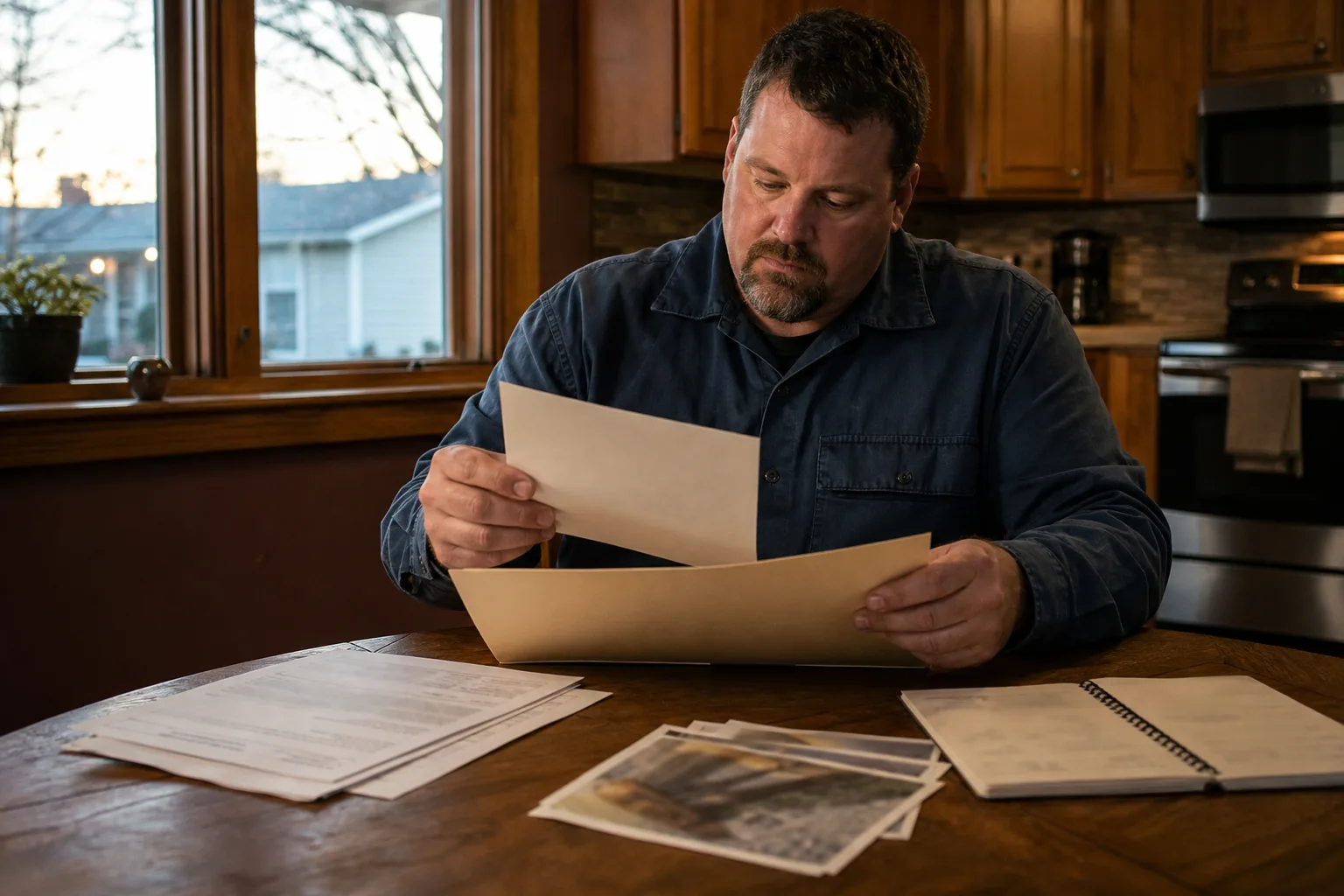
- The written denial and every stated reason for it.
- The safety policy and version that applied on the injury date.
- Photographs of the work area, warning signs, rule postings, guards, and safety equipment.
- Training records, acknowledgment forms, and relevant text messages or emails.
- Drug- or alcohol-test notices, consent forms, collection records, and results provided to you.
- Names and contact information for coworkers who observed the incident or ordinary work practices.
- The incident report, medical paperwork, work restrictions, and wage records.
As practical suggestions, write a private timeline while events are fresh, distinguish your own observations from secondhand information, and use care when discussing a pending dispute publicly.
What can you do if the carrier denies the claim?
First, ask for the denial reason in writing and compare it with the actual rule, test documents, and accident evidence. A denial notice is the carrier’s position; disputed claims can be decided through the Worker’s Compensation Board process.
The Board says its informal dispute process begins with a Request for Assistance, State Form 45442. A Board case coordinator may investigate and try to help the parties resolve the issue without a formal hearing; review the Board’s informal-dispute instructions[2].
If informal efforts do not resolve the dispute, the Board states that a formal claim proceeds through an Application for Adjustment of Claim, State Form 29109. The Board’s disputed-claims page[3] says the application generally must be filed within two years of the injury date.
The Board lists both forms on its official workers’ compensation forms page[4]. Because a disagreement about intoxication, causation, or a safety rule can be evidence-intensive, consider having the denial reviewed before deciding how to proceed.
You may also find our guides to responding to a denied Indiana workers’ comp claim and the Application for Adjustment of Claim helpful.
Frequently Asked Questions
Can workers’ comp be denied because I was careless at work?
Carelessness by itself is not listed as a defense in Indiana Code 22-3-2-8[1]. The employer must prove an applicable statutory defense, including its required knowledge and causation elements.
What if the safety rule was only verbal?
A verbal instruction does not satisfy the written-or-printed-rule wording of the specific rule-violation defense in Indiana Code 22-3-2-8[1]. Other facts or statutory defenses may still be disputed.
Does signing a safety policy automatically defeat my claim?
No. A signature may be evidence that you received a rule, but the statutory defense still requires a reasonable written or printed rule posted conspicuously, a knowing failure to obey it, and an injury due to that failure.
Does a positive marijuana test automatically end an Indiana workers’ comp claim?
No. The statute addresses intoxication and whether the injury was due to intoxication; it does not create an automatic bar for every positive drug test.
Who has to prove the intoxication or safety-rule defense?
Indiana Code 22-3-2-8[1] places the burden of proof on the defendant.
If your Indiana work-injury claim was denied after a safety allegation or drug test, a free consultation with Delventhal Law Office can help you understand the stated reason, the evidence, and the available next steps.
This article provides general information, not legal advice. Reading this article alone does not create an attorney-client relationship.