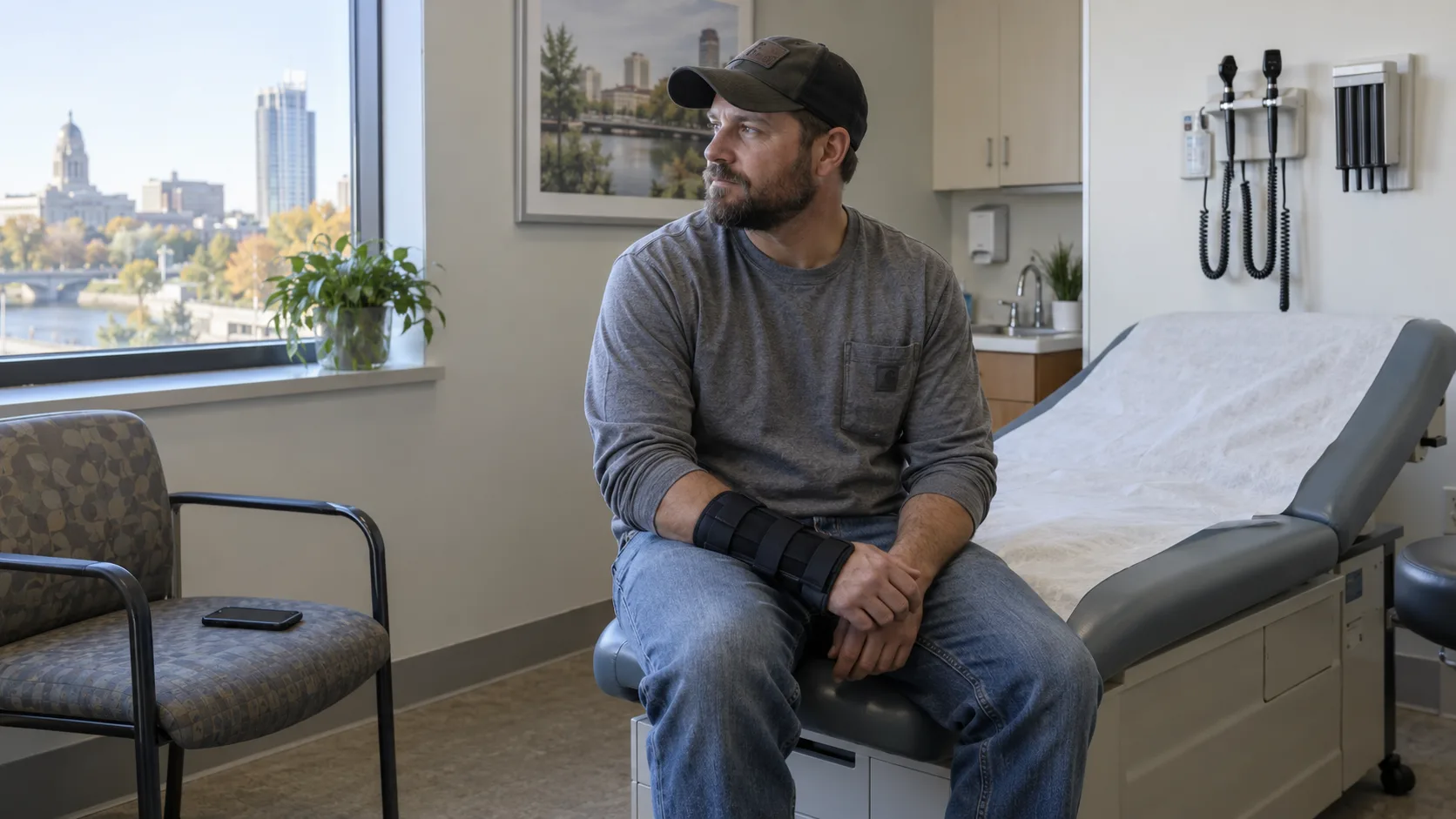

A lifting incident in a Fort Wayne warehouse, a fall at a jobsite, or pain noticed during a shift can leave you with several different questions: What happened? What does the clinician think? Which appointments have been arranged? This guide helps you keep those questions separate. For the broader Indiana claim process, start with our workers’ compensation guide.
Key takeaways
- Write down the task and sequence of events without guessing at a medical explanation.
- Describe earlier back problems honestly and distinguish them from what changed.
- Bring a concrete task list, not just a job title, to the appointment.
- Ask for clarification about unclear work-status notes and appointment arrangements.
- Use this worksheet alongside—not instead of—your existing reports and provider records.
The first report and a usable timeline
The Worker’s Compensation Board of Indiana’s employee FAQ[1] says to report a workplace accident to the employer immediately. Describe the event and what you noticed; you do not need to invent a medical label to explain a lift, slip, or fall. The linked agency FAQ was checked October 10, 2026.
As a practical writing exercise, separate four entries: the work activity, what you felt or observed, when you told someone, and what happened afterward. If there was no single event you can identify, say that. Describe the repeated tasks and the sequence as accurately as you can instead of choosing an accident date by guesswork.
Use units and context where you know them. “Moved cartons from the floor to a waist-high shelf” is more informative than “heavy work.” If you do not know a carton's weight, say so. Identify whether a coworker saw the movement, heard your report afterward, or both; those are different observations.

A back-injury appointment worksheet
This is our preparation worksheet, not a Board form or a list of required proof. Fill in what you know and leave uncertainties visible. For folders, receipts, and file storage, use the separate injured-worker recordkeeping guide.
| Topic | Useful factual detail | Avoid guessing about |
|---|---|---|
| Lift, fall, or other event | Starting position, reach, direction of movement, object, surface, and equipment | Unknown weight, force, or distance |
| Onset and location | When discomfort began, where you felt it, and what changed afterward | A medical label you have not been given |
| Earlier back history | Earlier visits, scans, procedures, and how you functioned before this event | Whether an old finding explains the current problem |
| Daily tasks | Concrete examples involving sitting, reaching, walking, carrying, or getting in and out of a vehicle | What a clinician would permit without asking |
| Job demands | Load sizes, carrying distance, lift height, repetition, shift length, and available assistance | A blanket claim that every task is identical |
| Next appointment | Provider name, date, referral, contact person, and unanswered questions | Whether a referral alone confirms the visit is arranged |
Hypothetical example: A warehouse employee recalls moving a carton from floor level, turning toward a shelf, and feeling lower-back discomfort. The employee had an earlier episode but had been doing the regular job before this shift. A useful note records those facts, identifies the coworker nearby, and lists what changed afterward. It does not announce that a particular disc was injured or that the claim must be accepted. This is an invented example, not a client result.

History, examination, and imaging answer different questions
The National Institute of Arthritis and Musculoskeletal and Skin Diseases (NIAMS) back-pain overview[2] explains that doctors use medical history, a physical examination, and sometimes tests to evaluate the possible cause of back pain. It lists questions about location, onset, what you were doing, severity, and what makes pain better or worse. This federal medical source was checked October 10, 2026.
NIAMS says most people do not need additional testing, although a doctor may order tests to rule out or confirm a suspected cause. It explains that MRI can help identify damage or disease in soft tissues such as discs, ligaments, and nerve roots. Whether a test is appropriate for you is a clinical question, not something this article can decide.
Bring the written scan report if you have it and ask how the findings fit your history and examination. Do not substitute your own reading of a technical phrase for the clinician’s explanation. If a visit note has the wrong side, date, or description of the work activity, identify the specific entry and ask the office how to request a correction; keep the original and any response.
A prior episode belongs in the history, not in a separate story you hope nobody asks about. Tell the clinician what earlier care you received and what you could do before this event. This article does not decide whether work contributed to a particular condition or whether it qualifies for compensation.

Separate the clinical plan from appointment authorization
The Indiana Worker’s Compensation Board FAQ on employer-selected doctors[3] explains that employers or insurers have the right to direct medical care. This is the general starting point for authorized care, not a complete discussion of exceptions or disputed bills. The official FAQ was checked October 10, 2026. Our guide to who chooses the workers’ compensation doctor addresses that separate issue.
Use two short question lists. The first is for the clinician; the second is for the person arranging appointments. These are suggested conversation prompts, not a recommendation for a particular procedure.
- For the clinician: What is the working explanation? What is the next step? What should I do if the problem changes before the next visit? Who should I contact with questions?
- For the appointment contact: Which provider is designated? Has the referral reached that office? Is the proposed visit authorized? Who will confirm the date? Is anything still needed from me?
Keep a referral, an appointment confirmation, and an authorization message as separate items. If they do not line up, ask for a written explanation. Do not use this organizational checklist to decide whether to postpone urgent care; seek medical advice for urgent concerns.
Match the work-status note to the actual job
For the next discussion with the clinician, list the actual physical demands: lifting from floor level versus waist height, carrying versus pushing, occasional versus repeated movement, seated driving versus walking, and whether assistance is available. A job title alone does not supply those details.
Consider this hypothetical wording problem: a note lists a lifting limit, but the proposed assignment involves pushing a loaded cart and repeated bending. Rather than decide for yourself that the note permits or forbids the assignment, show the exact task list and ask the clinician to clarify. Save each version of the note and the employer’s description of the assignment.
This section is about preparing that comparison—not whether to accept or refuse an offer. For the separate legal consequences, see light duty and work restrictions in Indiana.

Make an unanswered request specific
Instead of writing only “nothing is happening,” identify the open item: an unreturned referral, an appointment that has not been scheduled, an unanswered question about a visit, or a missing written explanation. Record the contact date, recipient, requested action, and response. Keep estimates and your recollection labeled as such.
The Worker’s Compensation Board’s informal-dispute page[4] says its informal process begins with a completed Request for Assistance, State Form 45442, allowing a case coordinator to inquire into the matter. Its formal disputed-claim page[5] identifies the Application for Adjustment of Claim, State Form 29109, for unresolved disputes moving to the formal hearing process. Both official pages were checked October 10, 2026.
Those are different processes. Ask an Indiana workers’ compensation attorney which filing or response your situation calls for and when it is due. This preparation guide does not calculate filing periods or address reopening a settled claim. Bring the notices and correspondence to that conversation instead of relying on a general article to choose a date.

Frequently asked questions
What should I write down about a lifting incident?
Record the object, starting height, reach, direction of movement, available assistance, and when you noticed discomfort. Label unknown weights or times as unknown rather than estimating them as facts.
Should I mention earlier back problems at the appointment?
Yes. Give an accurate history, including earlier care and what you could do before this event. NIAMS identifies medical history as part of the evaluation of back pain.
What should I ask about a scan report?
Ask the clinician to explain the findings in the context of your history and examination, and what questions remain. NIAMS describes imaging as one tool doctors may use, not something every patient needs.
What if the work-status note does not address a task?
Show the clinician the specific task, including repetition, load, position, and available help, and ask for clarification. Keep the original note, job description, and response together.
Who should confirm the next authorized appointment?
Ask the employer or designated claim contact which provider is authorized and who is arranging the visit. Confirm the date with the provider’s office instead of assuming a referral means an appointment exists.
Bring the unanswered questions to a consultation
If you are unsure what to do next, Chad Delventhal can review the situation with you. For a free case evaluation, bring your event notes, available provider records, work-status slips, appointment messages, and any Board papers. Keep private records out of public comments; ask the office how to share them.
This article is general information about Indiana law and is not legal advice. Reading it does not create an attorney-client relationship, and neither does contacting us.
Sources
- Worker’s Compensation Board of Indiana’s employee FAQ (in.gov) ↩
- National Institute of Arthritis and Musculoskeletal and Skin Diseases (NIAMS) back-pain overview (niams.nih.gov) ↩
- Indiana Worker’s Compensation Board FAQ on employer-selected doctors (faqs.in.gov) ↩
- Worker’s Compensation Board’s informal-dispute page (in.gov) ↩
- formal disputed-claim page (in.gov) ↩