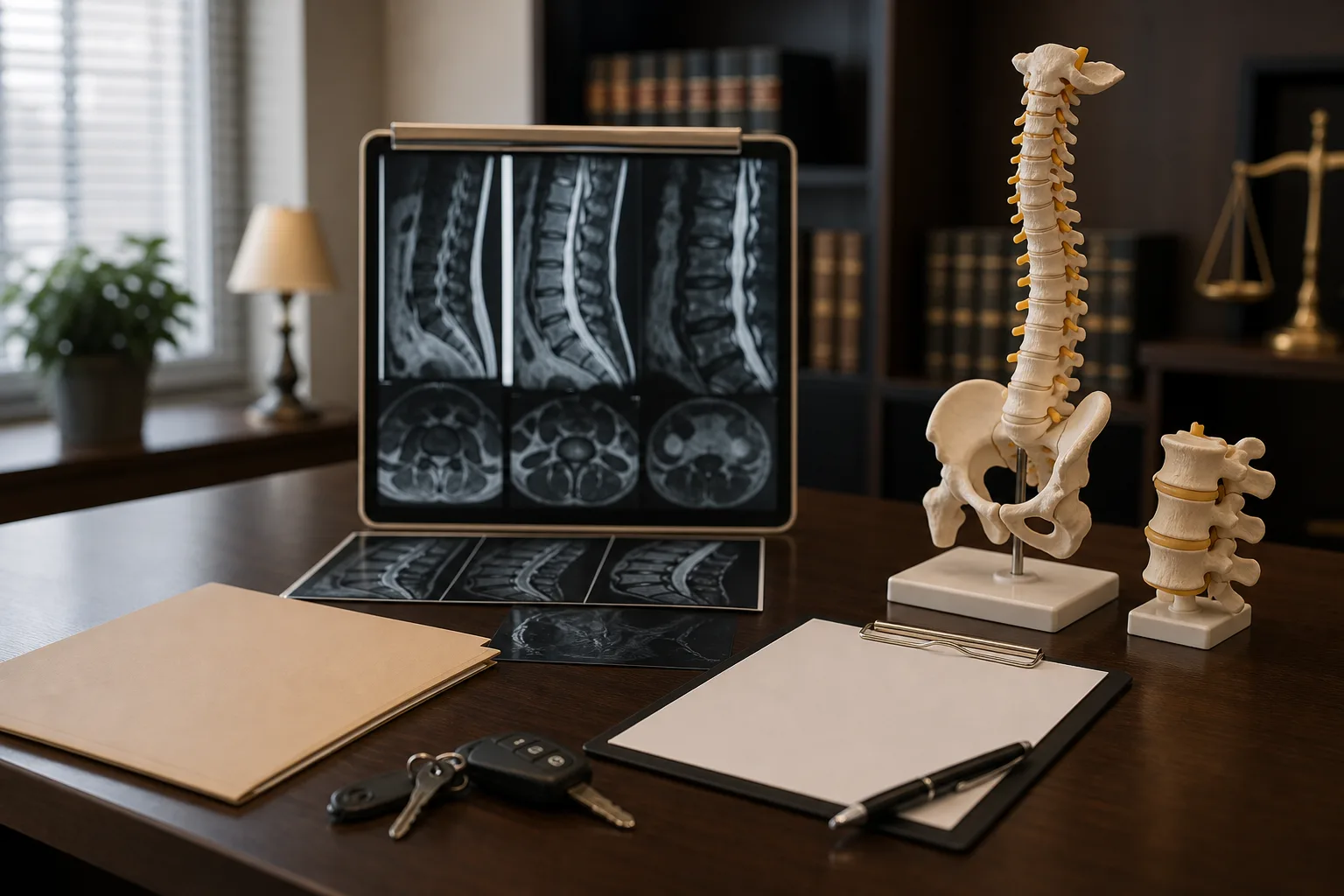
Spinal stenosis is a medical diagnosis. The injury claim is a proof problem. Insurance companies often point to “degenerative stenosis” on an MRI and argue the crash did nothing. Injured people often know the practical truth: they were working, driving, sleeping, and living normally before the wreck, and afterward they had radiating pain, numbness, weakness, balance problems, or treatment they never needed before.
Key takeaways
- Spinal stenosis means narrowing in the spine that can pressure nerves or the spinal cord; MedlinePlus explains that symptoms can include neck or back pain, numbness, weakness, cramping, arm or leg pain, and leg symptoms, and a clinical review in StatPearls/NCBI Bookshelf[1] describes lumbar spinal stenosis as narrowing that can compress neural structures.
- A crash can aggravate or activate a pre-existing condition even if imaging shows degeneration.
- Before-and-after function is often the most important proof: work, sleep, walking, lifting, driving, hobbies, and treatment history.
- Red-flag symptoms like progressive weakness, numbness, gait problems, bowel/bladder changes, or severe radiating pain need prompt medical attention.
- Indiana injury claims often turn on causation, medical records, prior records, imaging, and provider opinions.
What is spinal stenosis?
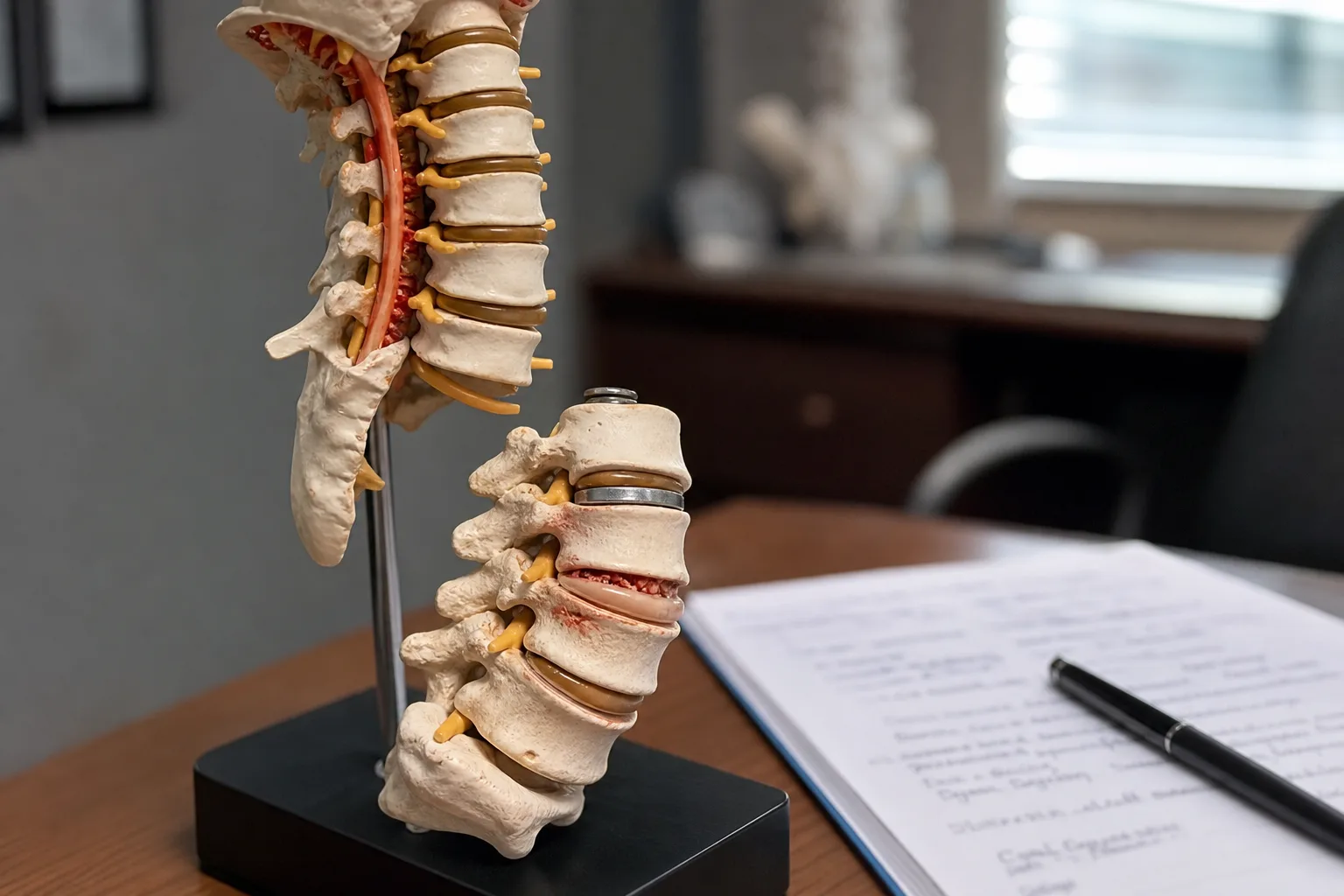
Spinal stenosis means the spaces in the spine narrow enough to put pressure on nerves or the spinal cord. MedlinePlus[2] describes stenosis as narrowing in the spine that can pressure nerves and cause pain. It is more common in people over 50, but younger people with a spine injury or a narrow spinal canal can also be at risk.
Symptoms vary by location. Cervical stenosis can involve neck pain, arm symptoms, hand weakness, balance problems, or coordination changes. Lumbar stenosis can involve low back pain, leg pain, numbness, cramping, weakness, or symptoms that change with standing and walking.
Cause versus aggravate: the distinction that matters
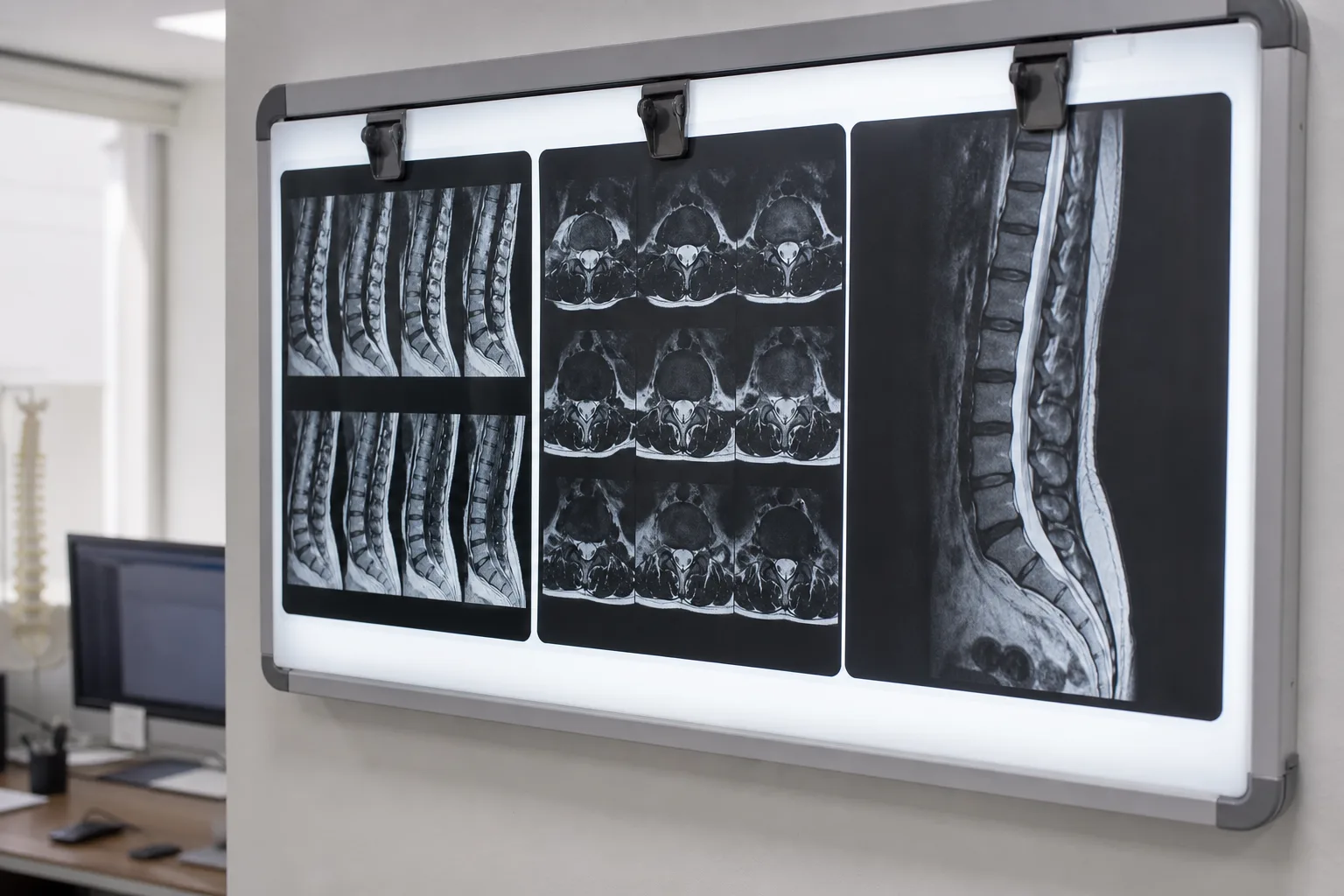
Insurance adjusters like simple labels: “degenerative” means not crash-related; “traumatic” means crash-related. Real cases are not that tidy. Many adults have some degeneration before a crash. The legal and medical question is whether the collision caused a new injury, aggravated an old condition, accelerated symptoms, or changed the treatment path.
Examples include a person with mild pre-existing narrowing who becomes symptomatic after impact, a disc injury that worsens already tight nerve space, inflammation that triggers radicular pain, or trauma that turns manageable back pain into disabling leg symptoms. The proof comes from medical records, imaging comparison, history, examination findings, and provider opinions.
Symptoms that should be taken seriously after a crash
- pain radiating into an arm or leg;
- numbness, tingling, burning, or electric-shock sensations;
- weakness, foot drop, grip problems, or clumsiness;
- balance changes or trouble walking;
- neck or back pain that worsens despite conservative care;
- bowel or bladder changes, saddle numbness, or rapidly worsening weakness.
Those symptoms should be evaluated medically. This article cannot diagnose you. It can only explain why documentation matters if symptoms began or worsened after a collision.

Why insurers fight spinal stenosis claims
Stenosis claims create familiar insurance defenses. The carrier may argue the MRI shows age-related degeneration, the crash was too minor, symptoms were delayed, prior records mention back pain, or treatment was excessive. Those arguments are common in neck and back injury cases.
The response is a disciplined proof package: prior medical records, post-crash records, MRI reports, exam findings, therapy notes, pain-management records, work restrictions, missed wages, and before-and-after witness statements. An experienced Fort Wayne car accident lawyer can help gather and organize that proof. Our pages on back and neck injuries and treatment gaps in Indiana injury claims explain why consistency matters. You can use our Indiana car accident settlement calculator to organize the factors that may affect a claim’s value; it is an educational tool, not a promise of any result.
What evidence helps prove aggravation?
| Evidence | Why it matters |
|---|---|
| Pre-crash records | Shows whether stenosis was symptomatic, treated, stable, or unknown before the collision. |
| Post-crash records | Connects symptoms, examination findings, referrals, restrictions, and treatment to the crash timeline. |
| Imaging | MRI/CT findings can show narrowing, disc issues, nerve compression, or changes from prior imaging. |
| Before-and-after witnesses | Family, coworkers, and friends can describe functional changes that records may not capture. |
| Provider opinion | A treating physician or specialist can explain whether the crash aggravated the condition or changed treatment needs. |

Can you recover if you had spinal stenosis before the crash?
Possibly. A pre-existing condition does not automatically defeat an Indiana personal injury claim. The issue is whether the crash caused a new injury or made the pre-existing condition worse. Insurers are allowed to investigate prior medical history, but they are not allowed to ignore a real aggravation just because an MRI uses words like “degenerative.”
Before-and-after proof is powerful. Could you work full shifts before the crash? Walk the grocery store? Sleep through the night? Lift your child? Drive without leg numbness? If those things changed after the wreck, make sure the medical records and claim documents tell that story accurately. Our article on why low-impact crashes can still cause serious pain is the natural next read if that page is available; otherwise, start with our Fort Wayne personal injury attorney overview.
Deadlines and claim strategy
Most Indiana personal injury lawsuits are subject to a two-year deadline under Indiana Code § 34-11-2-4[3]. But stenosis claims should not wait because the medical timeline is built in the first weeks and months. Delayed care, missed appointments, and unclear symptom history give insurers arguments.
Indiana comparative fault rules can also matter if the insurer blames you for the crash. See our guide to Indiana’s 51% fault rule for how fault percentages can affect recovery.

Frequently asked questions
Can whiplash make spinal stenosis worse?
A neck injury can aggravate symptoms in someone who already has cervical narrowing. Whether it did in a specific case depends on symptoms, exam findings, imaging, treatment history, and medical opinion.
What if my MRI says “degenerative stenosis”?
That phrase means the narrowing likely developed over time. It does not answer whether the crash aggravated it, triggered symptoms, or caused a related injury that changed your condition.
Should I get an MRI after a car accident?
That is a medical decision. Doctors may consider imaging when symptoms, neurological findings, pain pattern, or failed conservative care justify it. Follow your provider’s advice and report symptoms accurately.
What damages may be available?
Depending on proof, damages may include medical bills, future treatment, lost wages, reduced earning ability, pain and suffering, functional limitations, and out-of-pocket costs. The value depends on the facts, insurance, causation proof, and recovery.
Bottom line
A car accident may not be the original reason spinal stenosis exists, but it can still be the reason symptoms start, worsen, or require treatment. If the crash changed your life, the claim needs a careful medical timeline, prior-record review, and causation analysis. Delventhal Law Office can review the crash facts, medical records, and insurance issues and help you understand the next step.
This article is general information about Indiana law and injury claims. It is not medical advice, legal advice, or a substitute for evaluation by a qualified medical provider or attorney.