What Happened
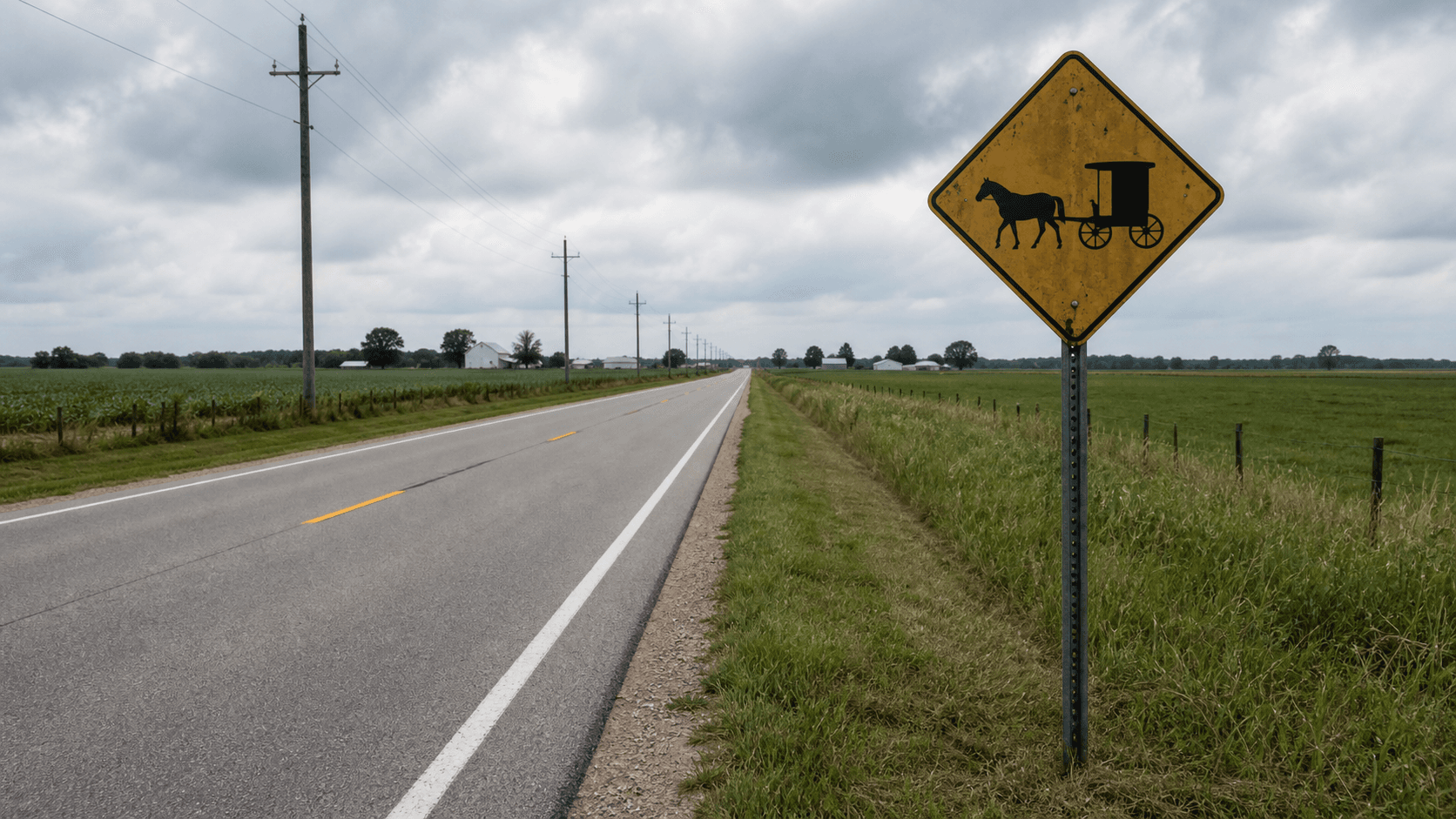
Three people, including a five-month-old baby, were hospitalized after a pickup truck struck a horse-drawn buggy from behind on State Road 9 in rural LaGrange County.
According to LaGrange County law enforcement as reported by WNDU (16 News Now)[1], and corroborated by WSBT[2] and ABC57[3], the crash happened just before 3:00 p.m. on Wednesday, July 22, 2026, in the 3000 block of South State Road 9, just south of County Road 300 South. This is an open stretch of a two-lane state highway in LaGrange County's Amish country, a corridor that carries both motor-vehicle and horse-and-buggy traffic.
Investigators reported that a southbound Ford F-150, driven by a 77-year-old Wolcottville man, rear-ended a southbound horse-drawn buggy. The impact ejected the buggy's operator, a 25-year-old woman, and one of the two children who were with her; the other child remained in the buggy until it came to a stop. All three buggy occupants were taken to a hospital: the woman with back injuries, a two-year-old boy with injuries described as being to his whole body, and a five-month-old girl with head injuries. The driver of the pickup was not hurt and told police he did not see the buggy before the crash. No names have been released. The crash was first publicly reported on July 24 and remains under investigation.
This post is general Indiana legal information framed by the publicly reported facts above. Because the people involved include very young children and no names have been released, this discussion deliberately does not identify any individual or family. It is not a comment on the conduct of any person involved, an opinion on civil or criminal liability, or legal advice on any particular claim, and it is not intended as solicitation of any individual or family. It will be updated as the investigation and the official crash report become part of the public record.
What Should Accident Victims Do Next?
When a buggy is struck by a motor vehicle and children are hurt, the practical and legal steps matter early, often while a family's whole attention is still on the hospital. The points below are the ones that tend to shape these cases.
Medical care comes first, and the medical record carries the case. Head injuries to an infant and whole-body injuries to a toddler can have a treatment arc that no one can predict on day one: imaging, specialist follow-up, rehabilitation, and monitoring for effects that only become clear over time. Keeping a complete record of providers, bills, and out-of-pocket costs is the foundation of any later claim, and for a very young child that record may need to support a long-term projection rather than a few weeks of expenses.
Understand that each child's claim belongs to the child. In Indiana, an injury claim for a minor is the child's own claim. A parent or guardian pursues it on the child's behalf, and Indiana courts supervise settlements involving minors so that the recovery is protected for the child. When more than one person is hurt in the same crash, each injured person, the adult operator and each child, has a separate claim, and those claims can compete for the same limited insurance.
Obtain the official crash report. Indiana crash reports generally become available through the State of Indiana's BuyCrash portal once the investigating agency uploads them, and a request under the Indiana Access to Public Records Act (Indiana Code 5-14-3[4]) is the standard route when a report does not surface through routine channels. Here LaGrange County law enforcement is the lead investigating agency, and its findings on the following distance, the driver's line of sight, and the point of impact will be central.
Help preserve evidence before it disappears. Physical evidence in a rear-end crash is perishable. The pickup's event data recorder ("black box") can record pre-impact speed, braking, and throttle, often powerful proof of whether a following driver slowed at all. The vehicles, the damage to the buggy, marks on the roadway, and any nearby camera or doorbell footage can be lost, repaired, or overwritten within weeks. A written preservation request to the insurer and the tow yard, sent early, is usually what keeps that evidence available.
Identify every insurance policy that might apply. Three seriously injured people, two of them very young children, can easily exceed a single private auto policy; Indiana's minimum liability limits are just 25,000 dollars per person and 50,000 per accident. That makes the rest of the coverage picture essential: uninsured/underinsured motorist coverage on any policy in the injured occupants' household, medical-payments coverage, and health insurance. Because a buggy is not an insured motor vehicle in the ordinary sense, sorting out which household coverages apply to buggy occupants injured by a car is a question worth asking early rather than assuming there is nothing beyond the at-fault driver's policy. Anyone weighing these questions may want to consult a Fort Wayne rear-end accident attorney about which coverages might apply.
Know that a child's deadline is different. Indiana's general personal-injury statute of limitations is two years (Indiana Code 34-11-2-4[5]), which for a July 22, 2026 crash would run to roughly July 22, 2028 for an adult such as the buggy operator. For children, Indiana Code 34-11-6-1[6] tolls the limitations period during minority, in practical terms, a young child's claim generally remains open until two years after turning 18, though current authority should be confirmed rather than assumed. That is a real protection, but it is not a reason to wait: vehicle data, witnesses, and scene evidence disappear on their own schedule, long before any legal deadline.
Why Location Matters in Indiana Injury Claims
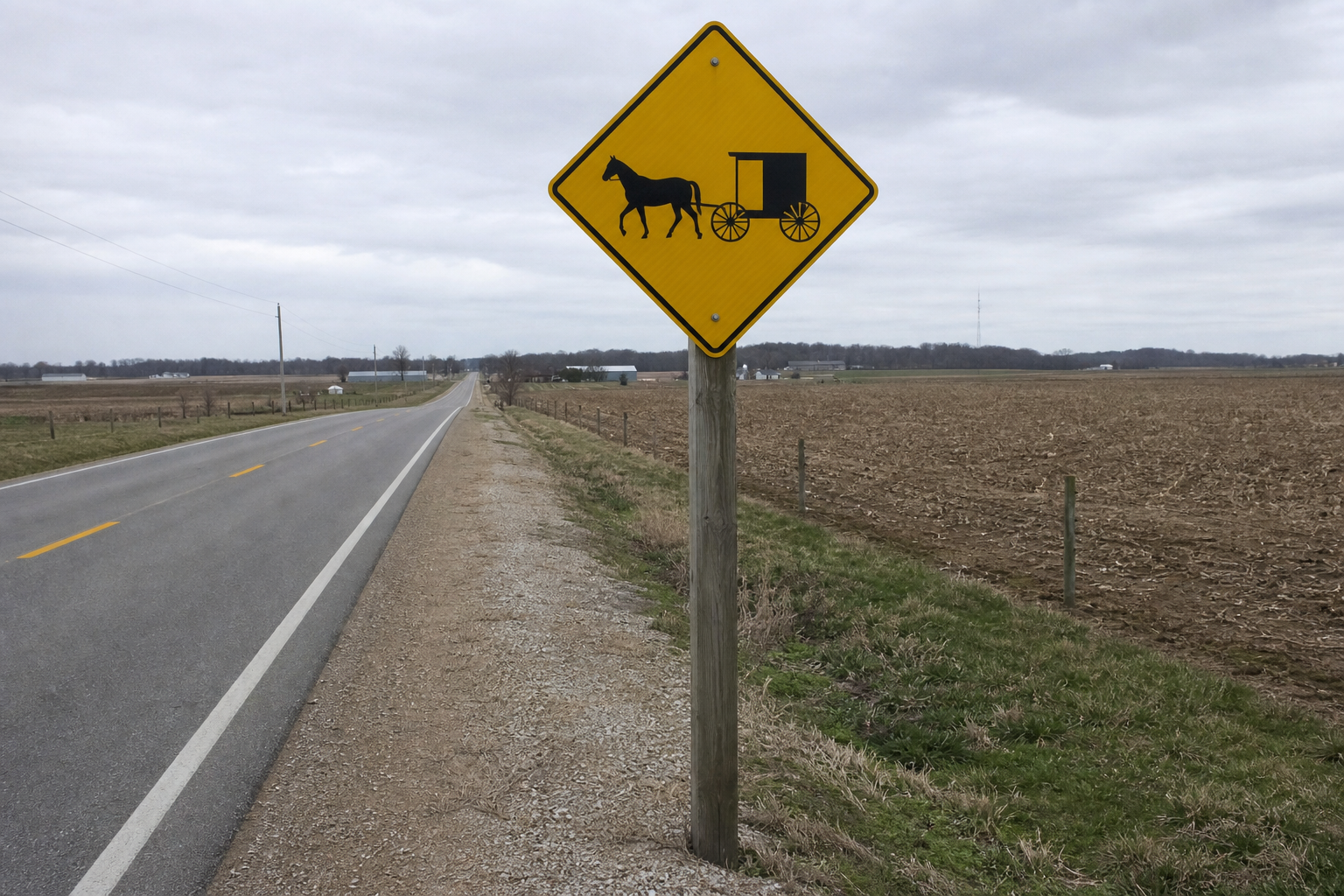
This crash happened on South State Road 9 in rural LaGrange County, just south of County Road 300 South, an open stretch of a two-lane state highway that runs through one of the largest Amish communities in Indiana. Location shapes an Indiana injury claim in concrete ways.
Shared-use rural highways set the duty of care. LaGrange County's roads regularly carry horse-drawn buggies alongside cars and trucks, and State Road 9 is a known buggy corridor. A horse-drawn buggy lawfully operated on a public road is a slow-moving vehicle that other drivers must be prepared to encounter and pass safely. Indiana law requires motorists to keep a proper lookout, maintain a safe following distance, and keep their vehicle under control, duties that apply with particular force where slow-moving buggies are a routine and foreseeable part of traffic.
A rear-end collision carries a strong presumption against the following driver. In Indiana, the driver who strikes another vehicle from behind generally bears a heavy burden to explain how the collision was not their fault, because the following driver controls the speed and spacing of their own vehicle. A statement that a driver simply did not see a buggy ahead of them, on an open road in daylight, tends to point back to the duties to look out and to keep a safe distance rather than away from them. Whether and how that presumption applies here is ultimately for the investigation and, if it comes to it, a court to weigh.

Occupants of the vehicle that was struck do not carry the fault. Indiana's Comparative Fault Act (Indiana Code 34-51-2[7]) bars recovery by a claimant more than fifty percent at fault and reduces recovery proportionally below that. The occupants of a buggy that is lawfully traveling in its lane and is struck from behind generally have little or no fault to allocate, and young children are not held to an adult standard of care at all. That makes injured buggy passengers, especially children, among the more legally straightforward claimants in Indiana injury law; in these cases the obstacle is rarely fault, it is the amount of insurance available.
Rural location changes the response and the venue. An open rural highway means longer EMS response and transport times, and it places LaGrange County law enforcement as the investigating agency and the LaGrange Circuit and Superior Courts as the civil forum. If a crash ever raised a question of roadway design or signage on a state highway, different notice rules and a different road authority, the State of Indiana, would come into play, and the Indiana Tort Claims Act's short notice deadlines would have to be evaluated early. On the reported facts the stated issue is a following driver who did not see the buggy, but the investigating agency and venue are set by where the crash happened.
Whether the driver was working matters, too. The purpose of the pickup driver's trip on a Wednesday afternoon has not been reported. If a driver is working at the time of a crash, their employer may share responsibility and additional commercial coverage may apply. That is an open question here, not a conclusion, but it is one of the first things worth checking, because it can change the entire insurance picture. Families sorting through these questions sometimes find it helpful to review general guidance on what happens if the at-fault driver was working when the crash occurred.
How Delventhal Law Office Can Help
Chad Delventhal and the Delventhal Law Office represent people seriously injured in motor-vehicle crashes across Northeast Indiana, including LaGrange County and the Topeka and Shipshewana area. Crashes between motor vehicles and horse-drawn buggies present issues that many drivers and families never expect to face: vulnerable occupants, very young children, and questions about what coverage reaches people who were riding in a buggy rather than a car.
For families trying to understand a serious crash like this one, the firm can help with the work these cases require: obtaining the LaGrange County crash report and following the investigation; making Indiana Access to Public Records Act requests where records do not come through routine channels; moving quickly to preserve the pickup's event-data-recorder information and the physical scene evidence before they are lost; identifying every applicable liability, uninsured/underinsured-motorist, medical-payments and health policy across the household; checking whether the at-fault driver was working at the time so that any employer responsibility and commercial coverage are not missed; addressing court approval of any minor's settlement and the protection of a child's recovery; and calendaring both the two-year adult deadline and the tolled deadlines that apply to children's claims. Anyone affected by a similar crash can review the firm's Fort Wayne accident attorney page or the Fort Wayne wrongful death attorney page for related information, and people in LaGrange County and across Northeast Indiana can request a free case evaluation or see the firm's service area to reach the Delventhal Law Office in Fort Wayne for a confidential, no-obligation conversation about their rights and options.
This post is based on public reporting and law-enforcement statements as of the publication date. The investigation is ongoing and facts may change as more information becomes available. Nothing in this post is legal advice, and reading it does not create an attorney-client relationship with Delventhal Law Office.