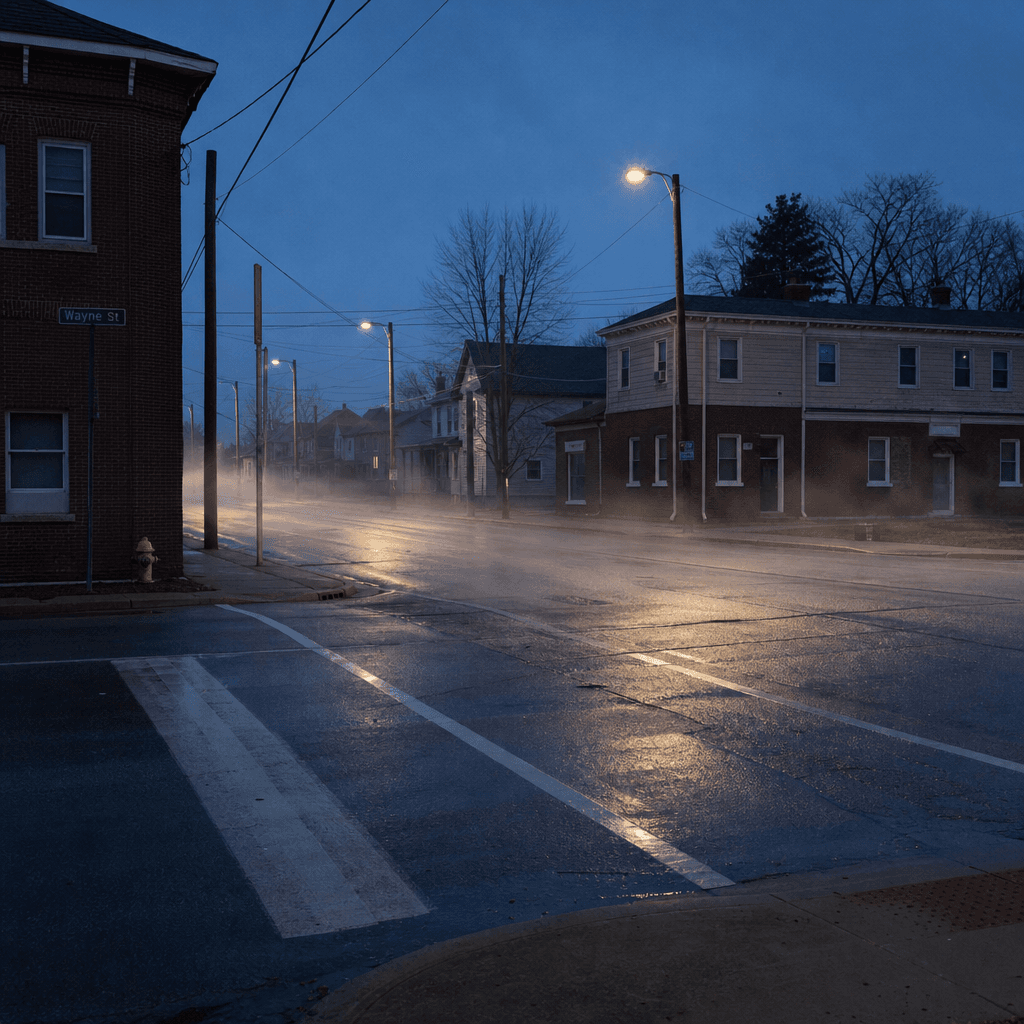
The Allen County Coroner's Office has identified the pedestrian killed in an overnight hit-and-run at the intersection of S. Hanna Street and E. Sherwood Terrace on the southeast side of Fort Wayne. According to WANE 15[1], the coroner named the man who died as DaQuon Sincere Reed, 24, of Fort Wayne. This post updates an earlier report of the same crash, which occurred on Saturday, June 6, 2026, at approximately 2:30 a.m.
According to the reporting, the Fort Wayne Police Department found Reed unresponsive in the area of the crash, and he was pronounced dead at the scene. The Allen County Coroner's Office reported that he died of multiple blunt force injuries and ruled the manner of death an accident. The vehicle that struck him left the scene, and as of the coroner's announcement no driver had been publicly identified or charged. The Fort Wayne Police Department had earlier reported that speed and alcohol were believed to be contributing factors. WANE 15 reported that Reed's death marks the 17th traffic-related death in Fort Wayne in 2026. The Fort Wayne Police Department, the Allen County Prosecutor's Office, and the Allen County Coroner's Office remain involved in the investigation.
This post is general Indiana legal information framed by the publicly reported facts above. It is not a comment on the conduct of any party, an opinion on civil liability, or legal advice on any particular claim, and it is not intended as solicitation of any individual. The post will be updated as the status of the suspect driver, any charges, the source of any alcohol, and additional facts become part of the public record.
What Should Accident Victims Do Next?
After a fatal hit-and-run involving a pedestrian, the early steps a grieving family takes can preserve both the facts and the insurance coverage that may ultimately matter most, even while the driver remains unidentified or uncharged. Many of the considerations below mirror the issues covered in the firm's general guidance on hit-skip accidents in Fort Wayne and Allen County.
The first step is to request the official crash report. Indiana crash reports generally become available through the State of Indiana's BuyCrash portal once the investigating agency uploads the report, and a formal request under the Indiana Access to Public Records Act (Indiana Code 5-14-3[2]) is the standard mechanism where a report does not become available through routine channels. For this crash, the Fort Wayne Police Department is the investigating agency. The report, the officers' observations, any scene measurements, and the coroner's findings form the foundation for understanding what happened.
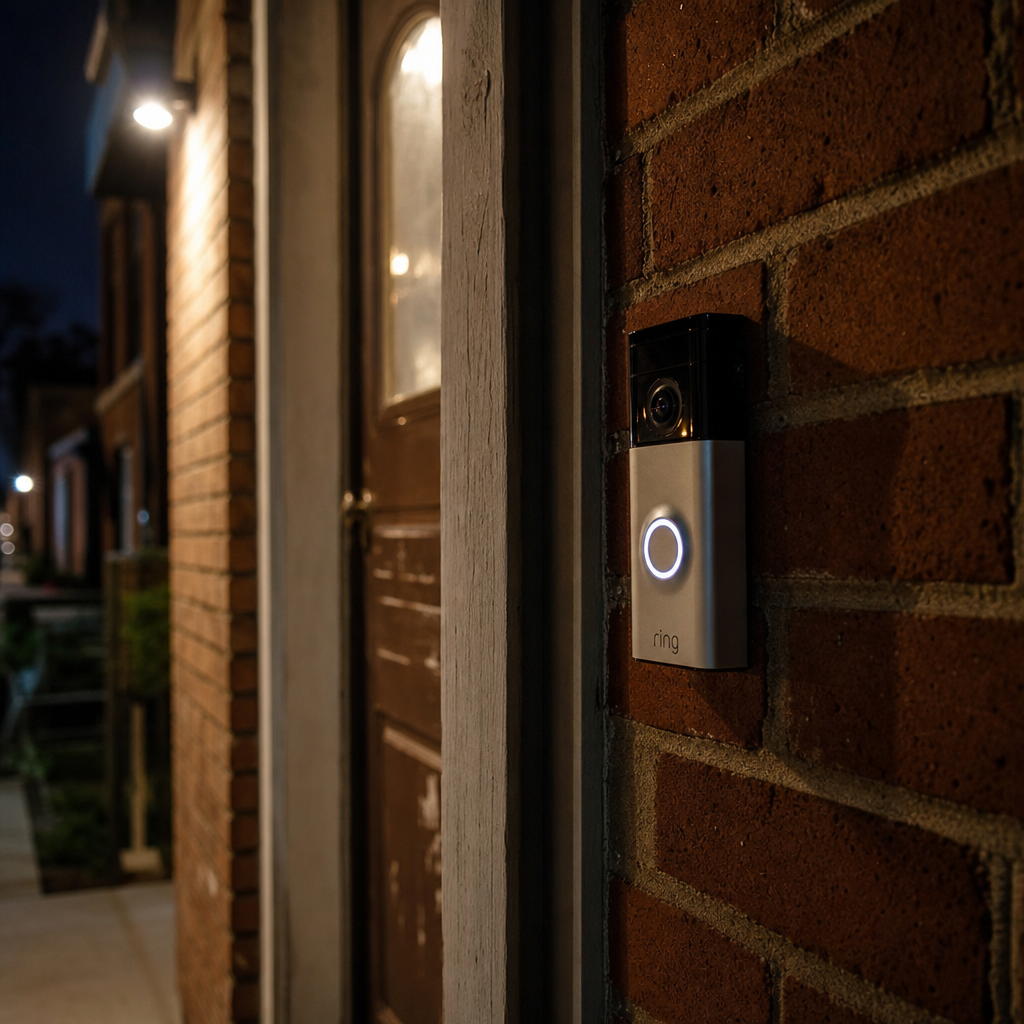
The second step is to preserve scene and video evidence quickly. An urban intersection like S. Hanna Street and E. Sherwood Terrace is often within range of residential, business, traffic, or doorbell cameras, and overnight footage can be overwritten within days. Photographs of the intersection, the lighting, any debris field, and the point of impact document conditions that change quickly. Because the striking vehicle fled, any footage that captured it, or a vehicle matching it leaving the area, can be central to identifying the driver, and an attorney can help ensure that evidence is identified and preserved before it disappears.
The third step is to focus on first-party insurance coverage, which is especially important in a hit-and-run. When the at-fault driver is unknown, unidentified, or uninsured, an injured person or a family may still have a path to recovery through their own uninsured-motorist (UM) coverage. Indiana law treats an unidentified hit-and-run driver as the equivalent of an uninsured driver for UM purposes in many circumstances, and a household's auto policies, including a policy held by the decedent or a resident relative, should each be reviewed. Underinsured-motorist (UIM) and medical-payments (MedPay) coverage, where carried, may also respond. A Fort Wayne uninsured motorist attorney can help identify every policy that might apply, and the notice and cooperation requirements each one imposes.
The fourth step is to evaluate whether anyone other than the driver may bear responsibility. Because the Fort Wayne Police Department reported that alcohol was believed to be a contributing factor, Indiana's Dram Shop Act (Indiana Code 7.1-5-10-15.5) is worth evaluating. That statute can, in narrow circumstances, allow a claim against a bar, restaurant, or other licensed establishment that furnished alcohol to a visibly intoxicated person who then caused harm. Whether such a claim exists depends entirely on facts that are not yet public (where and how the driver became impaired), which is one reason the underlying investigation matters.
The fifth step is to calendar the Indiana deadlines. Indiana imposes a two-year statute of limitations on personal-injury and wrongful-death claims under Indiana Code 34-11-2-4[3] and 34-23-1-1, which for a June 6, 2026, date of death runs to approximately June 6, 2028. A wrongful-death action in Indiana must generally be brought by the personal representative of the decedent's estate, so opening an estate is often a necessary early step. Uninsured- and underinsured-motorist claims are governed by the deadlines and conditions in the policy in force, which can require notice well before the statute of limitations expires.
Why Location Matters in Indiana Injury Claims
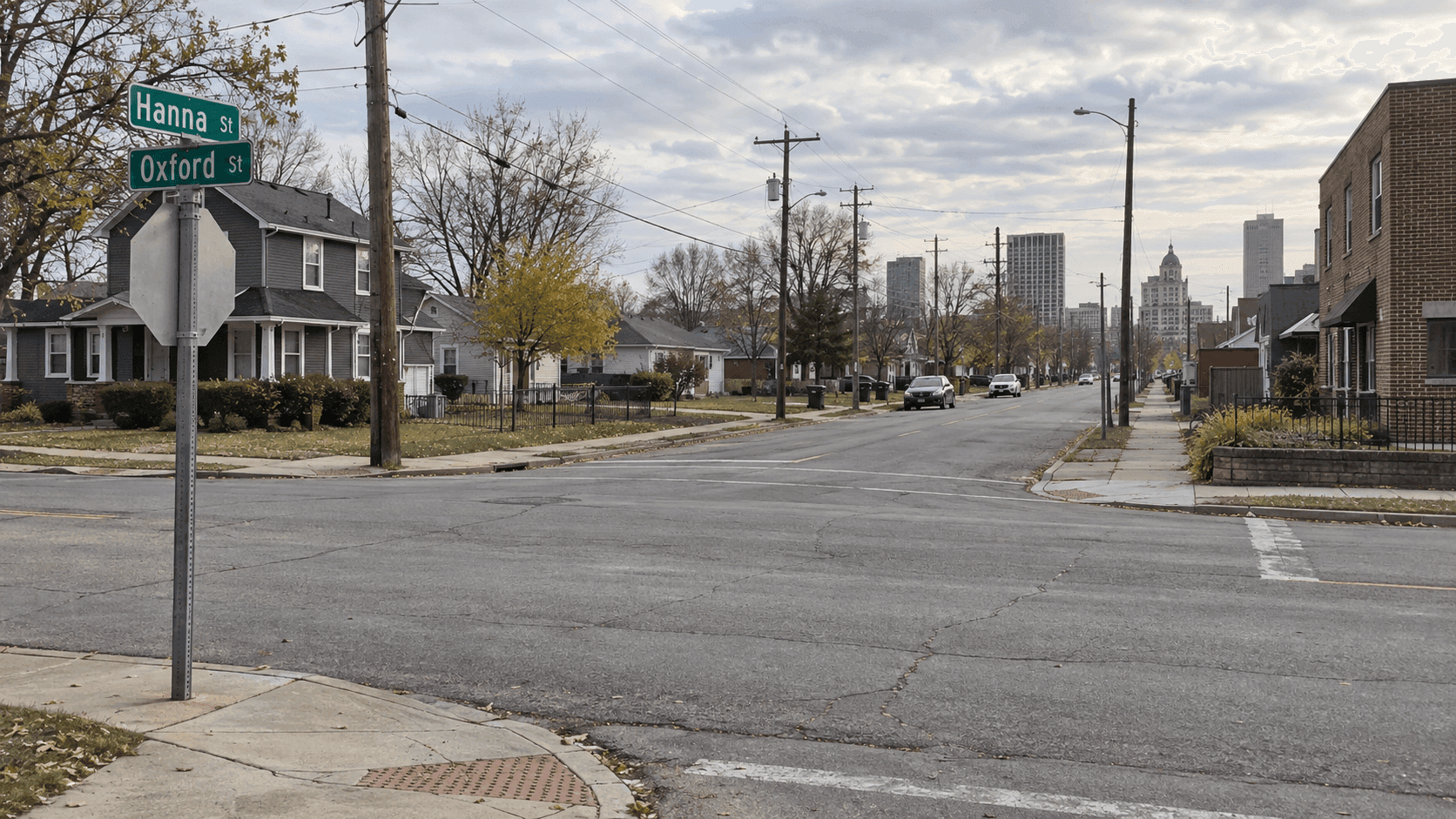
The crash occurred at the intersection of S. Hanna Street and E. Sherwood Terrace on the southeast side of Fort Wayne, Allen County, Indiana. The location shapes the claim in several ways.
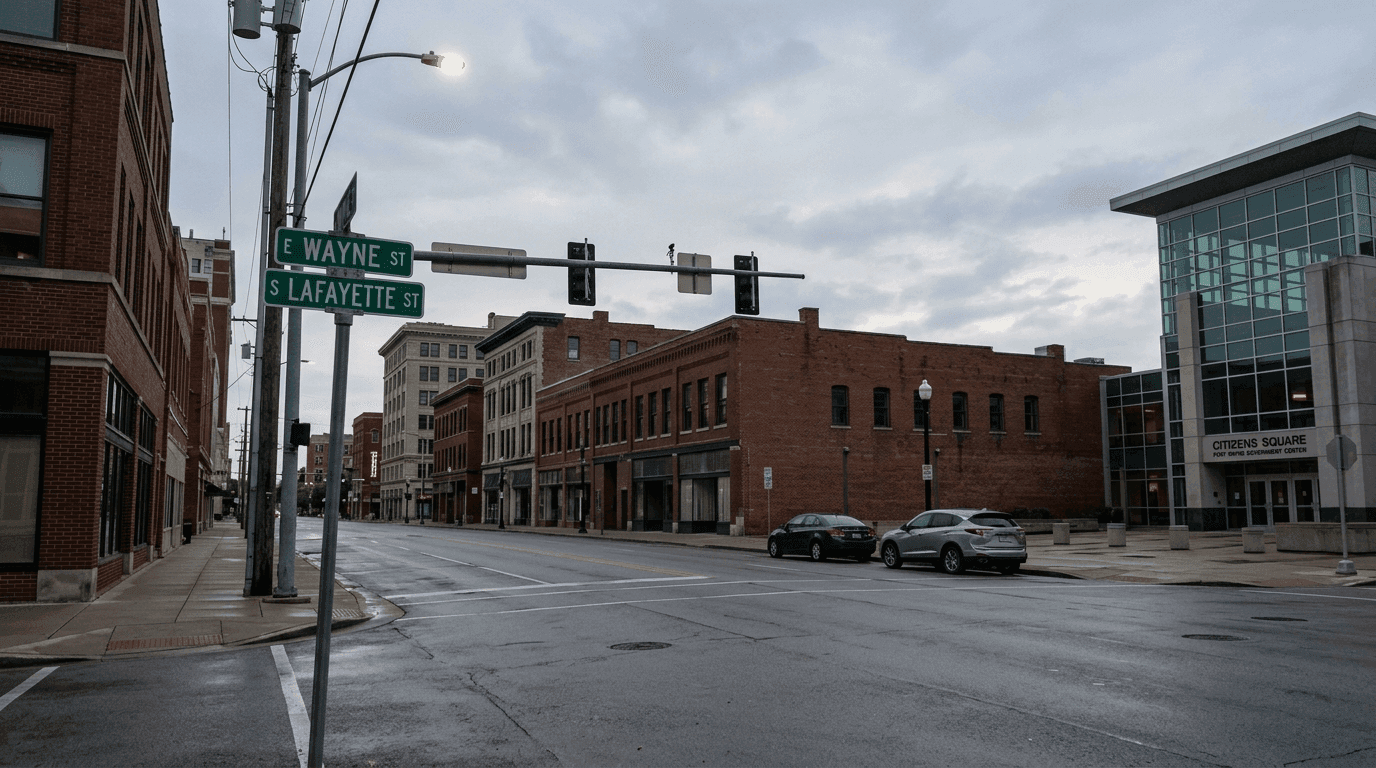
This was a surface-street intersection in an urban residential area, where a pedestrian was struck in darkness at roughly 2:30 a.m. Lighting, sight lines, the presence or absence of crosswalks and signals, and a pedestrian's location relative to the roadway are all facts that bear on how a pedestrian crash in Fort Wayne is evaluated. Where those facts are contested, Indiana's modified comparative-fault statute (Indiana Code 34-51-2[4]) becomes significant: in a claim against an at-fault driver, a person whose share of the fault exceeds fifty percent is barred from recovering, and a lesser share reduces the recovery proportionally. Because the at-fault driver here fled and any available recovery may depend on first-party uninsured-motorist coverage, the precise circumstances of where and how the pedestrian was struck carry real weight.
The crash lies in Allen County, which places the investigating agency as the Fort Wayne Police Department and the civil-jurisdictional courts as the Allen Circuit and Superior Courts in Fort Wayne. Allen County is at the center of the Delventhal Law Office service area, and the S. Hanna Street corridor on the southeast side is a route where serious overnight crashes recur. Because a fatal hit-and-run can require recovery through a family's own coverage and a careful look at any dram-shop angle, understanding exactly which Indiana policies and theories apply, and acting within their deadlines, is often the most consequential part of the claim.
How Delventhal Law Office Can Help
Chad Delventhal and the Delventhal Law Office represent Northeast Indiana pedestrians and the families of those killed by drivers, including in hit-and-run and suspected drunk-driving crashes where the at-fault driver is unknown, unnamed, or uninsured. For a crash like the one at S. Hanna Street and E. Sherwood Terrace, the firm handles the work this kind of case demands: prompt collection of the Fort Wayne Police Department crash report and the Allen County Coroner's findings; Indiana Access to Public Records Act requests where records do not become available through routine channels; rapid canvassing and preservation of nearby residential, business, and traffic-camera footage before it is overwritten; a careful review of every applicable uninsured-motorist, underinsured-motorist, and medical-payments policy in the household, along with the notice and cooperation requirements each imposes; an honest evaluation of any potential Indiana Dram Shop Act claim if the facts of how the driver became impaired emerge; assistance opening an estate so a wrongful-death action can be brought by the proper personal representative; and calendar management on the two-year Indiana personal-injury and wrongful-death deadline running to approximately June 6, 2028. Families in Allen County and across Northeast Indiana can reach the Delventhal Law Office in Fort Wayne for a free case evaluation about their rights and options.
This post is based on public reporting and official statements available at the time of writing. The investigation is ongoing, and details may change as additional facts become part of the public record. Nothing in this post is legal advice, and reading it does not create an attorney-client relationship with Delventhal Law Office, LLC.