What Happened
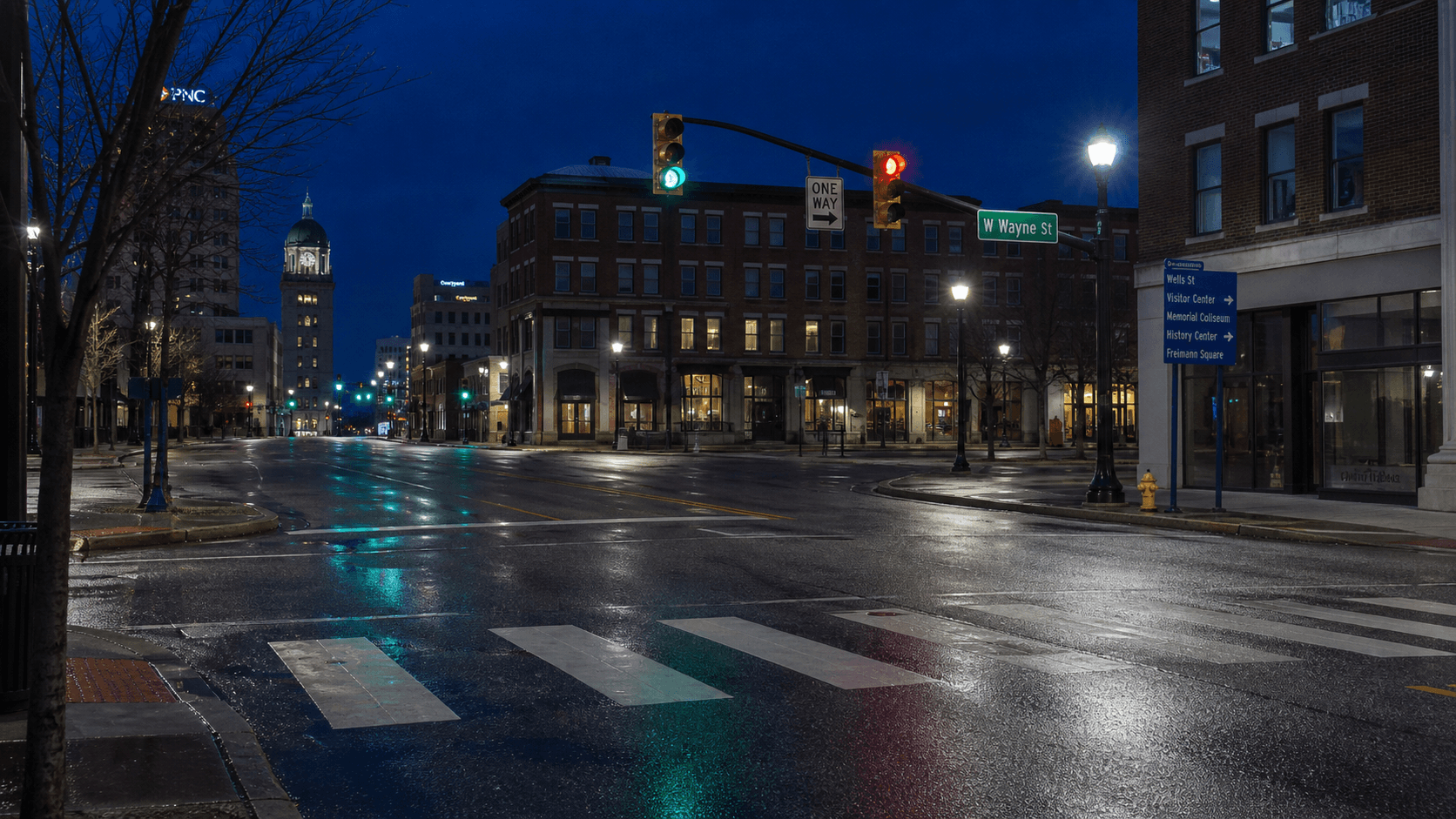
A man was critically injured late Wednesday, July 15, 2026, when a vehicle struck him at the intersection of South Lafayette Street and East Washington Boulevard in downtown Fort Wayne. According to 96.3XKE[1], citing Fort Wayne Police Department information, officers were dispatched at approximately 10:27 p.m. Police reported that a single vehicle was making a westbound turn onto East Washington Boulevard when it struck the pedestrian, who was in the roadway.
The man was transported by ground ambulance to a local hospital, where WOWO News/Talk 92.3 FM and 1190 AM reported[2] he remained in critical condition. Because of the severity of his injuries, the Fort Wayne Police Department's Fatal Accident Crash Team (FACT) assumed the investigation, with the department's Air Support Unit assisting in documenting the scene. Preliminary findings indicate that neither alcohol nor excessive speed is believed to have been a factor. No fault has been assigned, no citations or arrests have been reported, and the investigation remains ongoing. Neither the driver nor the pedestrian has been publicly identified.
Publicly reported facts at this stage are preliminary and incomplete. Notably, police have not reported whether the pedestrian was in a marked crosswalk, or what the signal phase was at the time, details that are central to how Indiana law analyzes a crash like this one.
This post is general Indiana legal information framed by the publicly reported facts above. It is not a comment on the conduct of any party, an opinion on civil liability, or legal advice on any particular claim, and it is not intended as solicitation of any individual or family. This post will be updated as the investigation, any determination of fault, citations, the official crash report, and additional facts become part of the public record.
What Should Accident Victims Do Next?
When a pedestrian is critically injured, the injured person and their family are focused on medical care, as they should be. The steps below are not urgent decisions about a claim. They are simply the things that, in our experience, tend to matter later and are easy to lose early.
Prioritize medical treatment and keep the record. A pedestrian struck by a vehicle often faces extended hospitalization, surgery, and a long recovery, frequently involving traumatic brain injury or orthopedic trauma. The medical record built along the way becomes the most important documentation of the harm done. Tracking providers, bills, and out-of-pocket costs protects both the patient's care and any later claim.
Obtain the official crash report and stay connected to the investigation. In Indiana, crash reports generally become available through the State of Indiana's BuyCrash portal once the investigating agency uploads them, and a request under the Indiana Access to Public Records Act (Indiana Code 5-14-3[3]) is the standard route where a report does not appear through routine channels. Here, the Fort Wayne Police Department's Fatal Accident Crash Team is investigating. FACT's reconstruction findings, particularly on the vehicle's path, the pedestrian's position, and the signal phase, will be central.
Help preserve evidence before it disappears. At a downtown intersection, the proof that matters most vanishes fastest. Security and business camera footage near Lafayette Street and Washington Boulevard is often overwritten within days. Traffic-signal timing data, the vehicle's event data recorder, and physical scene evidence are all perishable. In a case where crosswalk status is the pivotal unreported fact, video is frequently the only thing that answers it. Identifying and securing that footage early can decide the case.
Identify every insurance policy that might apply. A catastrophically injured pedestrian can exhaust a minimum Indiana liability policy (25/50) quickly. Uninsured/underinsured motorist coverage on the injured person's own household auto policy is a standard and often-overlooked avenue: it can apply even though the pedestrian was walking, not driving. Medical-payments coverage and health insurance may also matter, and each carries its own notice and cooperation requirements. If the vehicle turns out to have been a work vehicle or a rideshare unit, not established here, additional coverage could come into play.
Be aware of the Indiana deadlines. Indiana's general statute of limitations for personal-injury claims (Indiana Code 34-11-2-4[4]) is two years, which for a July 15, 2026, crash runs to approximately July 15, 2028. UM/UIM and MedPay claims are governed by policy terms and may carry shorter notice requirements. Nothing has to be decided immediately, but it helps to know the clocks are running.
Why Location Matters in Indiana Injury Claims
This crash happened at South Lafayette Street and East Washington Boulevard, a controlled intersection in the southeast quadrant of downtown Fort Wayne, Allen County, Indiana. Location shapes the legal picture in several concrete ways.
Crosswalk status is the decisive fact. Under Indiana Code 9-21-17-1[5] and the sections that follow, a driver making a turn must yield to a pedestrian lawfully within a crosswalk. Conversely, a pedestrian crossing outside a crosswalk must yield to vehicles on the roadway. Police described the pedestrian as being "in the roadway," a phrase that does not establish whether he was in a marked crosswalk. That single unreported fact does more to shape this analysis than anything else currently public, which is precisely why early evidence work matters so much.
Turning movements carry their own duty. Even where a pedestrian may bear some responsibility, a turning driver's duty to keep a proper lookout does not disappear. A driver turning left or right across a crosswalk is looking through a shifting field of view, often while watching for a gap in traffic. Indiana law does not excuse a failure to see what is there to be seen. With speed and alcohol preliminarily ruled out as to the driver, the analysis narrows toward failure to yield and failure to keep a proper lookout.
Indiana's modified comparative fault applies. Under Indiana Code 34-51-2[6], responsibility is divided among the parties. A claimant whose share of the fault exceeds fifty percent recovers nothing; a lesser share reduces the recovery proportionally. In a pedestrian case, this is where crosswalk status converts directly into dollars, and where an honest evaluation has to look squarely at both sides of the ledger rather than assume the pedestrian's position.
Downtown intersections have their own risk profile. The crash occurred in the dark, at approximately 10:27 p.m., at a downtown intersection where turning movements, pedestrian traffic, and street lighting all interact. The South Lafayette Street corridor has appeared in more than one serious pedestrian incident in the Fort Wayne area, which makes pedestrian safety along downtown arterials a continuing focus for community awareness and prompt investigation alike.
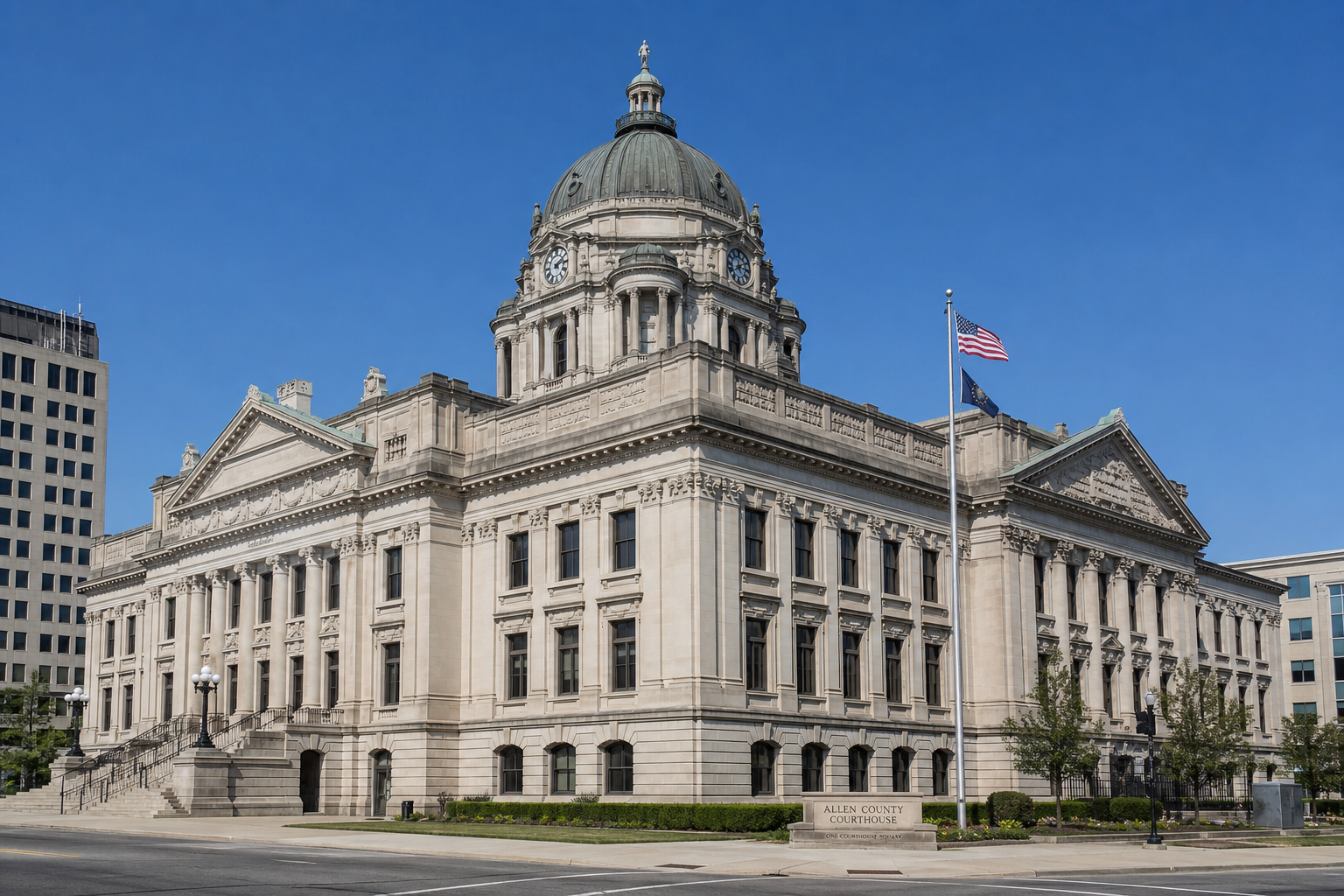
Allen County sets the venue. The location places the investigating agency as the Fort Wayne Police Department and the civil-jurisdictional courts as the Allen Circuit and Superior Courts in Fort Wayne.
How Delventhal Law Office Can Help
Chad Delventhal and the Delventhal Law Office represent people seriously injured in motor-vehicle and pedestrian crashes throughout Northeast Indiana, including catastrophic-injury cases in Fort Wayne and Allen County like this one downtown. The firm believes injured people and their families deserve a clear, honest assessment of what happened and what their options are, including a frank read on the facts that cut against a claim, not just the ones that help it. For those who want to understand a serious crash, the firm can help with the work this kind of case requires: obtaining the Fort Wayne Police Department and FACT crash reports and staying connected to the investigation; making Indiana Access to Public Records Act requests where records do not come through routine channels; early identification and preservation of downtown security-camera footage, signal-timing data, and scene evidence before they are lost; determining whether the striking vehicle was a personal, work, or rideshare unit; identification of every applicable liability, UM/UIM, MedPay, and health-coverage policy; and calendar management on the approximately two-year Indiana injury deadline running to about July 15, 2028. People in Allen County and across Northeast Indiana can consult a Fort Wayne pedestrian accident attorney or schedule a free case evaluation with the Delventhal Law Office in Fort Wayne for a confidential, no-obligation conversation about their rights and options. The firm's service area includes Allen County and communities across Northeast Indiana.
This post is based on public reporting and preliminary law-enforcement information. The investigation may still be ongoing, and facts summarized here may change as more information becomes available. Nothing in this post is legal advice, and reading it does not create an attorney-client relationship with Delventhal Law Office, LLC.
Update: Pedestrian Dies of Injuries, Identified as Jeffrey Scott Hill, July 22, 2026
The man struck at South Lafayette Street and East Washington Boulevard has died of his injuries. According to the Journal Gazette[7], citing an Allen County Coroner's Office news release, Jeffrey Scott Hill, 60, of Fort Wayne died on Saturday, July 18, of multiple blunt impact injuries, and the coroner ruled the manner of death accidental. The release identifies Hill's death as Allen County's 22nd traffic fatality of 2026, and reports that investigators believe he was facing homelessness at the time.
The report places the intersection next to The Rescue Mission and confirms that the driver was making a left turn onto Washington when the vehicle struck Hill, who was in the street. The Fatal Accident Crash Team's involvement, previously reported due to the severity of the injuries, is confirmed. What remains unreported publicly is whether Hill was in a marked crosswalk, and neither the driver's identity nor any citation or charging decision has been released. The matter now falls to review by the coroner, Fort Wayne police, and the Allen County Prosecutor's Office.
The facts reported in the original post above remain accurate as far as they go. With Hill's death now confirmed, any resulting civil claim moves from a personal-injury framework toward Indiana's wrongful-death statutes, discussed further below. The investigation into fault, and any charging decision, appears to still be ongoing.