What Happened
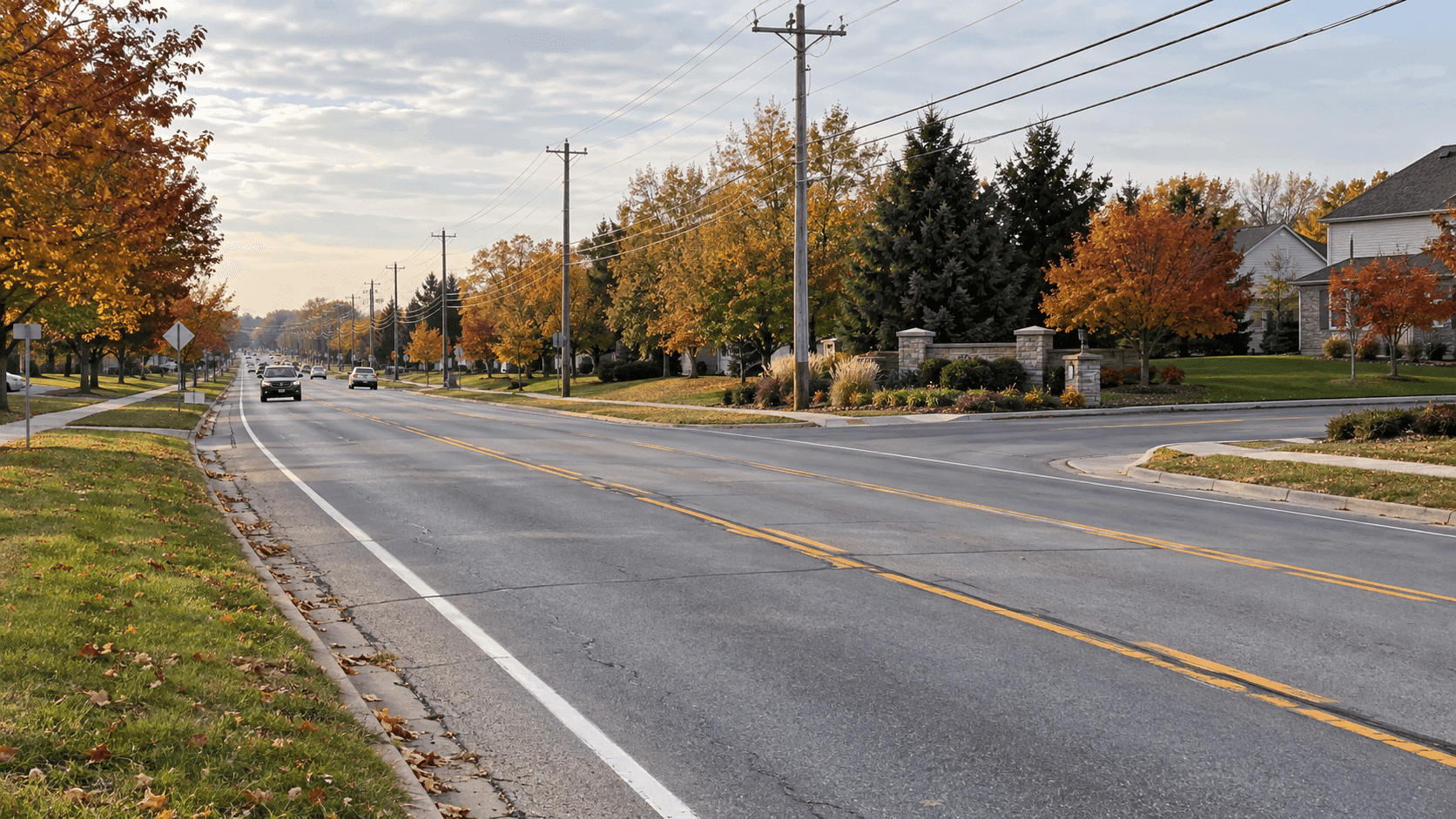
On Saturday, May 30, 2026, the Adams County Sheriff's Office[1] responded to a two-vehicle crash with serious injuries at the intersection of U.S. 27 and County Road 300 N in White River Township, in rural Adams County, Indiana. According to the Sheriff's Office, a 42-year-old Ossian woman driving east on County Road 300 N stopped at the intersection and then attempted to cross U.S. 27, believing the way was clear, and collided with a vehicle driven by a 38-year-old Decatur man traveling north on U.S. 27. The woman's vehicle continued east and rolled off the roadway into a field, and the man's vehicle flipped over on the roadway. The Ossian woman was taken to a hospital; the Sheriff's Office did not state whether the Decatur man was injured. As of the date of this draft, the crash remained under investigation, and no citations or charges had been publicly reported. Reporting on the incident has been published by WANE 15[2].
This post is general Indiana legal information framed by the publicly reported facts above. It is not a comment on the conduct of any party, an opinion on civil or criminal liability, or legal advice on any particular claim. The post will be updated as the Adams County Sheriff's Office report becomes available, as the injured parties' medical course is publicly reported, and as the public record otherwise develops.
What Should Accident Victims Do Next?
When a driver is seriously injured in a rollover crash at a rural highway intersection and the investigation is still open, the early steps an injured person or family takes can shape the eventual claim. Several steps are appropriate as soon as the injured person or the family is able to take them.
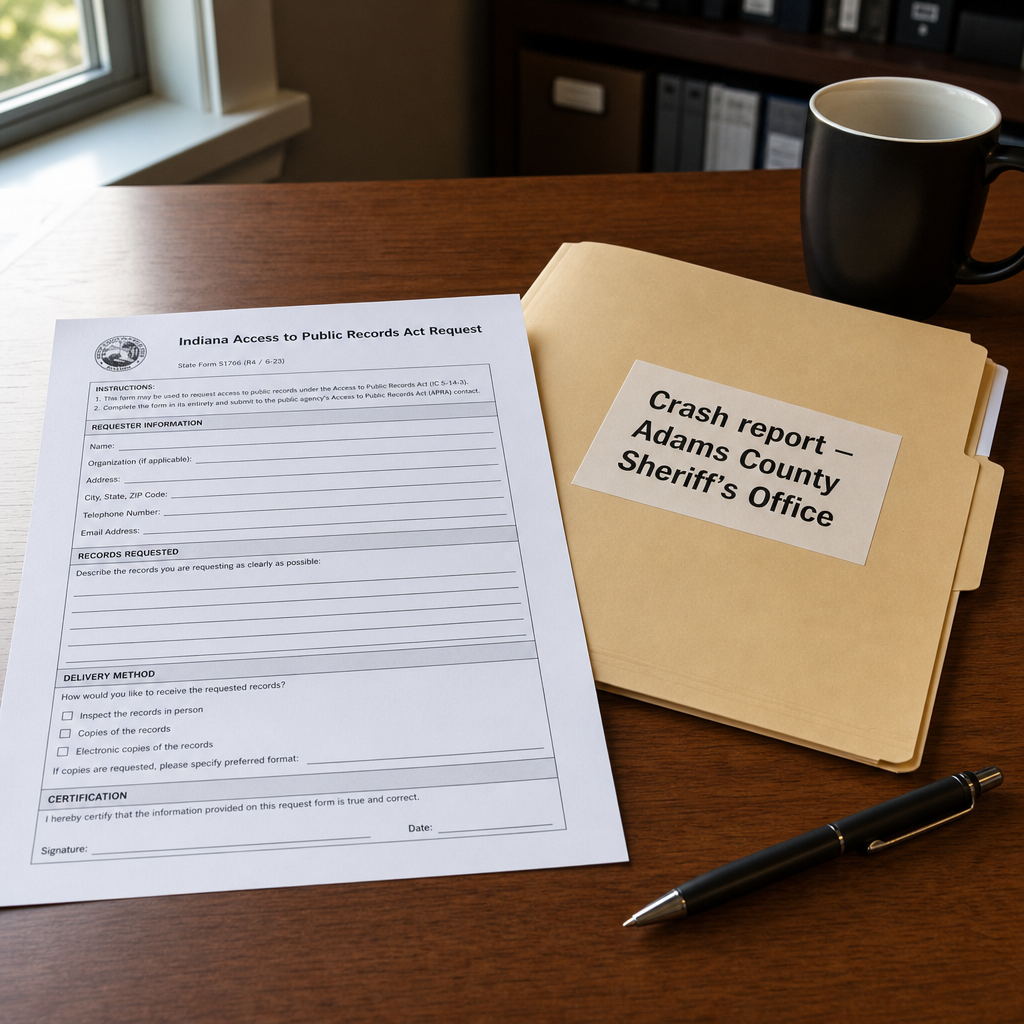
The first step is to request the official Adams County Sheriff's Office crash report. Indiana crash reports generally become available through the State of Indiana's BuyCrash portal[3] once the investigating agency uploads the report. Where a report does not become available through routine channels, a request under the Indiana Access to Public Records Act (Indiana Code 5-14-3[4]) to the Adams County Sheriff's Office is the standard formal mechanism. The report, the deputies' scene notes, the diagram, and any witness list are the foundation for the right-of-way analysis at a stop-controlled crossing of a through highway.
The second step is to preserve both vehicles in their post-crash condition before either insurer disposes of a damaged vehicle as a total loss. In a rollover crash, the vehicle's crush pattern, restraint systems, and any event data recorder carry physical and electronic evidence about speed, braking, and occupant protection. Where occupant protection, seat-belt performance, or a roof or restraint defect is later put at issue, that evidence must be preserved before the vehicles are repaired, salvaged, or scrapped. A written preservation request to each insurer and to any tow yard, impound facility, or salvage yard holding either vehicle is the standard early step.
The third step is to identify and preserve any third-party evidence about how the crash happened. At a rural highway intersection, sight-line obstructions, vegetation, and the position of the stop sign relative to the through lanes of U.S. 27 can all bear on what each driver could see. Any business, agricultural, or residential security cameras facing the U.S. 27 and County Road 300 N junction may have captured the moments before the collision, and such systems routinely overwrite within seven to thirty days, so preservation requests should issue quickly. Photographs of the intersection, the signage, and the sight lines, taken promptly, document conditions that change with the seasons.
The fourth step is to identify every potentially applicable insurance policy. Where one driver appears to have failed to yield the right-of-way, the injured party's recovery often runs first against that driver's liability coverage. Because rural Indiana drivers frequently carry only minimum or modest liability limits, it is important to determine early whether the at-fault driver's policy limits are adequate to the injuries. If they are not, the injured party's own underinsured-motorist coverage may be the difference between a partial and a full recovery, and uninsured-motorist coverage applies where an at-fault driver carried no insurance at all. Health insurance, medical-payments coverage, and any disability coverage should also be identified early.
The fifth step is to document the injuries and treatment course and to be cautious with recorded statements. A rollover crash can produce fractures, spinal and head injuries, internal injuries, and soft-tissue damage whose full extent takes time to emerge. The injured person should follow through on recommended treatment and keep records of medical expenses, missed work, and the practical impact on daily activities. An injured party is generally not required to give a recorded statement to the other driver's insurer before consulting counsel, and an early statement given before the medical picture is complete can be used to minimize a claim.
The sixth step is to calendar the Indiana deadlines. Indiana imposes a two-year statute of limitations on personal-injury claims under Indiana Code 34-11-2-4[5], which for a May 30, 2026, date of incident runs to approximately May 30, 2028. Uninsured-motorist and underinsured-motorist claims are governed by the contractual deadlines in the policy in force, which may differ from the personal-injury statute of limitations. Where any governmental theory might be developed — for example, an intersection-design, signage, or sight-line theory against the Indiana Department of Transportation[6] or the Adams County Highway Department — the Indiana Tort Claims Act imposes a 270-day notice requirement on claims against the State (Indiana Code 34-13-3-6[7]) and a 180-day notice requirement on claims against political subdivisions (Indiana Code 34-13-3-8[8]), which run much sooner. The firm’s guide to Indiana government tort claim notices explains why the correct public entity and notice recipient must be identified early.
Why Location Matters in Indiana Injury Claims
The crash occurred at the intersection of U.S. 27 and County Road 300 N in White River Township, in rural Adams County, Indiana, between the Decatur and Ossian corridors. Several location-specific factors shape the claim framework.

The intersection lies in unincorporated Adams County, which places the investigating agency as the Adams County Sheriff's Office and the civil-jurisdictional courts as the Adams Circuit and Superior Courts in Decatur. Adams County is within the Delventhal Law Office service area, and both drivers reported in this crash — an Ossian resident and a Decatur resident — are from the firm's Northeast Indiana service region.
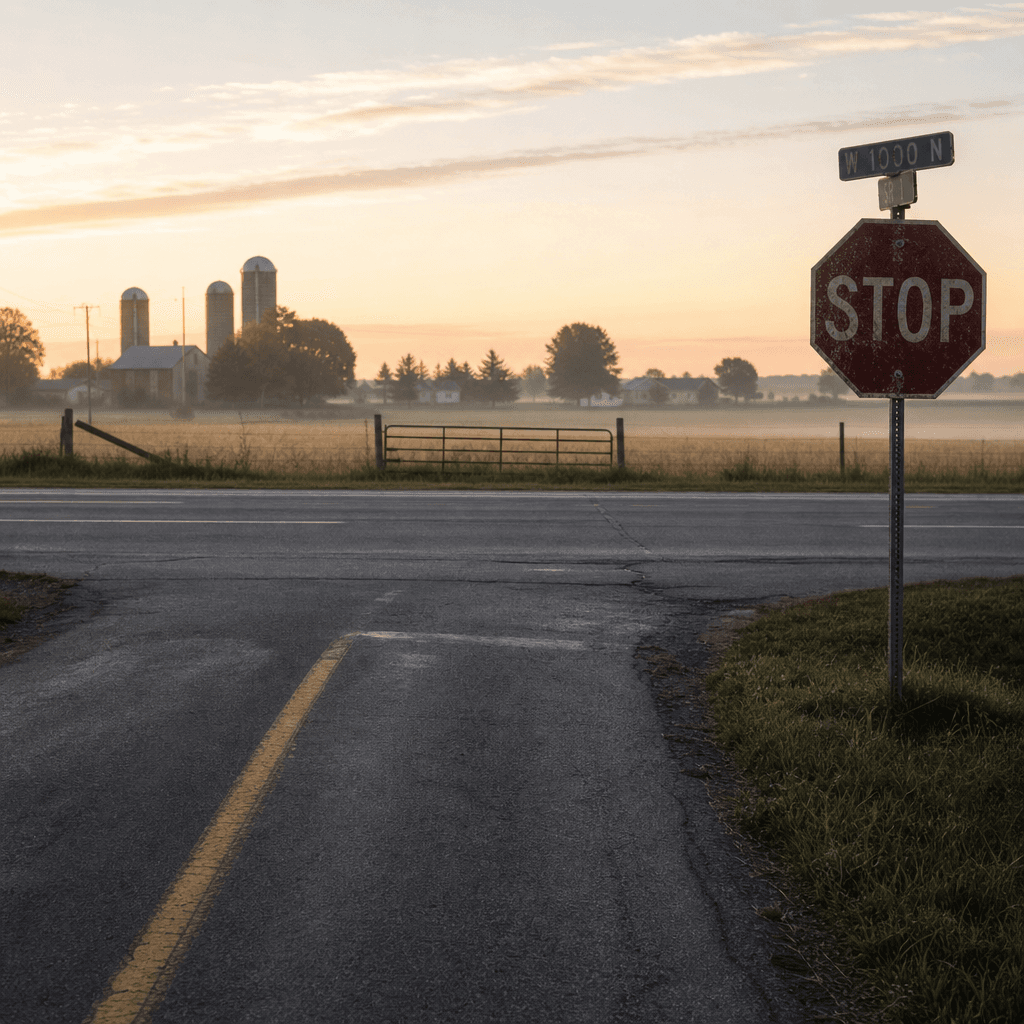
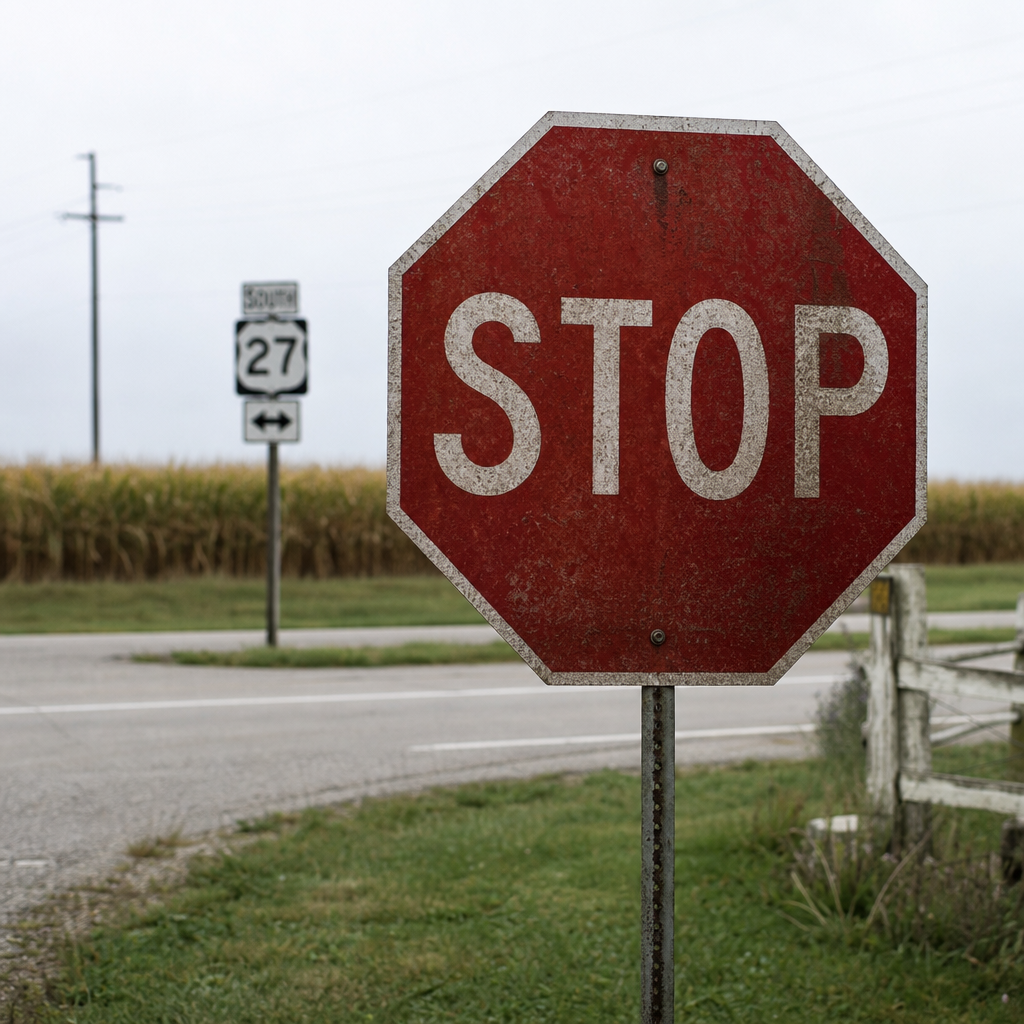
The intersection itself is a stop-controlled crossing where a county road meets a through state highway. U.S. 27 is a high-speed, north-south state highway, and County Road 300 N is the minor road controlled by a stop sign. Under Indiana's right-of-way rules, a driver stopped on the minor road who enters the intersection must yield to traffic on the through highway that is close enough to constitute an immediate hazard (Indiana Code 9-21-8-32[9] and related stop-sign provisions). Where, as reported here, a crossing driver stopped and then proceeded into the path of through traffic, the right-of-way analysis typically favors the driver who had the right-of-way on the highway — but that analysis still depends on speed, visibility, sight lines, and the precise sequence the crash report documents.
The rural-highway setting also bears on the practical investigation. Sight distance at a high-speed crossing can be affected by grade, crops, vegetation, and signage placement, and these conditions change with the season, which is why a prompt scene work-up and a public-records review of the intersection's design and crash history matter. Indiana's modified comparative-fault statute (Indiana Code 34-51-2[10]) governs the recovery: a claimant whose share of fault exceeds fifty percent is barred from recovery, and any allocation of fault below that threshold reduces the recovery proportionally. The firm’s Indiana 51% comparative-fault guide explains how that threshold works. That makes an early, accurate reconstruction of how this crossing collision unfolded especially important to protecting an injured party's claim.
How Delventhal Law Office Can Help
Chad Delventhal and the Delventhal Law Office represent Northeast Indiana drivers and passengers in injury claims arising from intersection and rollover crashes, including failure-to-yield and right-of-way disputes, serious-injury and catastrophic-injury matters, and uninsured-motorist and underinsured-motorist coverage disputes where an at-fault driver carries inadequate limits. For a crash like the one at U.S. 27 and County Road 300 N, the firm handles the work this kind of case demands: prompt collection of the Adams County Sheriff's Office crash report; Indiana Access to Public Records Act requests where records do not become available through routine channels; preservation letters to the insurers and to any tow yard, impound facility, or salvage yard holding either vehicle; preservation requests to the business, agricultural, and residential camera sources facing the U.S. 27 and County Road 300 N junction; a public-records work-up of the intersection's design, signage, and crash history; review of every applicable liability, underinsured-motorist, uninsured-motorist, health, and disability policy; and calendar management on the two-year Indiana personal-injury statute of limitations running to approximately May 30, 2028, along with any applicable uninsured-motorist and underinsured-motorist contractual deadlines.
If you or a family member were injured in an intersection or rollover crash on U.S. 27, a county road, or any roadway in Adams County or the surrounding Northeast Indiana counties, contact Chad Delventhal at the Delventhal Law Office in Fort Wayne for a free and confidential consultation. The firm works on a contingency-fee basis — there is no fee unless the firm recovers compensation — and the early steps of report collection, vehicle preservation, camera-source identification, and a full review of every applicable coverage, including underinsured-motorist coverage where the at-fault driver's limits may be inadequate, can matter substantially to the eventual recovery.
This post is based on publicly released information from the Adams County Sheriff's Office and WANE 15 as of the date of this draft. The Sheriff's Office investigation, the injured parties' medical course, and the public record are continuing to develop, and the crash remained under investigation as of this draft. The post will be updated as the public record develops. Nothing in this post is legal advice or creates an attorney-client relationship.
Sources
- Adams County Sheriff's Office (co.adams.in.us) ↩
- WANE 15 (wane.com) ↩
- BuyCrash portal (buycrash.com) ↩
- Indiana Code 5-14-3 (iga.in.gov) ↩
- Indiana Code 34-11-2-4 (iga.in.gov) ↩
- Indiana Department of Transportation (in.gov) ↩
- Indiana Code 34-13-3-6 (iga.in.gov) ↩
- Indiana Code 34-13-3-8 (iga.in.gov) ↩
- Indiana Code 9-21-8-32 (iga.in.gov) ↩
- Indiana Code 34-51-2 (iga.in.gov) ↩