What Happened
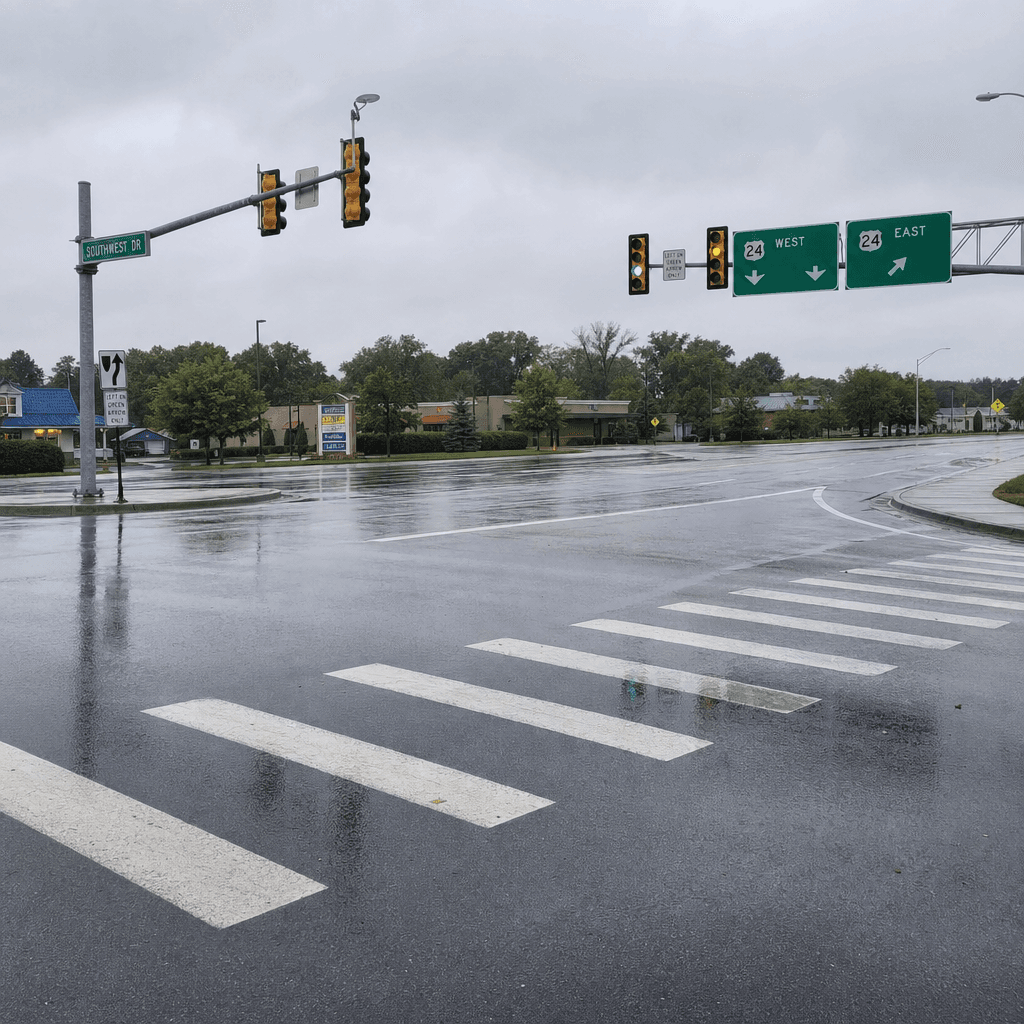
On the morning of Friday, May 29, 2026, the Fort Wayne Police Department responded to a motorcycle crash near the intersection of U.S. 24 and Homestead Road on the southwest side of Fort Wayne, in Allen County, Indiana. According to reporting from WANE 15[1], officers arriving on scene found a single motorcycle on its side in the roadway. The rider was initially classified at the scene under a fair-to-serious condition code, and the Fort Wayne Police Department later reported that the rider's injuries were non-life-threatening. Officers blocked the right lane of westbound U.S. 24 while the scene was cleared.
As of the date of this post, the cause of the crash had not been determined, no additional parties had been identified, and the rider's identity had not been publicly released. The incident has also been aggregated by Accident Data Center[2].
This is a separate incident from a same-morning southwest-side motorcycle crash involving a deer collision at West Jefferson Boulevard and Rolling Hills Parkway that was logged separately.
This post is general Indiana legal information framed by the publicly reported facts above. It is not a comment on the conduct of any party, an opinion on civil or criminal liability, or legal advice on any particular claim. The post will be updated as the Fort Wayne Police Department report becomes available, as the rider's medical course is publicly reported, and as the public record otherwise develops.
What Should Accident Victims Do Next?
When a rider is injured in a single-motorcycle crash on a busy Fort Wayne arterial and the cause has not yet been determined, the early steps you or your family take can shape the eventual claim, even where it is not yet clear whether another party contributed. Several steps are appropriate as soon as you are able to take them.
The first step is to request the official Fort Wayne Police Department incident report. Indiana crash reports generally become available through the State of Indiana's BuyCrash portal once the investigating agency uploads the report. Where a report does not become available through routine channels, a request under the Indiana Access to Public Records Act (Indiana Code 5-14-3[3]) to the Fort Wayne Police Department is the standard formal mechanism. The report, the officers' scene notes, and any witness list are the foundation for understanding what actually happened on a crash where the cause is still listed as undetermined.
The second step is to preserve the motorcycle in its post-crash condition before any insurer disposes of it as a total loss. The motorcycle's tires, brakes, suspension, and any electronic control units carry physical and data evidence about its pre-impact condition and performance. If a roadway defect, a mechanical failure, or a defective component is later put at issue, that evidence must be preserved before the machine is repaired, salvaged, or scrapped. The rider's helmet and other protective gear should likewise be retained in current condition. A written preservation request to the insurer and to any tow yard, impound facility, or salvage yard holding the motorcycle is the standard early step.
The third step is to identify and preserve any third-party evidence about how the crash happened. Because the cause is undetermined and "single-vehicle" is only the initial characterization, it is worth determining promptly whether another vehicle, one that left the scene or was never identified, contributed to the rider going down. Business security cameras, traffic cameras, and any commercial-property camera systems facing the U.S. 24 and Homestead Road junction may have captured the moments before the crash. Consumer and small-business systems routinely overwrite within seven to thirty days, so preservation requests should issue quickly. Where another vehicle's conduct contributed but that driver is unidentified or uninsured, a phantom-driver theory may bring your own uninsured and underinsured motorist coverage into play.
The fourth step is to identify every potentially applicable insurance policy. In a single-vehicle Indiana motorcycle crash, recovery often runs first through your own first-party coverages: motorcycle collision coverage, motorcycle medical-payments coverage where elected, and uninsured-motorist and underinsured-motorist coverage to the extent a phantom-driver theory may apply, along with health insurance for medical bills and any short-term or long-term disability coverage if you miss work. Indiana motorcycle policies often exclude motorcycle injuries from the medical-payments rider on an associated automobile policy by default, so careful policy review across every household coverage is an important early step.

The fifth step is to document your injuries and treatment course and to be cautious with recorded statements. Even injuries described as non-life-threatening can involve fractures, road rash with potential for permanent scarring, soft-tissue injury, and concussion, and the full medical picture can take time to emerge. You should follow through on recommended treatment and keep records of medical expenses, missed work, and the practical impact on daily activities. Because your own first-party insurer is often the primary source of recovery, you are in a contractual relationship with that insurer and are generally required to cooperate; but the cooperation duty does not displace your right to consult counsel before giving a recorded statement.
The sixth step is to calendar the Indiana deadlines. Indiana imposes a two-year statute of limitations on personal-injury claims under Indiana Code 34-11-2-4[4], which for a May 29, 2026, date of incident runs to approximately May 29, 2028. Uninsured-motorist and underinsured-motorist claims are governed by the contractual deadlines in the policy in force, which may differ from the personal-injury statute of limitations. Where any governmental-entity theory might be developed (for example, on a roadway-maintenance or signage theory against the Indiana Department of Transportation or Allen County Highway) the Indiana Tort Claims Act imposes a 270-day notice requirement on claims against the State (Indiana Code 34-13-3-6[5]) and a 180-day notice requirement on claims against political subdivisions (Indiana Code 34-13-3-8[6]), which run much sooner.
Why Location Matters in Indiana Injury Claims
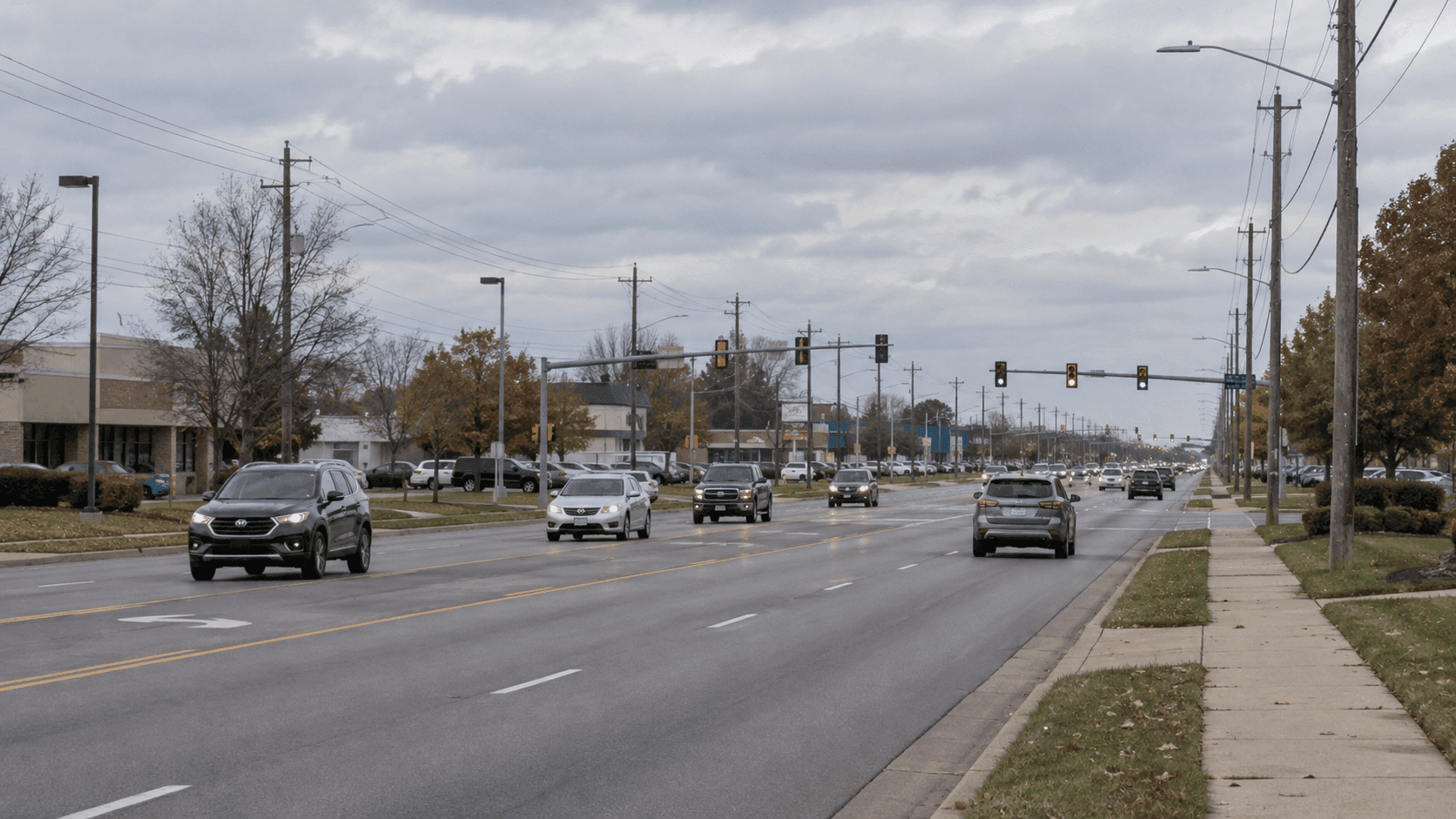
The crash occurred near the intersection of U.S. 24 and Homestead Road on the southwest side of Fort Wayne, in the Aboite area of Allen County, Indiana. Several location-specific factors shape the claim framework.
The intersection sits within the corporate limits of the City of Fort Wayne, which places the investigating agency as the Fort Wayne Police Department, the civil-jurisdictional courts as the Allen Superior and Circuit Courts, and the emergency-transport corridor within the Fort Wayne first-response system. Allen County is the center of the Delventhal Law Office service area, and the firm represents Allen County riders on motorcycle and personal-injury matters.
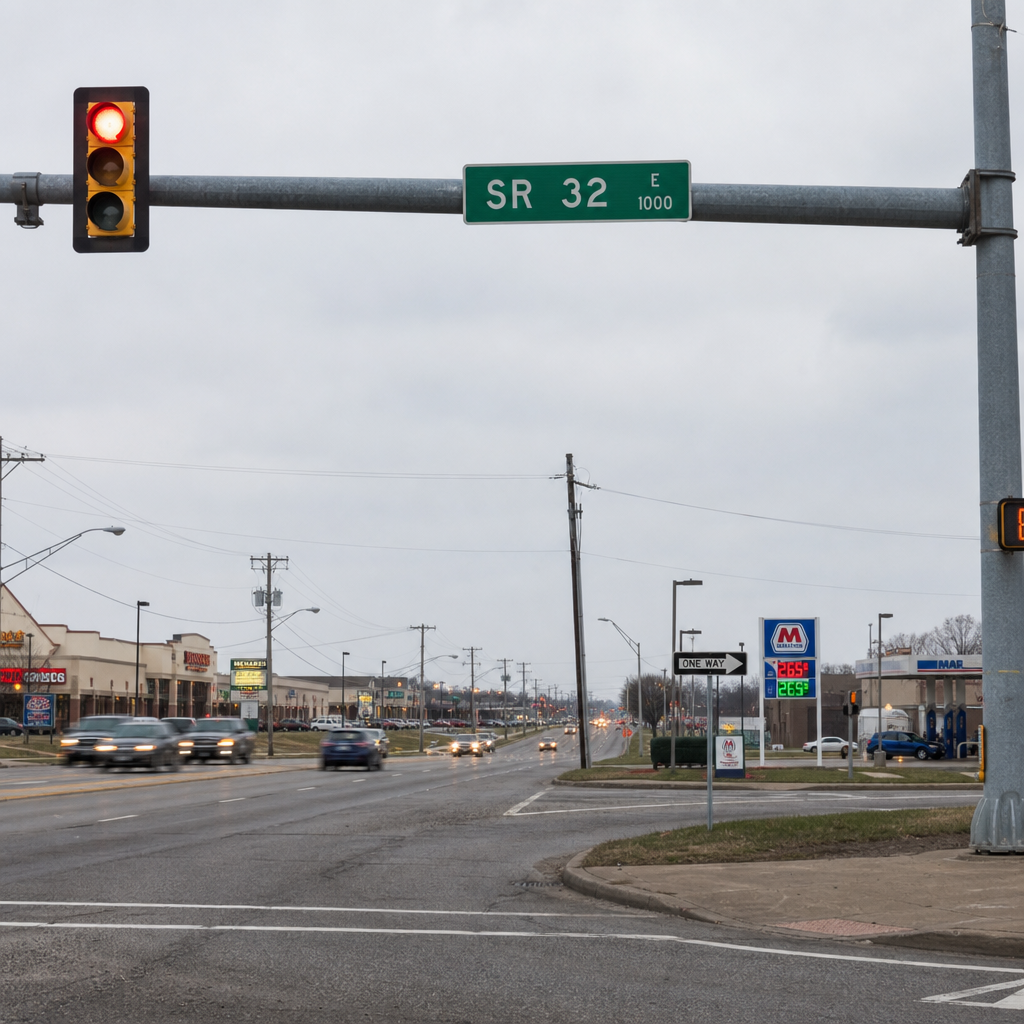
U.S. 24 at Homestead Road is a high-volume southwest-side arterial junction carrying heavy commuter traffic, and the Friday-morning timing of the crash falls within the morning rush. On a busy arterial, witness availability is initially high, but the witness pool dissipates within hours of an incident. A prompt request for the Fort Wayne Police Department witness list, followed by canvassing of the businesses and properties that face the U.S. 24 and Homestead Road junction, is a standard early step, and one that matters especially in a crash where the cause has not been determined and a contributing vehicle has not been ruled out.
The configuration of U.S. 24 in this corridor (a multi-lane state-route arterial with signalized intersections, higher arterial speeds, and adjacent commercial access points) also bears on the analysis. Lane geometry, signal timing, sight lines, pavement condition, and any active construction or work-zone striping along the corridor are the kinds of physical facts that an early scene investigation can document before they change. Where the roadway surface, striping, or signage is later put at issue, a public-records work-up of the corridor's maintenance and crash-history file is the standard step.
Indiana law on motorcycle helmet status, Indiana Code 9-19-7-1[7], provides that failure to wear a helmet is not admissible in evidence in an Indiana personal-injury case. The helmet defense is statutorily barred, and an insurer cannot use a rider's helmet status to reduce available coverage on a comparative-fault theory. Indiana's modified comparative-fault statute, Indiana Code 34-51-2[8], governs any third-party-track recovery: a claimant whose share of fault exceeds fifty percent is barred from recovery, which makes the early, accurate reconstruction of how a cause-undetermined crash actually unfolded especially important.
How Delventhal Law Office Can Help
Chad Delventhal and the Delventhal Law Office represent Northeast Indiana riders in injury claims arising from motorcycle crashes, including single-vehicle motorcycle crashes, multi-vehicle motorcycle crashes, and motorcycle-versus-commercial-vehicle crashes, as well as first-party-insurance disputes, uninsured-motorist and underinsured-motorist disputes including phantom-driver theories, and product-liability matters where motorcycle equipment performance is at issue. You can read more about the firm's work as a Fort Wayne motorcycle accident attorney and about general background on motorcycle accidents in Indiana.
For a crash like the one near U.S. 24 and Homestead Road, the firm handles the work this kind of case demands: prompt collection of the Fort Wayne Police Department incident report; Indiana Access to Public Records Act requests where records do not become available through routine channels; preservation letters to your insurer and to any tow yard, impound facility, or salvage yard holding the motorcycle, the helmet, and other gear; preservation requests to the business and commercial camera sources facing the U.S. 24 and Homestead Road junction; review of every applicable first-party motorcycle, automobile, health, and disability policy; phantom-driver and uninsured-motorist analysis where the facts support a third-party theory; and calendar management on the two-year Indiana personal-injury statute of limitations running to approximately May 29, 2028, along with any applicable uninsured-motorist and underinsured-motorist contractual deadlines.
If you or a family member were injured in a motorcycle crash on U.S. 24, Homestead Road, the West Jefferson Boulevard corridor, or any roadway in Allen County or the surrounding Northeast Indiana counties, contact Chad Delventhal at the Delventhal Law Office in Fort Wayne for a free and confidential consultation. The firm works on a contingency-fee basis: there is no fee unless the firm recovers compensation, and the early steps of report collection, motorcycle and gear preservation, camera-source identification, and policy review across every household coverage can matter substantially to the eventual recovery.
This post is based on publicly released information from the Fort Wayne Police Department and WANE 15, as aggregated by Accident Data Center, as of the date of this post. The Fort Wayne Police Department investigation, the rider's medical course, and the public record are continuing to develop, and the cause of the crash had not been determined as of this post. The post will be updated as the public record develops. Nothing in this post is legal advice or creates an attorney-client relationship.
Sources
- reporting from WANE 15 (wane.com) ↩
- aggregated by Accident Data Center (accidentdatacenter.com) ↩
- Indiana Code 5-14-3 (iga.in.gov) ↩
- Indiana Code 34-11-2-4 (iga.in.gov) ↩
- Indiana Code 34-13-3-6 (iga.in.gov) ↩
- Indiana Code 34-13-3-8 (iga.in.gov) ↩
- Indiana Code 9-19-7-1 (iga.in.gov) ↩
- Indiana Code 34-51-2 (iga.in.gov) ↩