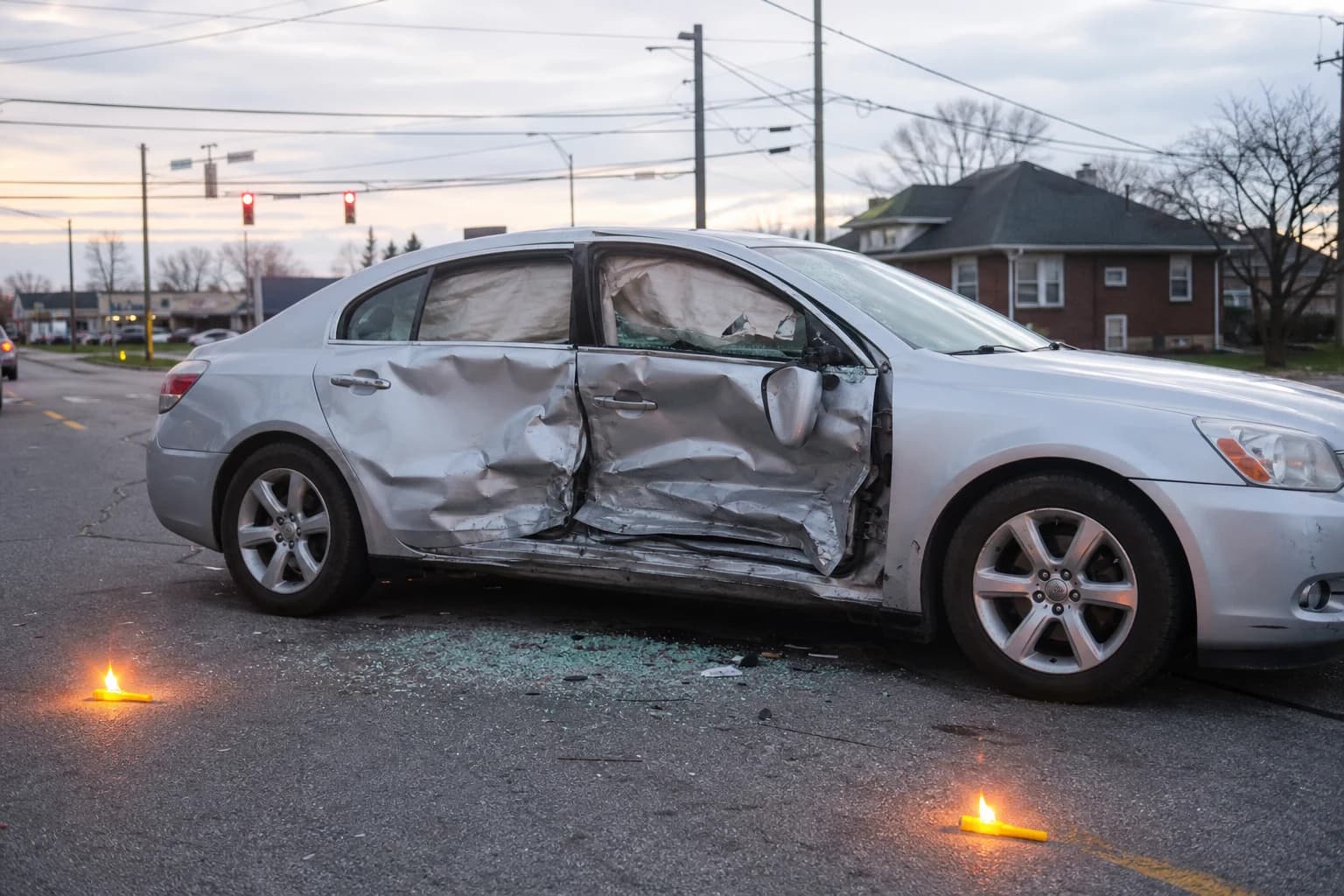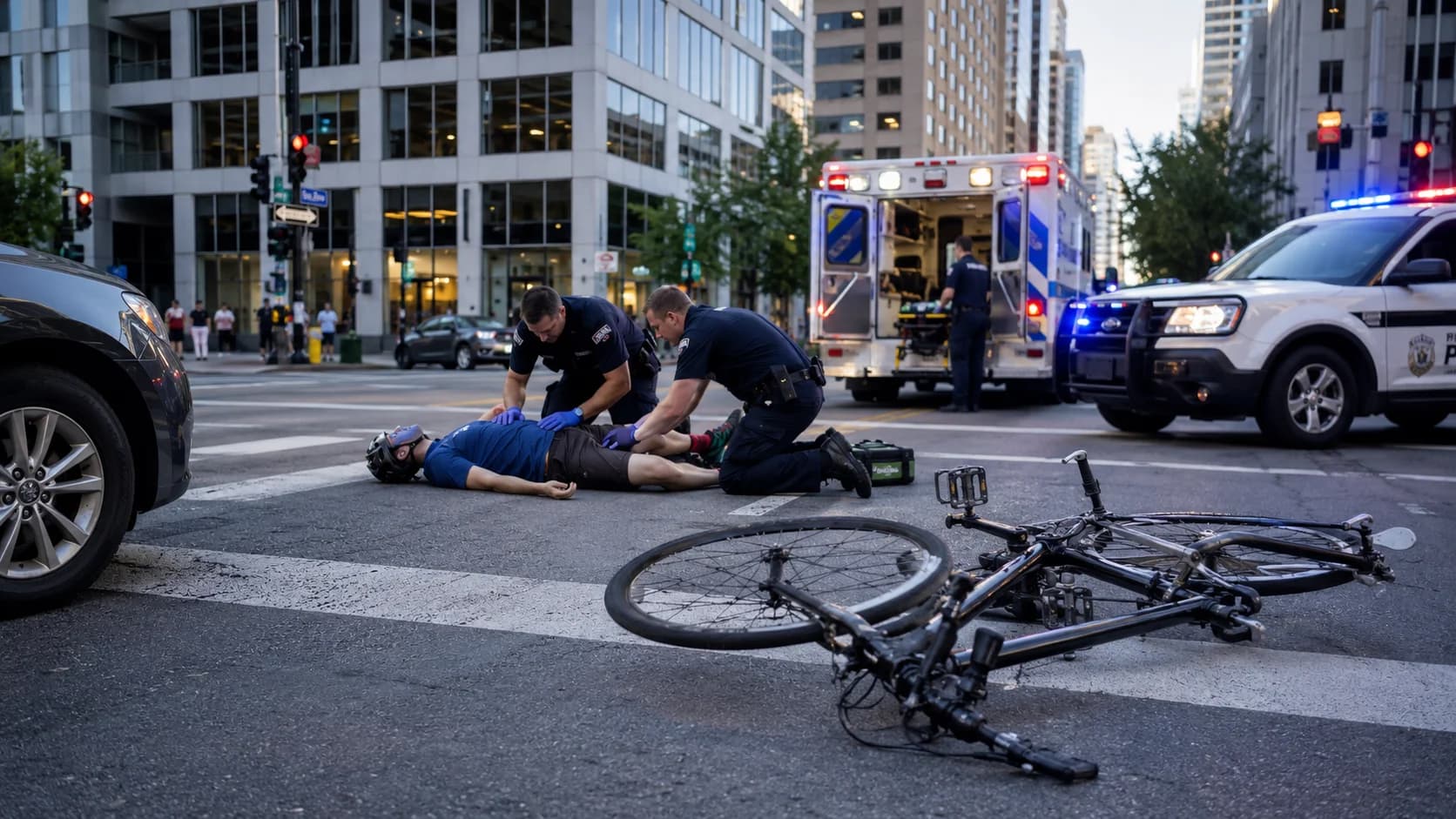



Uber and Lyft made it easy to get a ride home in Fort Wayne — and just as easy for the company to disappear after the ride goes wrong. When a rideshare driver runs a red light at Coliseum and Lima, T-bones another car on Jefferson, or hits a pedestrian crossing Calhoun downtown, the case isn't a regular two-driver crash. It's an insurance puzzle with three different coverage tiers that change based on what the driver's app was doing at the exact second of impact — and Uber and Lyft's lawyers know every loophole.
Our Fort Wayne Uber and Lyft accident attorneys handle rideshare cases against both companies, both as passengers and as drivers struck by a rideshare vehicle. Call 260-484-6655 for a free case evaluation, day or night. You pay nothing unless we win.
What counts as an Uber or Lyft accident case in Indiana?
Short answer: Any Indiana motor-vehicle crash involving a vehicle that was operating under the Uber, Lyft, or any other transportation network company (TNC) app at the time of the collision. The injured party can be the passenger in the rideshare car, the driver of another vehicle, a pedestrian or cyclist struck by the rideshare driver, or — increasingly often — the rideshare driver themselves when another motorist hits their vehicle on the job.
Indiana governs rideshare under the Transportation Network Company statute at Indiana Code 8-2.1-19.1[1]. That statute mandates specific minimum insurance coverages for every TNC operating in the state and divides driver liability into three distinct app-status periods — each with different insurance rules. Which period the driver was in when the crash happened decides which policy pays.
Which insurance policy pays for a Fort Wayne Uber or Lyft accident?
Short answer: One of three policies, and the one that pays depends on what the driver's rideshare app was doing at the moment of impact. App off (driver in personal use) — the driver's personal auto policy applies. App on but no ride accepted yet — Uber or Lyft's contingent liability coverage kicks in ($50K per person / $100K per accident bodily injury, $25K property damage under Indiana law). App on with passenger en route or in the car — the full $1M Uber or Lyft commercial liability policy applies, plus $1M uninsured/underinsured motorist coverage.

| App Status | Whose Policy Pays | Liability Limits | UM/UIM |
|---|---|---|---|
| Period 0: App OFF (personal use) | Driver's personal auto policy | Indiana minimum $25K/$50K/$25K | Personal policy only |
| Period 1: App ON, waiting for ride request | Uber/Lyft contingent liability | $50K/$100K bodily injury, $25K property damage | None at this period |
| Period 2: Ride accepted, en route to pickup | Uber/Lyft commercial policy | $1M combined single limit | $1M UM/UIM |
| Period 3: Passenger in vehicle | Uber/Lyft commercial policy | $1M combined single limit | $1M UM/UIM |
That three-tier structure is why Uber and Lyft will fight aggressively to characterize a crash as a Period 0 (app off) or Period 1 (app on, no ride) incident even when the driver was actually in Period 2 or 3 — the difference is $25,000 versus $1 million in available coverage. Our Fort Wayne Uber and Lyft accident attorneys subpoena the app data within days of a crash to lock in the actual app status at the moment of impact, before Uber or Lyft can argue otherwise.
Who is liable when an Uber or Lyft driver causes a Fort Wayne crash?
Short answer: In Indiana, the rideshare driver is personally liable for their own negligence and Uber or Lyft is liable through the contractual insurance program required by IC 8-2[2].1-19.1. The companies themselves rarely face direct liability because they classify drivers as independent contractors — but the required coverage program gives every crash victim a recovery source regardless. Indiana also recognizes comparative-fault doctrine under IC 34-51-2[3], so if multiple parties share fault, recovery is reduced (and barred entirely if you're more than 50% at fault).

Other potentially liable parties in a Fort Wayne Uber or Lyft crash:
- The driver of a third vehicle who caused the collision. If another driver T-boned an Uber on Jefferson and you were the passenger, the third driver's liability policy is the first payer.
- The vehicle manufacturer if a defective component (airbag, seatbelt, tire) contributed to the injury. Indiana product liability claims run alongside the rideshare claim.
- A government entity if hazardous road conditions or signal malfunctions contributed. Indiana Tort Claims Act notice deadlines apply — 180 days for local entities, 270 days for the State.
- Uber or Lyft directly in rare cases involving negligent driver vetting, retention of drivers with documented issues, or system-level failures in the app or background-check process.
What evidence do we preserve in the first 48 hours of a rideshare accident case?
Short answer: Uber and Lyft's evidence pipeline is entirely digital and overwrites itself fast. Trip records, GPS pings, app-status logs, driver acceptance times, pickup and drop-off coordinates, and dashcam footage if equipped all exist in Uber and Lyft's systems — but their retention policies wipe much of it within 30 to 90 days. The preservation letter to both companies goes out the day we open the file.

What we subpoena and preserve in every Fort Wayne rideshare case:
- App-status logs showing whether the driver was in Period 0, 1, 2, or 3 at the second of impact — the single most important document in the case.
- GPS pings from the rideshare app and the driver's phone, second-by-second around the crash.
- Trip records — the ride request, acceptance timestamp, pickup address, drop-off address, fare calculation.
- Driver background check and rating history — Uber and Lyft's internal records on prior complaints, customer ratings, and safety flags.
- Vehicle inspection records required by IC 8-2[2].1-19.1.
- Dashcam footage if the driver had one installed (many rideshare drivers do for their own protection).
- Third-party surveillance from nearby businesses, traffic cameras, and Ring doorbell systems near the crash scene — most overwrite in 7 to 30 days.
Uber vs. Lyft insurance — what's actually different in Indiana?
Short answer: The Indiana-mandated minimums are identical (set by IC 8-2[2].1-19.1), but the actual Uber insurance program[4] and Lyft insurance program[5] differ in administration. Uber's commercial coverage is underwritten through Progressive and James River; Lyft's is through Liberty Mutual. The carriers' claims handling, deductible structures, and dispute resolution timelines vary, which is part of why local Fort Wayne rideshare-accident attorneys need to know both playbooks.

Both companies require their drivers' personal vehicles to:
- Be no older than 15 model years (some markets stricter)
- Have four doors
- Pass a vehicle inspection annually
- Carry a TNC endorsement on the driver's personal auto policy (often ignored by drivers, which becomes its own liability question)
What are the most common Fort Wayne Uber and Lyft accident injuries — and what do they cost?
Short answer: Soft-tissue cervical strain, herniated discs, concussions, broken ribs, and shoulder injuries dominate the rideshare-passenger injury pool. Pedestrian and cyclist victims hit by rideshare drivers face the same orthopedic and TBI patterns as any pedestrian-MVA case. Treatment costs range from a few thousand dollars for whiplash to seven figures for catastrophic brain or spinal injuries. IIHS injury and fatality data[6] tracks the severity bell curve we see in Allen County.

| Injury Type | Treatment Cost Range | Settlement Range (clear liability) |
|---|---|---|
| Whiplash / cervical strain | $3K - $15K | $15K - $75K |
| Herniated disc | $25K - $150K | $75K - $400K |
| Concussion / mild TBI | $10K - $80K | $50K - $300K |
| Broken ribs / collarbone | $15K - $60K | $50K - $200K |
| Severe TBI | $200K - $1M+ | $750K - $5M+ |
| Spinal cord injury | $500K - $5M+ lifetime | $1M - $10M+ |
What tactics do Uber and Lyft's lawyers use against accident victims?
Short answer: Four patterns appear in nearly every Fort Wayne Uber and Lyft accident claim. The app-status defense (recharacterizing Period 2 or 3 incidents as Period 0 or 1 to reduce coverage by 95%), the independent-contractor defense (arguing Uber and Lyft are not responsible for the driver's negligence), the lowball Period 1 settlement, and the gap-in-treatment argument when delays in medical care let the carrier challenge causation.
- The app-status defense. Uber and Lyft will argue the driver was offline or merely "app on, no ride" at the moment of impact whenever they can — because that drops available coverage from $1 million to either $50K (Period 1) or whatever the driver's personal policy carries (often Indiana state minimum $25K). We rebut with the actual app logs.
- The independent-contractor defense. Both companies argue they're tech platforms, not transportation providers, and the driver is not their employee. Indiana law sidesteps this with IC 8-2[2].1-19.1's mandatory insurance program — the coverage applies regardless of the employment analysis.
- The lowball offer. Within 30 days of a serious crash, Uber or Lyft's carrier will offer a fast settlement well below value, often before the medical record is complete. Accepting it releases all claims against both the driver and the company.
- The gap-in-treatment argument. Any week-plus gap in physical therapy or any delay between the crash and the first medical visit becomes the carrier's argument that the injury isn't really crash-related. We coordinate treatment continuity from day one.
What should you do in the first week after a Fort Wayne Uber or Lyft accident?
Short answer: Get medical care within 24 hours even if you feel okay, screenshot the rideshare trip details from your app immediately (driver name, vehicle make and license plate, trip start and end times, fare receipt), photograph the scene and your injuries, collect witness names, report the crash to Uber or Lyft through the app's safety menu, and do not give the other side's insurer a recorded statement or sign anything before a Fort Wayne Uber and Lyft accident attorney has reviewed it.
Step-by-step:
- Get medical care immediately. Parkview Regional Medical Center, Lutheran Hospital, or a Fort Wayne urgent care if non-emergency. Adrenaline can mask serious injury for 24 to 72 hours; any treatment gap is the first thing the carrier will use against you.
- Screenshot the rideshare trip in the app. Within 24 hours of the crash, open your Uber or Lyft app and screenshot the trip details — the driver's name, profile photo, vehicle make/model/plate, the trip start and end times, the fare receipt, and the pickup and drop-off addresses. This is your single best evidence of the rideshare relationship at the moment of impact.
- Photograph the vehicles and scene. All vehicles before they're towed, the rideshare driver's TNC decal if visible on the windshield, the debris field, skid marks, traffic signals, weather conditions, and your visible injuries as they evolve over the first week.
- Collect every witness name. Officers typically list only one or two witnesses on the crash report. Get the names and contact info of everyone who saw what happened — passengers, bystanders, nearby business employees.
- Report the crash through the rideshare app. Both Uber and Lyft have in-app safety menus to report a crash. This triggers the company's internal claim and preserves their record of the event.
- Do not give a recorded statement. You are not legally required to give Uber's, Lyft's, or the other driver's insurer a recorded statement. Politely decline and refer them to your attorney.
- Do not sign anything. Quick-settlement checks contain a release of all your rights, including injuries that haven't been diagnosed yet. Have a Fort Wayne Uber and Lyft accident attorney review every document before you sign.
Which Indiana statutes govern Uber and Lyft accident claims?
Short answer: Indiana Code 8-2[2].1-19.1 sets TNC insurance requirements; IC 34-51-2-6[7] governs comparative fault (recovery barred if you're more than 50% at fault); IC 27-7-5[8].1 governs uninsured/underinsured motorist coverage; IC 9-25-4-1[9] governs financial responsibility; IC 34-11-2-4[10] sets the two-year statute of limitations on injury claims; and IC 34-23-1[11] applies to wrongful-death actions with the same two-year deadline.
If the rideshare driver was an Indiana commercial driver license (CDL) holder or had a passenger-transportation endorsement, federal hours-of-service regulations under 49 CFR Part 395[12] may apply. The Indiana BMV[13] maintains the driver records and TNC endorsement registry that we subpoena in every case.
What does compensation cover in a Fort Wayne Uber or Lyft accident claim?
Short answer: Indiana law allows recovery of every category of harm a rideshare accident causes — past and future medical expenses, lost wages, diminished earning capacity, property damage, pain and suffering, loss of enjoyment of life, loss of consortium, and in catastrophic cases punitive damages where the conduct rises above ordinary negligence.
- Past medical bills — every dollar billed by every provider, regardless of whether health insurance paid them.
- Future medical care — projected by a life-care planner for catastrophic injuries.
- Past lost wages — including PTO and sick time consumed during recovery.
- Diminished earning capacity — what you can no longer earn going forward, calculated by a vocational expert.
- Property damage — full repair or replacement value, rental, and diminished value.
- Pain and suffering — Indiana has no cap on non-economic damages in most personal injury cases.
- Loss of consortium — recoverable by spouses for the relational and household losses of the injury.
- Punitive damages — available where conduct is willful, wanton, or grossly negligent. Capped at the greater of three times compensatory damages or $50,000.
Why choose Delventhal Law for your Fort Wayne Uber or Lyft accident case?
We find what others miss. Local firms see "rideshare crash" and route the file to Uber or Lyft's primary carrier — where it settles fast and cheap. Our Fort Wayne Uber and Lyft accident attorneys treat the rideshare app data as the case-defining evidence, preserve it on day one, and refuse to accept the app-status defense without the actual logs to back it up. Preservation letters go to Uber, Lyft, and the underlying carriers within 24 hours of being hired.

Founded in 2009 by Chad Delventhal, our firm represents injured Hoosiers across Allen County and northeast Indiana. We've handled over 1,500 personal injury cases since opening, with 145+ five-star reviews on Google. There's no charge to talk. If we take your case, you pay nothing unless we recover. Call us at 260-484-6655 — we answer the phone 24 hours a day, 7 days a week.
Frequently Asked Questions
Can I sue Uber or Lyft directly after a Fort Wayne rideshare accident?
In most cases, no. Uber and Lyft both classify drivers as independent contractors, which generally insulates the companies from direct liability for driver negligence. However, both companies are required by Indiana Code 8-2[2].1-19.1 to maintain commercial liability coverage that pays out for driver-caused crashes — so the practical effect is similar. Direct corporate liability against Uber or Lyft is reserved for cases involving negligent driver vetting, retention of drivers with known safety issues, or systemic app failures.
How long do I have to file an Uber or Lyft accident claim in Indiana?
Indiana Code 34-11-2-4[10] gives you two years from the date of the crash to file suit. The clock starts the day of the collision, not the day you finish treatment. If a government vehicle was involved, you also face a Tort Claim Notice deadline of 180 days for local entities or 270 days for the State under IC 34-13-3-8[14]. Call our Fort Wayne Uber and Lyft accident attorneys immediately — these deadlines do not extend for good reasons.
What if I'm an Uber or Lyft passenger and the driver is at fault?
You're covered by Uber or Lyft's $1 million commercial liability policy, which applies anytime a passenger is in the vehicle (Period 2 and Period 3 in the rideshare insurance framework). You file the claim directly against the rideshare company's commercial carrier — Progressive or James River for Uber, Liberty Mutual for Lyft. You don't deal with the driver's personal policy at all in passenger cases.
What if I'm hit by an Uber or Lyft driver while in my own car?
The coverage that pays depends on the rideshare driver's app status at the moment of impact. If they were in Period 0 (app off), only their personal auto policy applies — often only the Indiana state minimum of $25K per person. If they were in Period 1 (app on, no ride), Uber or Lyft's contingent liability adds $50K per person on top. If they were in Period 2 or 3 (ride accepted or passenger in car), the full $1M Uber/Lyft commercial policy applies. We subpoena the app logs to confirm.
Is the rideshare driver's personal policy involved at all?
Sometimes. In Period 0 (app off), the driver's personal policy is the primary payer. In Period 1, Uber or Lyft's contingent liability sits on top of the personal policy. In Periods 2 and 3, the personal policy is typically excluded by a TNC clause and the commercial policy pays primary. The Indiana TNC statute requires drivers to disclose their rideshare activity to their personal insurer, but many don't — which can create coverage gaps the carriers fight aggressively.
What if I'm a Fort Wayne rideshare driver and another driver hits me?
If you were in Period 2 or 3 (en route to pickup or passenger in vehicle), Uber or Lyft's $1M uninsured/underinsured motorist coverage applies in addition to any recovery from the at-fault driver's policy. If you were in Period 1 (app on, no ride accepted), there is generally no UM/UIM coverage at that period — but the at-fault driver's policy is still the primary recovery. We pursue every layer of available coverage in every case.
How much does it cost to hire a Fort Wayne Uber and Lyft accident attorney?
Nothing upfront. Our firm takes rideshare accident cases on contingency — you pay no attorney's fees unless we recover compensation for you. The initial consultation is free. If we take your case and we don't recover, you owe us nothing.
Do I have to give Uber or Lyft a recorded statement?
No. You are not legally required to give a recorded statement to any insurance company that isn't your own. Both Uber and Lyft's insurance investigators will request one — but the statement is then used to lock you into an early version of events that gets compared against your later testimony for inconsistencies. Politely decline and refer them to your Fort Wayne Uber and Lyft accident attorney.
Transit vehicle instead of rideshare? Bus, shuttle, and public transit claims involve different evidence and deadline issues. See our Fort Wayne bus accident attorney page.
Sources
- Indiana Code 8-2.1-19.1 (iga.in.gov) ↩
- IC 8-2 (iga.in.gov) ↩
- IC 34-51-2 (iga.in.gov) ↩
- Uber insurance program (uber.com) ↩
- Lyft insurance program (lyft.com) ↩
- IIHS injury and fatality data (iihs.org) ↩
- IC 34-51-2-6 (iga.in.gov) ↩
- IC 27-7-5 (iga.in.gov) ↩
- IC 9-25-4-1 (iga.in.gov) ↩
- IC 34-11-2-4 (iga.in.gov) ↩
- IC 34-23-1 (iga.in.gov) ↩
- 49 CFR Part 395 (fmcsa.dot.gov) ↩
- Indiana BMV (in.gov) ↩
- IC 34-13-3-8 (iga.in.gov) ↩