

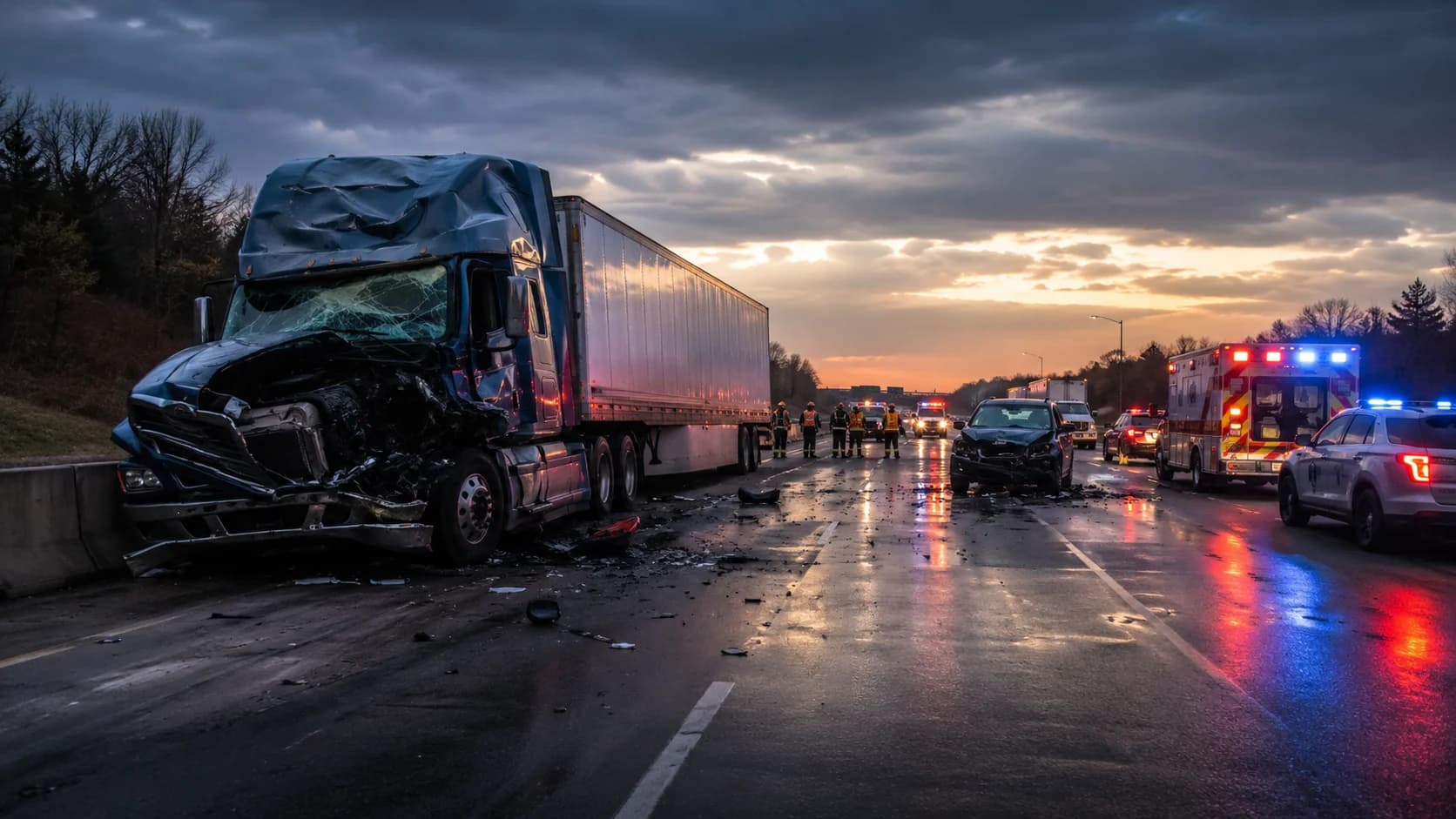

Fort Wayne Truck Accident Attorneys
A loaded tractor-trailer can weigh 80,000 pounds. A passenger car weighs 4,000. When those two collide on I-69 or US-30, the math is unforgiving — and the injuries usually are too. Delventhal Law Office represents people hurt by commercial trucks in Fort Wayne, Allen County, and across Indiana. We have handled crashes involving long-haul carriers, regional freight outfits, dump trucks running out of the gravel pits near New Haven, tankers, car haulers, and local delivery rigs. The investigation we run for a truck case looks nothing like a fender-bender. That is the point.
Truck litigation is governed by a stack of federal regulations layered on top of Indiana tort law. The Federal Motor Carrier Safety Regulations (49 C.F.R. Parts 350-399) dictate hours of service, driver qualification, maintenance, drug and alcohol testing, and cargo securement. When a carrier or driver violates one of those rules and someone gets hurt, that is evidence of negligence the jury can hear. Insurance carriers know it, which is why their rapid-response teams are often on scene within hours — sometimes before the injured driver is out of surgery at Lutheran or Parkview. We move quickly for the same reason.
Indiana Law That Controls Your Truck Claim
Indiana Code 34-11-2-4[2] gives you two years from the date of the crash to file a personal injury lawsuit. Miss that deadline and your claim is gone, no matter how clear the trucker's fault. Wrongful death claims carry the same two-year window under IC 34-23-1[3]. If a governmental entity is involved — a county truck, a city sanitation vehicle, INDOT equipment — you also have a 180-day Tort Claim Notice deadline under IC 34-13-3-8[4] (or 270 days for state entities). Those notice rules destroy more cases than any other procedural trap.

Indiana follows modified comparative fault under IC 34-51-2[5]. If a jury finds you 51% or more at fault, you recover nothing. If you are 50% or less at fault, your damages are reduced by your share. So if the case is worth $400,000 and you are assigned 20% of the blame, you collect $320,000. Trucking defense lawyers spend a great deal of energy trying to push you over the 50% line — claiming you were speeding, distracted, in a blind spot you "should have" avoided. We spend our energy proving the carrier and driver caused the crash.
Most commercial trucks operating in interstate commerce carry at least $750,000 in liability coverage under 49 C.F.R. 387.9, and many carry $1,000,000 to $5,000,000 in primary plus excess layers. Hazmat carriers carry $5,000,000. That coverage exists precisely because truck collisions cause catastrophic harm. It does not mean the carrier will offer it.
How Truck Crashes Happen in Indiana
The crashes we see in this region tend to cluster around a few recurring scenarios. We hear them often enough to predict the call. When a semi crash causes paralysis, traumatic brain injury, amputation, or permanent work restrictions, we build the truck case together with the catastrophic injury claim evidence.
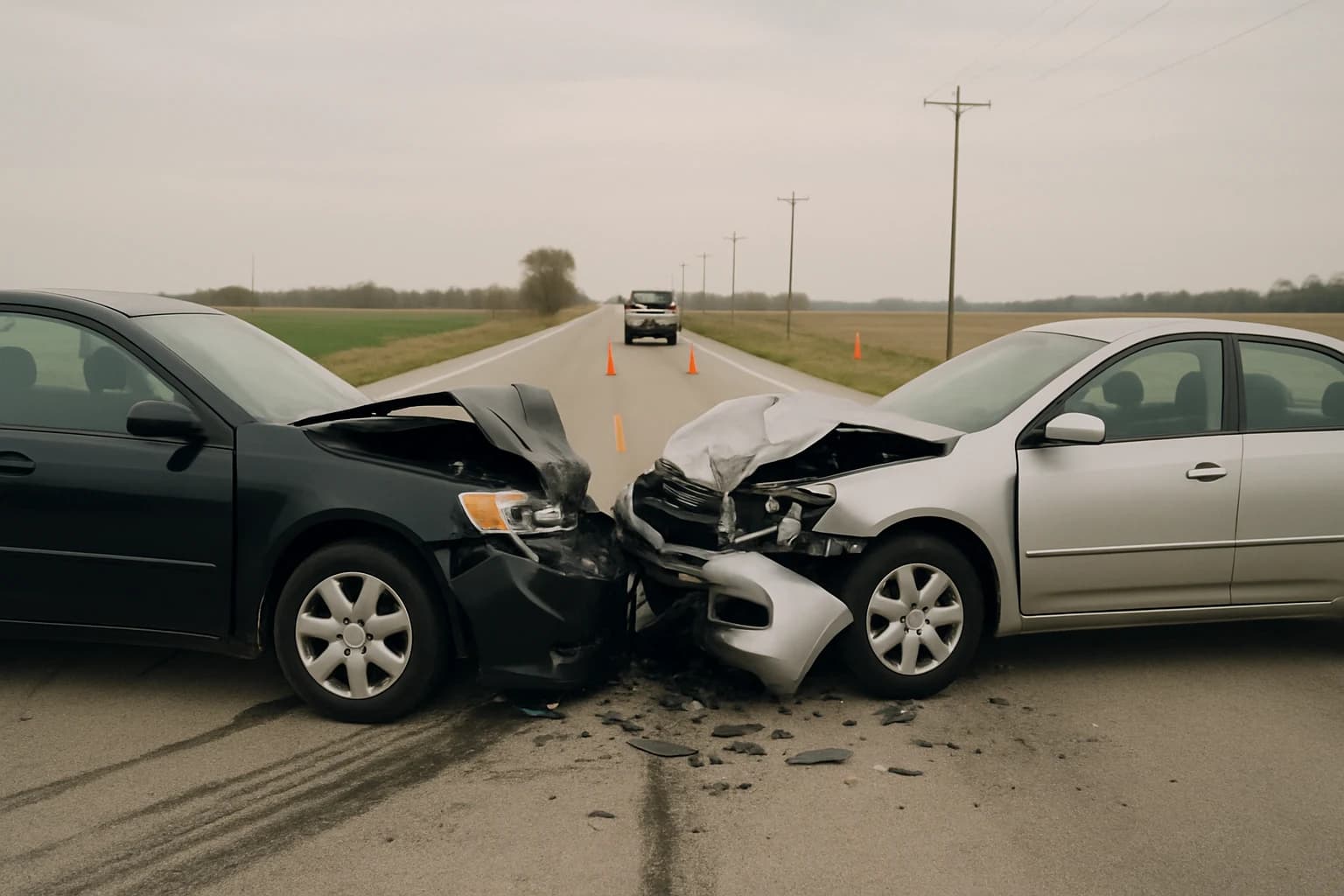
- Rear-end and chain-reaction crashes on I-69 north of Fort Wayne when traffic slows for construction or weather. A fatigued or distracted trucker fails to brake and pushes a passenger vehicle into the rig in front of it.
- Jackknife collisions on US-24 and US-30 in winter — the trailer swings out, sweeps across lanes, and takes oncoming cars with it.
- Underride accidents where a passenger car slides under the side or rear of a trailer that lacks adequate guards. These are frequently fatal and frequently involve missing or non-compliant rear impact guards.
- Blind-spot or "no-zone" sideswipes on Coliseum Boulevard and Lima Road, where a trucker changes lanes into a vehicle the driver never checked for.
- Left-turn and wide-right-turn collisions in downtown Fort Wayne and at industrial entrances, where a tractor swings wide to clear a turn and crushes a car beside it.
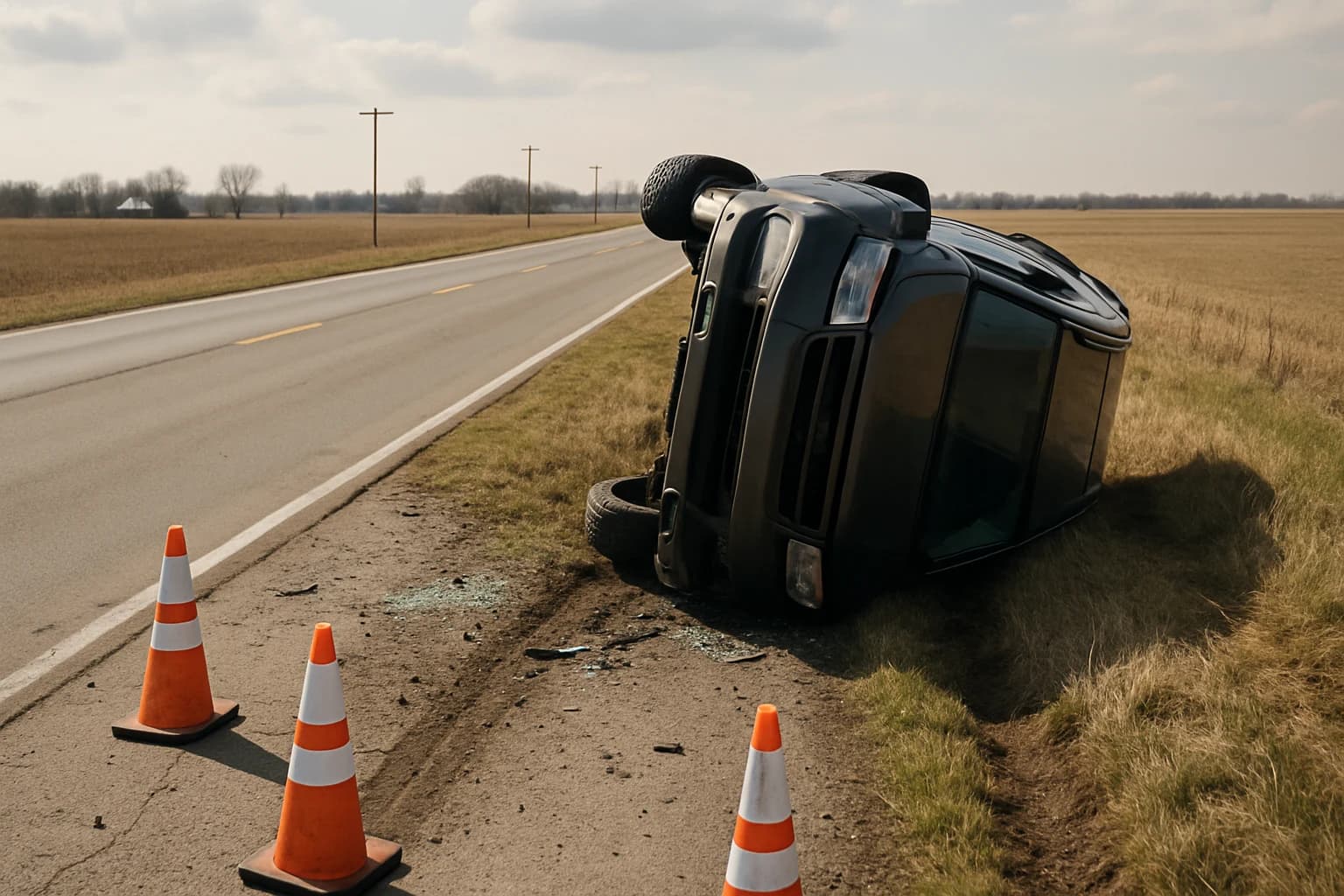
- Loss-of-control crashes on the curve from I-469 onto I-69, where a fast-moving rig with a high center of gravity rolls or runs off the road.
- Cargo-spill and shifted-load wrecks when freight is not blocked, braced, or secured per 49 C.F.R. Part 393, Subpart I.
- Drug, alcohol, and prescription-impairment crashes — every commercial driver involved in a fatal crash or a crash with an injury requiring transport must be tested under 49 C.F.R. 382.303. We make sure that happens.
Why Truck Cases Are Different From Car Cases
A truck case has more defendants, more insurance, more evidence, and a far shorter window before that evidence disappears. The driver is one defendant. The motor carrier is another. The truck owner, the trailer owner, the broker, the shipper, the loader, the maintenance shop, and the parts manufacturer can each be on the hook depending on what went wrong. Motor carriers are vicariously liable for the negligence of their drivers acting in the scope of employment, and they can be directly liable for negligent hiring, training, supervision, and retention — claims that often expose serious systemic problems inside the company.
The evidence is also fundamentally different. Modern trucks carry electronic control modules and electronic logging devices that record speed, brake application, throttle position, hours of service, and engine fault codes. Dash cameras, forward-collision warnings, and lane-departure systems generate data too. Driver qualification files, drug-test records, post-trip inspection reports, dispatch records, bills of lading, fuel receipts, weigh-station tickets, and ECM downloads can prove or destroy a case. Under FMCSA rules, drivers' daily logs only have to be retained for six months, and ECM data can be overwritten in days. Trailers get unhitched and disappear into national pools.
The first thing we do on a truck case is send a litigation hold letter — sometimes within 24 hours — demanding preservation of the truck, trailer, driver's logs, ECM data, dash cam video, drug test results, qualification file, and dispatch records. If a carrier destroys evidence after notice, Indiana courts can give the jury a spoliation instruction telling them to assume the missing evidence would have hurt the carrier. We find what others miss precisely because we go after the records nobody else asks for.
Match the evidence to the truck-safety question
No single record answers every truck-crash question. Investigators may compare ECM or black-box data for vehicle inputs, hours-of-service and fatigue records for duty time, maintenance and inspection logs for equipment condition, and CDL and driver-qualification files for licensing, medical certification, and training.
Other crashes call for cargo-loading and securement evidence, an accident reconstruction analysis that connects physical and electronic proof, or warning-device and scene-timeline evidence for a disabled semi. Which records matter depends on how the collision occurred, so preservation requests should be tailored to the actual safety issue.
GPS and telematics sit apart from the ELD. A carrier's telematics system is a separate feed from hours-of-service data: speed, harsh-braking and acceleration events, location pings and route history, often second by second. It is usually held by a third-party telematics vendor on that vendor's own retention schedule rather than by the motor carrier, which means a preservation letter addressed only to the carrier may never reach it. Where the dispute is how fast the truck was travelling or what the driver did in the last few seconds, telematics is frequently the most precise record in the case, and it is one of the first to cycle out.
One 2026 federal change is worth reading carefully. FMCSA's final rule published June 22, 2026 rescinded the requirement that a copy of the electronic logging device operator's manual be kept inside the commercial vehicle. It did not change the ELD requirement itself, and it did not change the records the device produces—drivers must still understand how the device works and present records of duty status at inspection. The manual left the cab; the data did not. The distinction matters because the headline reads like a rollback of ELD obligations, and it is not one.
What Truck-Crash Injuries Cost
Treatment costs for serious truck-crash injuries dwarf anything you see in a typical car wreck. A short ambulance ride to Lutheran's Level II trauma center runs $1,200 to $2,500. Trauma activation fees alone are commonly $5,000 to $20,000. Below are realistic ranges we see in Indiana cases — actual numbers depend on age, fault, insurance, and the specifics of the injury.

| Injury | Typical Medical Cost | Recovery / Permanency | Settlement Range (clear liability) |
|---|---|---|---|
| Mild concussion / whiplash | $5,000 - $20,000 | 2-6 months | $15,000 - $75,000 |
| Herniated cervical or lumbar disc with injection therapy | $25,000 - $80,000 | 6-18 months, often residual | $75,000 - $300,000 |
| Single-level spinal fusion | $100,000 - $200,000 | 1-2 years; permanent restrictions | $250,000 - $1,000,000+ |
| Complex orthopedic fracture requiring ORIF | $60,000 - $200,000 | 9-18 months; hardware may stay | $150,000 - $750,000 |
| Traumatic brain injury (moderate to severe) | $300,000 - $1,500,000 lifetime | Permanent cognitive deficits | $750,000 - policy limits |
| Spinal cord injury with paralysis | $1,500,000 - $5,000,000+ lifetime | Permanent | Policy limits in nearly every case |
| Burn injuries (tanker / fuel fire) | $200,000 - $2,000,000+ | Permanent scarring; multiple surgeries | $500,000 - policy limits |
| Wrongful death | Final medical + funeral | N/A | $750,000 - several million |
Those numbers are not promises. Every case turns on its own facts, fault, and available insurance. They do reflect the order of magnitude we see in real Allen County and federal court resolutions.
What Compensation Covers in an Indiana Truck Case
Indiana law allows you to recover both economic and non-economic damages. The categories matter because insurers love to pay one and ignore the others.
- Past medical expenses — billed amounts, not just paid amounts, are generally admissible to show the reasonable value of care.
- Future medical care — surgeries you have not yet had, injections, physical therapy, mental health treatment, durable medical equipment, and home modifications. We work with treating physicians and life-care planners to put a number on this.
- Lost wages and lost earning capacity — the difference between what you would have earned and what you can earn now, projected over your work-life expectancy.
- Pain and suffering, mental anguish, and loss of enjoyment of life — Indiana does not cap these in ordinary truck cases.
- Loss of consortium — your spouse has an independent claim for the loss of your services, society, and companionship.
- Punitive damages — available under IC 34-51-3[6] when the carrier's conduct was malicious, fraudulent, willful and wanton, or grossly negligent. Punitives are capped at the greater of $50,000 or three times compensatory damages, and 75% goes to the state's violent crime victims fund.
How Insurers Try to Pay You Less
Trucking insurers are not your neighbor's State Farm agent. The big carriers — Great West, Sentry, Northland, Zurich, Travelers, Old Republic — handle thousands of catastrophic claims a year. Their adjusters and defense lawyers know exactly what to do.
- They send a rapid-response team to the scene to take statements, photograph the vehicles, and start building a comparative-fault argument before the injured driver has been discharged.
- They ask for a recorded statement within days. Anything you say will be used later — including innocent statements about feeling "okay."
- They demand a broad medical authorization that lets them dig through ten years of unrelated records looking for pre-existing conditions to blame.
- They lowball early, hoping medical bills and lost wages will pressure you to accept.
- They argue you were speeding, distracted, not wearing a seatbelt, or in the blind spot — anything to push you toward the 51% bar.
- They drag out negotiations until your treatment plateaus, then argue your current condition is "as good as it's going to get."
You do not have to give a recorded statement to the truck's insurance company. You do not have to sign their medical authorization. You do not have to accept their first, second, or third offer. Talk to a lawyer before you do any of that.
Why You Should Call a Lawyer in the First 30 Days
Some truck evidence can be lost within days, and many records only have to be kept for months.

- ECM and EDR data can be overwritten when the truck is returned to service.
- Dash cam footage on many fleet systems is recorded over automatically unless someone saves it, sometimes within days.
- FMCSA only requires drivers' daily logs to be retained for six months.
- Skid marks, gouge marks, and fluid trails on the roadway are gone after the next rain or snowplow.
- Witness memories degrade rapidly and witnesses move out of state.
- The damaged truck and trailer go back into service or get sold within weeks.
A litigation hold letter and a quick scene investigation in the first month can be the difference between a case worth fighting and a case the carrier walks away from. Schedule a free consultation as soon as you are medically able.
Allen County Courts and Federal Court Practice
Most truck cases involving Indiana plaintiffs are filed in Allen Superior Court or, if there is diversity of citizenship and over $75,000 at stake, in the United States District Court for the Northern District of Indiana, Fort Wayne Division. Out-of-state motor carriers nearly always remove cases to federal court. We litigate in both. Federal practice has its own scheduling orders, expert disclosure rules under FRCP 26(a)(2), and discovery limits — knowing the difference matters from the day suit is filed.
What We Do on a Truck Case
- Send preservation-of-evidence letters to the carrier, driver, broker, and any maintenance vendor within days of being retained.
- Retain accident reconstructionists, biomechanical experts, trucking-industry standards experts, and life-care planners when the injuries warrant it.
- Pull the carrier's MCS-150 filing, SAFER score, FMCSA inspection history, and prior crash reports — patterns of negligence build punitive-damages and direct-negligence claims against the company.
- Obtain ECM, ELD, and dash cam data through formal preservation demands and, when necessary, court orders.
- Coordinate with treating physicians at Parkview, Lutheran, Orthopaedic Hospital, and area neurology and pain-management practices to make sure the medical record reflects the full extent of the injury.
- Handle health insurance, ERISA, Medicare, and Medicaid liens so the net recovery to the client is as large as possible.
- Try cases. The carrier's evaluation of your case shifts the moment they realize their lawyer is preparing for trial against ours.
We take truck cases on a contingency fee. You owe nothing unless and until we recover. Case expenses are advanced by the firm. If we do not collect, you do not reimburse the costs.
Frequently Asked Questions
How long do I have to file a truck accident lawsuit in Indiana?
Two years from the date of the crash under IC 34-11-2-4[2]. Wrongful death claims carry the same two-year deadline under IC 34-23-1[3]. If a government entity is involved — a county truck, a city plow, an INDOT vehicle — a much shorter Tort Claim Notice must be filed within 180 days (county/city) or 270 days (state) under IC 34-13-3-8[4]. Missing any of these deadlines almost always ends the case. There are a few narrow exceptions for minors and for fraudulent concealment, but you should never assume one applies without talking to a lawyer first.

What if I was partly at fault for the truck crash?
You can still recover under Indiana's modified comparative fault rule (IC 34-51-2[5]) as long as the jury or insurer assigns you 50% or less of the fault. Your damages are reduced by your percentage of fault. So if your case is worth $500,000 and you are found 30% at fault, you receive $350,000. Cross the 51% line and you receive nothing. Insurers know this and will push hard to inflate your share. A serious truck-case lawyer fights that allocation hard, because every percentage point of fault directly cuts your recovery.
Who pays my medical bills while my case is pending?
You do, through your health insurance, Medicare, Medicaid, or med-pay coverage on your own auto policy. Indiana does not require the at-fault carrier to pay your bills as you go — they pay only at settlement or judgment. We help clients line up med-pay, work with providers willing to wait on a letter of protection, and negotiate liens at the end so a larger share of the settlement reaches the client. If you have no health insurance and serious injuries, this is something to discuss the first day.
How much is my truck accident case worth?
It depends on the nature and permanency of your injuries, the medical bills incurred and projected, your wage loss, the impact on your daily life, the clarity of liability, and the insurance available. A neck strain that resolves in three months looks very different from a fusion or a brain injury. Most serious-injury truck cases in Indiana resolve in the mid-six to seven-figure range when liability is clear and the policy is large enough. We do not predict a number until we have your medical records, the carrier's policy information, and a fault picture we trust.
Do I have to give the trucking company's insurer a recorded statement?
No. You have no obligation to give a recorded statement to the at-fault driver's insurance company, and we routinely advise clients not to. Anything you say can be twisted and used against you — including casual remarks like "I'm doing okay" that are taken to mean the injury was minor. Your own insurer is different; your policy generally requires cooperation. Even there, having counsel present or routing communication through us avoids costly missteps.
Should I sign the medical authorization the truck's insurer sent me?
Almost never in the form they send it. The authorizations carriers use are deliberately broad — five or ten years of records from every provider, including mental health and substance treatment. The goal is to find a pre-existing condition to blame your injuries on. We provide targeted, limited authorizations that get the adjuster the records relevant to the injury without opening your entire medical history.
What does it cost to hire Delventhal Law Office for a truck case?
Nothing up front. We work on a contingency fee, meaning our fee is a percentage of the recovery and only payable if we win. Case expenses — expert witnesses, accident reconstruction, deposition costs, court filing fees — are advanced by the firm. If we do not recover for you, you do not reimburse those costs. The initial case review is free. Call or use our free consultation form to get started.
The Indiana law that applies to your truck accident case
Commercial truck-crash cases in Indiana proceed under the two-year statute of limitations in IC 34-11-2-4[2] and the 51% modified comparative-fault rule in IC 34-51-2-6[7], layered over the federal motor-carrier safety framework. Interstate truckers and their carriers must comply with FMCSA hours-of-service rules, electronic logging device (ELD) requirements, drug-and-alcohol testing under 49 CFR Part 382, and medical-certification standards under Part 391. Violations of these federal safety regulations frequently establish negligence per se against the driver and the motor carrier, and the corporate defendant's deeper insurance limits open a larger recovery channel than ordinary passenger-vehicle litigation.
How insurance carriers fight Fort Wayne truck accident claims
Motor carriers and their excess insurers run a coordinated rapid-response defense, often arriving on scene within hours. Meanwhile, some electronic and video evidence is recorded over on routine cycles unless someone asks the carrier to keep it. They argue sudden-emergency conduct, attributing the crash to an unforeseen event rather than driver fatigue or speed. They challenge the passenger-vehicle driver's lane position, braking, and visibility. They invoke the carrier's compliance records as proof of an exemplary safety culture. We respond by moving quickly to preserve the evidence: ELD data, dashcam footage, dispatch records, driver qualification files, drug-test results, and FMCSA Safety Measurement System data downloaded from the Federal Motor Carrier Safety Administration[8] regulations and compliance portal.
Underride, jackknife, cargo, training, and commercial-driver issues
Truck accident cases should not be treated like ordinary rear-end or lane-change claims. Before building separate subpages, this page needs to answer the main commercial-truck questions injured people and families have: did the trailer have proper underride protection, did the rig jackknife because of speed or braking, was the cargo properly loaded, was the driver qualified and trained, and did the motor carrier follow commercial-driver safety rules?
Underride crashes happen when a passenger vehicle slides under the rear or side of a trailer. These cases require immediate inspection of rear impact guards, side underride risk, conspicuity tape, trailer height, brake lights, reflectors, and whether the truck stopped or slowed in a way that made the trailer hard to see. Missing, damaged, or non-compliant guards can change the entire liability analysis.
Jackknife crashes often point to unsafe speed, sudden braking, poor weather decisions, brake imbalance, low tire tread, empty-trailer handling, or failure to adjust for traffic on I-69, US-30, US-24, and other Fort Wayne trucking corridors. We look at ELD data, engine-control data, brake inspection history, weather, grade, curve geometry, and whether the driver or carrier ignored conditions that made a jackknife foreseeable.
Cargo and loading issues matter when freight shifts, spills, falls from the trailer, or changes the truck's center of gravity. Federal cargo-securement rules require freight to be properly blocked, braced, tied down, and distributed. The shipper, broker, loader, trailer owner, and motor carrier may all need to be investigated when an overloaded, unbalanced, or unsecured load contributes to a crash.
Driver training and commercial-driver qualification are central issues in serious truck cases. We review the driver qualification file, CDL status, medical certification, prior violations, hours-of-service history, drug and alcohol testing, safety meetings, remedial training, route instructions, and whether the carrier put an unsafe or undertrained driver behind the wheel. A clean-looking crash report can miss the corporate safety failures that caused the wreck.
Those issues are why early preservation matters. The truck, trailer, cargo records, maintenance records, driver file, dispatch messages, dashcam footage, ELD data, and post-crash inspection evidence can disappear quickly unless the carrier is put on written notice immediately.
Evidence we work to preserve right away
There is no single deadline for truck evidence. Federal rules require carriers to keep drivers' hours-of-service records, including ELD records, for at least six months (49 CFR 395.8(k)[9]) and to keep an accident register for three years (49 CFR 390.15[10]). Dashcam video and engine-module data depend on each carrier's own systems and can be recorded over much sooner. A prompt preservation letter puts the carrier on written notice to keep it.

- ELD hours-of-service data covering the seven days preceding the crash, requested in a preservation letter so it is kept beyond the routine retention period.
- Dashcam footage from the truck (forward, driver-facing, and any side cameras) and any nearby surveillance or passenger-vehicle dashcam recordings.
- Dispatch records, bills of lading, fuel and tollway receipts, and the carrier's communications with the driver in the 48 hours before the collision.
- Driver qualification file, medical certificate, drug-and-alcohol test results (pre-employment, random, and post-crash under 49 CFR Part 382), and training records.
- FMCSA Safety Measurement System data on the carrier, including BASIC scores, prior crashes, and roadside-inspection violations downloaded from the federal database.
Damages categories in an Indiana truck accident case
Truck-crash damages routinely exceed passenger-vehicle damages because the impact forces are higher and the injuries — traumatic brain injury, spinal cord injury, internal-organ damage, polytrauma — produce lifetime care needs. Recovery includes medical care, lost wages, lost future earning capacity, and non-economic damages for pain, suffering, and disfigurement. Federal safety rules on driver fatigue, drug testing, and vehicle maintenance published at the Federal Motor Carrier Safety Administration[8] ground both compensatory and punitive-damages claims under IC 34-51-3[6] when the carrier knowingly disregarded the rules.
What our truck accident clients ask most
Why are commercial-truck cases different from regular auto accidents?
Trucks weigh up to 80,000 pounds, far more than passenger vehicles, producing dramatically higher crash forces. Interstate trucking is also regulated under the Federal Motor Carrier Safety Regulations, which create additional grounds for liability — hours-of-service violations, defective maintenance, inadequate driver qualification, and drug-and-alcohol violations. Carrier insurance limits are also significantly higher than ordinary auto policies.
How quickly does truck crash evidence need to be preserved?
As soon as possible. There is no fixed 72-hour rule. Federal rules require carriers to keep drivers' hours-of-service records, including ELD data, for at least six months, and to keep an accident register for three years. Dashcam recordings and engine-module data may be recorded over much sooner, depending on the carrier's system. A written preservation letter sent promptly puts the carrier on notice that the evidence matters to a claim and should be kept.
What electronic records should be preserved after an Indiana semi-truck crash?
After an Indiana semi-truck crash, a written preservation request should cover the tractor's engine control module and event data, the driver's electronic logging device records, GPS and telematics data, dashcam and nearby camera footage, dispatch and communication records, inspection and maintenance files, and the driver and carrier safety records. Each record is explained below.
- Engine control module (ECM) and event data. Speed, throttle, brake application, and sudden-deceleration events stored in the tractor's electronic systems. Depending on the carrier's system it can be recorded over, and it leaves with the truck when the tractor is repaired, sold, or salvaged. See our guide to black box and ECM evidence.
- Electronic logging device (ELD) records. The driver's duty-status and driving-time history, including the days before the crash. A carrier must keep records of duty status and supporting documents for six months under 49 CFR 395.8(k)(1), so the request should name the driver and the dates. See hours-of-service violations and fatigued driving.
- GPS and telematics data. Location pings, route history, speed, and harsh-braking events. A third-party vendor usually holds this feed on its own retention schedule, so the request has to reach the vendor, not only the carrier.
- Camera footage. Forward-facing and driver-facing dashcam video from the truck, plus nearby business, traffic, and passenger-vehicle cameras. Depending on the system, it can be recorded over much sooner than paper records. See how dashcam footage is preserved and used.
- Dispatch and communication records. Load assignments, delivery deadlines, electronic bills of lading, and the carrier's messages to the driver, along with phone records for the minutes around the crash.
- Inspection and maintenance files. Driver vehicle inspection reports, repair orders, and brake and tire service history. A carrier must keep driver vehicle inspection reports for only three months under 49 CFR 396.11(a)(4). See why truck maintenance logs matter.
- Driver and carrier safety records. The driver-qualification file, post-crash drug and alcohol test results, training records, and the carrier's FMCSA inspection and crash history. See CDL and driver-qualification rules and how to research a trucking company's safety record.
Send the preservation letter to the motor carrier, its insurer, and any telematics or camera vendor as soon as possible after the crash, before routine retention periods run out. When a shifted or lost load played a role, add the loading and securement records described in our article on improper cargo loading.
Who can be held liable in an Indiana truck-crash case?
Liability extends beyond the driver to the motor carrier (under respondeat superior and direct negligence in hiring, training, and supervision), the shipper or broker in some configurations, the maintenance contractor, the cargo loader if shifting cargo contributed, and any third party whose conduct contributed to the crash. Identifying every responsible party preserves access to all available insurance coverage.
What are FMCSA hours-of-service rules?
FMCSA hours-of-service rules under 49 CFR Part 395 limit driving time for property-carrying commercial drivers to 11 hours within a 14-hour on-duty window after 10 consecutive hours off-duty, with a 60- or 70-hour weekly limit. ELDs automatically record duty status. Violations are easy to identify and are powerful evidence of carrier liability for crash-causing fatigue.
How long do I have to file a truck-accident lawsuit in Indiana?
Indiana's two-year personal-injury statute of limitations under IC 34-11-2-4[2] runs from the date of the crash. Wrongful-death claims under IC 34-23-1-1[11] have a two-year filing deadline from the date of death. Claims against government-owned trucks or against road-design defendants trigger Indiana Tort Claims Act notice deadlines as short as 180 days under IC 34-13-3-8[4].
What happens after you hire us
From day one, we serve a spoliation letter on the carrier covering ELD, dashcam, dispatch, and driver-file data, pull FMCSA SMS records, and retain accident-reconstruction and trucking-safety experts. We coordinate ongoing medical care, identify every viable defendant including broker and shipper where applicable, send a documented demand once medical care plateaus, and file in Allen Superior Court or federal court depending on diversity. Every step is on a contingency-fee basis: no fee unless we recover.

Was it a work truck, delivery van, or company vehicle instead of a semi? Commercial vehicle crashes may involve employer liability, dispatch data, route apps, fleet maintenance records, and business auto policies even when the vehicle is not an 18-wheeler. See our Fort Wayne commercial vehicle accident attorney page.
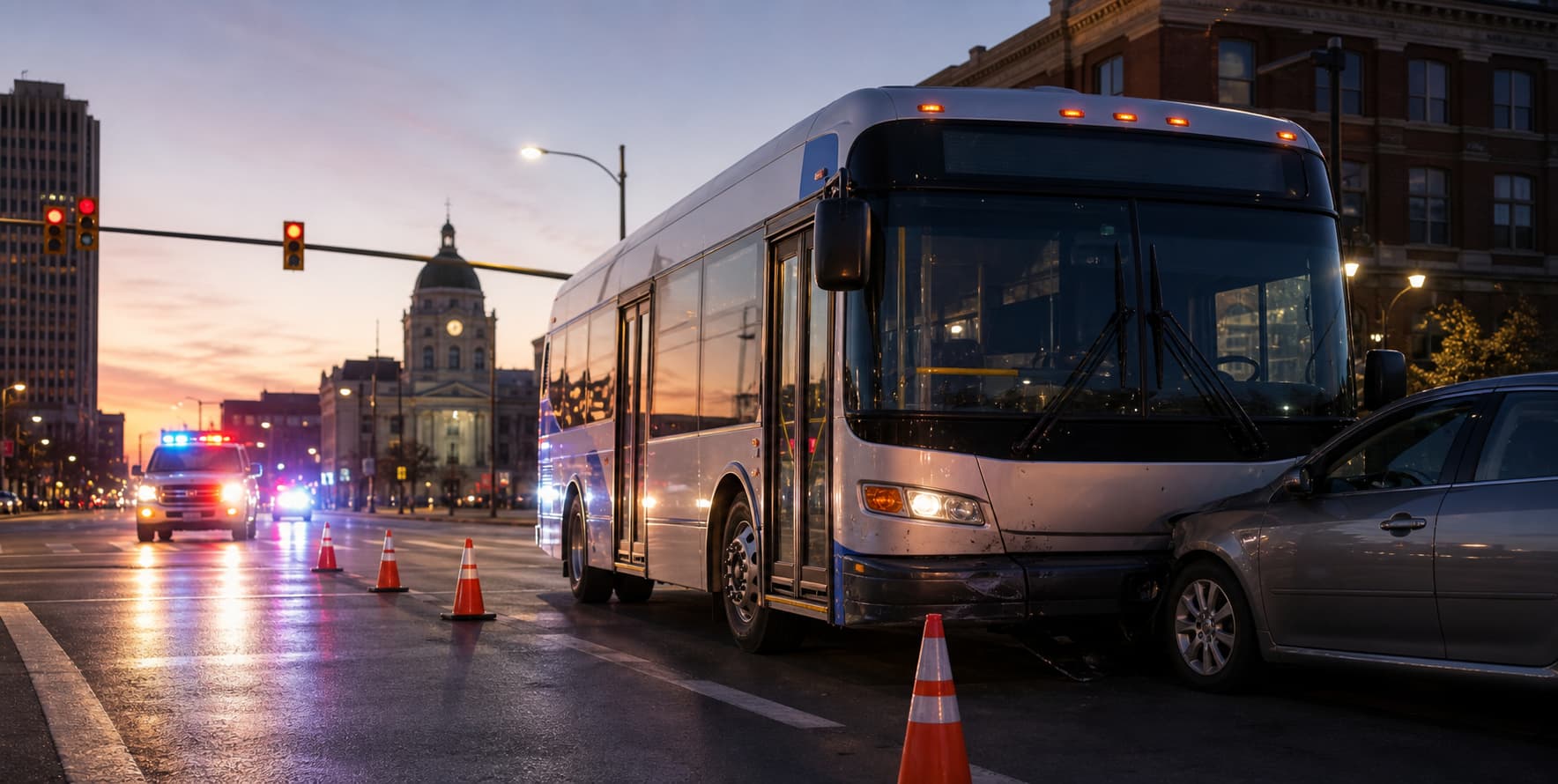
Was a bus or transit vehicle involved? Bus crash claims can involve commercial operators, public transit agencies, school corporations, maintenance contractors, and notice-deadline issues. See our Fort Wayne bus accident attorney page.
Sources
- Watch this truck accident video on YouTube (youtu.be) ↩
- Indiana Code 34-11-2-4 (iga.in.gov) ↩
- IC 34-23-1 (iga.in.gov) ↩
- IC 34-13-3-8 (iga.in.gov) ↩
- IC 34-51-2 (iga.in.gov) ↩
- IC 34-51-3 (iga.in.gov) ↩
- IC 34-51-2-6 (iga.in.gov) ↩
- Federal Motor Carrier Safety Administration (fmcsa.dot.gov) ↩
- 49 CFR 395.8(k) (ecfr.gov) ↩
- 49 CFR 390.15 (ecfr.gov) ↩
- IC 34-23-1-1 (iga.in.gov) ↩