


Fort Wayne Car Accident Attorneys
Indiana's official crash data recorded 12,698 collisions in Allen County in 2023, the third most of Indiana's 92 counties, including 40 fatal collisions and 2,308 that caused injuries (Indiana Crash Facts 2023[1]). Most are minor. The ones that change a person's life — the ones that put someone in the trauma bay at Lutheran or Parkview, that leave a parent unable to lift their child, that put a working adult out of a paycheck for months — are the ones we handle. Delventhal Law Office represents people injured by negligent drivers in Fort Wayne, New Haven, Huntertown, and across Indiana. We do this work every day, in state and federal court, and we know the local insurance adjusters and defense lawyers by name.
A car crash claim is a contract dispute as much as it is a tort case. Whatever the at-fault driver did wrong, the recovery usually comes from one or more insurance policies — the at-fault driver's liability coverage, your own uninsured or underinsured motorist coverage, your med-pay, sometimes a commercial policy if the other driver was working at the time, occasionally a homeowner's umbrella. Lining up every available source of coverage is half the job. Proving the case is the other half.
What Indiana laws govern your car-accident claim?
Short answer: Indiana applies a modified comparative-fault rule, a two-year statute of limitations, and shorter tort-claim deadlines when a government vehicle is involved. The window to act closes faster than most Fort Wayne drivers expect — and missing a single notice deadline can end an otherwise winnable case before it begins. Indiana State Police crash data is published at in.gov/isp[3].
Indiana Code 34-11-2-4[4] gives you two years from the date of the crash to file suit. The clock starts the day of the collision, not the day you finish treatment. Wrongful death actions under IC 34-23-1[5] carry the same two-year deadline. If a city, county, INDOT, or other government vehicle was involved, you also have a Tort Claim Notice deadline of 180 days for local entities under IC 34-13-3-8[6] (270 days for the State under IC 34-13-3-6[7]) — fail to send the right notice and the case ends before it begins.

Indiana uses modified comparative fault under IC 34-51-2[8]. If a jury or insurer assigns you 51% or more of the fault, you recover nothing. At 50% or less, your recovery is reduced by your percentage. That is why insurance carriers spend so much energy trying to push some share of the blame onto the injured driver — speeding, distraction, failure to wear a seatbelt, "you could have avoided it." Under IC 9-19-10-7[9], not wearing a seatbelt is not fault under the comparative fault statute. For crashes on or after July 1, 2024, though, a defendant may offer evidence that an injured person 15 or older was unbelted to argue that the damages should be reduced, if it proves a seatbelt would have reduced the injuries. That makes the seatbelt question part of many damage discussions.
Minimum liability insurance in Indiana is $25,000 per person / $50,000 per accident / $25,000 property damage under IC 9-25-4-5[10]. Those limits do not begin to cover a serious injury. Your own underinsured motorist (UIM) coverage is often the difference between full compensation and a partial recovery. We pull the declarations pages from every available policy in the household. More than one policy can sometimes apply, subject to each policy's terms and Indiana law on combining coverage, and many drivers do not realize what they actually own.
Which Fort Wayne car-accident scenarios do we handle most often?
Short answer: Allen County recorded 12,698 collisions in 2023, according to Indiana's official crash data, and the patterns repeat — distracted-driving rear-ends on I-69, left-turn collisions at signalized intersections on Lima Road and Dupont, and high-energy head-on or rollover wrecks on US-30 and US-24. The NHTSA[11] ranks distraction among the top three causes of injury crashes nationwide.
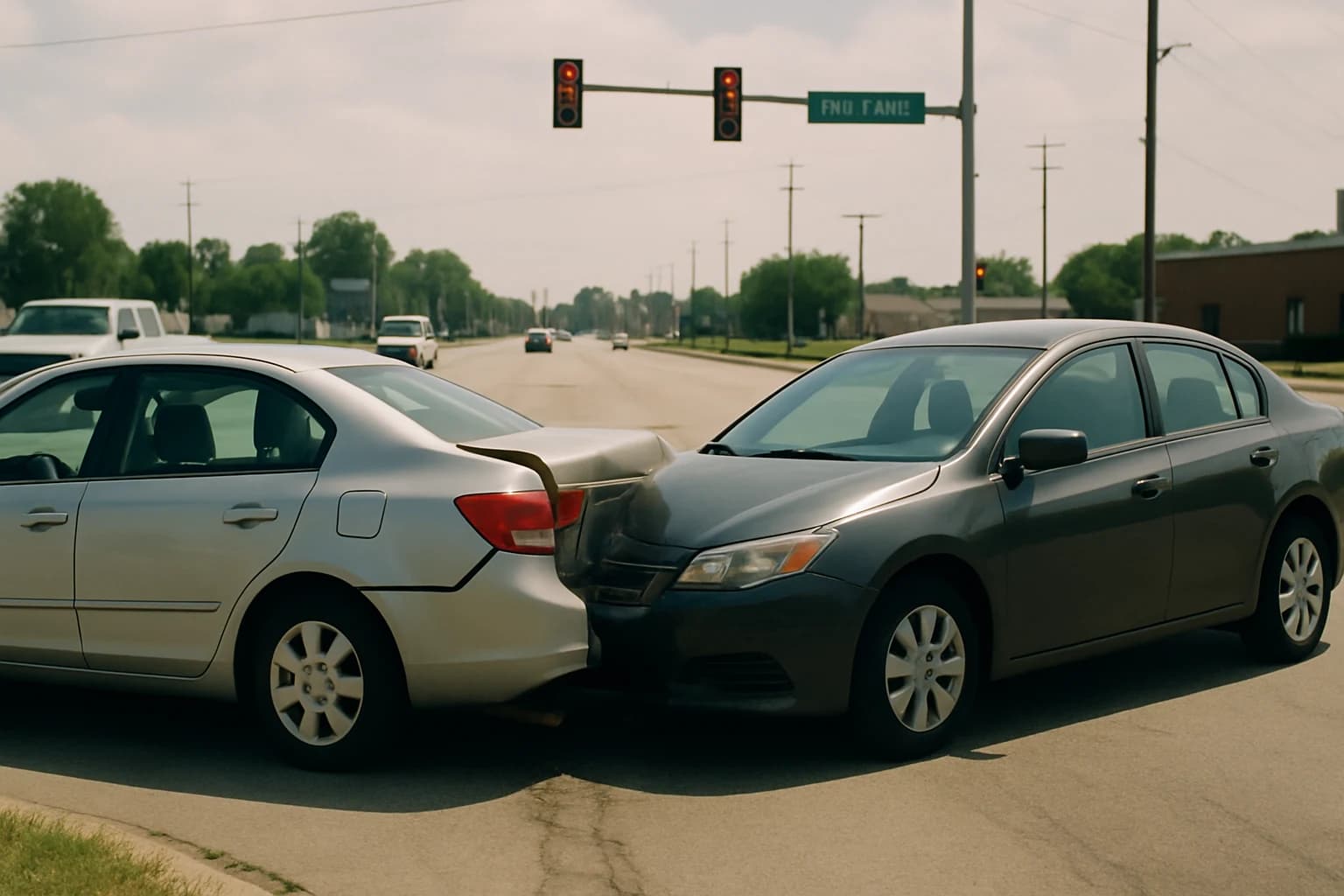
- Rear-end collisions on I-69, I-469, US-30, and Coliseum Boulevard — usually distracted driving or following more closely than is reasonable and prudent under IC 9-21-8-14[12].
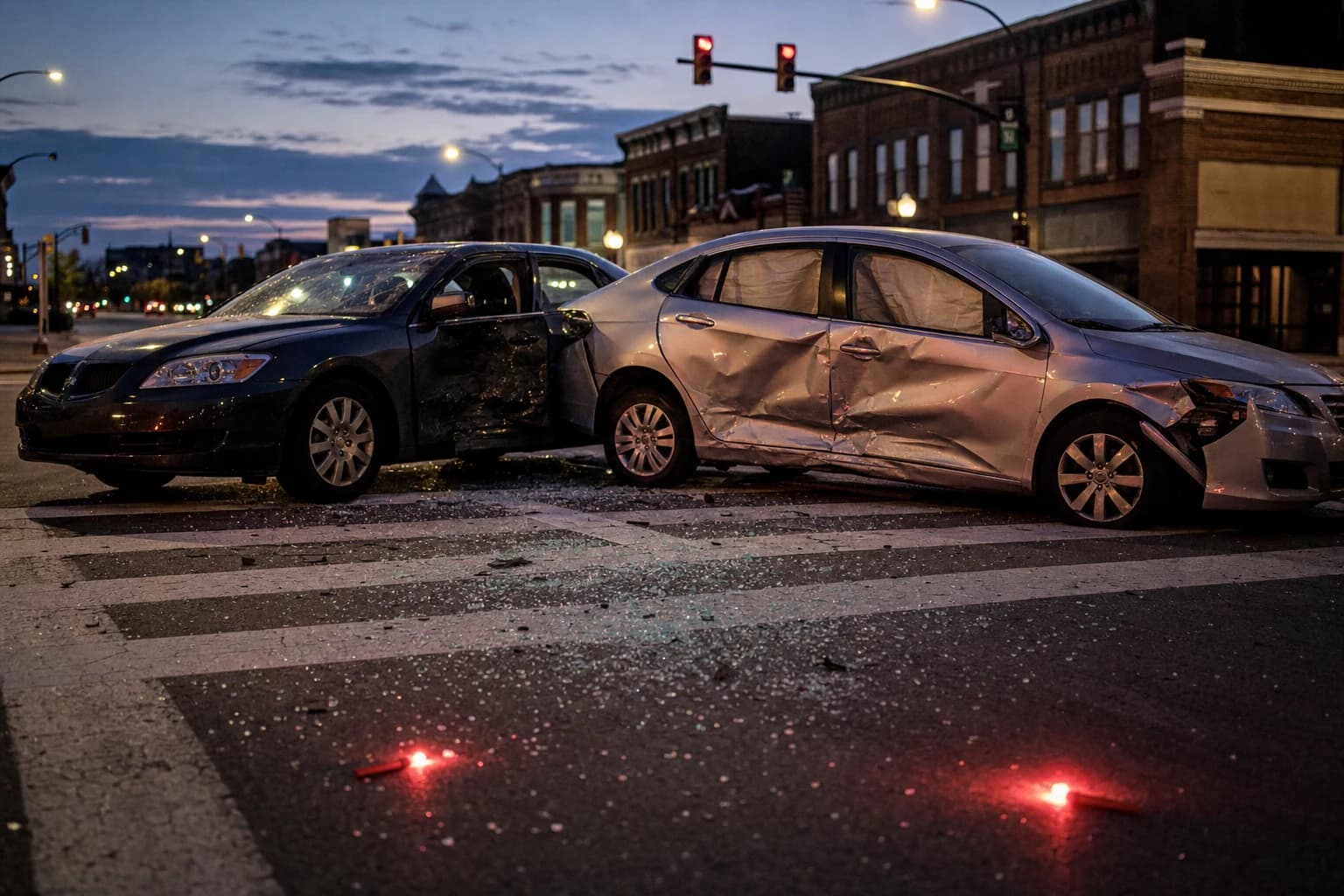
- Intersection T-bones at signalized crossings on Lima Road, Maplecrest, Dupont, and Jefferson Boulevard, where one driver runs a red or fails to yield on a left turn.
- Left-turn crashes against oncoming traffic — Indiana places the duty to yield on the turning driver under IC 9-21-8-30[13].
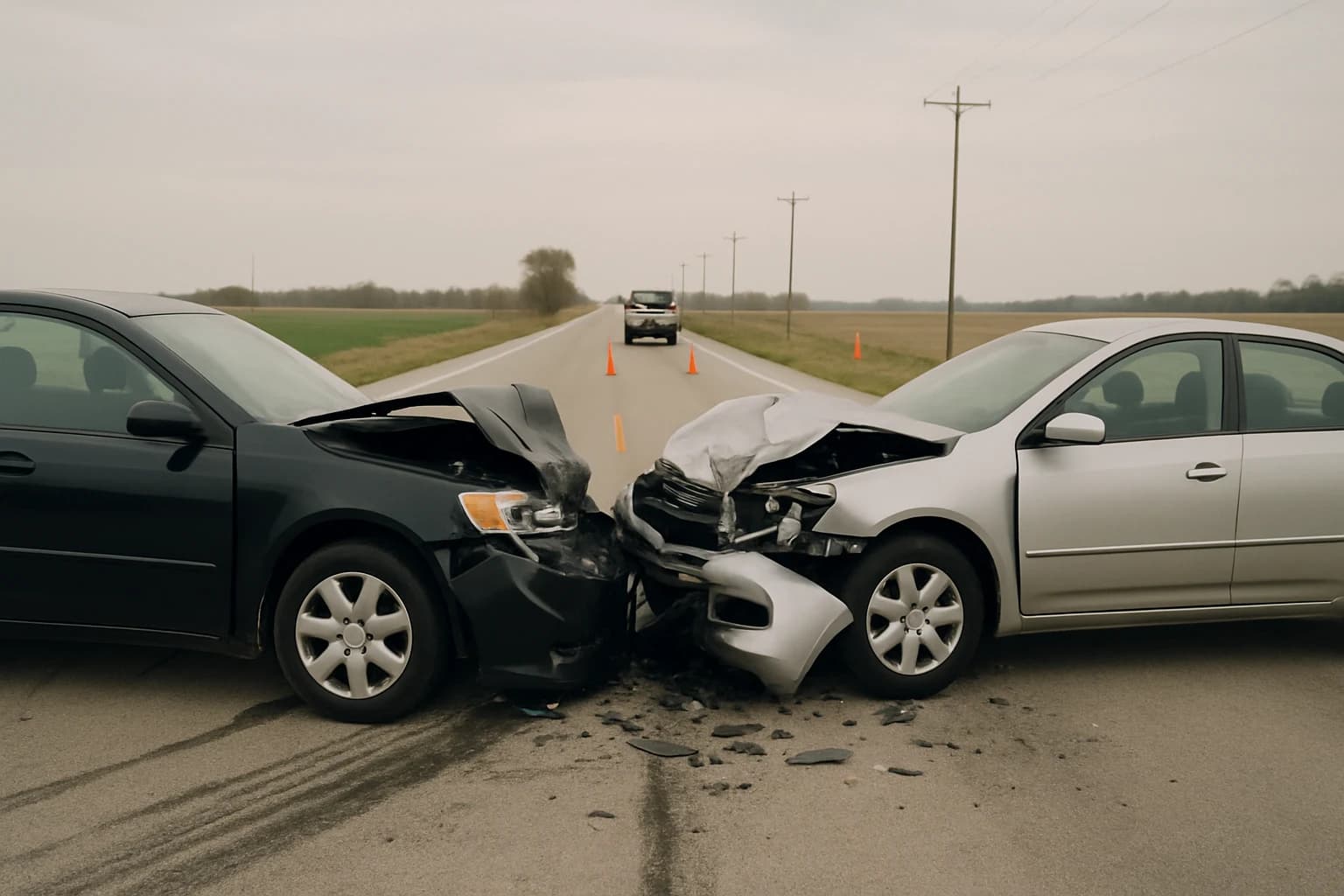
- Head-on collisions on rural two-lane stretches of US-24, US-27, US-33, and county roads in Allen, DeKalb, Whitley, and Noble counties, often involving fatigue, impairment, or improper passing.
- Single-vehicle and run-off-road wrecks caused by road defects, debris, or another driver's evasive maneuver that should still be on the police report.
- Hit-and-run and uninsured-driver crashes that turn into UM claims against the injured driver's own carrier.
- Multi-vehicle pileups in winter weather along I-69 north of the city, where fault is split among several drivers and proper accident reconstruction is essential.
- Crashes involving impaired drivers — alcohol, marijuana, prescription medication, or combinations — which open the door to punitive damages under IC 34-51-3[14].
- Crashes caused by company drivers in personal or company vehicles while in the scope of employment, which expose the employer's commercial policy and often much larger limits.
What a Car Crash Case Looks Like From Start to Finish
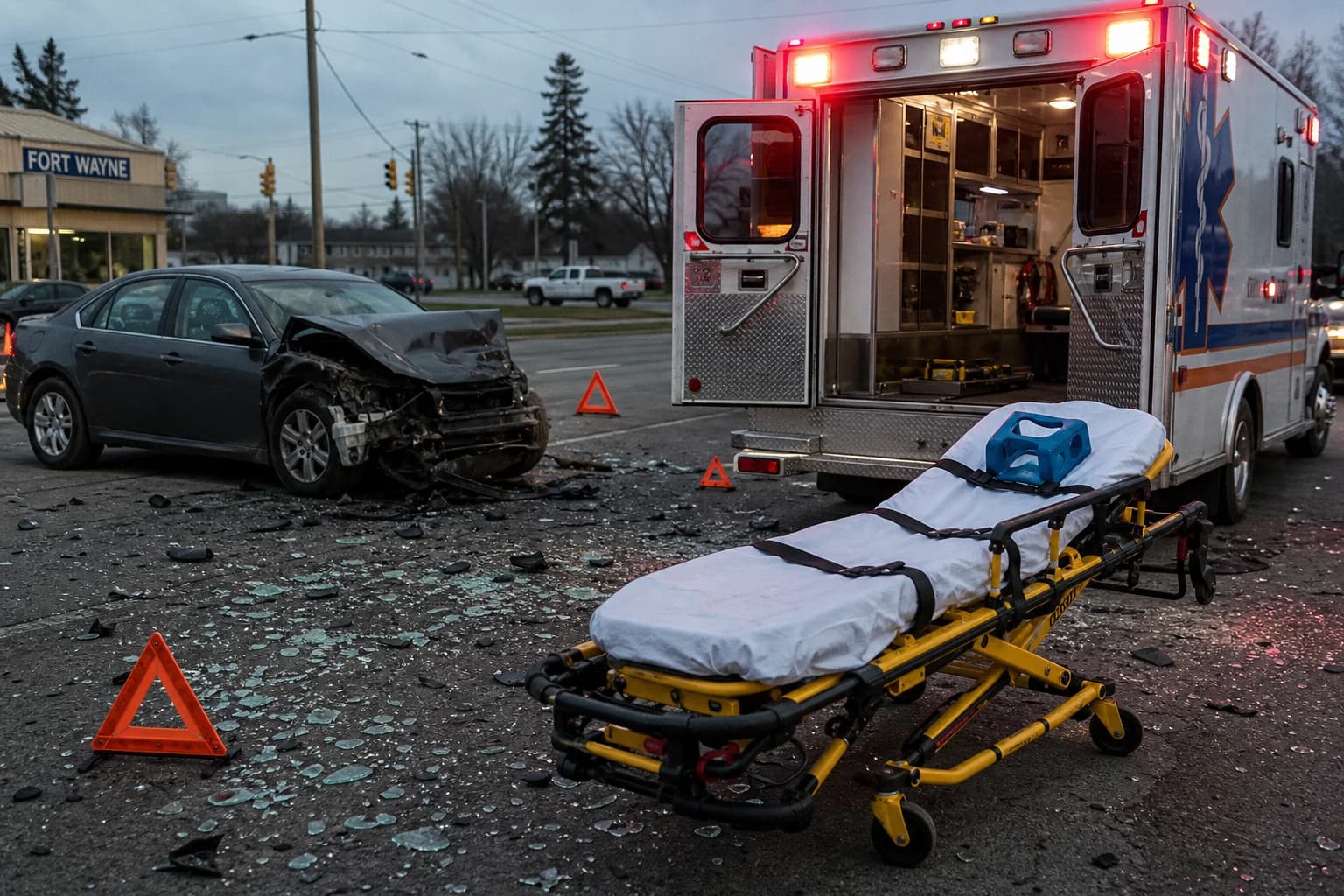
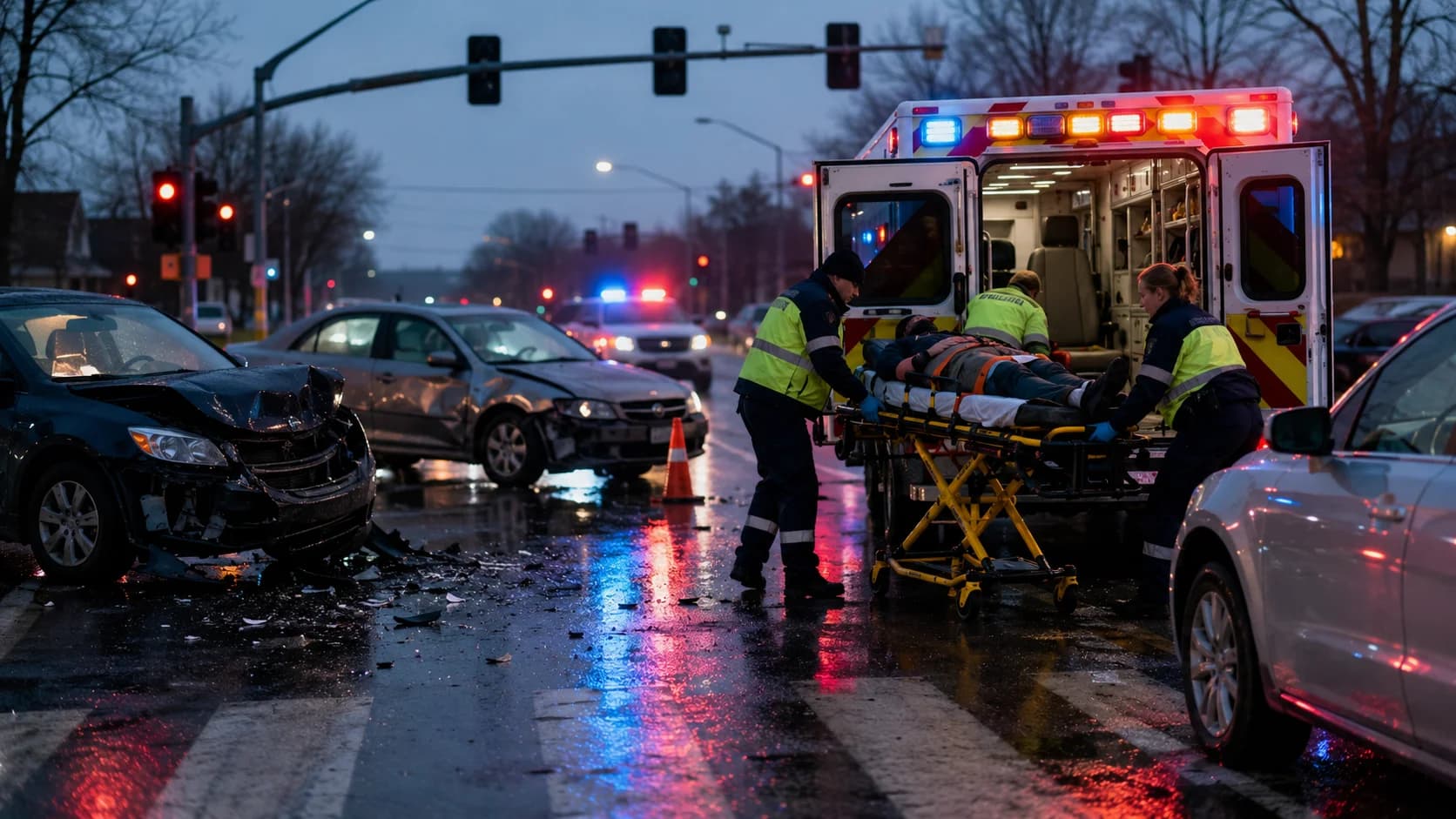
The day of the crash, you call 911, get medical care, and get your vehicle off the road if you can. Officers from Fort Wayne PD, Allen County Sheriff, or the Indiana State Police complete an Indiana crash report. That report is not the final word on fault, and officers sometimes get it wrong, but it is the starting point. Photographs of the vehicles, the scene, your injuries, and any visible debris matter enormously and the right time to take them is in the first 48 hours. If the crash caused permanent impairment, major surgery, brain trauma, or future-care needs, the claim also needs a catastrophic injury claim strategy from the beginning.

Treatment comes next. You see your primary care doctor or an urgent care, then likely a specialist — orthopedics, neurology, pain management, physical therapy. Indiana law lets you choose your providers. Lutheran, Parkview, Dupont, and Orthopaedic Hospital all handle motor vehicle injuries every day. Keep every receipt, every appointment record, and every prescription. Gaps in treatment become the insurer's argument that you were not really hurt.
Once you reach maximum medical improvement — meaning your doctors agree your condition is as good as it is going to get, or that further treatment will only maintain rather than improve you — we package the claim. That means a demand letter with your medical records, billing summaries, wage-loss documentation, photos, witness statements, the police report, and a settlement demand. If the insurer responds reasonably, the case settles. If not, we file suit. Filed cases tend to settle later in litigation; some go to trial. We prepare every case as if it will be tried.
Which insurance policies cover your Indiana car accident?
Short answer: Many Fort Wayne car-accident claims involve three or four separate sources of coverage — the at-fault driver's liability policy, your own uninsured/underinsured-motorist coverage, MedPay, and sometimes health insurance with subrogation rights. Finding every layer is often the difference between a claim that pays for one ER visit and one that pays for the rest of your life.
| Coverage Type | Who Pays | What It Covers | Typical Limits |
|---|---|---|---|
| Bodily Injury Liability | At-fault driver's insurer | Injuries and damages to you | $25K - $1M+ |
| Uninsured Motorist (UM) | Your insurer | Injuries from a driver with no insurance or hit-and-run | $25K - $500K |
| Underinsured Motorist (UIM) | Your insurer | Excess over at-fault driver's limits when their policy isn't enough | $25K - $500K |
| Medical Payments (Med-Pay) | Your insurer | Medical bills regardless of fault | $1K - $25K |
| Personal Umbrella | At-fault driver or yours | Excess liability above primary policy | $1M - $5M+ |
| Commercial Auto / Employer | Employer's insurer | If at-fault driver was working at the time | $500K - $5M+ |
| Health Insurance / Medicare / Medicaid | Your own plan | Medical care; subject to subrogation | Plan limits |
Many people only think to look at the at-fault driver's policy. Your own household policies may carry underinsured motorist coverage that nobody else thought to check. We find what others miss — and on a coverage analysis that can mean additional available money.

What are the most common Fort Wayne car-accident injuries — and what do they cost?
Short answer: Whiplash and cervical strain, herniated discs, concussions, broken ribs, and knee or shoulder injuries are the patterns we see in nearly every Allen County crash file. Treatment costs range from a few thousand dollars for soft-tissue care to six and seven figures for traumatic brain injury or surgical fracture repair. IIHS fatality and injury data[15] confirms the severity bell curve.
The treatment cost and recovery ranges below are general patterns in Indiana medical bills, not a prediction for any case.

| Injury | Typical Medical Cost | Recovery |
|---|---|---|
| Soft-tissue neck/back strain (whiplash) | $3,000 - $15,000 | 6 weeks - 4 months |
| Concussion, no imaging findings | $5,000 - $20,000 | 1-6 months |
| Herniated disc, conservative treatment | $15,000 - $50,000 | 6-12 months |
| Herniated disc with injections | $25,000 - $80,000 | 9-18 months |
| Spinal fusion (single level) | $100,000 - $200,000 | 1-2 years; permanent restrictions |
| Wrist, ankle, or rib fracture | $10,000 - $40,000 | 3-6 months |
| Complex extremity fracture (ORIF) | $50,000 - $150,000 | 9-18 months |
| Mild to moderate TBI | $50,000 - $300,000+ | Often permanent deficits |
These are ranges. Yours may be higher or lower. The point is that a serious injury easily blows through the $25,000 minimum Indiana liability policy — which is why uninsured and underinsured motorist coverage matter so much.
What Compensation Covers
- Past and future medical expenses — including surgery, rehabilitation, mental health treatment, and durable medical equipment.
- Lost wages — every paycheck, including overtime, bonuses, and tips you can document.
- Diminished earning capacity — the long-term hit to what you can earn given new permanent restrictions.
- Pain, suffering, mental anguish, and loss of enjoyment of life — no statutory cap in ordinary cases.
- Property damage — repair, total loss, diminished value, rental, and personal property in the vehicle.
- Loss of consortium — your spouse's separate claim for loss of companionship, services, and intimacy.
- Punitive damages — available under IC 34-51-3[14] in drunk-driving and reckless cases; capped at the greater of $50,000 or three times compensatory damages, with 75% paid to the state's violent crime fund.
What tactics do insurance adjusters use after a Fort Wayne car accident?
Short answer: Adjusters often aim to close claims quickly — early low offers in the first 30 days, recorded statements that can lock in an incomplete account, gap-in-treatment arguments, and pre-existing-condition defenses are the four moves we see in nearly every Fort Wayne car accident claim. Knowing the pattern helps you respond to it.
Adjusters are often pleasant on the phone, and their job is to resolve claims for as little as the facts allow. The patterns we see in many cases:

- Calling you in the first 72 hours, before you know the extent of your injuries, with a "quick settlement" check.
- Asking for a recorded statement and a broad medical authorization.
- Telling you that hiring a lawyer "doesn't help" or "just takes a third of your check."
- Using software like Colossus to generate a low computer-driven valuation, then defending it as objective.
- Pointing to a gap in treatment, a missed appointment, or a normal MRI to argue you are exaggerating.
- Pulling up old medical records to argue the injury was pre-existing.
- Sitting on the claim until your statute of limitations is close, then making a take-it-or-leave-it offer.
None of this is personal. It is how the industry pays serious injury claims. You change the dynamic by getting represented early.
What should you do in the first week after a Fort Wayne car accident?
Short answer: Get checked at the ER even if you feel fine, document the scene and your injuries with photos, collect witness names, report the crash to your own insurer only — and do not give the at-fault driver's insurer a recorded statement or cash a quick-settlement check until a Fort Wayne car accident attorney has reviewed it. The decisions you make in the first seven days set the ceiling on the case.
- Get medical care, even if you think you are okay. Some injuries do not cause noticeable symptoms right away.
- Photograph everything — vehicles before they are towed, scene, debris field, your injuries as they evolve.
- Get the names and contact info of every witness. Officers often only list one or two on the report.
- Report the crash to your own insurer. Do not give the other side's insurer a recorded statement.
- Do not sign anything from the other driver's insurer. Do not cash a quick settlement check — many include a full release on the back.
- Save the damaged vehicle until your lawyer says it can be released; photographs of the damage are key evidence.
- Start a notebook: how you feel each day, what you cannot do, what appointments you went to.
- Call a lawyer. Even if you do not hire us, you should get a free read on your case before you make decisions you cannot undo.
Why Choose Delventhal Law After a Car Accident?
After a crash, you need more than a law firm that opens a file and waits for the insurance company to make the first move. You need someone who listens, explains the process clearly, and starts looking for the details that change the value of the case. At Delventhal Law Office, we find what others miss — the overlooked witness, the missing photo, the business camera, the 911 audio, the crash-data issue, the extra insurance coverage, or the medical detail that explains why your injury is worse than the adjuster wants to admit.

Chad Delventhal and the attorneys here stay personally involved. We meet with clients, prepare them for what comes next, attend the important depositions, and try the cases that need to be tried. We investigate fault, build the medical proof, document wage loss, and negotiate health insurance, hospital, ERISA, Medicare, and Medicaid liens so the net recovery matters — not just the headline settlement number.
The difference is attention. Insurance companies handle claims in bulk. We handle your case like the facts matter, because they do. If you want a confidential, no-cost review of your crash, call us or use the free consultation form. You can also read more about our other practice areas.
Frequently Asked Questions
How long do I have to file a car accident claim in Indiana?
Two years from the date of the crash under IC 34-11-2-4[4] to file a personal injury lawsuit. Property damage claims also carry a two-year deadline. If the at-fault driver was operating a government vehicle, a Tort Claim Notice must be filed within 180 days for city or county vehicles (IC 34-13-3-8[6]) and 270 days for state vehicles (IC 34-13-3-6[7]). Claims against your own insurer for UM or UIM benefits are subject to the policy's contractual deadlines, which are often shorter than the two-year tort deadline. Treat the deadline as if it is months sooner than you think.
What if the other driver had no insurance, or fled the scene?
Your own uninsured motorist (UM) coverage steps into the at-fault driver's shoes and pays for your injuries up to the UM policy limits. Indiana requires UM coverage to be offered on every auto policy unless it is rejected in writing under IC 27-7-5-2[16]. Hit-and-run crashes may qualify as uninsured motorist claims, subject to your policy's terms, which often require prompt reporting to police and to your insurer. If multiple household vehicles are insured, the policies may stack depending on policy language and applicable case law. Pulling every declarations page in the household is one of the first things we do.
What if the crash was partly my fault?
Under Indiana's modified comparative fault rule (IC 34-51-2[8]), you can recover as long as you are 50% or less at fault. Your recovery is reduced by your share of the blame. So a $200,000 case at 25% fault becomes a $150,000 recovery. Cross 50% and you recover nothing. Insurers know exactly how to push this number and routinely argue some share of fault for following too closely, distraction, speed, or failure to take evasive action. A serious crash lawyer fights that allocation hard — every percentage point matters.
How much is my car accident case worth?
It depends on the severity and permanence of the injuries, the medical bills, lost income, the impact on your life, the clarity of liability, and the available insurance. A soft-tissue case that resolves in a few months settles very differently from a herniated disc requiring surgery. No honest lawyer will quote a number on the first call. After we have your medical records, the policy information, and a full picture of how the injury is affecting your life, we can give you a real range. Our guide to what an Indiana car accident case is worth explains the factors, and the difference between the settlement amount and what you take home.
Should I accept the insurance company's first offer?
Almost never. First offers from at-fault carriers are designed to close cases cheaply before you understand the full extent of your injury or know what coverage is actually available. They are also typically made with broad releases that cut off any future claim — including for injuries that worsen or surgeries you do not yet know you need. Have a lawyer evaluate the offer before you sign anything. A consultation costs you nothing.
Do I have to talk to the other driver's insurance company?
No. You have no legal obligation to give the at-fault driver's insurer a recorded statement, to fill out their forms, or to sign their medical authorization. Routing communication through a lawyer protects you from saying something innocent that gets twisted later. Your own insurer is different — your policy typically requires cooperation — but even there, having counsel present avoids the kinds of missteps that hurt cases.
What does it cost to hire Delventhal Law Office for a car accident case?
Nothing up front. We handle car accident cases on a contingency fee — our fee is a percentage of the recovery, and we are only paid if we win. Case costs (medical records, court fees, depositions, experts) are advanced by the firm. If we do not recover for you, you owe us nothing for those costs. The initial review is free. Call us or fill out the free consultation form.
Was the other vehicle being used for work? Delivery vans, work trucks, company cars, rental trucks, and fleet vehicles can add employer liability, route data, maintenance records, and commercial insurance layers. See our Fort Wayne commercial vehicle accident attorney page.
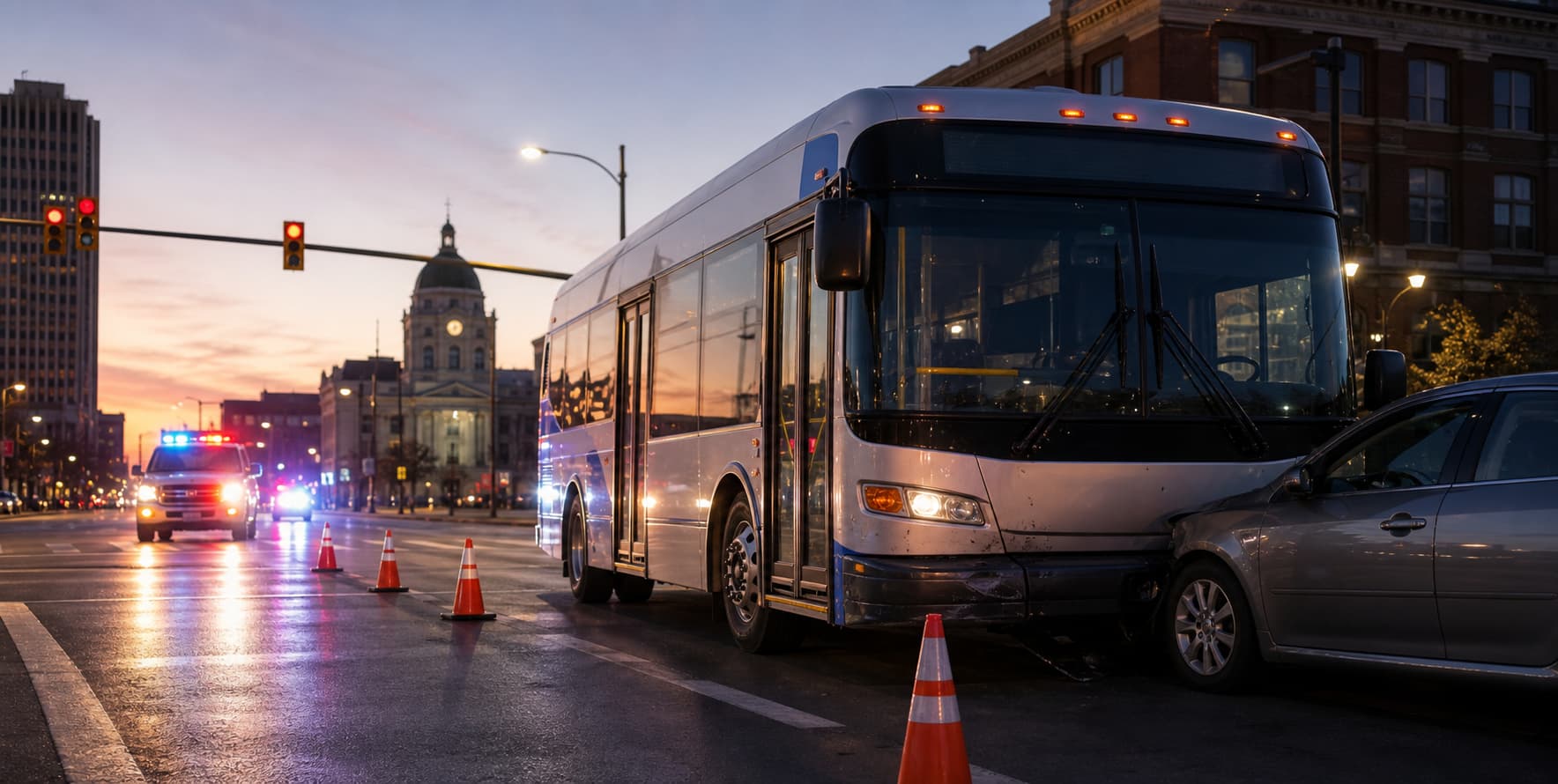
Was a bus involved? Bus crashes can involve public-entity notice rules, route data, onboard video, and different insurance layers. See our Fort Wayne bus accident attorney page.
Wondering what the claim may be worth? Use our Fort Wayne car accident settlement calculator for an educational range, then have Delventhal Law review the facts, medical bills, wage loss, fault issues, and insurance coverage.
Sources
- Indiana Crash Facts 2023 (in.gov) ↩
- Watch this car accident video on YouTube (youtu.be) ↩
- in.gov/isp (in.gov) ↩
- Indiana Code 34-11-2-4 (iga.in.gov) ↩
- IC 34-23-1 (iga.in.gov) ↩
- IC 34-13-3-8 (iga.in.gov) ↩
- IC 34-13-3-6 (iga.in.gov) ↩
- IC 34-51-2 (iga.in.gov) ↩
- IC 9-19-10-7 (iga.in.gov) ↩
- IC 9-25-4-5 (iga.in.gov) ↩
- NHTSA (nhtsa.gov) ↩
- IC 9-21-8-14 (iga.in.gov) ↩
- IC 9-21-8-30 (iga.in.gov) ↩
- IC 34-51-3 (iga.in.gov) ↩
- IIHS fatality and injury data (iihs.org) ↩
- IC 27-7-5-2 (iga.in.gov) ↩