
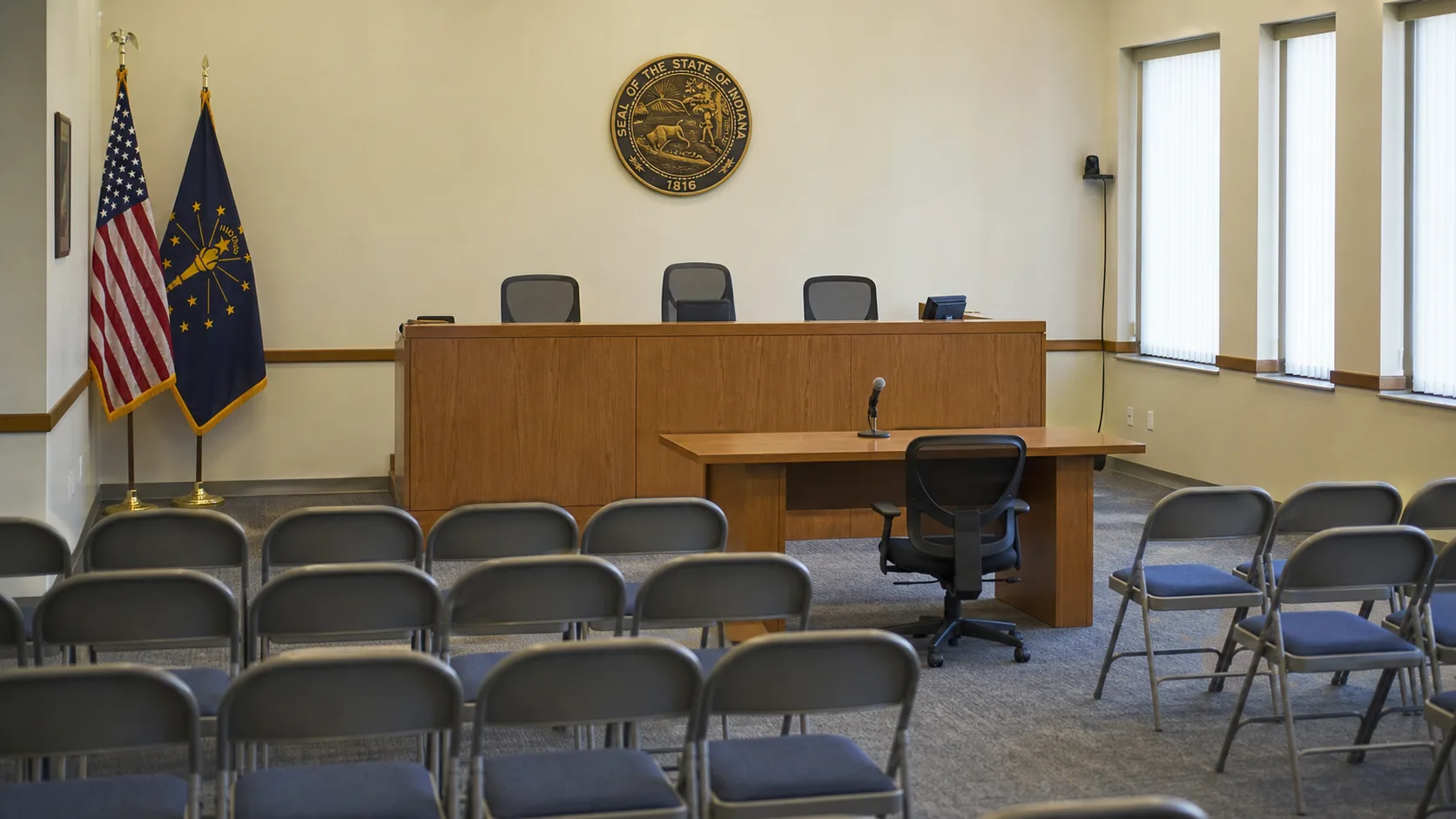
If your Indiana work-injury claim is stuck—benefits denied, medical care cut off, or a permanent impairment rating in dispute—the process can eventually lead to a formal hearing. Knowing what that hearing looks like, who runs it, and what proof matters can make the day far less intimidating. This guide walks through each stage under Indiana law, from the pre-trial conference to the written award and any appeal, with a practical checklist for injured Fort Wayne and Allen County workers.
Key takeaways
- A workers' comp hearing in Indiana is decided by a Single Hearing Member of the Worker's Compensation Board—not a jury.
- The formal process starts when an Application for Adjustment of Claim (SF 29109) is filed; it generally must be filed within two years of the injury.
- Most claims are first set for a pre-trial conference, and each side is allowed one continuance.
- At the hearing, you present evidence and carry the burden of proving an accidental work injury; medical evidence is extremely important.
- The hearing member issues a written award with stipulations, findings of fact, and conclusions of law.
- A dissatisfied party may appeal to the full Board within 30 days, then to the Indiana Court of Appeals for errors of law.
Before a hearing: informal steps come first
Most Indiana work-injury disputes are meant to be resolved without a formal hearing. The Worker's Compensation Board offers informal dispute resolution services designed to settle problems between injured workers, employers, and insurers before anyone sets foot in a hearing room. According to the Board[1], the informal process starts when you file a Request for Assistance (State Form 45442), which authorizes a Board Case Coordinator to investigate and try to bring the claim to a resolution.
If the informal answer is not favorable and you want to challenge it, the only remaining legal remedy is the formal hearing process. To learn how that first informal step works, see our explainer on the Indiana Request for Assistance process. If your claim was flatly denied, our guide on what to do when an Indiana workers' comp claim is denied covers your options in more detail.
How the formal hearing process starts
The formal process begins by filing an Application for Adjustment of Claim (State Form 29109) with the Board. As the Worker's Compensation Board explains[2], once filed, the case is assigned to a Single Hearing Member for determination of all unresolved issues, and it must generally be filed within two years of the date of injury under Indiana Code § 22-3-3-3[3]. That two-year window is separate from the earlier deadline to report your injury to your employer, which our post on the Indiana workers' comp filing deadline breaks down.
After the Board receives the Application, it assigns a cause number and sets the case for a pre-trial conference or a hearing before the appropriate Single Hearing Member on the first available date in the correct location. Both sides are notified, and each side is allowed one continuance. You may pursue a claim without an attorney, but a corporate employer must be represented by legal counsel. For a deeper look at that filing, read our overview of the Application for Adjustment of Claim.

The pre-trial conference
Many Indiana claims are first scheduled for a pre-trial conference rather than a full evidentiary hearing. This is a working meeting, not a trial. It gives the parties a chance to narrow the issues in dispute, exchange information, discuss what medical proof still needs to be gathered, and explore whether the claim can settle. The Board also offers formal mediation of claims under Indiana Code § 22-3-4-4.5[4] as another path to resolve disputes without a contested hearing.
If the case does not settle and issues remain open, the hearing member sets the matter for a formal hearing. Think of the pre-trial stage as the point where each side figures out exactly what the fight is about—coverage, medical care, average weekly wage, temporary disability, or a permanent impairment rating.
What happens at the hearing itself
The hearing is a formal but streamlined proceeding. Indiana law directs the Board to hear the parties, their representatives, and their witnesses and to decide the dispute in a summary manner, so it is far less rigid than a full civil jury trial. There is no jury—the Single Hearing Member acts as the judge who weighs the evidence and decides the outcome.
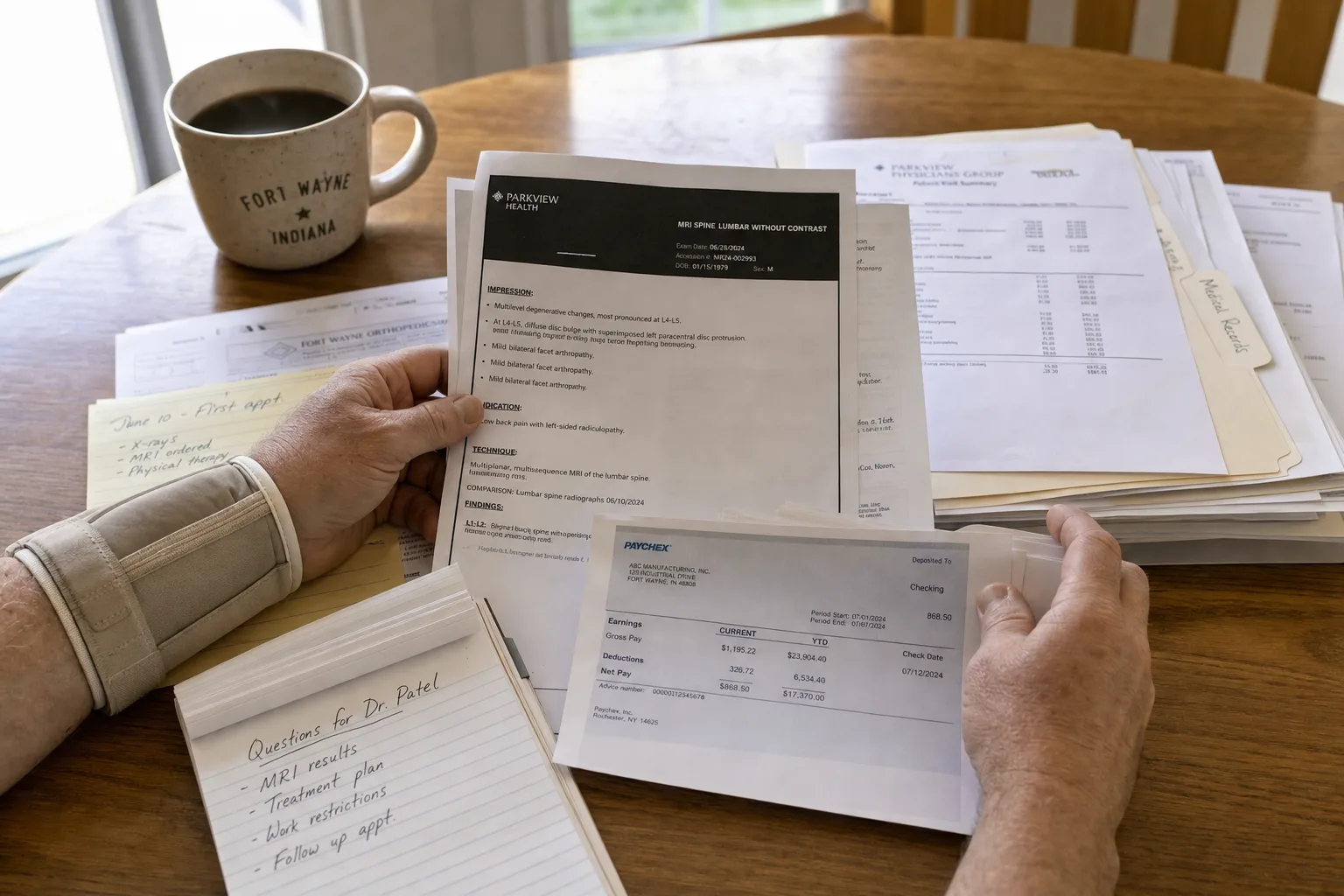
At the hearing, each party presents evidence. The injured worker has the burden of proving that an accidental injury occurred in the course and scope of employment in order to recover benefits, and medical evidence is extremely important to meeting that burden. In practice, that can mean:
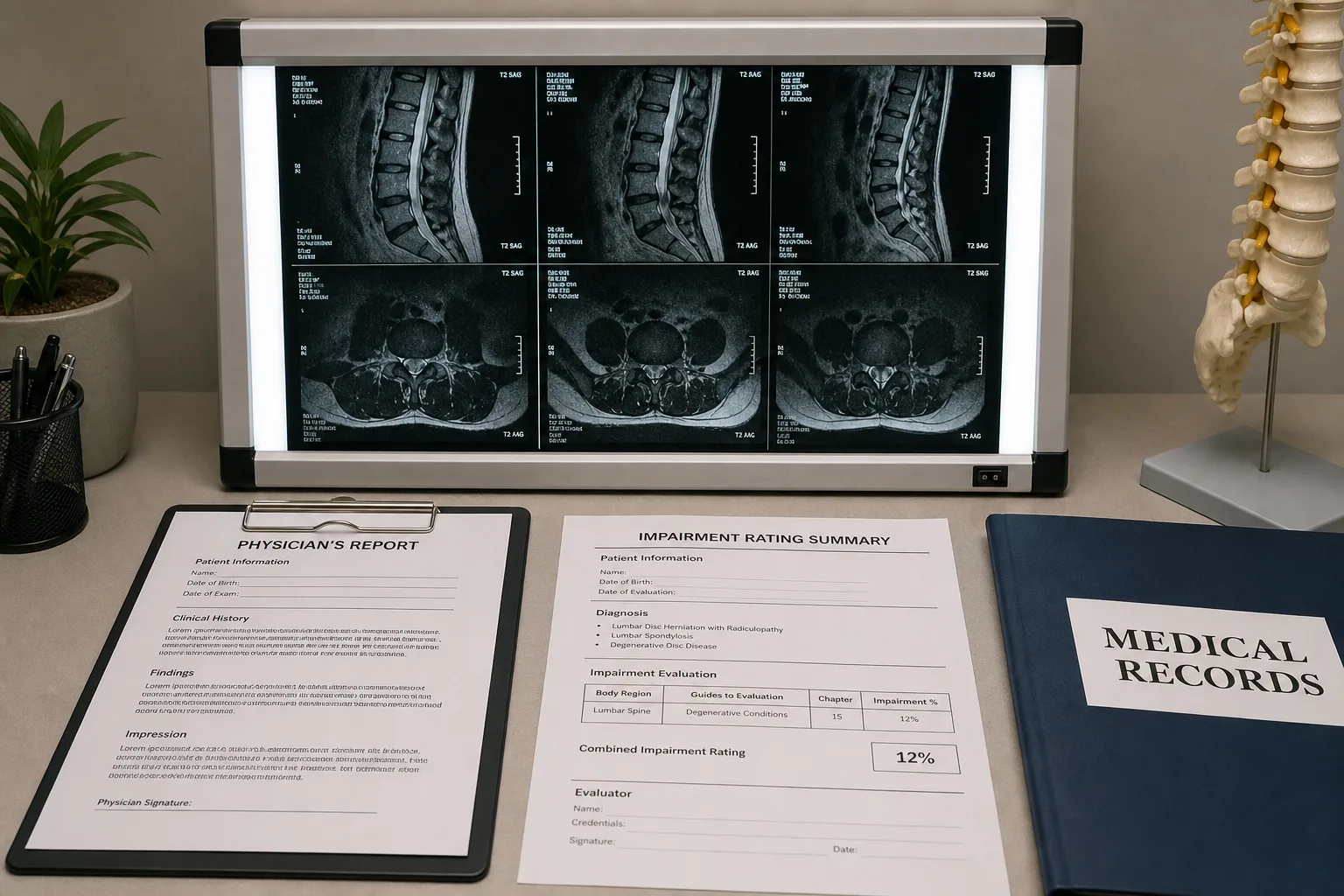
- Documentary evidence — medical records, imaging, physician reports, an impairment rating, wage records, and correspondence.
- Testimony — your own testimony about how the injury happened and how it affects you, plus testimony from witnesses.
- Medical opinions — often the deciding factor, because Indiana comp cases turn on whether the work event caused or aggravated the condition.
Because medical opinions carry so much weight, what you say to examining doctors matters. Our guide on what not to say to an IME doctor in Indiana explains how independent medical exams can shape the record a hearing member later reviews.
The award: how the hearing member decides
After the hearing, the Single Hearing Member prepares and serves a written award on the parties. That award details the stipulations of the parties (the issues that were not contested), the findings of fact, and the conclusions of law the hearing member reached. In other words, it explains what facts were accepted, what the law requires, and what the worker is or is not entitled to receive.
If your case involves a permanent partial impairment rating, the award may set the value of that rating. You can estimate a range in advance with our Indiana PPI calculator. If instead the parties reach a settlement before or after the hearing, review our checklist on what to know before signing an Indiana workers' comp settlement—a signed, Board-approved settlement generally closes the claim.
Appealing the award
Already have a written award? Our guide to Full Board and Court of Appeals review of an Indiana workers’ comp Board award explains how to organize disputed findings, transcript references, and the review record.
If either party is dissatisfied with the hearing member's award, they may appeal to the full Board. An Application for Review by Full Board (State Form 1042) must be filed within 30 days of the date of the award. The case is then set on the next available full Board date, usually within about three months.
The Board describes Full Board review as legal argument rather than a new hearing, but IC 22-3-4-7[5] also permits the Board to hear parties, representatives, and witnesses if it deems that advisable. Our Single Hearing Member versus Full Board comparison explains the different decision-making roles. The full Board then issues its own written award. Under Indiana Code § 22-3-4-8[3], a full-Board award is conclusive and binding on questions of fact, but either party may appeal to the Indiana Court of Appeals within 30 days for errors of law, and from there potentially to the Indiana Supreme Court.
Indiana workers' comp hearing timeline at a glance
Every case is different, but the stages generally follow this order:
| Stage | What happens | Key form / deadline |
|---|---|---|
| Report the injury | You notify your employer of the work injury. | As soon as practicable (30-day outer limit) |
| Informal dispute | Board Case Coordinator investigates and tries to resolve the issue. | Request for Assistance (SF 45442) |
| File formal claim | Claim assigned to a Single Hearing Member. | Application for Adjustment of Claim (SF 29109); file within 2 years |
| Pre-trial conference | Issues narrowed; settlement or mediation explored. | One continuance allowed per side |
| Hearing | Each side presents evidence and testimony; worker carries the burden. | Medical evidence central |
| Award | Hearing member issues findings of fact and conclusions of law. | Written award served on parties |
| Full Board review | Administrative review of the evidence by the Full Board. | Application for Review (SF 1042); 30 days |
| Court appeal | Appeal for errors of law. | Court of Appeals; 30 days |

How to prepare for your hearing
- Gather your medical record — treatment notes, imaging, work restrictions, and any impairment rating.
- Organize wage proof — pay stubs and wage statements that show your average weekly wage.
- Line up witnesses — coworkers who saw the injury or your supervisor who received your report.
- Keep a symptom and treatment timeline — dates of care, missed work, and how the injury affects daily tasks.
- Understand the deadlines — the two-year filing window and the 30-day appeal window are strict.
- Know your benefits — review the workers' comp benefits available in Indiana so you know what you are asking the hearing member to award.
Local injured workers can also learn how we handle these claims on our Allen County workers' compensation page and our main Fort Wayne workers' compensation practice page.
Frequently Asked Questions
Is there a jury at an Indiana workers' comp hearing?
No. An Indiana workers' compensation dispute is decided by a Single Hearing Member of the Worker's Compensation Board, who weighs the evidence and issues a written award. There is no jury, and the proceeding is handled in a summary manner rather than as a full civil trial.
Do I need a lawyer for a workers' comp hearing in Indiana?
You are allowed to pursue a claim without an attorney, though a corporate employer must be represented by counsel. Because the worker carries the burden of proof and medical evidence drives the outcome, many injured workers choose to have an attorney help build the record.
How long does the process take?
It varies. A full Board appeal is usually heard within about three months of filing, but the time from filing a claim to a hearing and award depends on the issues, medical development, continuances, and the Board's schedule.
Can I appeal if I lose?
Yes. A dissatisfied party can seek full Board review within 30 days using State Form 1042, and after that can appeal to the Indiana Court of Appeals within 30 days for errors of law.
What is the most important evidence at a hearing?
Medical evidence is extremely important because Indiana comp cases turn on whether a work accident caused or aggravated the condition. Physician opinions, imaging, treatment records, and any impairment rating typically carry the most weight, supported by your testimony and wage records.
Talk with a Fort Wayne workers' comp attorney
A hearing is not the end of the road—it is one step in a process built to resolve disputes fairly, and preparation makes a real difference. If your Indiana work-injury benefits have been denied, delayed, or disputed, a free consultation can help you understand the deadlines that may apply and decide your next step. Delventhal Law Office can review what happened, explain how the Worker's Compensation Board process works, and help you weigh your options. You do not have to navigate the hearing process alone—request a free case evaluation to get started.
This article is general information about Indiana law and is not legal advice. Reading it does not create an attorney-client relationship, and neither does contacting us. If you do contact us about a possible claim, Indiana Rule of Professional Conduct 1.18 requires us to keep what you tell us confidential whether or not we take the case — but please do not send documents or detailed facts until we have agreed in writing to represent you. For advice about your specific situation, speak with a qualified Indiana attorney.