The two claims are not interchangeable. They involve different parties, evidence, deadlines, and forms of recovery, and Indiana law coordinates them when both arise from the same injury.
Key takeaways
- A machinery injury arising out of and in the course of employment may fall within Indiana’s workers’ compensation system.
- A separate product-liability claim may exist when a manufacturer or seller placed an unreasonably dangerous defective product into the stream of commerce and the defect caused physical harm.
- Indiana workers’ compensation law generally prevents a separate negligence lawsuit against your employer or a coworker for the same accidental work injury.
- A recovery from a responsible third party can affect workers’ compensation benefits and reimbursement rights, so the claims should be evaluated together before any settlement is signed.
- Indiana generally requires a workers’ compensation claim to be filed with the Board within two years, subject to statutory rules that can change when the period begins.

The two possible claims
Start by separating the employment claim from the product claim. The Indiana workers’ compensation process focuses on whether the injury arose out of and in the course of employment. The Indiana Worker’s Compensation Board[2] explains that the program may provide medical, rehabilitation, and income benefits for an on-the-job injury and that the employer directs authorized medical care.
A product-liability claim focuses on the machinery and the conduct of a manufacturer or seller. Under Indiana Code 34-20-2-1[3], a manufacturer or seller can be liable for physical harm caused by a product in a defective condition unreasonably dangerous to an expected user or consumer when the product reaches the user without substantial alteration.
| Question | Workers’ compensation | Possible product-liability claim |
|---|---|---|
| Who is the claim directed toward? | The employer or its workers’ compensation carrier. | A legally responsible manufacturer, seller, or other third party. |
| What is the central issue? | Whether the injury arose out of and in the course of employment. | Whether a covered product defect caused physical harm. |
| Can the claims interact? | Yes. Indiana Code 22-3-2-13[4] contains reimbursement and future-benefit rules when an injured employee obtains a third-party judgment or settlement. | |
A product case is not established merely because a machine malfunctioned or an injury happened. The machine’s design, warnings, maintenance history, later alterations, guarding, controls, and condition at the time of the event may all require investigation.

Who may be responsible
Indiana workers’ compensation ordinarily supplies the exclusive remedy against an employer for an accidental injury covered by the Act. A distinct third-party claim instead looks outside the employment relationship.
Depending on the evidence, the investigation may examine a machine manufacturer, component manufacturer, seller, distributor, outside maintenance contractor, equipment lessor, or another company that controlled relevant work. Listing a company does not mean it is legally responsible; responsibility depends on the evidence and the applicable law. Under Indiana Code 34-20-2-2[3], design-defect and warning claims require proof of a failure to exercise reasonable care. Section 3 generally limits strict-liability product claims to manufacturers, subject to section 4’s principal-distributor or seller rule when jurisdiction over the manufacturer is unavailable.
Federal workplace-safety rules can also help identify relevant records. OSHA identifies machine-guarding standards[5] for general industry and other sectors, including 29 C.F.R. 1910.212 for general machine requirements. An OSHA standard does not by itself answer every product-liability question, but inspection, guarding, training, and energy-control records may help explain what happened.
For forklift-specific information, see our forklift resource. For other workplace equipment, the same basic task remains: identify every business connected to the machine without assuming that the employer owned, designed, repaired, or altered it.
Evidence to preserve
The physical machine may be the most important source of information. Do not enter a restricted work area, remove company property, or interfere with an investigation. Instead, record what you lawfully know and ask that relevant evidence be preserved.
- Identify the machine by manufacturer, model, serial number, asset number, and location.
- Write down the task being performed, control settings, guard positions, warning messages, and sequence of events.
- Preserve photographs or video already in your lawful possession, without editing the original files.
- Record the names of witnesses and the people who inspected, maintained, repaired, or altered the machine.
- Keep incident reports, work restrictions, medical records, wage records, and communications about the injury.
- Ask that the machine, removed components, guards, electronic data, maintenance records, manuals, purchase documents, and surveillance video be preserved.
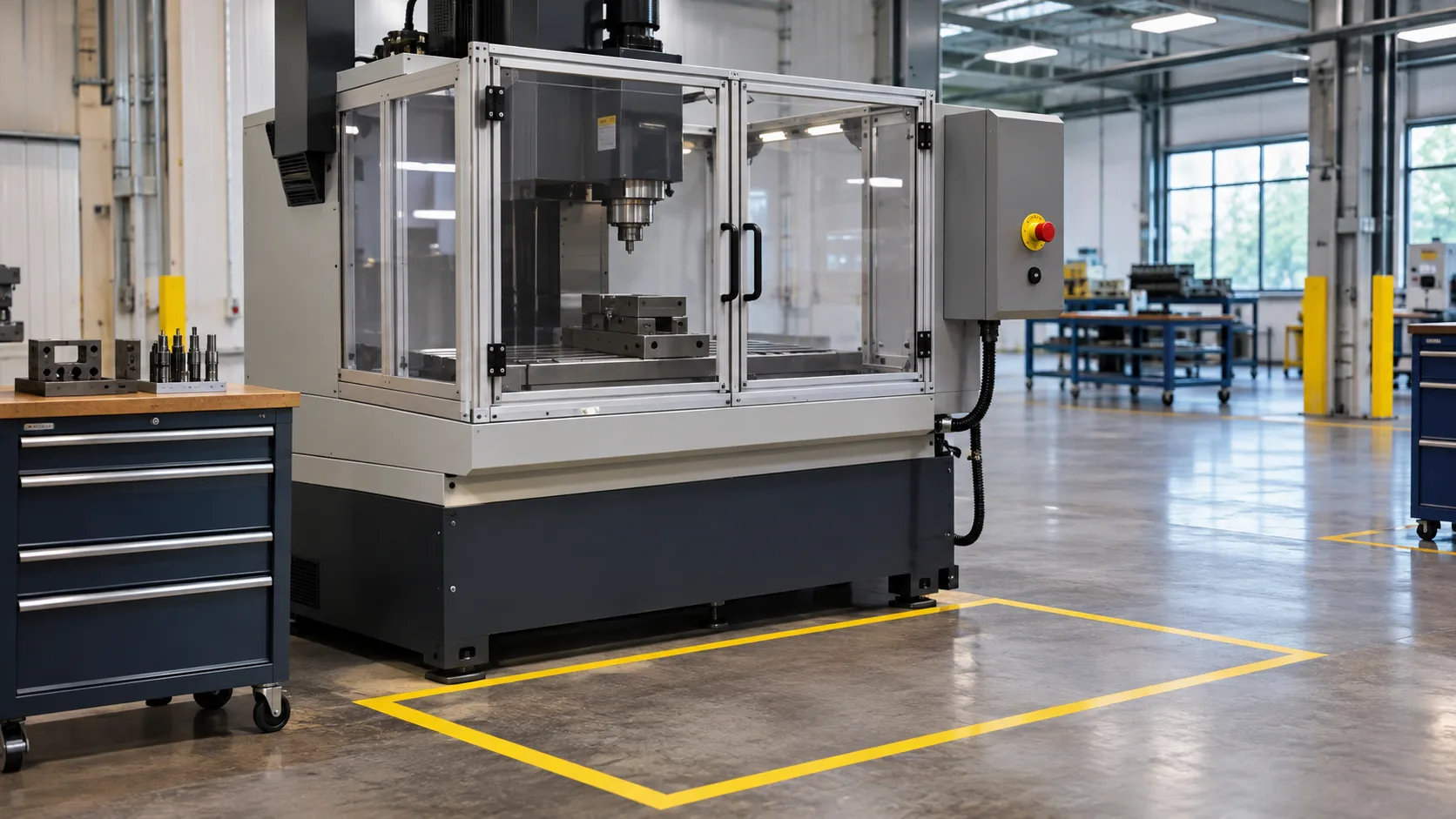
OSHA’s general machine-guarding standard[6] states that guarding is intended to protect employees from hazards such as points of operation, ingoing nip points, rotating parts, flying chips, and sparks. The standard also states that machines exposing employees to injury at the point of operation must be guarded.
For a broader recordkeeping framework, use the firm’s Indiana injured-worker records checklist.

Deadlines and coordination
Indiana Code 22-3-3-3[1] generally bars the right to workers’ compensation unless a claim is filed with the Worker’s Compensation Board within two years after the accident or, when death results, within two years after death. Under subsection (b), when qualifying temporary total or temporary partial disability compensation is paid, the two-year period begins on the last date for which that compensation was paid, not simply the date a check arrived.
Indiana Code 34-20-3-1[3] generally requires a product-liability action based on negligence or strict liability to be commenced within two years after the cause of action accrues and also establishes a ten-year limit measured from delivery to the initial user or consumer, with a statutory rule for claims accruing during the final two years of that period.
These time rules are not a reason to guess at a filing date. The original delivery records and benefit-payment history should be reviewed rather than estimating a deadline from the injury date alone.
Coordination matters before settlement, too. Indiana Code 22-3-2-13[4] addresses repayment of compensation and specified expenses from a third-party recovery, the employer or carrier’s share of reasonable claim costs, and the effect of a recovery on future compensation. Have both files reviewed before signing a third-party release or allocating settlement proceeds.
For background, see our related guide.
Practical next steps
- Report the injury in writing as soon as practicable unless the employer already has actual knowledge. Under Indiana Code 22-3-3-1[1], if notice or knowledge is not obtained within thirty days, payment may be affected, but a notice defect bars compensation only to the extent the employer proves prejudice. Do not assume a late report automatically ends the claim.
- Follow the authorized-care process or ask the carrier in writing where you should be treated; the Indiana Worker’s Compensation Board states that the employer directs medical care.
- Describe the event accurately without guessing why the machine failed.
- Preserve identifying information and request preservation of the machine and related records.
- Do not authorize destructive testing, disposal, repair, or settlement without understanding how it could affect both claims.

Frequently Asked Questions
Can I receive workers’ compensation and bring a product case?
Potentially. Indiana Code 22-3-2-13[4] allows proceedings against a legally responsible person other than the employer or someone in the same employ, but it also coordinates a third-party recovery with workers’ compensation reimbursement and future-benefit rights.
Can I sue my employer because it used unsafe machinery?
Indiana workers’ compensation is generally the exclusive remedy against the employer for an accidental personal injury covered by the Act. Whether another company can be sued requires a separate investigation of its identity, role, and legal responsibility.
What if the machine was old?
Age can be critical because Indiana Code 34-20-3-1[7] contains a ten-year product-liability statute of repose measured from delivery to the initial user or consumer, along with a specific rule for a cause of action accruing at least eight but less than ten years after delivery.
Should the machine be repaired before it is inspected?
As a practical precaution, request an inspection before changes to the machine that could remove useful evidence. A preservation request can identify the machine, components, guards, controls, data, photographs, manuals, and maintenance records that should be retained for review.
Who chooses the doctor for the workers’ compensation claim?
The Indiana Worker’s Compensation Board states that the employer directs medical care in an Indiana workers’ compensation claim.

If a machine injured you at work and you are unsure whether another company may share responsibility, Delventhal Law Office can review the available records, explain how the two claim systems may interact, and help you decide on a sensible next step through a free consultation.
This article is general information about Indiana law and is not legal advice. Reading it does not create an attorney-client relationship, and neither does contacting us.
Sources
- Indiana Code 22-3-2-13 (iga.in.gov) ↩
- The Indiana Worker’s Compensation Board (secure.in.gov) ↩
- Indiana Code 34-20-2-1 (iga.in.gov) ↩
- Indiana Code 22-3-2-13 (iga.in.gov) ↩
- OSHA identifies machine-guarding standards (osha.gov) ↩
- OSHA’s general machine-guarding standard (osha.gov) ↩
- Indiana Code 34-20-3-1 (iga.in.gov) ↩