
Under Indiana Code 22-3-2-2[1], Indiana workers’ compensation applies to accidental personal injury or death arising out of and in the course of employment.
Key takeaways
- The statutory test, rather than the event’s label, controls.
- The time, place, circumstances, and employment-related cause of the injury require close attention.
- Waters concerns the particular facts of an employer appreciation luncheon; it does not establish a checklist for every party, picnic, or team-building event.
- Preserving event records can help document what happened.
Indiana’s coverage test and Waters
In Waters v. Indiana State University[2], the Indiana Court of Appeals stated that “in the course of” employment refers to the time, place, and circumstances of an injury, while “arising out of” employment refers to the injury’s causal nexus to the work.
The court also explained that an activity incidental to employment may fall within the course of employment when it advances, directly or indirectly, the employer’s interests.
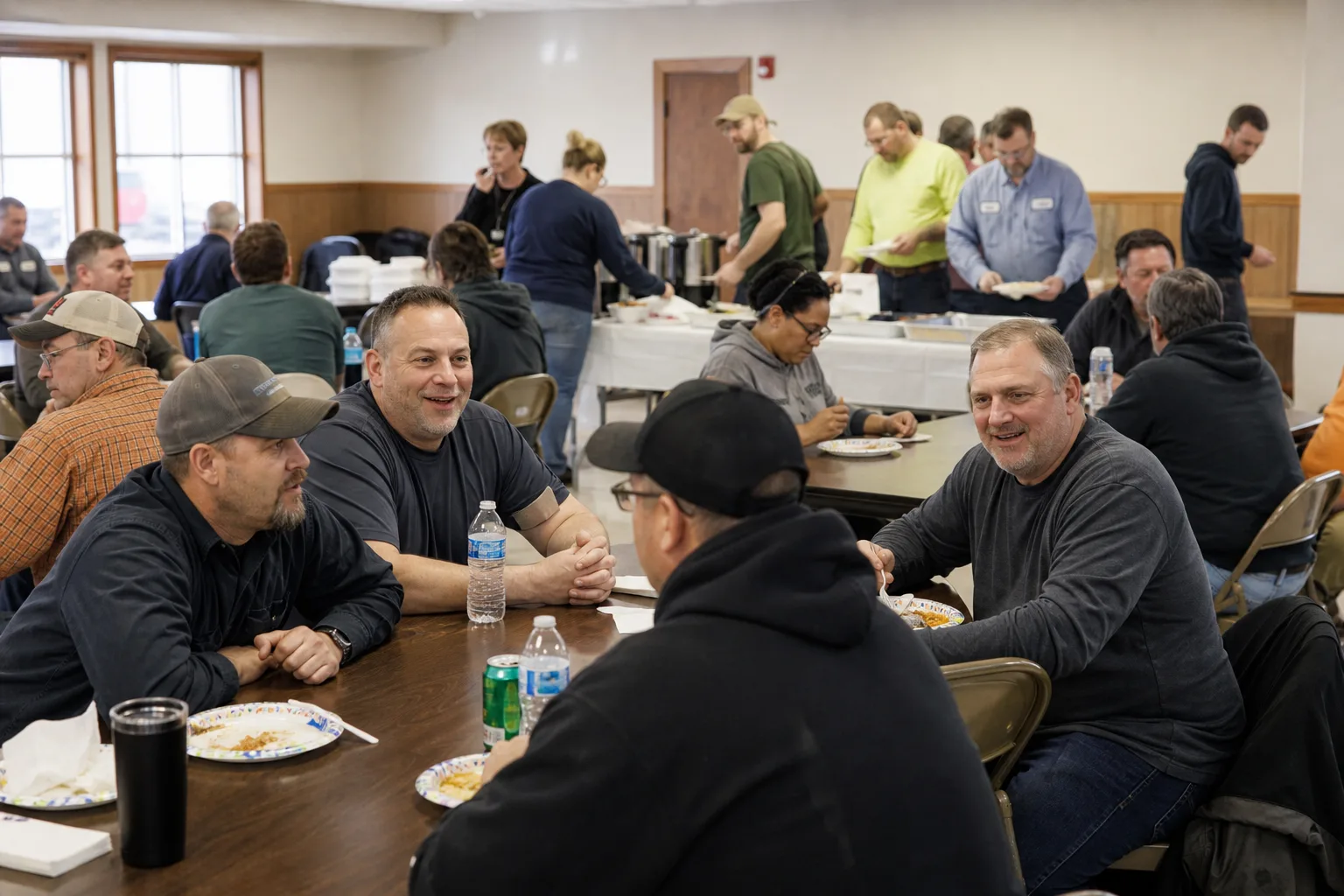
The actual luncheon facts were specific: Indiana State University sponsored an annual employee-appreciation luncheon in a campus cafeteria; attendance was voluntary; employees who attended were paid for their time; and Waters had difficulty getting out of a fixed restaurant-style booth and fractured her femur while rising and twisting to exit it.
On those facts, the court concluded that the luncheon promoted and advanced employer-employee relations, that Waters’s voluntary attendance was not dispositive, and that her injury arose out of and in the course of employment.
Facts and records to gather
Events differ, so preserve records that show what happened here.
| Record | What it documents |
|---|---|
| Invitation or agenda | How the event was presented and scheduled |
| Time records | Recorded work and event times |
| Messages | Communications before and after the event |
| Photographs or video | The setting, activities, and visible conditions |
| Incident report and witness names | Contemporaneous accounts and people who were present |
The table is an organizational aid; it does not decide a claim.
For a broader explanation of the system, read who qualifies for Indiana workers’ compensation and the firm’s Fort Wayne workers’ compensation overview.
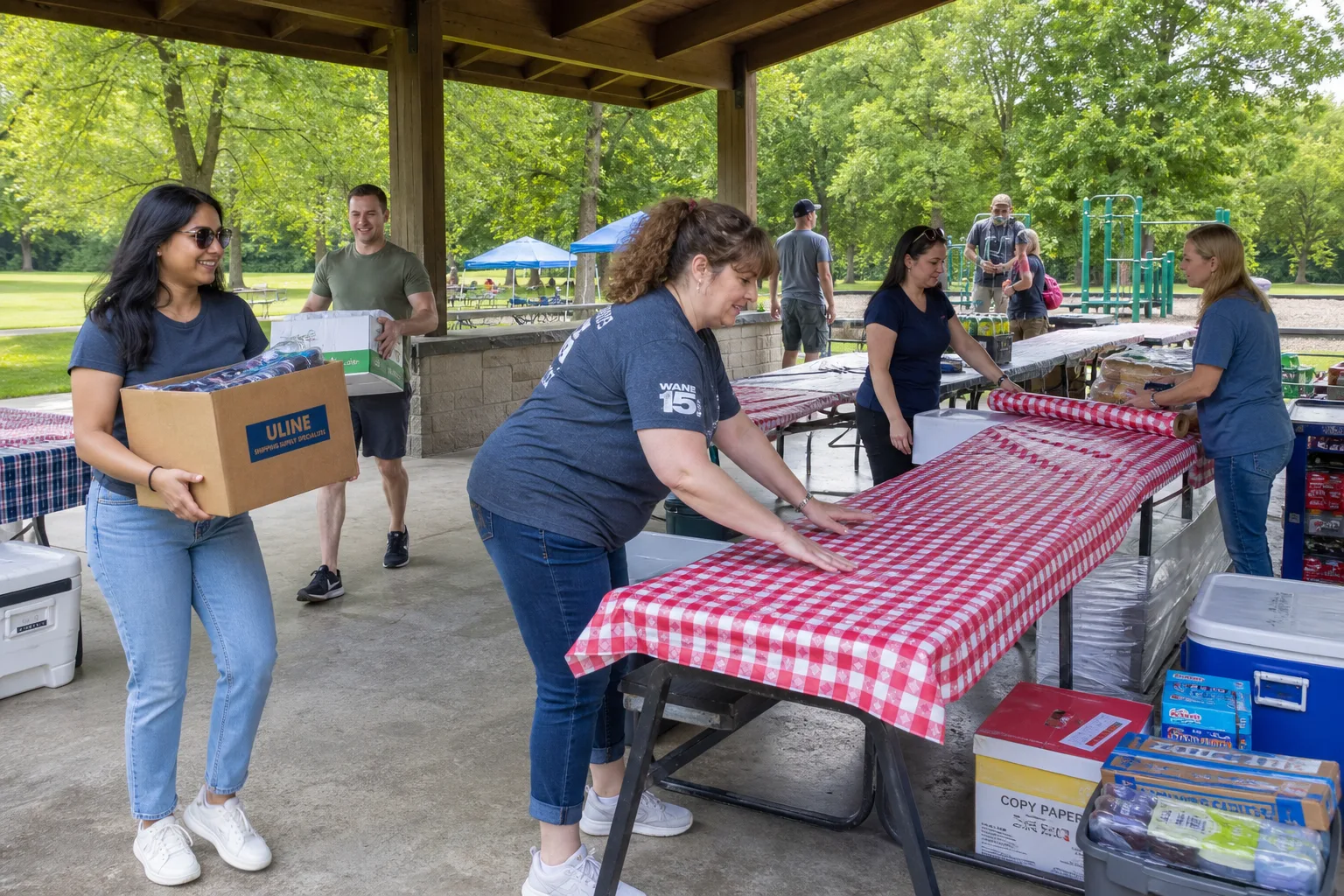
Document the activity at the time of injury
Write down what you were doing immediately before the injury and how the injury occurred. Preserve any related instructions or communications, identify who was present, and retain receipts or other contemporaneous records. These details may help the parties evaluate the statutory test without assuming that an invitation, instruction, or event activity has a predetermined legal effect.

What to do after an injury at a company event
- Address immediate safety and health needs.
- Report the injury to an appropriate employer representative and keep a copy of the report.
- Preserve the event and accident records described above.
- Describe the event and injury in specific terms.
Indiana Code 22-3-3-1[3] generally requires notice as soon as practicable and within 30 days, but contains exceptions involving knowledge by the employer, its agent, or its insurance carrier and circumstances in which the Worker's Compensation Board excuses lack of notice or delay.
The Indiana Worker’s Compensation Board provides forms and guidance on its employee resources page[4]. You can also review the firm’s guides to reporting an Indiana work injury and responding when an Indiana workers’ compensation claim is denied.

Frequently Asked Questions
What does Waters say about voluntary attendance?
The court treated voluntary attendance as nondispositive in light of the luncheon’s actual circumstances. The decision should be read in that factual setting.
Does employer sponsorship decide coverage?
Sponsorship was part of the factual record in Waters, but the governing inquiry remained the statutory arising-out-of and in-the-course-of test.
What if the event was described as team building?
That description alone does not establish the circumstances of the injury. Preserve the event materials and a factual account of what occurred.
What if I was doing a task at the event?
Record the task, the surrounding circumstances, and any contemporaneous communications without assuming the task alone determines the legal outcome.
Where can I learn more about reporting and Board procedures?
The links above provide the notice provision and the Board’s employee materials.
If you were injured at an employer-sponsored event and the connection to your work is unclear, Delventhal Law Office can review the event records, explain the Indiana claim process, and help you consider your options through a free case evaluation.
This article is for general informational purposes only and is not legal advice.