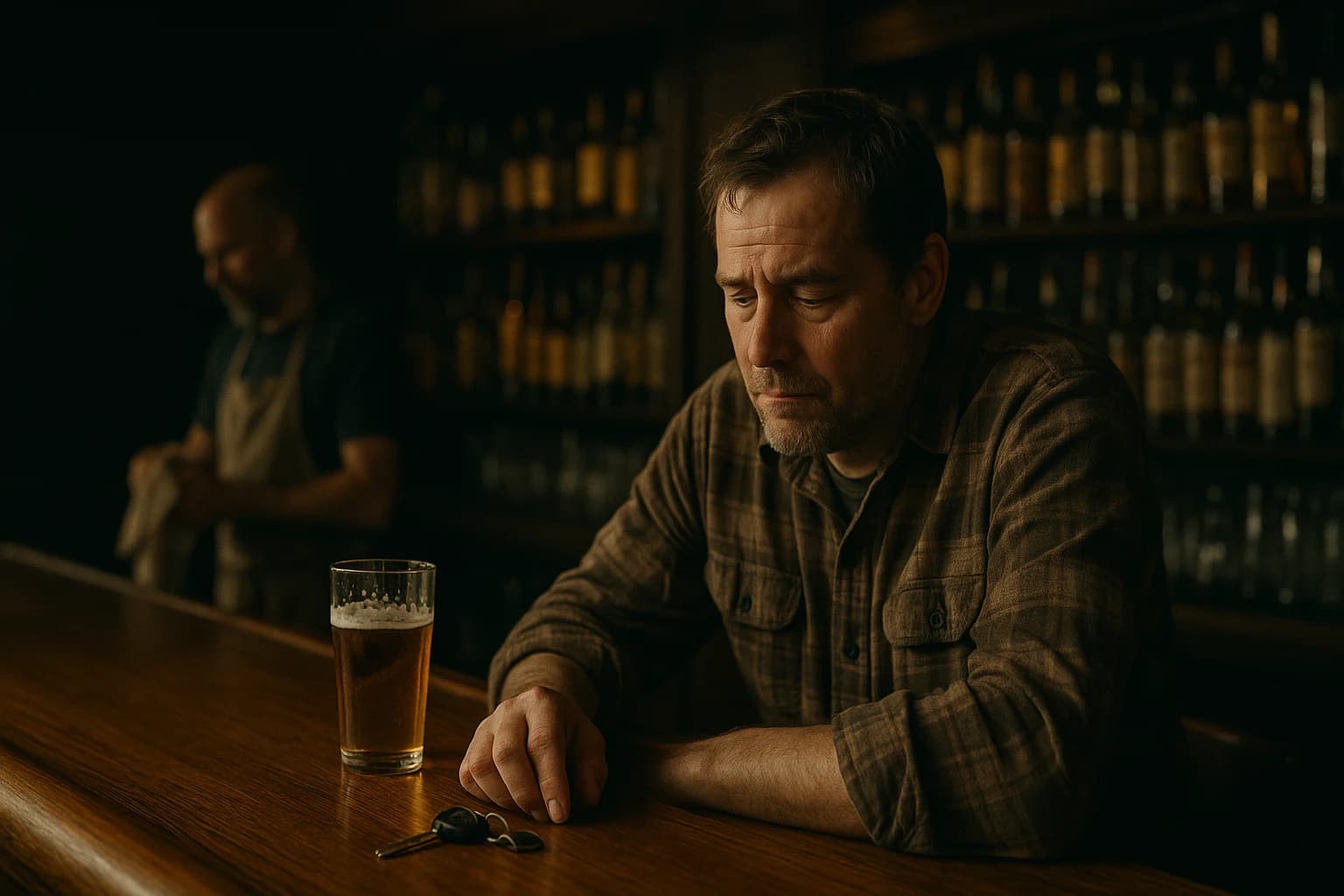
The hard truth about drinking and driving is that the test in your head is not the test the law uses, and it is not the test physics uses either. You can feel mostly fine at a blood alcohol concentration that has already put you well over Indiana’s legal limit. This article walks through how Indiana defines impaired driving, what the actual signs of intoxication look like, and what to do if you or someone you know was hurt by a drunk driver in Fort Wayne or anywhere in Indiana.
Indiana’s Legal Standard for Impaired Driving
Indiana defines the offense of operating a vehicle while intoxicated (OWI) at Indiana Code Title 9, Article 30, Chapter 5. The simple rule: a BAC of 0.08 or higher in the driver’s blood or breath is per-se intoxication. You do not have to weave, swerve, or fail field sobriety; the number alone is the offense. Commercial drivers are held to a lower 0.04 standard. Drivers under 21 are held to 0.02.
Indiana also recognizes impairment short of the per-se number. A driver can be charged with operating while intoxicated based on observed behavior (slurred speech, the smell of alcohol, poor coordination, erratic driving) even if the breath test comes in below 0.08. The state has to prove impairment as a factual matter, but it does not have to prove a specific BAC.
For the civil case (the personal-injury side, not the criminal charge), the standard is even broader. A drunk driver can be liable for damages to a victim even if no breath test was taken or even if the breath result was inconclusive. What matters in civil court is whether alcohol contributed to negligent driving that caused the injury. You can use our Indiana car accident settlement calculator to organize the factors that may affect a claim’s value; it is an educational tool, not a promise of any result.
What 0.08 Actually Feels Like

The CDC and most state health departments publish broad BAC stage descriptions. They are useful as long as you read them with a grain of salt; everyone metabolizes alcohol differently.
- 0.02 to 0.05 (one drink, give or take). Mild relaxation. Slight loss of judgment. You feel fine. Reaction time has already dropped measurably in lab tests.
- 0.05 to 0.08 (two to three drinks for many adults). Coordination starts to suffer. Inhibitions drop. You feel “tipsy.” This is the danger zone, because you feel functional and you are no longer fit to drive.
- 0.08 to 0.15 (three to five drinks for many adults). Clear impairment. Blurred vision, loss of fine motor coordination, slower reaction time. Per-se illegal in Indiana.
- 0.15 to 0.30. Profound impairment. Loss of balance, confusion, possible blackout. Drivers at this level often do not remember the crash they caused.
- Above 0.30. Risk of unconsciousness, alcohol poisoning, and death.
Body weight matters. A 200-pound man and a 130-pound woman who each have three drinks in an hour will not have the same BAC. Food in the stomach slows absorption but does not change the total amount of alcohol in the bloodstream. Tolerance changes what a person feels, but it does not change what their BAC is or how alcohol degrades their reaction time.
Signs You Are Too Drunk to Drive
The honest signs are not the obvious ones. By the time you are slurring or staggering, you have been impaired for hours. The earlier signs are subtler:
- You feel “a little buzzed,” but you tell yourself you are fine.
- You laugh more than usual at things that are not that funny.
- You start a sentence and lose the thread before finishing it.
- You misjudge distance reaching for a glass or a phone on the bar.
- You have a stronger urge to argue or to push back at small things.
- You feel warm in the face. Eyes look glassy in the mirror.
- You have switched from beer or wine to liquor because the beer is “not doing it.”
If any of these are present, you are not fit to drive. The decision is not whether you can technically operate a vehicle. It is whether your reaction time, judgment, and visual processing are within the margins you would need if the worst happened ahead of you on the road.
Why “I Felt Fine” Is the Most Dangerous Sentence
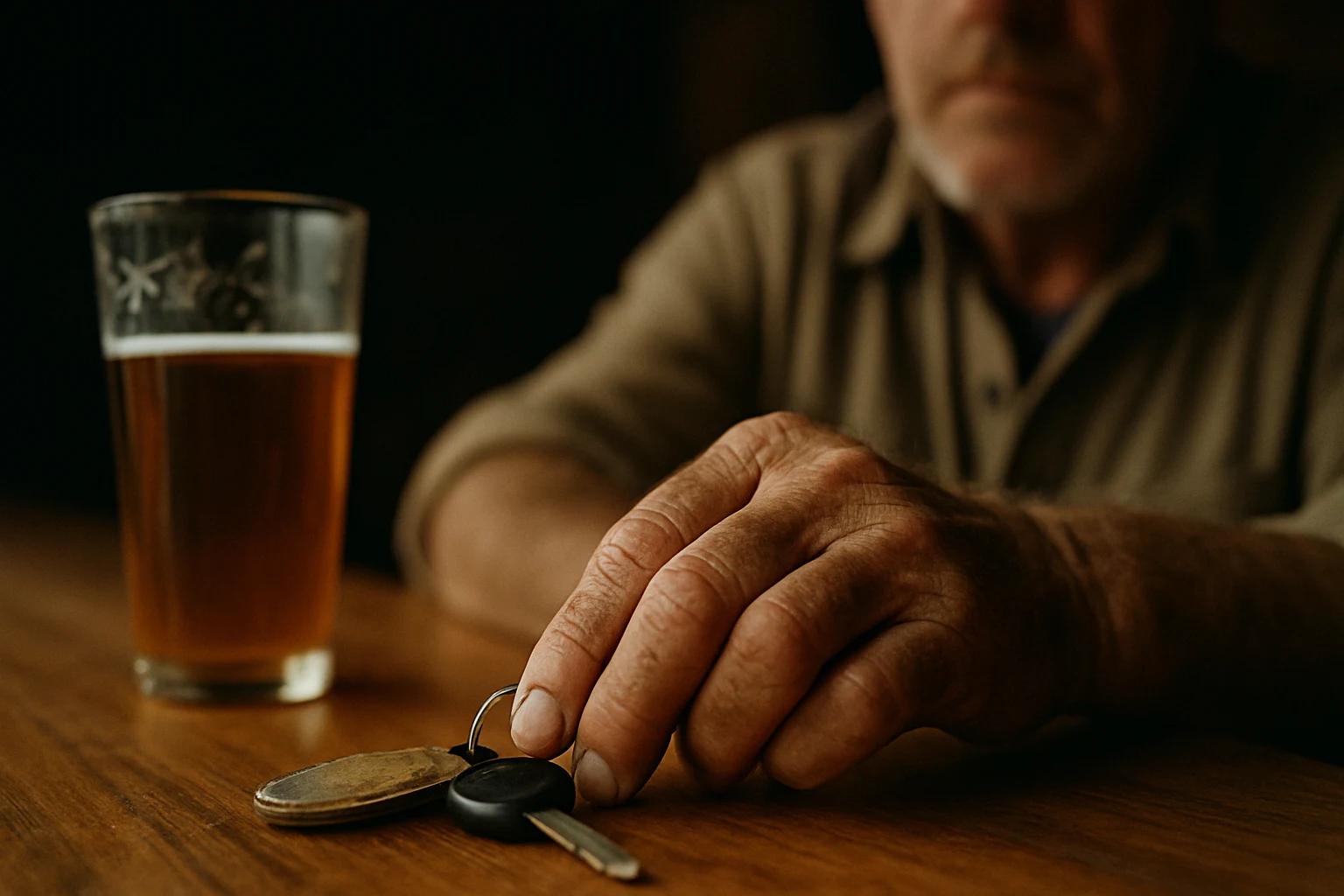
The first cognitive function alcohol degrades is the one that would tell you you are impaired. By the time a driver reaches 0.05, their self-assessment is no longer reliable. Lab studies show that at BAC levels above 0.05, people consistently rate themselves as more capable than their actual measured performance.
That is the brutal piece. The drunker a driver gets, the more confident they get in their ability to drive. The friend who looks fine at the bar may already be the worst possible judge of whether they can get home.
The practical rule: do not use your own perception. Use the simple binary. Have you had any alcohol in the last few hours? If yes, do not drive. Call an Uber. Call a friend. Sleep on a couch. Spend $25 instead of the price of a crash, a lawsuit, a job, and a life.
If You Were Hit by a Drunk Driver in Indiana
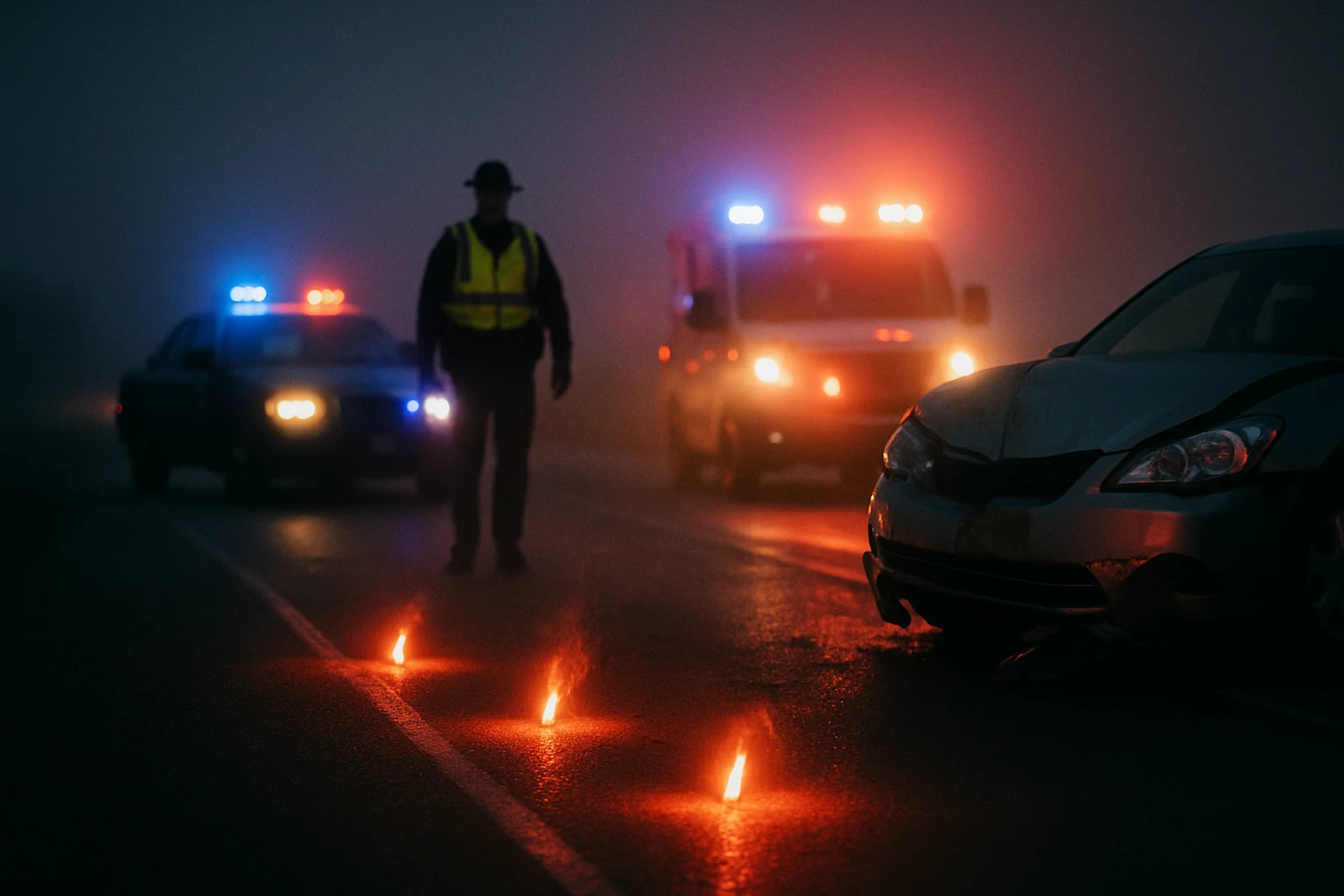
If you were the one hit, Indiana law gives you several layers of recovery:
- The drunk driver’s liability insurance. The primary source of compensation in most cases.
- Punitive damages. Indiana allows punitive damages where the defendant’s conduct was particularly reckless. Drunk driving frequently qualifies. Punitive damages are designed to punish and deter, on top of compensatory damages.
- Dram-shop liability. Indiana’s dram-shop statute allows recovery against an alcohol provider (a bar, restaurant, or in some cases a social host) who knowingly served a visibly intoxicated person who then caused harm. This becomes important when the at-fault driver’s insurance is not enough to cover serious injuries.
- Your own uninsured / underinsured motorist coverage. If the drunk driver had no insurance or not enough, your own UM/UIM coverage steps in.
The filing deadline for the civil case is two years under IC § 34-11-2-4[1]. Wrongful-death actions where a family member died in the crash run two years under IC § 34-23-1-1[2]. See our walkthrough of Indiana’s statute of limitations for auto claims for the deadline traps to watch for.
Evidence That Wins a Drunk-Driver Case
The criminal case (the State’s prosecution of the drunk driver) and the civil case (yours) run on parallel tracks. The criminal case can be useful for your civil case, but it is not the same case and it does not replace your case.
The evidence that matters in the civil case includes:
- The police report and the body-cam footage of the field sobriety test.
- The chemical test result (breath, blood, or urine) and the chain-of-custody documents.
- Receipts and security footage from the establishment where the driver was served, if dram-shop liability is in play.
- The driver’s prior history, including any prior OWI convictions, which can support punitive damages.
- The vehicle event data recorder data showing pre-crash speed, brake application, and steering input.
- Witness statements from passengers, other drivers, and bystanders.
A criminal conviction (or even a plea) is admissible in the civil case as evidence of negligence and recklessness. A criminal acquittal does not bar the civil case, because the criminal standard (beyond a reasonable doubt) is much higher than the civil standard (preponderance of the evidence).
How Delventhal Law Office Handles Drunk-Driver Cases
Drunk-driver cases are different from ordinary crash cases. The defendant is not just negligent; they made a choice that put your family in the hospital. Indiana law recognizes that difference, and so does the Fort Wayne car accident attorney handling your file at Delventhal Law Office.
The work starts with full document discovery from the criminal case: the arresting officer’s report, the chemical test, the body-cam, the booking video, the dispatch audio. Then comes the dram-shop investigation. Did a bar or restaurant overserve? Were there warning signs the staff ignored? Indiana dram-shop cases are fact-intensive and require fast preservation of receipts and surveillance, often within 14 to 30 days before footage overwrites.
Where punitive damages are on the table, the case strategy shifts. Punitive damages are not insured against in most policies, which means the defendant has personal exposure. That changes settlement leverage in ways an ordinary at-fault case does not.
Chad Delventhal handles every drunk-driver case at the firm personally. Indiana State Bar since 2008. One direct line to your attorney, twenty-four hours a day, seven days a week. Visit the Fort Wayne drunk driver accident attorney page for more on how the firm works these cases.
FAQs About Drunk Driving in Indiana
What is the legal BAC limit in Indiana?
0.08 for adult drivers of standard passenger vehicles. 0.04 for commercial drivers. 0.02 for drivers under 21. Indiana also allows OWI prosecution based on observed impairment even when the BAC is below the per-se number.
Can I get punitive damages from a drunk driver in Indiana?
Yes. Indiana allows punitive damages where the defendant’s conduct was particularly reckless, and drunk driving frequently qualifies. Punitive damages are awarded on top of compensatory damages and are designed to punish and deter.
What about the bar that overserved the driver?
Indiana’s dram-shop statute allows recovery against an alcohol provider who knowingly served a visibly intoxicated person who then caused harm. These cases require fast preservation of receipts and surveillance, so timing matters.
How long do I have to file a drunk-driver injury claim?
Two years from the date of the crash under IC § 34-11-2-4[1]. Wrongful-death claims run two years under IC § 34-23-1-1[2].
The drunk driver had only state-minimum insurance. Now what?
If the at-fault driver’s coverage is not enough to cover your injuries, your own underinsured motorist (UIM) coverage steps in. Dram-shop liability may also expand the available pool. A short consultation can map out which sources of recovery apply to your case.
Talk to a Fort Wayne Drunk Driver Accident Attorney
The drunk driver who hit you made a choice. The insurance company representing them is going to spend the next year trying to pay you as little as possible for it. That is what they do.
Delventhal Law Office offers a free, no-obligation consultation. Call (260) 484-6655 or contact us online to schedule a free case evaluation. You talk directly to Chad, not a screener.