Many injured workers in Fort Wayne and across Allen County assume that clocking back in means the case is over. That is one of the most common — and most costly — misunderstandings in Indiana workers' compensation. Whether you returned to your old job, moved to light duty, or took a lower-paying position, you may still have a claim with real settlement value. This guide explains how return-to-work affects each type of benefit, why PPI survives your return, and how Indiana settlements actually get approved.
Key takeaways
- Returning to work does not end your Indiana workers' comp claim or prevent a settlement.
- Going back to work generally stops temporary total disability (TTD) checks, but it does not cancel a PPI award, which pays for permanent loss of function regardless of your wages.
- A settlement can cover unpaid past benefits, your PPI value, and — depending on how it is structured — future medical care.
- Every Indiana workers' comp settlement must be approved by the Worker's Compensation Board before it is valid.
- You generally have two years from the injury (or last compensation paid) to file, so returning to work does not pause that deadline.

Does returning to work end my workers' comp claim?
No. Indiana law ties your right to compensation to your injury and its lasting effects — not to whether you are currently punching a clock. The Worker's Compensation Act allows the injured worker and the employer's insurer to enter a voluntary settlement of the claim, and nothing in the Act treats a return to work as a waiver of that right. Indiana Code § 22-3-2-15[1] expressly permits voluntary settlement agreements, subject to Board approval.
Returning to work often helps your case in one sense: it shows you tried to get back on your feet. What it changes is the type of benefit you are owed, not whether you are owed anything. To understand where a return-to-work fits in the bigger picture, it helps to see the full menu of Indiana benefits, which we break down in our overview of the workers' compensation benefits available in Indiana.
How going back to work affects each benefit
Indiana workers' comp is not one single check — it is several distinct benefits, and a return to work touches each one differently. Here is a plain-language comparison.
| Benefit | What it pays for | Effect of returning to work |
|---|---|---|
| Medical care | Reasonable and necessary treatment for the work injury | Continues while care is authorized; return to work does not end it |
| TTD (temporary total disability) | Wage replacement while you are off work recovering | Generally stops once you can return to available work |
| TPD (temporary partial disability) | Partial wage replacement when you earn less on light duty | May apply if you return but earn less than before |
| PPI (permanent partial impairment) | Permanent loss of use of a body part or the body as a whole | Unaffected — paid based on impairment, not your wages |
| Unpaid past benefits | Checks or bills that should have been paid earlier | Still owed and can be resolved in a settlement |
TTD stops, but that is expected. Under Indiana Code § 22-3-3-7[2], temporary total disability benefits may be terminated once you are no longer temporarily disabled or can return to employment your employer has made available. Losing TTD when you go back to work is normal — it is not the end of your claim.
TPD may kick in if you earn less. If you return to a light-duty or reduced-hours role and make less than before, temporary partial disability can pay a portion of the difference. Indiana caps TPD at a maximum of 300 weeks. We explain the math and the wage-gap rules in our guide to temporary partial disability in Indiana workers' comp.

Why PPI survives your return to work
The single most important point for workers who have returned to their jobs: permanent partial impairment is not wage-loss compensation. A PPI award pays for the permanent physical loss caused by your injury — a stiff shoulder, a fused disc, reduced grip, limited range of motion — regardless of whether you are back earning a paycheck.
PPI is calculated under Indiana Code § 22-3-3-10[3], which uses a degree-based schedule. A doctor assigns an impairment percentage after you reach maximum medical improvement (MMI); that percentage converts into "degrees," and each degree carries a set dollar value under the statute. Because the formula is driven by lost function rather than lost income, a worker who is back to full duty can still be owed a substantial PPI payment.
MMI is the medical turning point that makes PPI possible. It means your condition has reached a stable plateau where no further significant improvement is expected — not that you are pain-free or fully healed. The American Medical Association describes MMI as the point at which a condition has resolved or reached a stable plateau, which is why impairment cannot be rated before then. You can read more in our explainer on what maximum medical improvement means in Indiana workers' comp, and you can estimate a rating with our Indiana workers' compensation PPI calculator.
What can a settlement include after I'm back at work?
Even with wage checks stopped and a job in hand, a settlement can resolve several outstanding pieces of your claim. The Indiana Worker's Compensation Board's own settlement checklist[4] asks parties to address unpaid medical bills, future medical care, and the PPI calculation — a good map of what a settlement typically covers:
- The value of your PPI rating under the statutory schedule.
- Unpaid or disputed past benefits, such as TTD/TPD that should have been paid.
- Outstanding medical bills tied to the work injury.
- Future medical care — either left open or "bought out," depending on the deal.
How future medical is handled is often the highest-stakes decision, especially for back, joint, and chronic-pain injuries that may need ongoing treatment. A full-and-final settlement can permanently close your right to future medical for that injury. We cover the trade-offs in our guide to future medical care in a workers' comp settlement and in what to know before signing an Indiana workers' comp settlement.
Every Indiana settlement needs Board approval
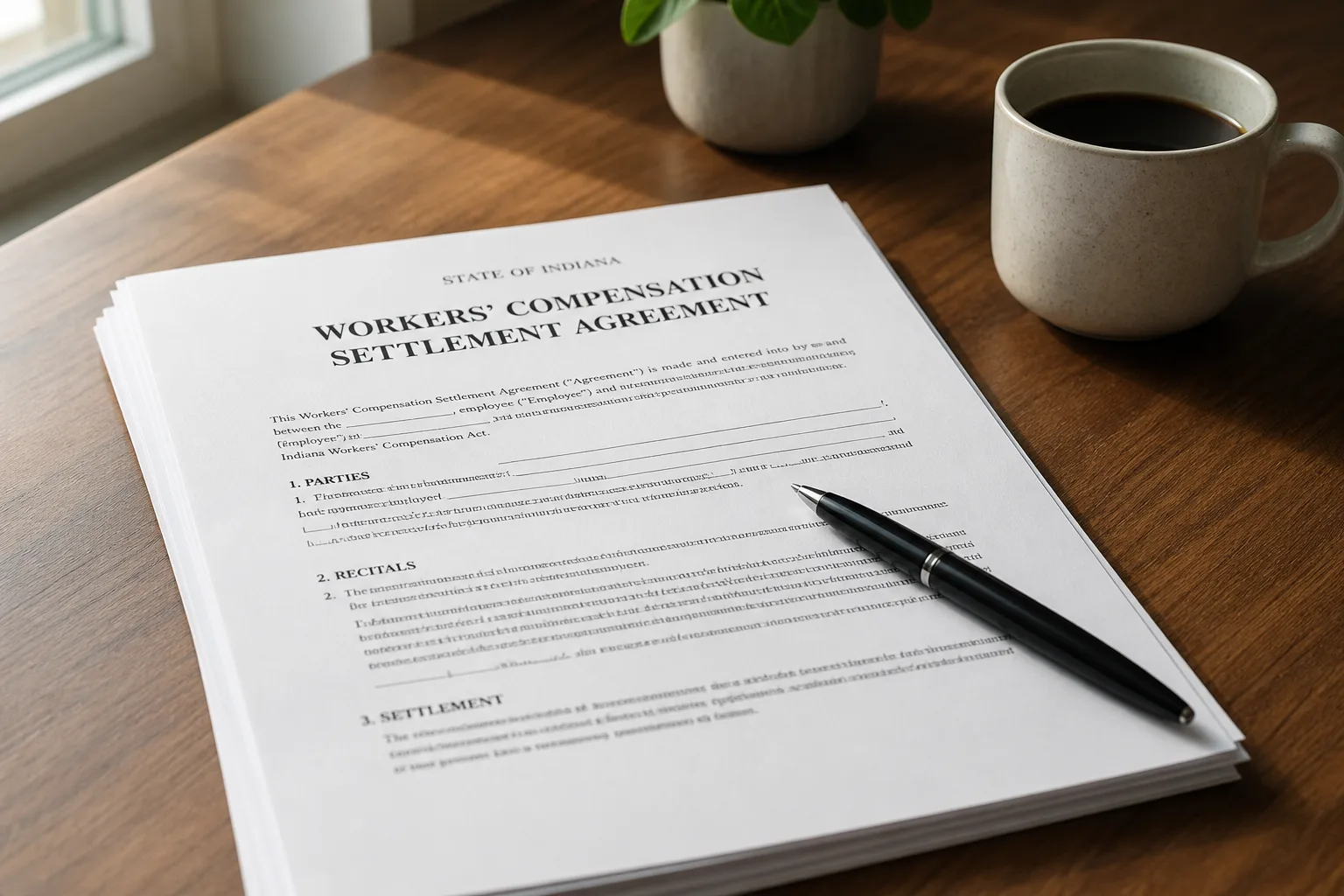
A workers' comp settlement is not final just because you and the insurer agree. Under Indiana Code § 22-3-2-15[5], a settlement or compromise of a claim is not valid until it is approved by a member of the Worker's Compensation Board, and a Board member cannot approve a settlement that is not in accordance with your rights under the Act. The statute also provides that no such agreement is valid unless made after seven days from the date of injury.
This review is a protection for injured workers — it is meant to make sure the deal is fair — but approval does not guarantee the number is the best one for your situation. The Board reviews what is in front of it; it does not negotiate a higher figure for you.
Common insurer arguments (and why they may be wrong)
Because return-to-work is so widely misunderstood, some adjusters lean on it. Watch for these:
- "You're back at work, so there's nothing left to pay." This confuses wage benefits with impairment. PPI is separate and is based on lost function.
- A rushed or zero PPI rating. A low or zero rating can dramatically undercut a settlement. Indiana workers can contest a rating, including through a second opinion.
- Pressure to sign a full-and-final release quickly. Once approved and signed, closing your future medical may be permanent for that injury.
If your adjuster has gone quiet or the numbers do not add up, our team at Delventhal Law Office's workers' compensation practice can review your file. Local injured workers can also learn about county-specific process on our Allen County workers' compensation page.
Deadlines still matter — even if you never missed work again
Returning to work does not stop the clock. Under Indiana Code § 22-3-3-3[6], a claim is generally barred unless filed with the Board within two years after the accident; when TTD or TPD has been paid, that two-year window runs from the last date compensation was paid. Separately, Indiana Code § 22-3-3-1[7] requires you to give your employer notice of the injury, with 30 days as the practical outer limit. If a dispute develops after you are back at work, those deadlines apply just as they would to someone still off the job.
Practical next steps if you've returned to work
- Ask, in writing, whether you have reached MMI and whether a PPI rating has been assigned.
- Keep copies of pay records that show any wage reduction (this supports TPD).
- Save all medical records, work restrictions, and bills tied to the injury.
- Do not sign a settlement or release before you understand whether it closes future medical.
- Note your injury date and the date of your last comp payment so you can track the two-year deadline.

Frequently Asked Questions
Can I still settle if I'm back at my old job full-time?
Yes. Full-duty return does not cancel a PPI award or unpaid past benefits. Because PPI is based on permanent loss of function rather than your wages, you may still be owed a settlement even while earning your normal pay.
Did I lose my PPI money by going back to work?
No. PPI is calculated under Indiana Code § 22-3-3-10[8] using an impairment-based schedule. It is separate from wage-replacement benefits, so returning to work does not reduce or eliminate it.
The insurer stopped my checks when I returned. Is that legal?
Usually, yes — for temporary total disability. Under Indiana Code § 22-3-3-7[9], TTD can be terminated when you can return to available work. But that only ends the temporary wage benefit; it does not end your claim, your PPI, or your right to settle.
Will a settlement cover future treatment?
It depends on how the agreement is written. Some settlements leave medical open; many full-and-final settlements close future medical for that injury permanently. Review this carefully before signing.
Does returning to work extend my filing deadline?
No. The general two-year deadline under Indiana Code § 22-3-3-3[10] still applies, running from the accident or the last date compensation was paid. Returning to work does not pause it.
Talk with an Indiana workers' comp attorney
If you have gone back to work and are not sure whether you still have a claim, a free consultation can help you understand your options. Delventhal Law Office can review what happened, explain the deadlines that may apply, look at your PPI rating and settlement terms, and help you decide the next step. You do not have to figure out the workers' comp process alone — contact our Fort Wayne office to talk it through.
This article is general information about Indiana law and is not legal advice. Reading it does not create an attorney-client relationship, and neither does contacting us. If you do contact us about a possible claim, Indiana Rule of Professional Conduct 1.18 requires us to keep what you tell us confidential whether or not we take the case — but please do not send documents or detailed facts until we have agreed in writing to represent you. For advice about your specific situation, speak with a qualified attorney.
Sources
- Indiana Code § 22-3-2-15 (iga.in.gov) ↩
- Indiana Code § 22-3-3-7 (iga.in.gov) ↩
- Indiana Code § 22-3-3-10 (iga.in.gov) ↩
- settlement checklist (in.gov) ↩
- Indiana Code § 22-3-2-15 (iga.in.gov) ↩
- Indiana Code § 22-3-3-3 (iga.in.gov) ↩
- Indiana Code § 22-3-3-1 (iga.in.gov) ↩
- Indiana Code § 22-3-3-10 (iga.in.gov) ↩
- Indiana Code § 22-3-3-7 (iga.in.gov) ↩
- Indiana Code § 22-3-3-3 (iga.in.gov) ↩