


Fort Wayne Pedestrian Accident Attorneys
A pedestrian struck by a passenger car at 30 mph has roughly a 45% chance of being killed. At 40 mph, the chance is around 85%. Those are NHTSA numbers, and they explain why pedestrian crashes in Allen County so often involve catastrophic injury or death. A walker, a runner, a person crossing Coliseum Boulevard from a bus stop to a strip mall, a parent leaving a school dropoff line — they have no protection from a vehicle hitting them. Delventhal Law Office represents people hit by drivers in Fort Wayne, New Haven, Huntertown, and across Indiana. We also represent the families of people who did not survive.
Pedestrian cases are emotionally heavier than most. The injuries are severe. Liability is often clear but vigorously denied. Insurance carriers reflexively try to blame the pedestrian — for jaywalking, for not wearing high-visibility clothing, for being in the wrong place. Effective representation begins with rejecting that narrative and rebuilding the picture with hard evidence.
Indiana Law That Controls a Pedestrian Crash
Indiana Code 9-21-17[2] governs pedestrian rights and duties. The headline rule: drivers must yield the right of way to pedestrians lawfully in crosswalks (IC 9-21-17-1[3]). Pedestrians outside marked or unmarked crosswalks must yield to vehicles (IC 9-21-17-7[4]), but drivers still have an obligation to exercise due care to avoid colliding with any pedestrian, sound the horn when necessary, and exercise proper precaution upon observing a child or obviously confused or incapacitated person (IC 9-21-17-9[5]). In plain language: even when a pedestrian was technically outside a crosswalk, a driver who saw or should have seen them still has a duty to avoid the collision.

The two-year personal injury statute of limitations in IC 34-11-2-4[6] applies. Wrongful death claims are subject to the same two-year deadline under IC 34-23-1[7]. If the at-fault driver was operating a government vehicle — Fort Wayne Police, an Allen County Sheriff cruiser, a transit bus, a public works truck, an INDOT vehicle — a Tort Claim Notice must be filed within 180 days for local entities and 270 days for the State under IC 34-13-3-8[8]. Our guide to Indiana government tort claim notices explains the separate notice process. Missing the notice deadline typically ends the case before suit can even be filed.
Indiana follows modified comparative fault under IC 34-51-2[9]. Recover if you are 50% or less at fault; recover nothing at 51% or more. Damages are reduced by your share. Defense lawyers and adjusters consistently push fault onto pedestrians for being outside a crosswalk, wearing dark clothing, looking at a phone, or "darting out." Some of these arguments have a basis in fact; many do not. Either way, they have to be answered.
How Pedestrian Crashes Happen in Indiana
The crash patterns we see most often:
- Crosswalk strikes — a driver turning left or right through a crosswalk hits a pedestrian who has the walk signal. The duty to yield is squarely on the turning driver.
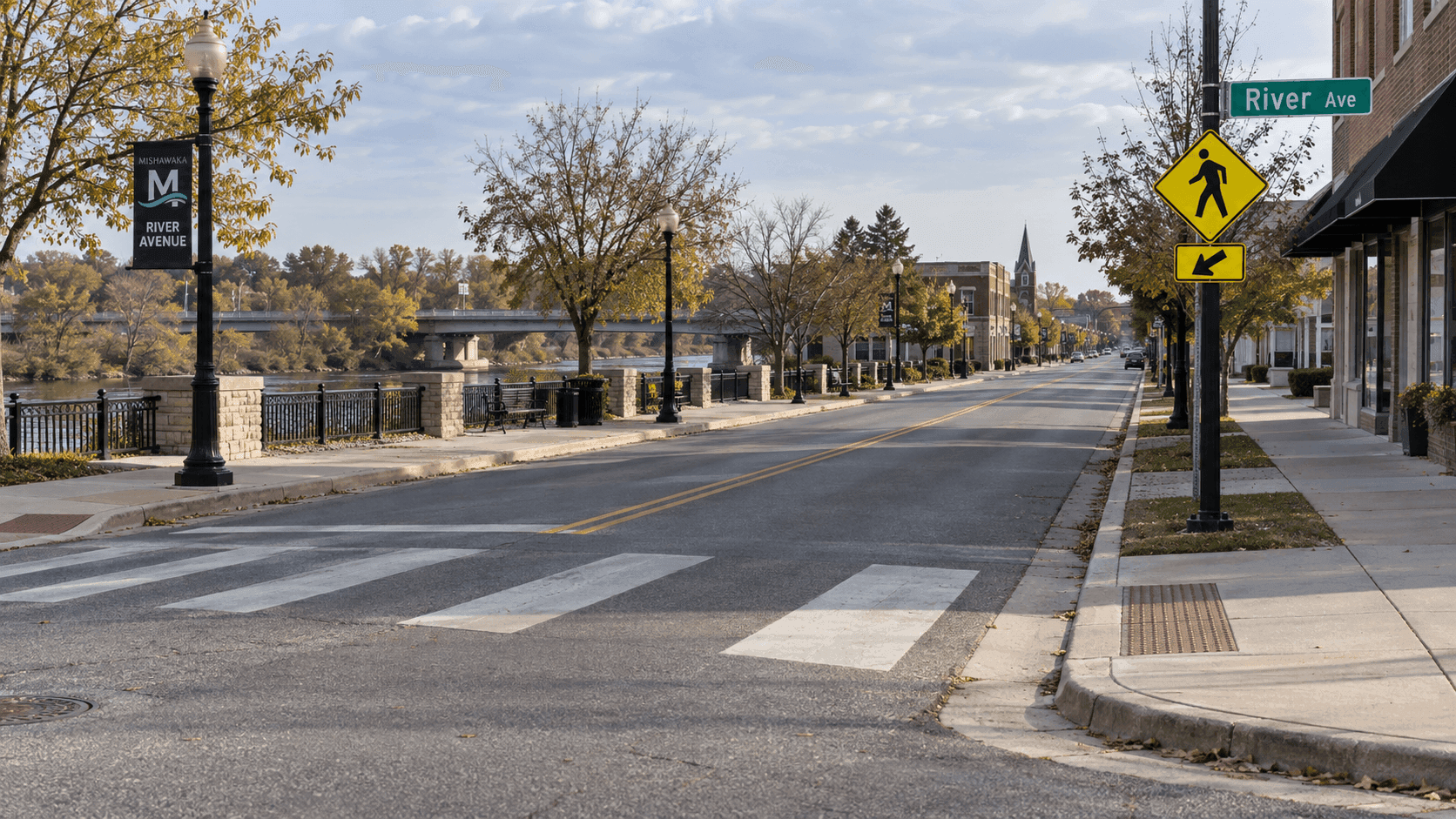
- Mid-block collisions on Coliseum Boulevard, Lima Road, and Maumee Avenue where pedestrians cross between widely spaced signals. The driver's duty of due care under IC 9-21-17-9[5] still applies.
- Parking lot strikes in lots at Glenbrook, Jefferson Pointe, downtown, and grocery and big-box stores — drivers backing out, drivers cutting across lanes, drivers texting.
- Backover crashes in residential driveways, particularly involving young children.
- Bus stop and school crossing strikes — drivers failing to stop for school buses (IC 9-21-12[10]) or to yield in clearly marked school zones.
- Hit-and-run pedestrian crashes, which usually become uninsured motorist claims under the pedestrian's own household auto policy.
- Impaired-driver crashes — alcohol, drugs, prescription medication — which open the door to punitive damages under IC 34-51-3[11].
- Distracted-driver crashes — texting, phone use, screen distraction. Cell phone records pulled with proper process can prove the distraction.
- Right-on-red and right-turn-into-crosswalk crashes — extraordinarily common at suburban intersections.
The Injuries Pedestrians Sustain
A pedestrian struck by a car typically experiences three impact events in rapid succession: the bumper striking the legs, the hood and windshield striking the upper body, and the road striking whichever part of the body lands first. The result is a pattern of injuries that includes lower-extremity fractures from the bumper, internal injuries and head injuries from the hood-and-windshield phase, and additional fractures and road rash from landing. In severe cases the pedestrian is run over by the vehicle, by oncoming traffic, or both.
| Injury | Typical Medical Cost | Recovery | Settlement Range (clear liability) |
|---|---|---|---|
| Tibial plateau or femur fracture | $60,000 - $200,000 | 9-18 months | $150,000 - $500,000 |
| Pelvic fracture | $80,000 - $250,000 | 1-2 years; possible permanent restrictions | $200,000 - $750,000 |
| Multiple rib fractures with lung injury | $50,000 - $200,000 | 3-9 months | $100,000 - $400,000 |
| Spinal fracture / cord involvement | $200,000 - $2,000,000+ | Permanent | $500,000 - policy limits |
| Traumatic brain injury (mod-severe) | $300,000 - $1,500,000+ lifetime | Permanent | $750,000 - policy limits |
| Internal organ injuries (splenic, liver, bowel) | $75,000 - $250,000 | 3-12 months | $125,000 - $500,000 |
| Crush injuries / amputation | $200,000 - $1,500,000+ | Permanent | Policy limits in nearly every case |
| Wrongful death | Final medical + funeral | N/A | $750,000 - several million |
These ranges reflect actual outcomes we see in Allen County and federal court resolutions when liability is clear and there is sufficient insurance. They are not promises about any particular case.
What Compensation Covers

- Past and future medical care — surgery, hardware, rehabilitation at Parkview's or Lutheran's rehab units, prosthetics, durable medical equipment, home modifications, mental health care.
- Lost wages and lost earning capacity — both the income you have already missed and the long-term effect of permanent restrictions on what you can earn.
- Pain, suffering, mental anguish, and loss of enjoyment of life — no statutory cap in ordinary pedestrian cases.
- Permanent scarring and disfigurement, particularly for facial and forearm injuries.
- Loss of consortium for the injured person's spouse.
- Wrongful death damages under IC 34-23-1[7], which are recoverable by a personal representative for the benefit of certain family members.
- Punitive damages under IC 34-51-3[11] in drunk driving, fleeing, or reckless cases. Capped at the greater of $50,000 or three times compensatory damages, with 75% paid to the state's violent crime victims fund.
Where the Money Comes From
Indiana minimum liability coverage is $25,000 per person under IC 27-7-5-2[12] — almost never enough for a pedestrian-versus-car crash. The full coverage picture often includes:
- The at-fault driver's bodily injury liability policy.
- The injured pedestrian's own uninsured/underinsured motorist (UM/UIM) coverage from a household auto policy. Yes — your auto policy covers you when you are on foot if struck by a motor vehicle. Most pedestrians do not realize this.
- Med-pay on the pedestrian's household auto policy.
- An umbrella policy on either side.
- A commercial policy if the at-fault driver was working at the time.
- The pedestrian's health insurance — which pays bills but typically has subrogation rights against the recovery.
We pull every household policy declarations page and look for every layer of available coverage. We find what others miss — and on a pedestrian case that often means another six figures of recovery the carrier never volunteered.
The Common Insurance Tactics
- Blame the pedestrian for being outside a crosswalk, wearing dark clothing, "looking at a phone," or "darting out."
- Push for a recorded statement before the injured person is out of the hospital.
- Demand a broad medical authorization to hunt for unrelated old records.
- Offer a quick low settlement before the medical picture is complete.
- Argue medical bills should be discounted to "what insurance actually paid" — a misreading of Indiana law that we routinely beat.
- Wait out the two-year statute of limitations and then make a take-it-or-leave-it offer.
What To Do After a Pedestrian Crash

- Call 911 immediately and accept transport to the hospital. Internal injuries can be silent for hours.
- If you can or someone with you can, photograph the scene, the vehicle, the position of the body and any debris, and the lighting and signage.
- Get names and contact information for every witness present.
- Report the crash to your own auto insurer to trigger UM/UIM and med-pay coverage. Pedestrians who do not own a car may still be covered through a resident family member's policy.
- Do not give the at-fault driver's insurer a recorded statement. Do not sign their medical authorization. Do not accept a quick check that comes with a release.
- Save your clothing, shoes, and any items you were carrying. They are evidence.
- Call a lawyer in the first days. Camera footage from nearby businesses and homes is often overwritten in 14 to 30 days.
What Evidence Can Prove the Crash When the Driver Says “I Never Saw the Pedestrian”?
“I never saw the pedestrian” does not by itself excuse negligence, but poor visibility does not automatically establish driver fault either. The investigation asks what each person could reasonably see and do under the actual conditions. All facts—and Indiana’s comparative-fault rules—matter.
- Lighting and contrast: daylight, dusk, darkness, streetlights, headlights, weather, glare, clothing, and background contrast should be documented under conditions reasonably comparable to the crash.
- Sight lines and obstructions: lane geometry, parked or moving vehicles, signs, landscaping, construction, and the driver’s path can show when the pedestrian entered view.
- Vehicle blind zones: vehicle height, hood profile, windshield geometry, mirrors, and A-pillars can obscure a pedestrian differently as the vehicle or person moves.
- Speed and braking: skid or tire marks, debris, damage, video, and available electronic data may help evaluate approach speed, reaction, braking, and impact sequence.
- Crosswalk and signal timing: phase records, pedestrian intervals, push-button operation, markings, and site measurements can test where each participant should have been.
- Video and witnesses: traffic, business, doorbell, surveillance, and dashcam footage can be overwritten quickly. Witness accounts should record each person’s exact vantage point, view duration, and obstructions—not just a conclusion about fault.
- Distraction evidence: relevant phone or app records may be obtained through consent, subpoena, discovery, or other proper legal process; a suspicion alone does not establish distraction.
- Vehicle data: depending on the vehicle and event, EDR, infotainment, ADAS, camera, radar, or other sensor data may exist. Availability, retention, access, interpretation, and whether a system recorded the event vary, so prompt preservation and qualified analysis may be necessary.
Scene measurements, 911 audio, CAD records, police materials, and reconstruction may connect these sources. For a deeper intersection-specific analysis, see visibility evidence in Indiana left-turn pedestrian crashes. The firm’s Fort Wayne car accident lawyer page also explains broader collision evidence and insurance issues. If the vehicle had automatic emergency braking with pedestrian detection, our article on what AEB data can and cannot show explains why a system that did not activate at night, at higher speeds, or during a turn is not proof that the pedestrian was at fault.
We coordinate with treating physicians at Lutheran, Parkview, Orthopaedic Hospital, and rehab facilities in the area to make sure the medical record reflects the full extent of injury and the projected future care. In wrongful death cases, we work with economic experts to project the value of the income, services, and support the family has lost.
We file in Allen Superior or Allen Circuit Court. When the defendant is from out of state and damages exceed $75,000, the case typically lands in the United States District Court for the Northern District of Indiana, Fort Wayne Division. We litigate and try cases in both.
Wrongful Death of a Pedestrian
If a pedestrian crash takes a life, the claim is brought by a personal representative appointed by the probate court under IC 34-23-1[7]. Damages depend on who survives the decedent. If the decedent leaves a spouse, dependent children, or dependent next of kin, damages include loss of services, support, love and affection, and the value of services the decedent provided to the household. If the decedent is an adult with no spouse and no dependents, the Adult Wrongful Death Statute (IC 34-23-1-2[13]) controls. That statute permits recovery of medical, funeral, and burial expenses, plus loss of services and loss of love and companionship of the adult, with the noneconomic damages capped at $300,000. These are technical distinctions that affect strategy from day one.
Frequently Asked Questions
How long do I have to file a pedestrian accident lawsuit in Indiana?
Two years from the date of the crash under IC 34-11-2-4[6]. Wrongful death claims under IC 34-23-1[7] carry the same two-year deadline. If the at-fault driver was operating a government vehicle, a Tort Claim Notice must be filed within 180 days for local entities and 270 days for the State under IC 34-13-3-8[8]. UM and UIM claims may have shorter contractual deadlines under the policy. Get a lawyer involved well before any of these deadlines run.

I was crossing outside a crosswalk. Do I still have a case?
Often yes. While Indiana places the duty to yield on pedestrians outside a crosswalk (IC 9-21-17-7[4]), drivers still have an independent duty to exercise due care, keep a proper lookout, and avoid colliding with any pedestrian (IC 9-21-17-9[5]). Many mid-block crashes involve a driver who was speeding, distracted, or simply not paying attention. Comparative fault may reduce your recovery, but as long as your share of the fault is 50% or less, you can still recover under IC 34-51-2[9].
I do not own a car. Is there any insurance to cover me?
Possibly yes. If you live in a household with a resident family member who carries auto insurance, you are generally considered an insured under that policy's UM, UIM, and med-pay coverages. That means if the at-fault driver had no insurance or inadequate insurance, you may still have access to substantial coverage you did not know about. Pulling every household policy is one of the first things we do.
What if the driver fled the scene?
You generally have a claim against your own (or a household member's) uninsured motorist coverage. The hit-and-run must usually be reported to law enforcement within a reasonable time, and you should report the loss to the UM carrier promptly. Indiana requires UM coverage to be offered on every auto policy unless rejected in writing. Police investigation, traffic camera footage, and witness work sometimes identify the driver later, which can open up the at-fault driver's policy as well.
How much is a pedestrian accident case worth?
It depends on the severity of the injuries, the medical bills (past and projected), wage loss, permanent restrictions, the clarity of liability, and the available insurance. Pedestrian cases tend to produce serious injuries and large medical bills, so the cases typically resolve in the high five to seven figures when liability is clear and the coverage is adequate. We will not quote a number until we have the medical records, the coverage information, and a real fault analysis.
What if my loved one was killed?
A wrongful death claim must be brought by a personal representative under IC 34-23-1[7]. If the decedent had a spouse, dependent children, or dependent next of kin, the recovery is broad. If the decedent was an adult with no spouse and no dependents, the Adult Wrongful Death Statute (IC 34-23-1-2[13]) applies, which caps noneconomic damages at $300,000. We handle the probate appointment of the personal representative, the wrongful death litigation, and the eventual distribution of any settlement or judgment.
What does it cost to hire Delventhal Law Office for a pedestrian case?
Nothing up front. We handle pedestrian cases on a contingency fee — our fee is a percentage of the recovery, payable only if we win. The firm advances the costs of investigation, experts, court filings, and depositions. You owe nothing if we do not collect. Call or use the free consultation form to schedule a confidential review. See also our other practice areas.
The Indiana law that applies to your pedestrian accident case
Pedestrian-injury cases in Indiana run on the two-year statute of limitations in IC 34-11-2-4[6] and the 51% modified comparative-fault rule in IC 34-51-2-6[14]. Pedestrian right-of-way under IC 9-21-17[2] governs marked and unmarked crosswalks, mid-block crossings, and intersection conduct. The case turns on driver negligence — speed, distraction, impairment, failure to yield — and the pedestrian's own placement and visibility at the moment of impact. When the at-fault driver flees or carries minimum-limits liability coverage, uninsured and underinsured motorist coverage on the pedestrian's own household auto policy becomes the primary recovery source.
How insurance carriers fight Fort Wayne pedestrian accident claims
Driver carriers defend pedestrian claims on four predictable fronts. First, they argue the pedestrian was outside a marked crosswalk, in a mid-block crossing, or walking against the signal, attempting to push the fault percentage above 50%. Second, they argue the pedestrian wore dark clothing and was not visible despite the driver's reasonable lookout. Third, they argue the pedestrian was distracted on a cell phone, intoxicated, or otherwise inattentive. Fourth, they minimize the medical injury, arguing soft-tissue claims and not the documented pelvic, head, or leg fractures. We counter with reconstruction analysis, dashcam and surveillance video, toxicology if the driver was tested, and pedestrian-severity research published by the Centers for Disease Control and Prevention[15] documenting why pedestrian injuries are categorically more severe than occupant injuries at the same impact speed.
Damages categories in an Indiana pedestrian accident case
Pedestrian-injury damages routinely exceed occupant-injury damages at the same impact speed because the human body has no crumple zone. Recovery includes medical care for head injury, internal bleeding, pelvic and lower-extremity fractures, lost wages, permanent loss of earning capacity, and non-economic damages for pain, suffering, and disfigurement. Pedestrian-fatality and injury-severity data published by the Centers for Disease Control and Prevention[15] grounds the future-care portion of the damages model and rebuts the carrier's typical minimization strategy.
What our pedestrian accident clients ask most
Who has the right of way under Indiana pedestrian law?
Indiana pedestrian right-of-way is governed by IC 9-21-17[2]. Pedestrians have the right of way in marked crosswalks and at unmarked crosswalks at intersections when crossing with the signal or where no signal exists. Outside crosswalks, pedestrians must yield to vehicles, but drivers retain a duty of due care and cannot run down a visible pedestrian even outside a crosswalk.
What if the driver who hit me left the scene?
Hit-and-run pedestrian claims proceed primarily through uninsured-motorist coverage on the injured person's own household auto policy under IC 27-7-5[16]. Indiana requires UM coverage on every auto policy unless the insured affirmatively rejects it in writing. Pedestrians without an auto policy can sometimes claim under a resident relative's policy if they live in the same household.
Does Indiana require pedestrians to use marked crosswalks?
Indiana does not require pedestrians to use marked crosswalks where none exist within reasonable distance. IC 9-21-17[2] governs crossing conduct in different scenarios. Outside crosswalks, pedestrians must yield to vehicles, but the driver's duty of due care, reasonable speed, and proper lookout still applies, and a visible pedestrian outside a crosswalk does not justify failure to yield.
How is fault allocated when a pedestrian was struck outside a crosswalk?
Indiana applies the 51% modified comparative-fault rule under IC 34-51-2-6[14]. The jury allocates a fault percentage to each party. If the pedestrian is found 50% or less at fault, recovery is reduced by that percentage; if found 51% or more, recovery is barred. Reconstruction, driver inattention, and impact-speed evidence are the levers that keep the pedestrian's fault percentage below 50%.
How long do I have to file an Indiana pedestrian-accident lawsuit?
Indiana's two-year personal-injury statute of limitations under IC 34-11-2-4[6] runs from the date of the crash. Claims against government drivers or on government roads with negligent design or maintenance trigger Indiana Tort Claims Act notice deadlines as short as 180 days under IC 34-13-3-8[8]. Claims by injured minors are tolled under IC 34-11-6-1[17].
What happens after you hire us
From day one, we pull the police crash report, send preservation letters for surveillance and dashcam footage, and coordinate accident reconstruction. We work the driver's liability carrier and the injured pedestrian's own UM/UIM carrier in parallel, send a documented demand once medical care plateaus, and file in Allen Superior Court when needed. Every step is on a contingency-fee basis: no fee unless we recover.

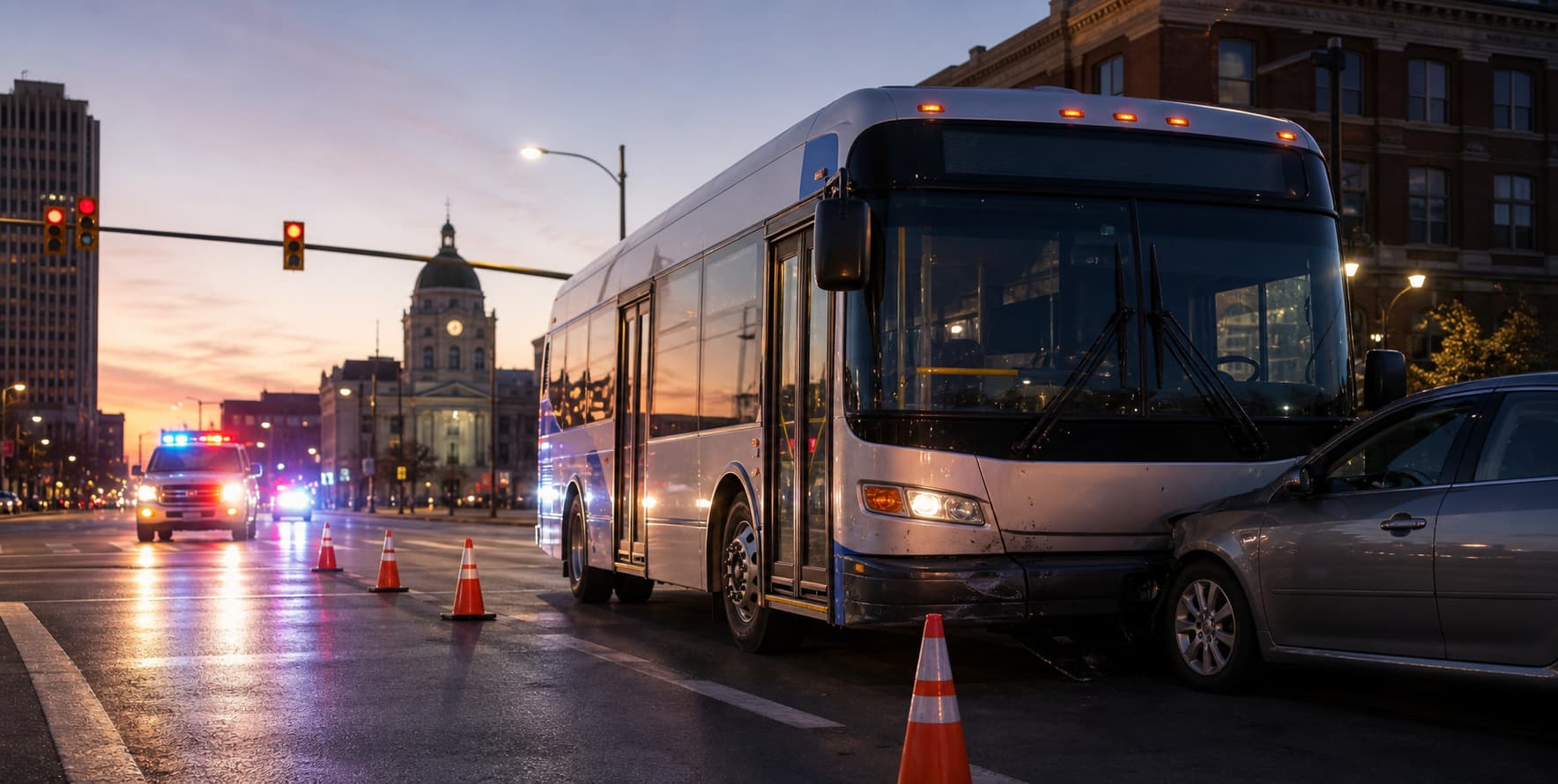
Hit by a bus while walking? See how Delventhal Law handles Fort Wayne bus accident claims involving transit vehicles, school buses, and public-entity evidence.
Sources
- Watch this pedestrian accident claims video on YouTube (youtu.be) ↩
- Indiana Code 9-21-17 (iga.in.gov) ↩
- IC 9-21-17-1 (iga.in.gov) ↩
- IC 9-21-17-7 (iga.in.gov) ↩
- IC 9-21-17-9 (iga.in.gov) ↩
- IC 34-11-2-4 (iga.in.gov) ↩
- IC 34-23-1 (iga.in.gov) ↩
- IC 34-13-3-8 (iga.in.gov) ↩
- IC 34-51-2 (iga.in.gov) ↩
- IC 9-21-12 (iga.in.gov) ↩
- IC 34-51-3 (iga.in.gov) ↩
- IC 27-7-5-2 (iga.in.gov) ↩
- IC 34-23-1-2 (iga.in.gov) ↩
- IC 34-51-2-6 (iga.in.gov) ↩
- Centers for Disease Control and Prevention (cdc.gov) ↩
- IC 27-7-5 (iga.in.gov) ↩
- IC 34-11-6-1 (iga.in.gov) ↩