


DELVENTHAL LAW
Fender Bender Accidents
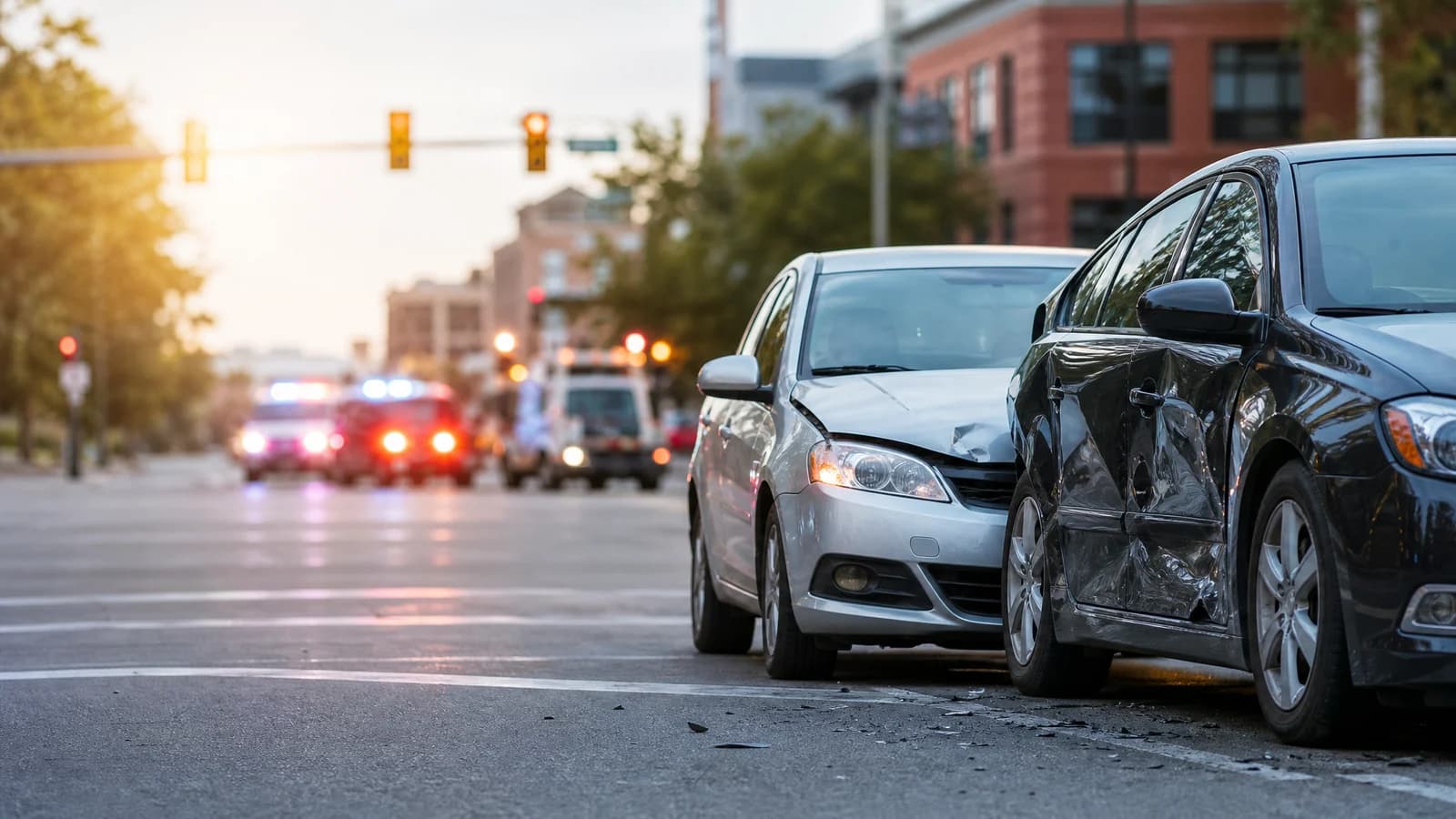
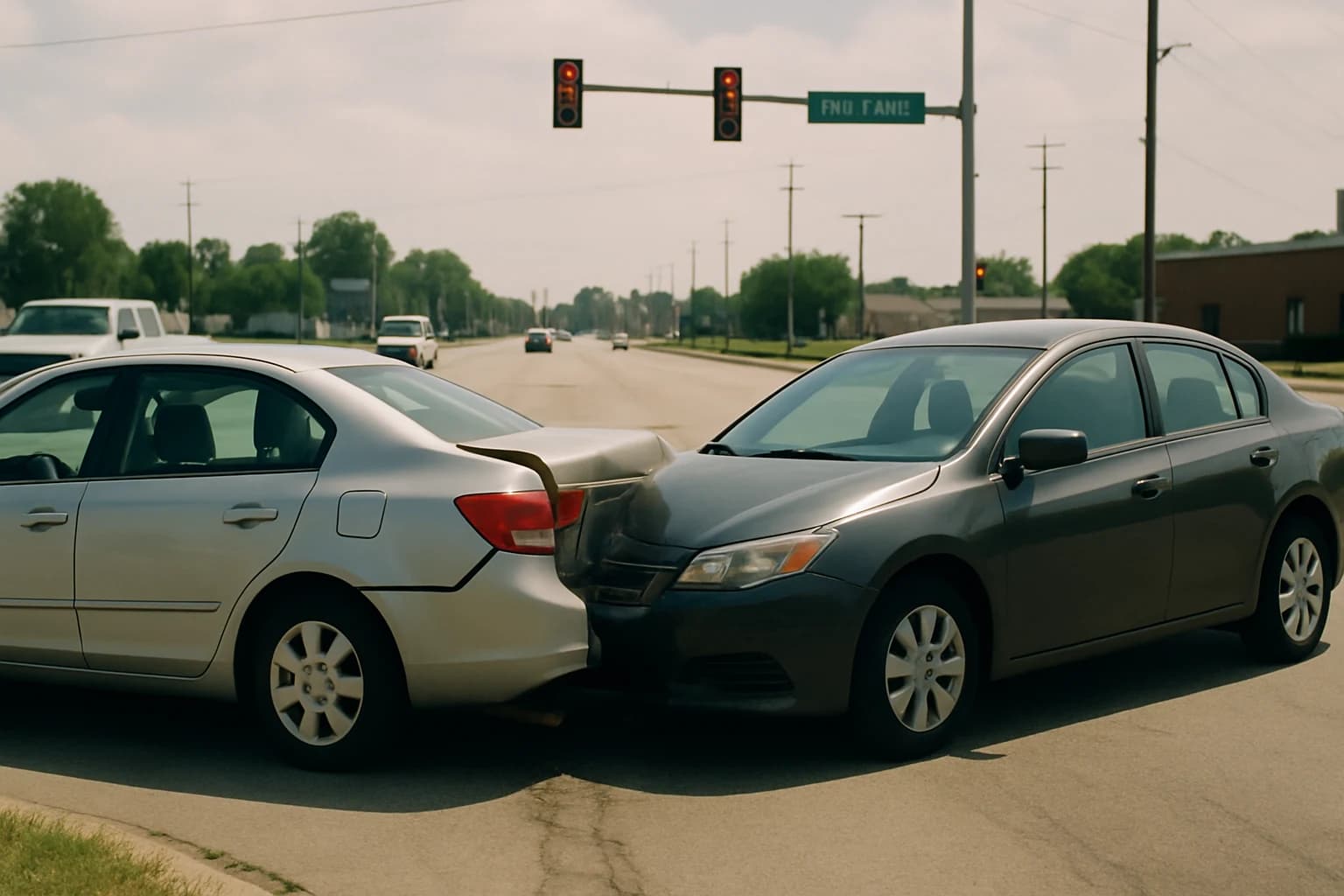
Rear-end collisions are fairly common auto accidents, which also go by the name “fender bender.” But many rear-end collisions are very serious accidents and will leave more than your fender damaged. Instead, many passengers and drivers will suffer horrifying injuries that can permanently change their lives and cost them tens of thousands of dollars (or more) in medical care.
At Delventhal Law Office, our team of car accident lawyers has helped many clients after a rear-end collision or other wreck. We know how to build a case for compensation the correct way, so reach out to us as soon as possible to schedule a free consultation.
WHY REAR-END ACCIDENTS HAPPEN
Rear-end collisions can happen at intersections, in parking lots, and out on the road. There are many causes:
- Distracted driving. A motorist might be looking at a cell phone and not see that she is approaching an intersection. As a result, she slams into the back of the vehicle stopped at the light.
- Aggressive driving. A motorist might be following too closely and not have enough room if the vehicle in front slams on the brakes. As a result, the following vehicle crashes into the fender.
- Intoxication. A drunk or high driver might have delayed reflexes, which impedes their ability to pump on the brakes to stop in time.
- Cutting off another driver. Sometimes, the vehicle in front is to blame for a rear-end collision even though it got hit. The driver might have cut off another vehicle and then slammed on the brakes, causing an unavoidable collision.
Regardless of how the accident occurred, you should meet with an attorney to review. As you can see, it isn’t true that the vehicle that struck the vehicle in front is always to blame (though this is often the case).
COMMON REAR-END ACCIDENT INJURIES
A person involved in a rear-end collision can suffer many of the same injuries as motorists involved in other kinds of car wrecks. We have seen clients suffer from:
- Broken bones. Motorists can break bones in their hands, arms, legs, feet, and face. If a rib breaks, then many complications can ensue, including pneumonia.
- Whiplash. This is a common injury for rear-end collisions. The head snaps forward and backwards, injuring soft tissue in the neck and upper back.
- Traumatic brain injuries[1]. A person can suffer a brain injury if they hit their head on something. Even whiplash can shake the brain inside the skull and change how it operates, leading to impaired memory, speech, balance, movement, and sleep.
- Spinal cord injuries. Damage to the spinal column often leads to muscle weakness, loss of sensation, and sometimes paralysis.
- Back injuries. A person might pinch a nerve in their back or suffer a herniated disc.
- Burns. If the rear-end collision ruptures the fuel tank, then the car could catch on fire. A driver or passenger could suffer serious burns trying to escape from the car, which can result in limb amputation or skin grafts.
Many injuries require extensive medical care, which few people can financially pay for. Instead of shouldering the full cost of your accident alone, meet with a Fort Wayne rear-end accident lawyer to review your chances of receiving compensation.
COMPENSATION FOR A REAR-END ACCIDENT
Our clients have made claims for the following types of compensation:
- Lost wages
- Medical care
- Damage to their vehicles
Imagine Mike needs surgery to insert a plate in his arm for a broken bone. He also has a concussion. Mike spends $25,000 on medical care and misses 3 months of work, where his monthly salary is $2,500. His car also suffered $10,000 in damage to his vehicle. Unless Mike was partially to blame for the accident, he should qualify for $42,500 in compensation for these economic losses.
Mike also might receive much more for pain and suffering, which Indiana law also allows him to be compensated for. Depending on the severity of his pain, he could receive an equal amount for pain and suffering or possibly even more.
EXPERIENCED FORT WAYNE REAR-END ACCIDENT ATTORNEYS
Rear-end collisions are often more than mere “fender benders.” Instead, our clients have suffered serious injuries that warrant serious compensation. After a crash, you should receive medical treatment and then meet with a rear-end accident lawyer in Fort Wayne for a free consultation.
At Delventhal Law Office, our team is committed to your well-being. We can work to maximize any settlement, and we will do everything possible to make sure you can begin to turn your life around after a serious collision.
Contact us today. We offer a free consultation.
The Indiana law that applies to your rear-end crash case
Indiana's two-year personal-injury statute at IC 34-11-2-4[2] controls almost every Fort Wayne rear-end crash claim, and the 51% modified comparative-fault bar at IC 34-51-2-6[3] governs allocation. Indiana case law applies a strong presumption that the trailing driver is at fault — the duty to maintain assured clear distance is foundational. Cell-phone distraction cases also implicate IC 9-21-8-59[4], and following-too-closely citations under IC 9-21-8-14[5] frequently appear in the crash report. Soft-tissue cervical and lumbar injuries dominate the medical picture.

How insurance carriers fight Fort Wayne rear-end crash claims
Rear-end carriers in Allen and surrounding counties run an injury-attack defense rather than a liability-attack defense. First is the sudden-stop argument — the trailing driver claims the lead driver braked unexpectedly for no reason, attempting to shift the presumption of negligence away from the rear position. Second is the low-speed-impact argument, where the carrier insists the property damage is too minor to cause real injury despite peer-reviewed biomechanical literature to the contrary. Third is the pre-existing-degeneration argument, mining prior chiropractic, primary-care, and imaging records to argue the cervical and lumbar findings are wear-and-tear. Fourth is the gap-in-treatment argument attacking any pause in care. We counter with photogrammetry, EDR delta-V data, and chronic-pain literature published at the National Institutes of Health[6] outcome library.
Evidence we preserve in the first 48 hours
Rear-end cases turn on impact-severity documentation, occupant-force analysis, and the full medical-treatment timeline preserved early. From day one we lock down:
- Event Data Recorder downloads when available, capturing trailing-driver speed and braking inputs in the five seconds before impact and the resulting delta-V.
- Detailed vehicle damage photographs of bumper, reinforcement bar, and frame deformation — photogrammetry establishes impact severity even in low-property-damage cases.
- ER intake records documenting the immediate complaint of neck or back pain, cervical-spine x-ray, and any same-day MRI of the cervical or lumbar spine.
- Pre-incident primary-care, chiropractic, and orthopedic records for the prior five to ten years to neutralize the carrier's pre-existing-degeneration ambush.
- Cell-phone records and any infotainment-system data showing the trailing driver was texting, calling, or interacting with a device at the moment of impact.

Damages categories in an Indiana rear-end crash case
Rear-end damages divide into economic and non-economic categories. Economic damages cover ER care, diagnostic imaging, orthopedic and pain-management visits, physical therapy that frequently runs three to six months, epidural and facet-joint injections, and any surgical intervention for documented herniated or extruded discs. Future-care damages account for the chronic-pain trajectory documented in published National Institutes of Health[6] outcome research. Non-economic damages capture pain, sleep disturbance, headache patterns, and loss of enjoyment — soft-tissue cases settle higher than carriers initially offer when the full medical narrative is properly built.

What our rear-end crash clients ask most
How much is a Fort Wayne rear-end crash case worth?
Settlement value tracks injury severity and treatment duration. A cervical strain treated with six weeks of physical therapy is a very different claim from a documented disc herniation with injections and ongoing pain management, or a surgical case with aligned imaging and EMG findings. Every case is different, and no past result predicts the outcome of yours.
Is the rear driver always at fault in Indiana?
Indiana applies a strong presumption that the trailing driver breached the duty to maintain assured clear distance, but the presumption is rebuttable. A sudden-stop defense, a chain-reaction impact, or a lead driver's brake-light failure can shift some allocation. The 51% comparative-fault bar at IC 34-51-2-6[3] still allows recovery as long as the injured driver remains below the fifty-percent threshold.
The other driver says my injury could not have come from a low-speed impact — what now?
Biomechanical and chronic-pain research published by the National Institutes of Health documents real soft-tissue cervical and lumbar injury at delta-V values below 10 mph. Property damage is a poor proxy for occupant force, and modern bumper systems absorb energy without showing visible damage. The medical record, not the bumper photograph, controls case value.
What if I had prior neck or back problems?
Indiana applies the eggshell plaintiff rule — a defendant takes the victim as found. Prior cervical or lumbar degeneration does not defeat the claim, and the law allows recovery for aggravation of an underlying condition. Your pre-incident records establish the baseline against which the new injury is measured, and a careful medical narrative defeats the wear-and-tear argument.
How long do I have to file a rear-end injury claim in Indiana?
Indiana's general two-year personal-injury statute at IC 34-11-2-4[2] runs from the crash date. UM and UIM components may carry contractual notice obligations under the policy. Government-vehicle defendants — sanitation trucks, school buses, public-transit buses — trigger Indiana Tort Claims Act notice as short as 180 days under IC 34-13-3-8[7].

What happens after you hire us
From the day we open the rear-end file we preserve EDR data when retrievable, place vehicle photographs and ER imaging under litigation hold, and notify the trailing driver's carrier that communications run through this office. We coordinate orthopedic, pain-management, and physical-therapy care, monitor the treatment progression, and demand at maximum medical improvement. If the carrier's offer falls short of documented soft-tissue and disc injury, suit is filed in Allen Superior Court. Contingency-fee — no fee unless we recover.