


DELVENTHAL LAW
PREMISES LIABILITY ATTORNEY IN INDIANA
In Indiana, property owners have certain responsibilities to visitors. For instance, when a property owner invites someone onto his or her land, he or she is required to exercise reasonable care to ensure that the individual is protected while on the premises.
Property owners who fail to fulfill this duty can be held liable in court if their action or inaction caused a social guest or a business visitor to sustain an injury. Unfortunately, filing this type of claim can be difficult, especially for victims who suffered serious injury, so if you were injured on someone else’s property in Indiana, you should consider contacting a premises liability attorney in Fort Wayne who can ensure that you file your claim properly and on time.
WHAT IS A PROPERTY OWNER’S DUTY OF CARE IN INDIANA?
Indiana law requires property owners to take steps to ensure that their property is safe for visitors. However, the nature and extent of this duty depends largely on the visitor’s status[1] as one of the following:
- An invitee;
- A licensee; or
- A trespasser.
Invitees, or those who have specifically been invited onto a person’s property, are owed the highest duty of care, which requires the owner to exercise reasonable care for the visitor’s protection. This includes a duty to fix any dangerous conditions on the property and to warn the guest about any non-obvious dangers. There are three main categories of invitee:
- The social guest, who has been specifically invited onto the property by the host;
- The business visitor, who is invited onto the property, such as a store or restaurant, for the owner’s economic benefit; and
- The public invitee, who is visiting the property because it is held open to the general public, like a city park or a playground.
DUTY TO WARN
Visitors who don’t fall under the category of an invitee are often classified as licensees if they entered onto someone else’s land for their own convenience, entertainment, or curiosity, but are privileged to do so by the owner’s permission or sufferance. A lesser duty is owed to these individuals, as property owners are only required to refrain from:
- Willfully or wantonly injuring them; or
- Acting in a manner that increases their danger.
This includes a duty to warn licensees of any latent, or non-obvious dangers, of which the owner has a prior knowledge. The final group of visitors recognized under Indiana law are trespassers. The only duty owed by landowners to this group is to refrain from purposeful injury. For instance, landowners are prohibited from intentionally placing hidden dangers or traps on their property to discourage trespassers. There is, however, an exception when it comes to child trespassers if the injured minor was enticed to enter the property because it contained an attractive nuisance, such as a trampoline or swimming pool. In these cases, a property owner could be held liable for the child’s injuries, if the accident was foreseeable and the owner failed to take steps to prevent it, like building a fence.
TYPES OF PREMISES LIABILITY CLAIMS
A failure to fulfill a duty owed to a visitor can open the property owner up to liability. Some of the most common examples of these types of premises liability cases involve:
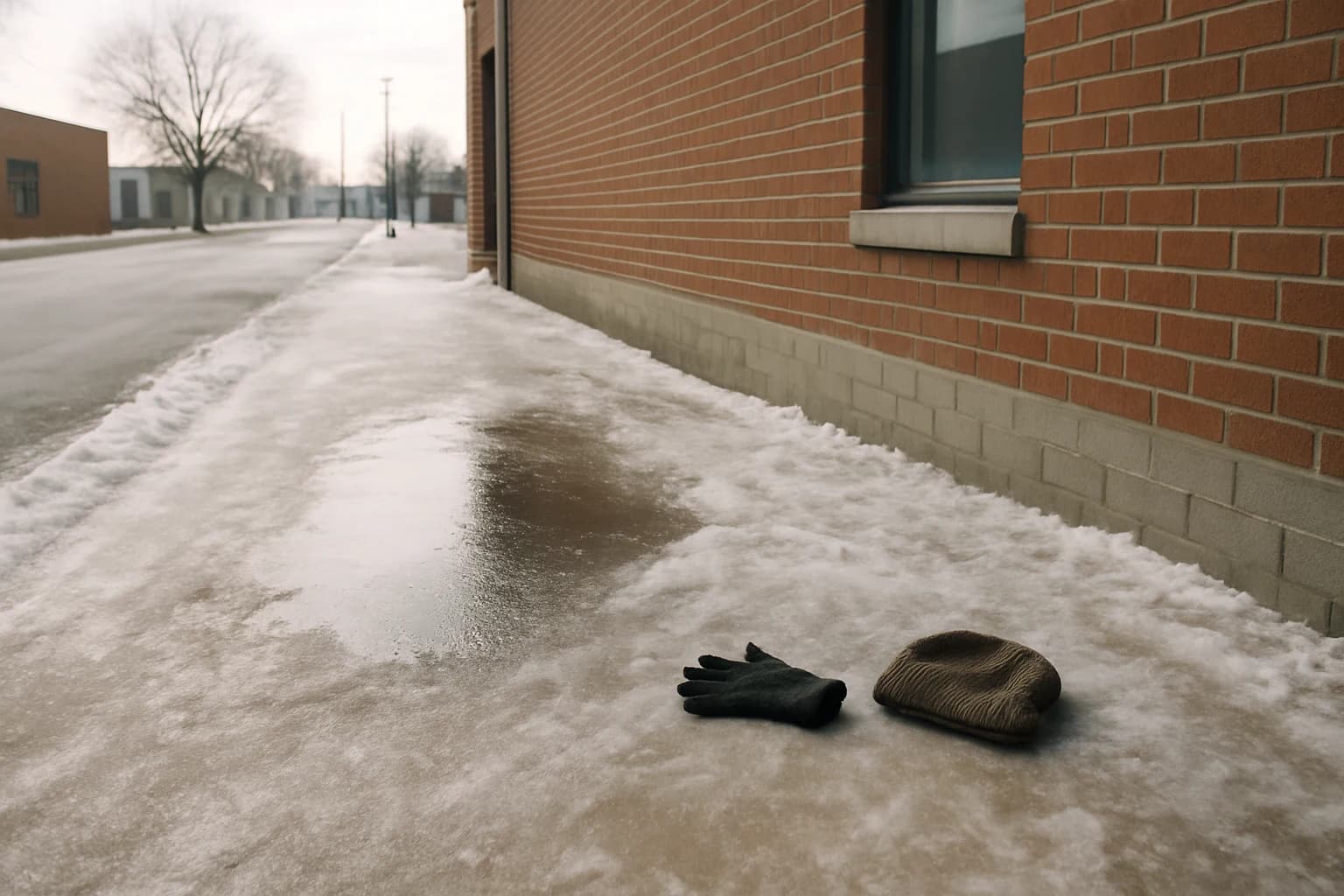
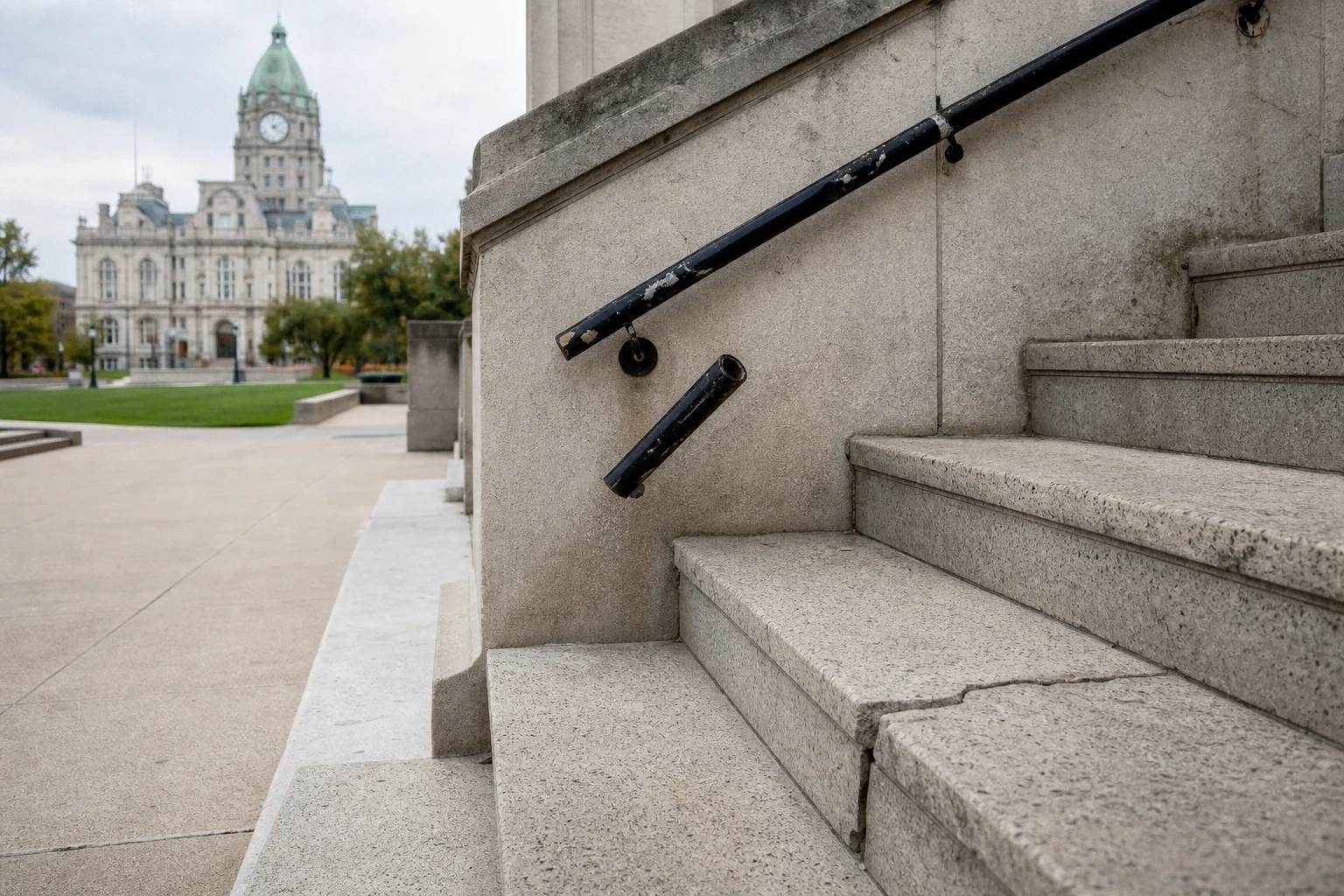
- Slip and fall accidents, which occur when a visitor falls due to a hazard on the property, such as poor lighting, broken railings, uneven pavement, spilled liquid, or the presence of ice in a parking lot or on a sidewalk;
- Dog bites or animal attacks, which usually involve a dog biting a person because it was not properly leashed or was running at large;
- Falling objects from shelving or scaffolding at a construction site,
- Assault resulting from a property owner’s failure to provide reasonable security after becoming aware of similar crimes in the area;
- Exposure to toxic substances and other hazardous materials;
- Swimming pool accidents, if the public or private pool’s owner exhibited negligence that resulted in a drowning, near-drowning, a fall, or exposure to dangerous chemicals or bacteria; and
- Elevator and escalator accidents, if caused by a failure to maintain or inspect.
Whether or not a person is able to file a claim in these kinds of cases depends on his or her status as a visitor and the accompanying duty owed by the property owner.
POTENTIAL DAMAGES
In order to succeed when filing a premises liability claim in court, plaintiffs must establish three elements, namely that:
- The defendant owed a duty of care to the plaintiff;
- The defendant breached that duty; and
- The defendant’s breach caused the plaintiff to suffer an injury.
Plaintiffs who are able to prove these elements are eligible for damages[2] compensating them for:
- Past and future medical expenses;
- Lost wages;
- Loss of earning capacity;
- Scarring or disfigurement;
- Physical and emotional pain and suffering endured by the victim;
- Mental anguish; and
- Emotional distress suffered by the injured party’s family.
In some cases, where a plaintiff can prove that an at-fault party’s behavior was malicious, he or she could even be awarded punitive damages, which are intended to punish the negligent or reckless party.
In many situations, an at-fault party’s homeowner’s or commercial liability insurance will agree to settle with the injured party out of court. This can save all parties a significant amount of time, money, and stress. However, these agreements are not always possible, especially if the insurer contends that the hazard was open or obvious or that the injured party assumed the risk of injury by entering onto the property. In these cases, the accident victims must usually take the other party to court.
CALL TODAY FOR HELP WITH YOUR PREMISES LIABILITY CASE
No one enters a store, parking lot, or friend’s home expecting to be injured. However, this is not an uncommon occurrence and can be both painful and expensive, so if you were injured on someone else’s property, please call Delventhal Law Office LLC at (260) 238-8608 to speak with an experienced Fort Wayne premises liability attorney about your case. Initial consultations are conducted free of charge, so please don’t hesitate to call or contact us online today.
The Indiana law that applies to your premises liability case
Indiana's two-year personal-injury statute of limitations (IC 34-11-2-4[3]) governs almost every premises-liability claim filed in Allen County. Liability turns on the plaintiff's status on the land — invitee, licensee, or trespasser — and on whether the owner had actual or constructive notice of the hazardous condition. Indiana's 51% modified comparative-fault rule (IC 34-51-2-6[4]) bars recovery if a jury allocates more than half of the fault to the injured visitor, which is why early scene investigation and inspection records matter so much.

How insurance carriers fight Fort Wayne premises liability claims
Premises carriers in Allen, DeKalb, and Whitley County run a predictable defense. First, they attack the plaintiff's status — arguing the visitor was a mere licensee or trespasser owed only a limited duty, not an invitee owed reasonable care. Second, they attack notice — insisting the spill, broken stair, or icy patch had not been there long enough for the owner to discover and remedy it. Third, they push the open-and-obvious doctrine, arguing the hazard was visible and the visitor should have avoided it. Fourth, they pull every prior medical record to argue pre-existing injury. We answer with sweep logs, inspection records, surveillance footage, witness statements taken within days, and falls-research published by the Centers for Disease Control and Prevention[5] that grounds the injury-severity argument.
Evidence we preserve in the first 48 hours
Premises cases live and die on the notice-and-condition record locked down before the property is cleaned, repaired, or repainted.
- Maintenance and inspection sweep logs covering the 24 hours before the incident, plus the work-order history for the specific location.
- Surveillance video from the incident scene and adjacent cameras, secured by preservation letter before the routine 30-day overwrite cycle erases it.
- Incident reports prepared by the property manager, security staff, or store-level employee, including any internal photographs of the hazard.
- Witness statements from staff and bystanders taken within days of the fall, while memories are fresh and before the carrier coaches testimony.
- Emergency-room imaging, orthopedic records, and the full physical-therapy progression that documents the functional loss and treatment trajectory.
Damages categories in an Indiana premises liability case
Premises-liability damages break into economic and non-economic categories. Economic damages cover past and future medical care, lost wages during recovery, and lost future earning capacity when a hip fracture, head injury, or back injury permanently limits work. Non-economic damages cover pain and suffering, loss of enjoyment of life, and permanent impairment. Older adults injured in falls face longer recoveries and higher complication rates — research published by the Centers for Disease Control and Prevention[5] documents the elevated mortality and disability risk that grounds the future-care portion of the damages model.
What our premises liability clients ask most
What does it mean to be an invitee versus a licensee under Indiana premises law?
Invitees enter for the property owner's commercial benefit — shoppers, restaurant guests, and business visitors — and are owed a duty of reasonable care to discover and warn of hazards. Licensees enter for their own purposes with the owner's permission and are owed a lesser duty. Status frames every premises case and shapes the available damages.
How does the property owner's notice of the hazard affect my case?
Indiana requires proof the owner had actual notice — they knew about the hazard — or constructive notice, meaning the condition existed long enough that a reasonable inspection should have caught it. Spill duration, sweep-log gaps, and prior similar incidents all build the notice case. Without notice evidence, premises claims fail at summary judgment.
What if I did not see the hazard before I fell?
Failure to see a hazard does not automatically defeat the claim, but the open-and-obvious doctrine permits owners to argue an ordinary visitor would have noticed and avoided it. Lighting, sight-line obstructions, distractions inherent to the business (signage, displays, foot traffic), and the time of day all factor into whether the condition was truly obvious.
How long do I have to file an Indiana premises-liability lawsuit?
Indiana's general personal-injury statute of limitations is two years from the date of the fall under IC 34-11-2-4[3]. Falls on government property — county courthouses, city sidewalks, public housing — trigger Indiana Tort Claims Act notice deadlines as short as 180 days under IC 34-13-3-8[6], with different rules for the state itself. Our guide to Indiana government tort claim notices explains why the public entity and notice recipient must be identified correctly. Missing notice forfeits the claim.
What if the property owner has already repaired the hazard?
Subsequent remedial measures are generally inadmissible to prove negligence under Indiana Evidence Rule 407, but the repair itself often confirms the condition existed. We move quickly to lock down photographs, surveillance footage, and witness statements documenting the pre-repair state. A spoliation letter sent within days preserves the most important evidence.
What happens after you hire us
From the day we open the file, we send preservation letters demanding sweep logs, surveillance video, and incident reports be held under litigation hold. We notify the property's carrier that all future communications run through this office. We coordinate ongoing medical care, send a written settlement demand once you reach maximum medical improvement, and — if the carrier's offer falls short of documented damages — file suit in Allen Superior Court or wherever venue is proper. Every step is on a contingency-fee basis: no fee unless we recover.