



DELVENTHAL LAW
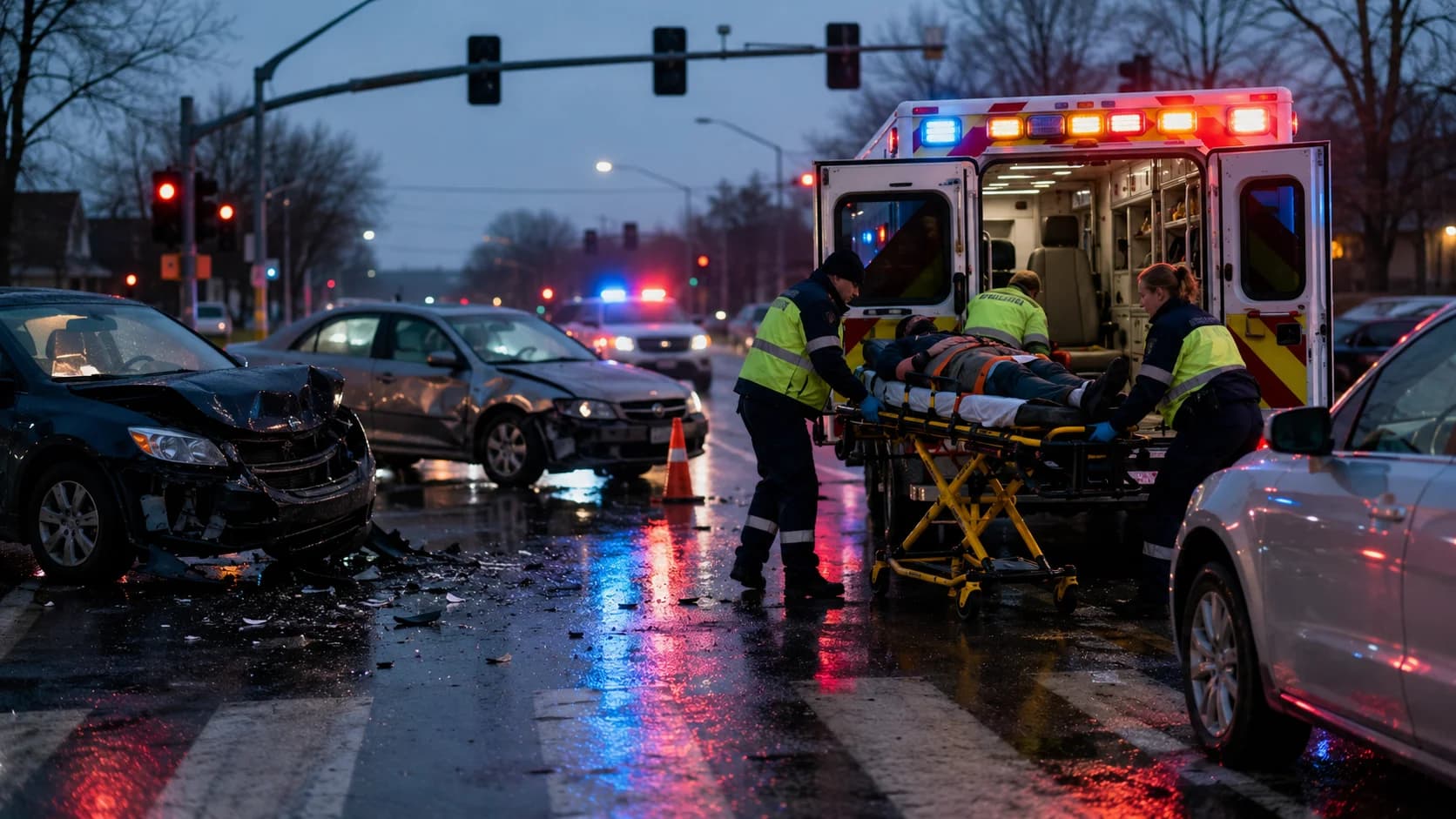
SERIOUS ACCIDENTS CAN HAPPEN AT ANY TIME, AND IN ANY PLACE.
Short answer: If someone else's carelessness injured you in Indiana, you may be able to recover your medical bills, lost income, and other losses from the person or business responsible, usually through their insurance. Most claims must be filed in court within two years, and claims against a government body need written notice much sooner. Delventhal Law Office reviews what happened at no charge and explains the deadlines that apply to you.
Whether you were hurt in a crash, at a local business, or on someone else's property, the insurance company handling the claim works for the person or business it insures. From our office in downtown Fort Wayne, we represent injured people across Indiana and handle the claim from investigation through settlement or, when needed, trial.
Here is how the process works. Your first consultation is free. We listen to what happened, review any documents you have, and explain your options. If we take the case, we investigate the accident and gather evidence, which may include:
- Photographs;
- Surveillance or security video;
- Medical records;
- Expert opinions;
- Police reports.
We also contact witnesses and others involved to piece together how the accident happened and how your injuries affect your daily life. The goal is a claim that is well documented and hard for an insurer to dismiss.
Once your treatment has progressed far enough to understand your injuries, we present the claim to the insurance company and negotiate on your behalf. Every case is different, and no lawyer can promise a particular result or timeline.
If the insurer will not offer a fair amount, we can file a lawsuit and prepare the case for trial. Many cases settle after a lawsuit is filed, during discovery or mediation. Whether to settle or go to trial is always your decision.
FULL-SERVICE PERSONAL INJURY LAW FIRM SERVING FORT WAYNE

Delventhal Law Office represents injured people in Fort Wayne and throughout Indiana. When we take your case, you work directly with our office and get individual attention, whether the case is large or small. The personal injury cases we handle include:
- Car accidents;
- Drunk driving accident claims;
- Uninsured/underinsured motorist cases;
- Commercial truck accidents;
- Motorcycle crashes;
- Bicycle accidents;
- Pedestrian collisions;
- Boating accidents;
- Indiana workers’ compensation claims;
- Construction site accidents;
- Prescription drug injuries;
- Nursing home abuse and neglect;
- Birth injuries;
- Child accidents & injuries;
- Product liability claims;
- Premises liability claims;
- Slip and fall accidents;
- Dog bite injuries;
- Indiana wrongful death claims.
TAKE LEGAL ACTION
You Have Limited Time to Take Legal Action
In Indiana, most personal injury lawsuits must be filed within two years of the injury (IC 34-11-2-4[2]). Some claims have shorter or different deadlines:
- Claims against a city, county, school, or other local government require written notice within 180 days of the loss (IC 34-13-3-8[3]).
- Claims against the State of Indiana or a state agency require written notice within 270 days of the loss (IC 34-13-3-6[4]).
- Medical malpractice claims generally must be filed within two years of the act or omission, and a child injured before age six has until their eighth birthday (IC 34-18-7-1[5]).
Missing a deadline can end a claim no matter how strong it is, so it helps to talk with a lawyer early.
Contacting a lawyer early also helps with evidence. Video is often recorded over on a routine schedule, scenes get repaired, and witnesses become harder to find. An early investigation preserves what is still available.
Many injured people worry about what a lawyer will cost. Your first consultation is free and does not obligate you to anything.
We handle personal injury cases on a contingency fee. Our fee is a percentage of the recovery, and we are paid only if you recover. The firm advances case costs, such as medical records, court fees, depositions, and experts. If there is no recovery, you owe us nothing for those costs.
WE HOLD NEGLIGENT DEFENDANTS ACCOUNTABLE

Most personal injury claims are based on negligence, which means a failure to use reasonable care. To hold someone responsible, an injured person generally must prove four things:
- The defendant owed you a duty of care;
- The duty of care was breached by the defendant;
- There is causation between their breach and your injuries; and
- You sustained real harm in the accident.
The Indiana law that applies to your personal injury case
Indiana uses modified comparative fault (IC 34-51-2-6[6]). If you share some of the blame for an accident, your damages are reduced by your percentage of fault. If your fault is greater than the combined fault of everyone else involved, meaning 51% or more, you cannot recover. The filing and notice deadlines above apply as well.
How insurers dispute personal injury claims
Insurers tend to dispute claims in a few predictable ways. They may argue the injury was pre-existing or caused by something else. They may question whether all of the treatment was necessary. They may argue the injured person was partly at fault, which reduces the recovery under Indiana law. And they may make an early offer before the full extent of the injuries is known. We respond with complete medical records, testimony from treating providers, and a clear timeline of what happened and how the injuries have affected you.

Evidence to preserve early
Some evidence disappears quickly, so we work to secure it as early as possible:
- Police, OSHA, or other incident-report documentation prepared by the responding investigator, with body-camera or supplemental narrative when available.
- Surveillance video, dashcam footage, doorbell-camera recordings, and any third-party electronic data, requested in a preservation letter as soon as possible.
- Photographs of the scene, the hazard, vehicle or product damage, and any visible injuries taken before cleanup, repair, or healing alters the evidence.
- Witness statements taken soon after the incident, while memories are fresh.
- Complete medical records from EMS through emergency department, specialty care, surgery, physical therapy, and any permanent-impairment evaluation.
Damages categories in an Indiana personal injury case
Indiana personal injury damages fall into two groups. Economic damages cover past and future medical care, lost wages, and lost earning capacity. Non-economic damages cover pain and suffering, loss of enjoyment of life, disfigurement, and emotional distress. Punitive damages are uncommon. The facts supporting them must be proven by clear and convincing evidence (IC 34-51-3-2[7]). They are capped at the greater of three times the compensatory damages or $50,000 (IC 34-51-3-4[8]), and 75% of any punitive award goes to the state's violent crime victims compensation fund (IC 34-51-3-6[9]).

What our personal injury clients ask most
What are the elements of a personal-injury claim in Indiana?
Indiana personal-injury claims rest on four elements: duty, breach, causation, and damages. The defendant must owe a legal duty of care, breach it by acting unreasonably or violating a safety standard, proximately cause the resulting injury, and produce compensable harm. Each element requires its own evidence — duty from the relationship or statute, breach from conduct and standards, causation from medical and reconstruction proof, damages from records.
How long do I have to file an Indiana personal-injury lawsuit?
Most Indiana personal injury lawsuits must be filed within two years of the injury under IC 34-11-2-4[10]. Claims against local government require written notice within 180 days under IC 34-13-3-8[11], and claims against the state within 270 days under IC 34-13-3-6[12]. An injured child generally has two years after turning 18 under IC 34-11-6-1[13], but medical malpractice is different: a child injured before age six must file by their eighth birthday under IC 34-18-7-1[14]. A parent's own claims can have different deadlines, so it is best to talk with a lawyer promptly.
What is Indiana's comparative-fault rule and how does it affect my case?
Indiana applies a 51% modified comparative-fault rule under IC 34-51-2-6[15]. A jury allocates a percentage of fault to each party. If the injured plaintiff is found 50% or less at fault, damages are reduced by that percentage. If the plaintiff is found 51% or more at fault, recovery is barred entirely. Preserving evidence early helps answer arguments that you were at fault.
What damages can I recover in an Indiana personal-injury case?
Indiana allows recovery for past and future medical expenses, lost wages, lost future earning capacity, pain and suffering, loss of enjoyment of life, disfigurement, and emotional distress. Punitive damages are uncommon. They require clear and convincing evidence under IC 34-51-3-2[16], are capped at the greater of three times compensatory damages or $50,000 under IC 34-51-3-4[17], and 75% of the award goes to the state's violent crime victims compensation fund under IC 34-51-3-6[18].
Do I have to go to court for a personal-injury case in Indiana?
Most Indiana personal-injury cases resolve through pre-suit negotiation or post-suit mediation before reaching a jury trial. Filing suit and conducting discovery (depositions, written discovery, expert disclosure) often produces a settlement once the case is fully developed. Trial remains available when an insurer will not fairly evaluate documented damages, and being prepared for trial often helps produce a fair settlement.
What happens after you hire us
Early on, we work to preserve evidence, photograph injuries and property damage, send preservation letters for electronic evidence, and notify the at-fault insurer that all communication goes through our office. We keep track of your medical care, send a documented demand once your condition is well understood, and, if the insurer's offer falls short, file suit in the appropriate Indiana court. Our fee is contingent: we are paid only if you recover, and you owe nothing for case costs if there is no recovery.

Injured in a bus, school bus, or public transit crash? We handle those as a distinct injury category because evidence and deadlines can move fast. See our Fort Wayne bus accident attorney page.
Sources
- Watch this personal injury video on YouTube (youtu.be) ↩
- IC 34-11-2-4 (iga.in.gov) ↩
- IC 34-13-3-8 (iga.in.gov) ↩
- IC 34-13-3-6 (iga.in.gov) ↩
- IC 34-18-7-1 (iga.in.gov) ↩
- IC 34-51-2-6 (iga.in.gov) ↩
- IC 34-51-3-2 (iga.in.gov) ↩
- IC 34-51-3-4 (iga.in.gov) ↩
- IC 34-51-3-6 (iga.in.gov) ↩
- IC 34-11-2-4 (iga.in.gov) ↩
- IC 34-13-3-8 (iga.in.gov) ↩
- IC 34-13-3-6 (iga.in.gov) ↩
- IC 34-11-6-1 (iga.in.gov) ↩
- IC 34-18-7-1 (iga.in.gov) ↩
- IC 34-51-2-6 (iga.in.gov) ↩
- IC 34-51-3-2 (iga.in.gov) ↩
- IC 34-51-3-4 (iga.in.gov) ↩
- IC 34-51-3-6 (iga.in.gov) ↩