
DELVENTHAL LAW
NEED A DRUG INJURY ATTORNEY?
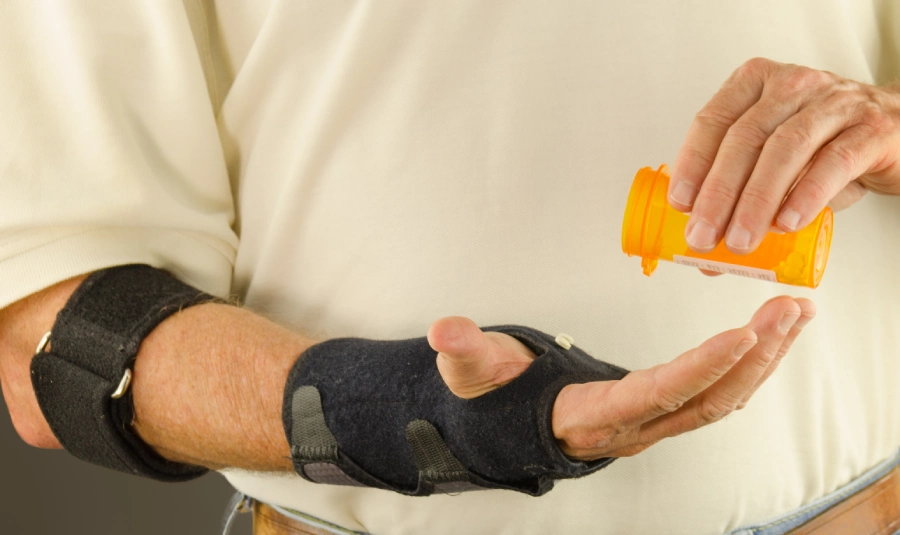
Drug injuries happen for a number of reasons. When they do happen, those injured can recover damages for their injuries under certain conditions. If you have been injured by a dangerous drug, we encourage you to reach out to our drug injury attorneys in Fort Wayne, IN today for assistance with your case.
DOCTOR’S ERRORS AND DRUG INJURIES

Drug injuries often happen because doctors make a serious error in prescribing medication. It is one of the most common causes of inpatient medical malpractice. These mistakes can include:
- When a doctor does not check a patient’s allergies and prescribes a medication that he or she is allergic to;
- When a doctor does not check the patient’s record and note that there may be a bad interaction with a drug that is still in their system;
- When a doctor prescribes too much of a medication or not enough of a medication;
- And when a doctor fills out the wrong prescription.
Pharmacist Errors and Drug Injuries
Sometimes, a pharmacist is to blame for a patient’s injuries. When this happens, the cause is usually due to the pharmacist putting the wrong pills into the bottle. Many pills look the same or have similar names. A mistake like this can cause severe injuries to a patient who is both getting the wrong medication and not getting the medication that they need.
Pharmacists are also responsible for ensuring that drug interactions between medication do not harm the patient.
DRUG COMPANIES AND DRUG INJURIES
Sometimes, drug companies manufacture drugs that have dangerous side effects and they don’t warn either doctors or patients. Under product liability regulations, the drug company is responsible for a patient’s injuries.
One major example of this is the opioid lawsuits that are happening right now against pharmaceutical companies. According to the plaintiffs, not only did the drug companies fail to warn doctors about the dangerous addictive side effects of these drugs but actually assured them that the drugs were less addictive than other opioids that came before them. As a result, the drug companies spawned millions of drug addicts, destroyed lives, and hurt families. This would be an example of a drug company failing to properly warn patients and doctors about the dangers of their drug.
In other cases, drugs can have an unanticipated side effect that causes the patient injury. An example of this would be the high-potency antibiotic called fluoroquinolone drugs. These are sold under the name Cipro, Levaquin, and Noroxin among others. Current lawsuits allege that the drugs can also cause peripheral neuropathy which is a chronic condition caused by nerve damage in the hands and feet. The lawsuit also claims that the antibiotics can cause aortic aneurysms. This is an example of a drug causing an unanticipated side effect.
Lastly, the drug Risperdal, an antipsychotic, is known to cause gynecomastia, a disorder in which men grow breasts. The lawsuit alleges that Johnson & Johnson, the manufacturer of the drug, knew about and failed to disclose this side effect to the public.
HOW LAWSUITS AGAINST PHARMACEUTICAL COMPANIES ARE DIFFERENT

In the case of pharmacists and doctors, a plaintiff must show that the medical specialist was negligent in their care of the patient. This is because these lawsuits fall under the aegis of professional malpractice. In the case of drug companies, lawsuits fall under the category of product liability.
Product liability is a much different category of personal injury lawsuit. A plaintiff who brings an action against a company for a defective product does not need to prove negligence. They only need to prove that the product did, in fact, cause their injuries. This is a much lower standard of proof for you and your attorney.
HOW ARE DANGEROUS DRUGS RELEASED ON THE MARKET?
You may be wondering how dangerous drugs are release to patients when the FDA regulates such things. There are a number of reasons for this. In some cases, there are regulatory loopholes that companies can use to fast medicine or medical devices through the testing process. This is most prevalent when the drug is considered an analog of another drug on the market.
There also limitations on what the FDA can regulate. In some cases, companies can operate in regulatory dead zones and outside the purview of the FDA.
The majority of problems, however, are caused by the pharmaceutical companies and their drug reps failing to disclose dangerous side effects to doctors and patients.
Contact a Fort Wayne, IN Drug Injury Attorney
If you’ve been injured after taking a drug, it may be possible to recover damages for your injury. The Delventhal Law Office can help. Give us a call or contact us online for a free case evaluation.
The Indiana law that applies to your pharmaceutical injury case
Pharmaceutical-injury claims in Indiana proceed under the Indiana Product Liability Act (IC 34-20[1]) with the two-year statute of limitations in IC 34-11-2-4[2] measured from the date the injury was, or reasonably should have been, discovered. Most drug cases turn on failure-to-warn theory — whether the manufacturer's label, prescribing information, and post-market communications adequately disclosed the risk that caused the injury. Federal preemption under Wyeth v. Levine and Mutual Pharmaceutical v. Bartlett shapes which warnings claims survive against branded and generic manufacturers, and Indiana's 51% modified comparative-fault rule (IC 34-51-2-6[3]) applies.

How insurance carriers fight Fort Wayne pharmaceutical injury claims
Pharmaceutical manufacturers run a federal-preemption defense as their first line, arguing that FDA approval of the label forecloses any state-law warnings claim. They argue the learned-intermediary doctrine, claiming the prescribing physician's independent judgment broke any chain of causation between the label and the patient. They argue alternative causation — the underlying disease, comorbidities, or concurrent medications caused the adverse event. They argue that MedWatch and adverse-event reports do not establish causation in the individual case. We counter with the published label history (including black-box warning revisions), the manufacturer's own internal pharmacovigilance data, FDA enforcement letters, label-change correspondence, and adverse-event reporting available through the U.S. Food and Drug Administration[4] drug-information portal.
Evidence we preserve in the first 48 hours
Drug-injury cases require immediate preservation of the patient's prescription history and rapid public-records work on the label, the recall record, and the manufacturer's regulatory file.

- Complete prescription and pharmacy records — every refill, dosage change, and concurrent medication — preserved with chain-of-custody integrity.
- Original drug labeling, package inserts, patient medication guides, and any direct-to-consumer marketing materials in effect when the prescription was filled.
- FDA black-box warning history, label-change letters, and any Drug Safety Communications relating to the medication, downloaded from the federal database.
- MedWatch adverse-event reports and the manufacturer's annual pharmacovigilance summaries, which establish the pattern of similar adverse events.
- Treating-provider records and a qualified medical causation expert linking the specific adverse event to the medication's known mechanism of toxicity.
Damages categories in an Indiana pharmaceutical injury case
Pharmaceutical-injury damages cover medical care for the adverse event, lost wages during recovery, lost future earning capacity for permanent injuries (liver failure, stroke, suicide, congenital defect, cancer recurrence), and non-economic damages for pain, suffering, and disfigurement. The published black-box warnings, label-change history, and post-market surveillance data available through the FDA recalls and safety-alerts portal[5] document the manufacturer's notice of risk, which grounds both compensatory and any punitive-damages claims under IC 34-51-3[6].
What our pharmaceutical injury clients ask most
What is a failure-to-warn drug claim in Indiana?
Failure-to-warn claims allege the manufacturer knew or should have known about a serious adverse-event risk and failed to provide adequate warnings in the label, prescribing information, or post-market communications. Indiana applies the learned-intermediary doctrine, meaning the warning must reach the prescribing physician with enough specificity to allow an informed risk-benefit decision for the individual patient.

Does FDA approval bar a state-law drug-injury claim?
FDA approval does not categorically bar state-law claims. Under Wyeth v. Levine, branded manufacturers retain a duty to update warnings via the Changes Being Effected pathway when new safety information emerges. Generic-drug claims face significantly tighter preemption under Mutual Pharmaceutical v. Bartlett, which is why the choice of defendant matters early in case evaluation.
How long do I have to file a drug-injury lawsuit in Indiana?
Indiana's two-year statute of limitations under IC 34-11-2-4[2] runs from when the injury was discovered or reasonably should have been discovered, which can be later than the date of last drug exposure. The Indiana Product Liability Act adds a ten-year statute of repose under IC 34-20-3-1[7], with narrow exceptions for latent-disease cases and certain pharmaceutical exposures.
What kinds of injuries support a drug-injury claim?
Common drug-injury claims involve cardiovascular events (heart attack, stroke), liver toxicity and acute liver failure, severe skin reactions (Stevens-Johnson syndrome and toxic epidermal necrolysis), suicidal ideation and completed suicide on antidepressants, congenital defects from teratogenic exposure during pregnancy, and cancer linked to long-term exposure to specific carcinogenic medications.
Can the prescribing physician also be sued in a drug-injury case?
Physician liability runs through Indiana's Medical Malpractice Act, which is a separate procedural track with a 90-day notice requirement to the Indiana Department of Insurance and a Medical Review Panel under IC 34-18[8]. In most drug cases, the focus is the manufacturer rather than the prescriber, but parallel malpractice claims are sometimes appropriate where the prescription itself fell below standard of care.
What happens after you hire us
From day one, we preserve prescription records, pull FDA label history and MedWatch data, and identify the responsible manufacturer through NDC and lot-number tracking. We retain qualified medical-causation and regulatory experts before filing, evaluate whether the case fits an existing MDL, and file in Allen Superior Court or federal court depending on the procedural posture. Every step is on a contingency-fee basis: no fee unless we recover.